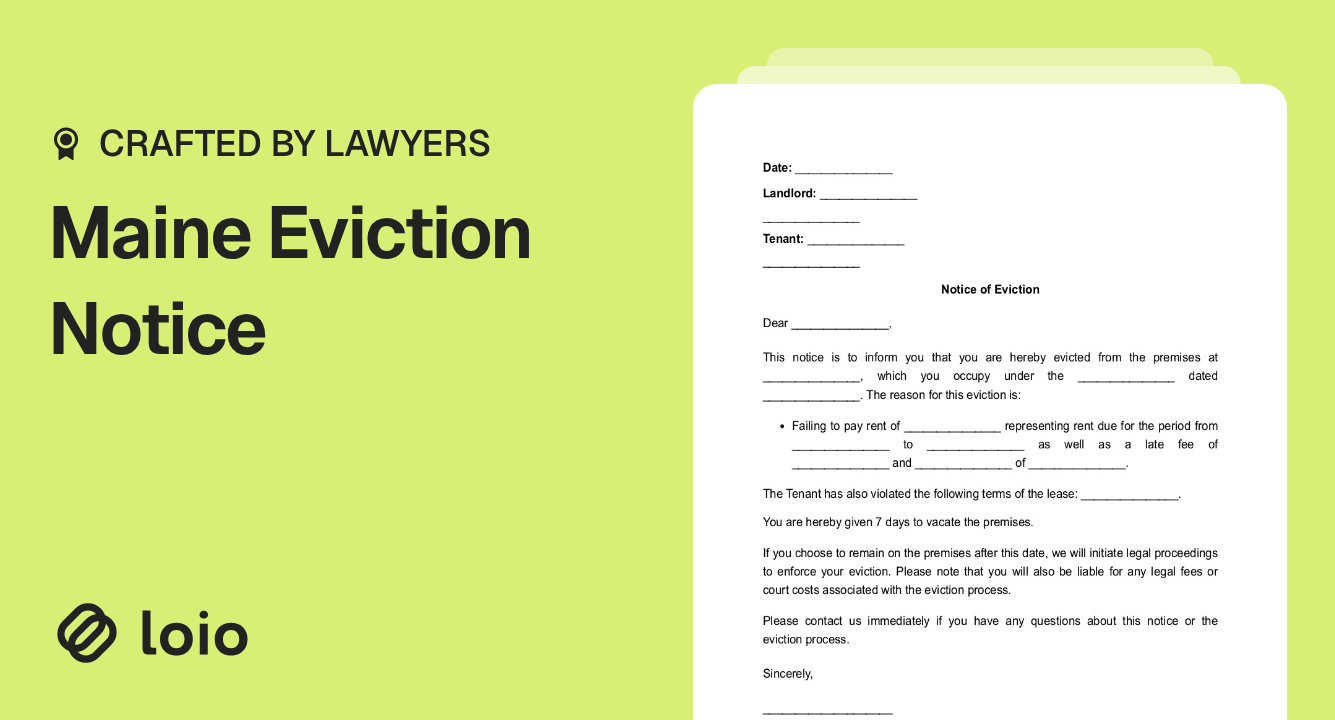
A Maine Eviction Notice is a legal document between a landlord and a tenant notifying the tenant to leave the property for nonpayment or lease violation. It is used to comply with Maine state eviction laws and formally begin the removal process.
Evictions are never easy, but sometimes, they are necessary to maintain the integrity of a rental property or resolve legal disputes. Whether you're a landlord facing a difficult tenant situation or a tenant trying to understand your rights, having a clear understanding of the laws and eviction letter Maine is crucial.
Eviction laws in Maine are designed to protect both landlords and tenants by providing a fair legal process. Under Maine law, landlords must have a valid reason to evict a tenant, which is often referred to as a “just cause.” Common just causes include:
Non-payment of rent;
Violation of lease terms (e.g., unauthorized pets or subletting);
Damage to property;
Illegal activities on the premises.
Maine landlords are required to follow a strict legal procedure. This includes giving tenants proper notice, filing a lawsuit in the appropriate local court if necessary, and obtaining a court order before physically evicting anyone. Skipping any step in this process could lead to legal consequences for the landlord, such as fines or the case being dismissed.
Local courts in Maine, such as the Penobscot County District Court, handle eviction cases. For low-income tenants facing eviction, organizations like Pine Tree Legal Assistance provide free legal aid.
Evicting a tenant in Maine involves multiple steps to ensure compliance with state law:
Provide an Eviction Notice Maine
Depending on the reason for eviction, landlords must issue the appropriate type of notice to vacate form Maine:
7-Day Notice: For non-payment of rent or serious lease violations.
30-Day Notice: For no-fault evictions, such as ending a month-to-month tenancy.
File an Eviction Complaint
If the tenant does not comply with the eviction template Maine, the landlord must file an eviction lawsuit (known as a Forcible Entry and Detainer action) in the local court.
Attend the Court Hearing
Both parties will present their case. If the court rules in favor of the landlord, a Writ of Possession will be issued, allowing the landlord to regain control of the property.
Coordinate with Law Enforcement
Landlords cannot remove tenants themselves. Instead, they must work with local law enforcement to execute the court-ordered eviction.
Creating a legally compliant Maine notice to vacate form is a critical first step. A proper eviction notice must include:
Tenant’s Full Name and Address: Ensure all tenants listed on the lease are named.
Reason for Eviction: Clearly state in the Maine eviction letter the just cause, such as non-payment of rent or lease violation.
Deadline for Compliance: Specify how many days the tenant has to resolve the issue or vacate.
Landlord’s Contact Information: Include your name, address, and phone number.
It’s advisable to use an eviction notice template Maine. Online platforms like Loio Templates offer customizable eviction notice forms that comply with state requirements.
Tip: Double-check the sample eviction notice Maine for accuracy and completeness before delivering it. Incomplete notices may be considered invalid in court.
Key Considerations When Writing an Eviction Notice
Navigating an eviction is never a pleasant experience, but understanding Maine’s eviction laws and the steps involved can help you manage the process effectively. Whether you're a landlord issuing an eviction notice in Maine template or a tenant defending your rights, resources are available to guide you through. Remember, adhering to the legal process and seeking professional advice when needed is the best way to resolve disputes fairly and efficiently. If you need assistance, consider using a notice to vacate Maine template to ensure compliance with state laws and streamline the process.