Free template
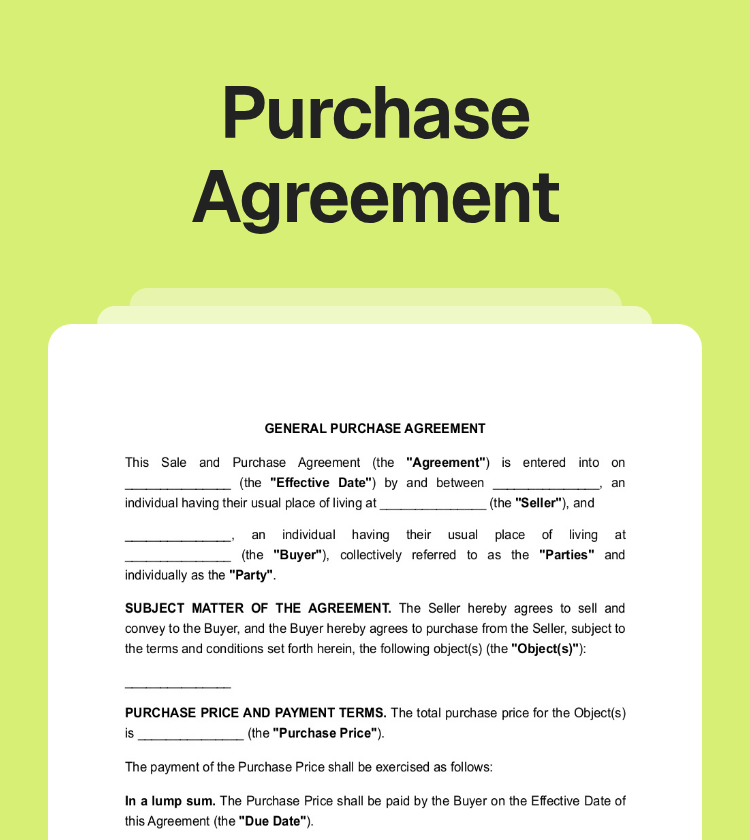
A purchase agreement is a legally binding contract between a buyer and a seller that outlines the rules of a sale. It serves as a kind of roadmap for a deal. A purchase agreement spells out exactly what is being bought, how much it costs, and when the final exchange will happen. When people want a reliable and fast way to set the contract, they look for a ready purchase agreement template to make sure the document already includes all the necessary legal protections like title insurance and warranties.
While you don’t need a formal document for small daily purchases, a detailed purchase contact can be helpful for when stakes are higher. For example, when buying a house or a piece of land, you need to use a specific type of contract, a property purchase agreement. This document will handle complex real estate law and protect your down payment.
This document ensures that both parties understand their responsibilities before the transaction. Using a well-composed purchase agreement template helps avoid misunderstandings, layout safety switches like home inspections, and ensures that if one of the parties tries to back out of the deal in an illegal way, the other party can be fully protected by law.
A generic purchase agreement comes in handy when you need clear terms and legal protection for your deal. Whenever something valuable changes hands, and especially when there are specific timelines or rules to follow, a purchase agreement becomes a safe step in the buying and selling process.
Here are some common scenarios where people use a purchase agreement template:
buying and selling personal items like vehicles or electronics;
real estate deals (including homes, land, or commercial buildings);
stock sales when one of the parties purchases ownership shares in a corporation;
business transactions (including equipment, inventory, or the entire company);
private transactions between two individuals.
A purchase agreement is a contract between two primary parties, but there can also be extra parties and entities depending on the complexity of the agreement.
Primary Parties
Conditional Parties
Depending on the type of transaction and contract, there might also be these parties listed in the agreement:
Effective date: a specific date when the agreement becomes enforceable and legally binding.
Force Majeure: a clause in a contract that relieves parties from their obligation; an unforeseeable and unavoidable event.
Termination for Cause: a legal term that allows one party to cancel the contract because the other party failed to meet their common obligations.
Termination without Cause/Termination for Convenience: a provision that allows one of the parties to legally cancel the contract with no need to prove the other party's terms violation.
Delivery Method: a legal clause that defines how, when, and where the buyer will receive the purchased goods, service, or property from the seller.
Encumbrance: any legal claim, right, or restriction on a property by a third party that limits its use, lowers its value, or complicates its sale.
Requirements for this document vary by state. Review your state's laws and procedures — or consult a licensed attorney — before using this template to ensure it's valid and enforceable where you live.
Set expectations for when and how the items will be delivered.