Updated September 4, 2026
8 min read
Buying vs. Leasing Commercial Property in 2026: Which Is Better for Your Business?
Buying vs. Leasing Commercial Property in 2026: Which Is Better for Your Business?
Content
Deciding whether to buy or rent commercial space is one of the biggest structural decisions a business owner makes. It affects not only monthly costs, but also how flexible your business can be, how much capital stays available for growth, and how much risk you personally carry if things change.
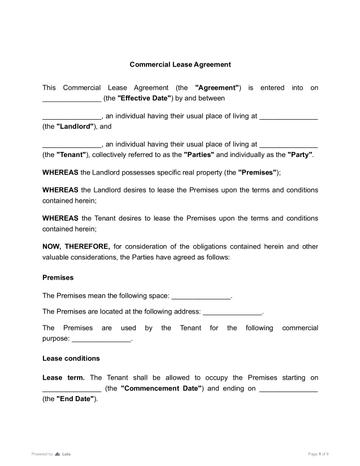
- Commercial Lease Agreement
 5432 downloads
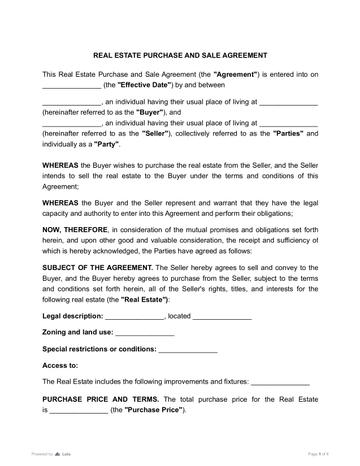
 - Real Estate Purchase & Sale Agreement
 5520 downloads
Buying vs. Leasing Commercial Property: The Decision Mechanics
At its core, buying versus leasing is not just about which option costs less on a spreadsheet.
Leasing prioritizes flexibility. It limits upfront capital commitment and makes it easier to relocate or downsize if the business changes. Buying emphasizes control and long-term stability, but it ties up capital and increases exposure to market and financing risk.
This is why buying vs. leasing commercial property is rarely a purely financial decision. It is an operational decision. Owners who treat it as math alone often miss how leases, loans, and guarantees behave when conditions change.
When deciding, you are really weighing:
Control over space versus the ability to exit.
Capital locked in real estate versus capital available to operate the business.
Predictable rent versus variable ownership costs.
Focus on the business versus managing property-level risk.
A practical step is to put the draft lease or loan terms into the AI Summary and mark the clauses that drive flexibility, like renewal triggers, escalation formulas, guarantees, and exit rights, so you can compare how each option behaves under stress.
Differences in core responsibilities
Leasing does not mean “less responsibility.” It means different responsibilities.
At its core, a lease grants use of commercial property through defined terms, conditions, and restrictions. Everything that matters flows from those terms.
The lease provisions that most affect the buy-versus-rent decision include:
- 1
Lease term length and renewal options determine how secure your location really is.
- 2
Rent escalations, including CPI-based increases that can compound unexpectedly.
- 3
Assignment and sublease rights control whether you can transfer the space if you sell or restructure the business.
- 4
Personal or corporate guarantees that may survive business closure.
- 5
Maintenance obligations can quietly shift repair costs to the tenant.
- 6
CAM, NNN, or modified gross structures that determine who pays for taxes, insurance, and common areas.
Many operators assume leasing is flexible, but flexibility can disappear quickly. Long terms without realistic exit rights, restrictive assignment clauses, and open-ended operating expenses can lock tenants in more tightly than expected.
That’s why the commercial lease agreement deserves careful attention before you commit: it controls renewals, rent escalations, assignment or sublease rights, and how CAM or NNN charges are defined and reconciled.
Meanwhile, buying property for your own operations usually makes sense only when the business itself is stable. Ownership aligns well with businesses that have predictable space needs, steady cash flow, and a long operating horizon. It is less forgiving if revenue fluctuates or the business model evolves.
Before pursuing financing, make sure your entity structure and formation documents are in order, since lenders will review them as part of underwriting. When you buy, the cost structure changes. Mortgage payments, taxes, insurance, maintenance, and capital expenditures replace rent. Some costs become less predictable, not more.
Differences in financing
Commercial purchases are almost always financed, and it carries its risks. A mortgage loan requires a down payment that directly affects liquidity. In conventional commercial real estate lending, leverage often varies by property type and borrower profile, with market sources describing many loans as low to moderately levered rather than fully financed.
For SBA 504 owner-occupied projects, financing is commonly structured with a borrower contribution of at least 10% of project costs, with higher contributions in some cases, allowing up to 90% financing.
Commercial loans differ from residential loans in key ways. Amortization periods may be shorter than the loan term, creating balloon risk. Interest rates are often variable. Lenders may impose covenants, reporting requirements, or occupancy restrictions.
Financing risk should be compared to lease renewal risk. With a lease, the risk is losing the space or facing higher rent. With a loan, the risk is refinancing on worse terms or having to inject additional capital.
After understanding financing mechanics, a real estate purchase agreement
naturally follows as the document that ties price, contingencies, and financing together.
Differences in tax treatment
Renting and owning are treated differently for tax purposes, but those differences are often oversold.
Commercial property is subject to depreciation for tax purposes under U.S. tax rules. Depreciation allows owners to recover the cost of a building over time, while tenants generally deduct rent as an operating expense.
Depreciation is a timing concept, not free money. It affects when costs are recognized, not whether they exist. The framework is outlined in Internal Revenue Service guidance, including Publications 946 and 527.
Differences in problem management
Commercial real estate mistakes rarely fail fast. They surface later, when a business needs flexibility and has the least leverage.
When leasing goes wrong, businesses often get trapped by long-term leases, rising rents, personal guarantees, or restrictions on assignment and subleasing. These issues usually appear during a sale, downsizing, or relocation. Recovery typically comes through renegotiation: lease amendments, approved assignments, or negotiated exits, rather than termination, and disputes often turn on documentation, notice, and how the escalation process is handled.
When buying goes wrong, the pressure comes from cash flow. Buying too early can drain working capital, while maintenance costs, refinancing risk, or balloon payments arrive regardless of revenue. Recovery focuses on stabilizing cash flow through refinancing, partial leasing, or property repositioning.
When buying commercial property to rent out goes wrong, owners often underestimate vacancy, build-out costs, and management time. In these cases, recovery usually means professionalizing the operation — tightening lease terms, improving tenant selection, or delegating management.
The common thread is misalignment. Businesses recover best when they identify that misalignment early and adjust documents, terms, or property use before choices become forced.
Buying vs. Leasing Commercial Property: What to Choose
Leasing usually wins when flexibility, speed, and capital preservation matter more than long-term control.
Buying makes sense when space needs are stable, capital reserves are strong, and the business plans to stay put for many years. Buying to rent out can work when you are prepared to operate real estate as a business, not as a side effect.
There is no single correct answer to whether to buy or lease commercial property. The right choice depends on business stage, risk tolerance, and operational priorities.
More guides
September 1
7 min read
How to Provide Proof of Employment: Documents and Steps
July 24
4 min read
What Is a Fixed-Term Lease, and How Is It Different From an Automatic Renewal Lease?
July 20
4 min read
Addendum vs. Amendment: Change Your Purchase Agreement Properly
July 23
5 min read
Commercial Lease Negotiation & Mastering the Deal
July 25
9 min read
How to Buy Commercial Property in 2026: A Practical Guide
July 26
10 min read
Commercial Real Estate Leasing Process: 2026 Guide
One home for your
agreements
Edit PDFs seamlessly
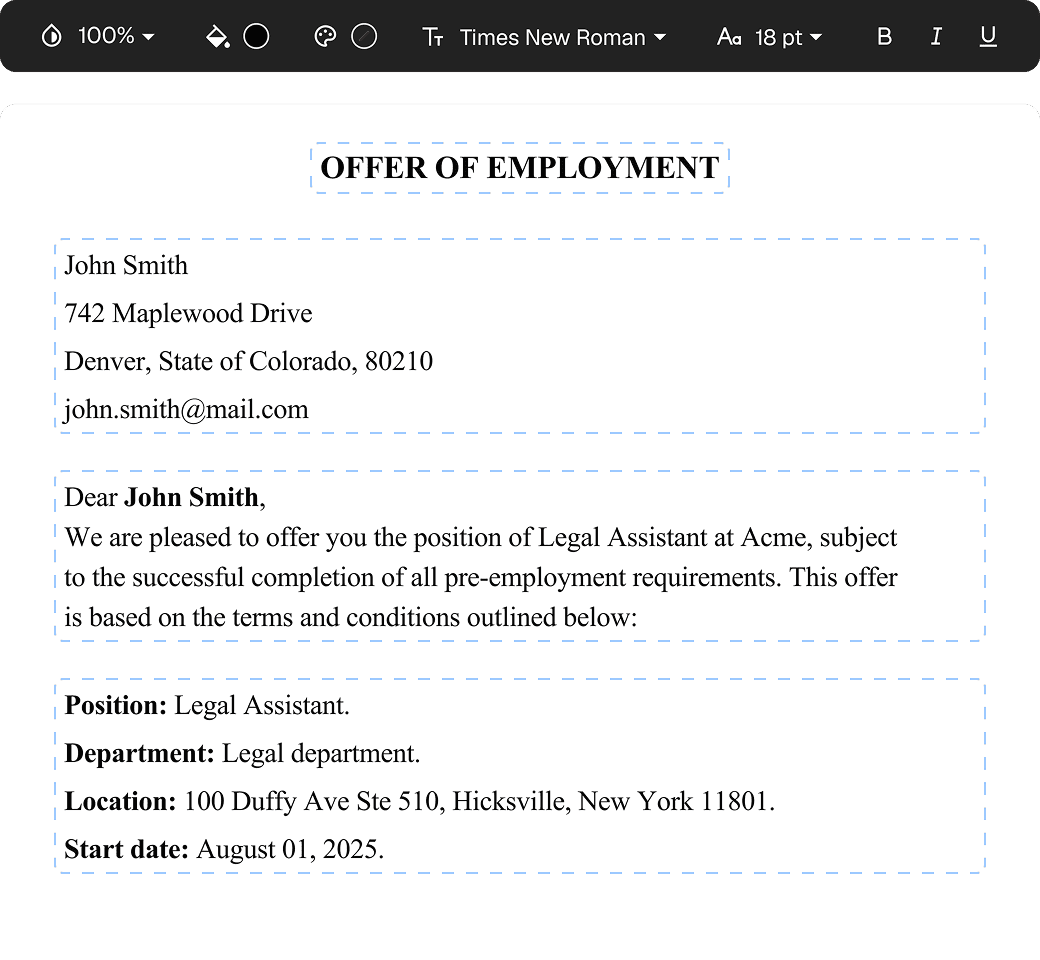
Tweak agreements before signing or sending for signatures. Update details, add or remove clauses, adjust formatting, and redline changes instantly.
eSign legally and securely
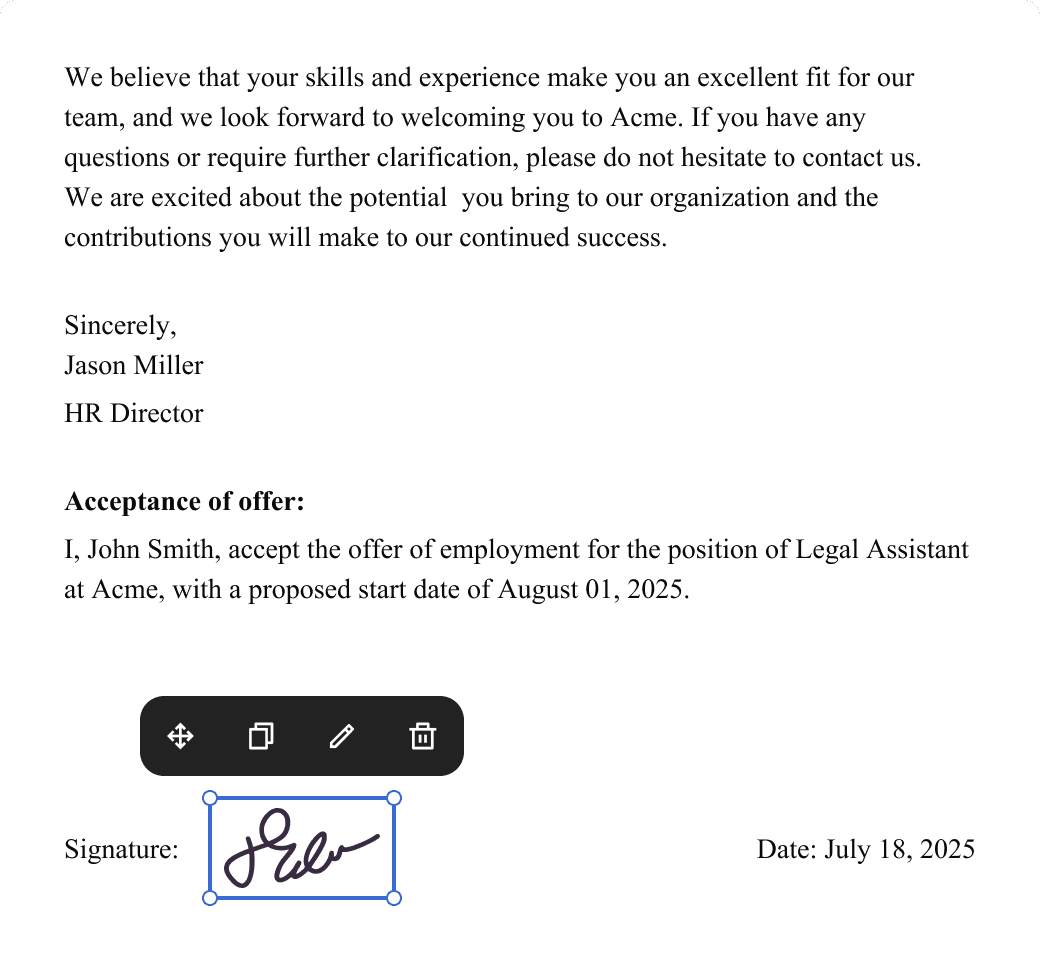
Sign documents and collect legally binding signatures. Invite up to ten people to sign in any order, track the progress, and send reminders.
Request legally binding signatures
Invite up to ten people to sign your document in any order. Get a finalized, audit-ready copy without chasing signatures.
Skip the drafting.
Choose from 2,500+ templates
Browse templatesChoose a template
Fill in details
Sign and download