Updated August 20, 2026
15 min read
How Long Does It Take to Start an LLC?

How Long Does It Take to Start an LLC?
Content
If you plan to start an LLC in 2026, you probably want to know how soon you’ll be able to do business. The honest answer is that the LLC formation timeline depends on many things. You may receive state approval within days, but you will need several more weeks to resolve all issues related to taxes, banking, and operations. So, how long does it take to register an LLC, and what can you do to make it faster?
How Long Does It Take to Set Up an LLC?
In the U.S., the process of LLC formation is relatively fast, but the total time varies a lot by state. In general, it takes anywhere from 1 day to 8 weeks to go from an idea to a company that can legally operate. You should remember that the LLC can start working not when you sign an operating agreement, but when you finish setting up all the business processes.
Besides, each state has its own processing timeline, and faster service may cost extra. Delaware, for example, offers paid expedited filing options, including one-hour, two-hour, same-day, and next-day service. Standard processing should not be confused with these expedited tiers. Processing times in other states also vary depending on the filing method and workload.
Here are the key factors that affect the answer to the question – How long does it take to get an LLC?
Filing method: Online applications are usually approved faster than paper ones.
Standard or expedited processing: Some states offer paid options for those entrepreneurs who need quick approval.
Filing mistakes: A name conflict, missing information, or an incorrect fee can be a reason for rejection.
Registered agent details: If the agent’s address is invalid or the agent is missing, the application won’t be approved.
Licenses and tax setup: Sales tax permits, local business licenses, and employer registrations can add days or weeks, depending on where you register the company.
The whole process of getting your LLC ready to work consists of three stages: legal, tax, and operational.

1. Legal formation
This stage ends when your state accepts your filing, you have all the documents ready, and your LLC legally exists. It commonly lasts for 1–14 days and includes such steps:
- 1
Choose an LLC name and check its availability in your state database (up to 1 day).
If your name is too similar to any of the existing businesses, or if it includes restricted words, such as “bank,” “trust,” or “insurance,” the state may reject the filing or require extra approvals.
- 2
Appoint a registered agent with a physical address in the state (10 min – 1 day).
If you use a professional registered agent service, you typically get a compliant in-state address and the required agent acceptance, reducing the risk of errors. If you list an address that does not meet state rules (for example, a P.O. box), your filing can be rejected, and you may need to refile.
- 3
File Articles of Organization and pay the state fee (30 min – 2 days).
This is the official submission that creates the LLC under your state’s LLC statute.
- 4
Wait for state approval (1 – 4 days).
Your state will issue a special notice, stamped filing, or certificate. It is the point at which your LLC legally exists and can enter into contracts.
- 5
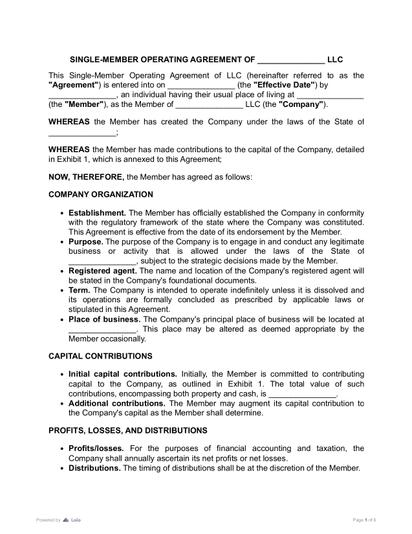
Sign your operating agreement (10 minutes – 1 day).
Do it right after your filing is approved and before you open a business bank account, add another member, or make any business deals. The signing process can take up to several days, depending on whether you’re the only owner and need a single-member operating agreement and whether you sign the document electronically or need to send paper copies to each member.
2. Tax & compliance setup
How long does it take to open an LLC after the registration? State approval alone does not complete your legal and tax obligations. The next stage takes 2–6 weeks, during which you’ll need to:
- 1
Register for state taxes (3 days – 3 weeks).
If you will collect sales tax, you must register with your state revenue agency before you start sales. Besides, having employees means you should also register for state withholding and state unemployment insurance (SUI).
- 2
Choose federal taxes (1 day – 2 weeks).
If your company is taxed as an LLC, it requires no extra filing. But if you want S corporation tax treatment, plan time to prepare and file IRS Form 2553 and confirm that you meet the eligibility requirements. Form 2553 generally must be filed no later than 2 months and 15 days after the beginning of the tax year when the election is to take effect, or at any time during the preceding tax year.
- 3
Meet state-specific requirements (1–6 weeks).
Some states add extra publication requirements after an LLC is formed. In New York, most LLCs must publish a copy of their Articles of Organization or a notice of formation in two newspapers designated by the county clerk for six consecutive weeks. The LLC must then file a Certificate of Publication with the Department of State within 120 days after formation. Failure to complete the publication requirement within that period may result in suspension of the LLC’s authority to carry on, conduct, or transact business.
Arizona also imposes a post-filing publication requirement. Within 60 days after the Articles of Organization are filed, the required information must either be published in a newspaper for three consecutive publications or, when the statutory agent’s address is in a county with more than 800,000 residents, entered into the Arizona Corporation Commission’s database.
Nebraska requires an LLC to publish a notice of organization for three successive weeks in a qualifying legal newspaper and file proof of publication with the Secretary of State.
- 4
Get local licenses and permits (1 day to 4+ weeks).
City or county business licenses can be received the same day in some jurisdictions, but others require review, zoning checks, or scheduled processing. This is one of the most common reasons a “fast LLC” still takes weeks to become fully compliant.
- 5
Set up the payroll (1–2 weeks).
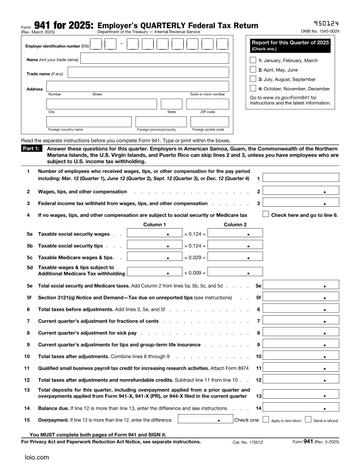
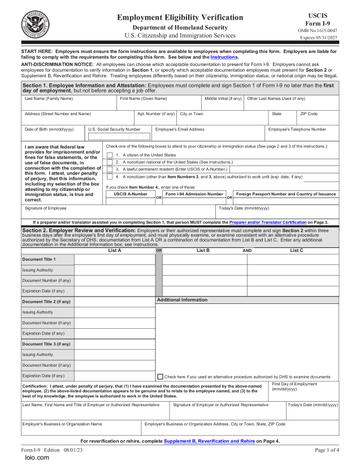
If you hire employees, you’ll also need to complete payroll and employment-verification requirements. Complete Form I-9 for each new employee, but do not file it with USCIS or another government agency. Instead, keep the completed form in your records for as long as the employee works for you and, after employment ends, until the later of three years after the date of hire or one year after termination. Employer payroll returns, such as Form 941 and Form 940, are filed with the IRS.
3. Operational readiness
Once all the formalities are done, it’s time to get to the practical part. You need to ensure your LLC can accept payments, pay bills, and serve customers without legal or banking issues. How long does an LLC take to process all these tasks? It commonly takes 2–4 weeks to get everything ready:
- 1
Get a business bank account (2 days – 2 weeks).
Some banks can open an account in one appointment once you have your approved formation document and EIN. Others require a compliance review, especially if you work in high-risk industries.
- 2
Set the payment processing (1 day – 2 weeks).
You will handle basic invoicing and ACH quickly, but card processing may take longer if the provider requests identity checks, website details, or proof of inventory.
- 3
Get insurance (2 days to 2 weeks).
The insurer may need details about your services, locations, or subcontractors, which can add to the timeline.
- 4
Sign vendor contracts (2 days – 2 weeks).
It may take some time to check lease agreements, prepare supplier applications, and customer terms. The contract itself may take one day, but the back-and-forth can take two weeks.
- 5
Prepare a compliance calendar (1–2 days).
Add your annual or biennial report deadlines, state fee due dates, and key federal tax dates to one calendar so that you can easily track everything. U.S.-formed LLCs are currently exempt from FinCEN beneficial ownership information reporting requirements. Certain foreign entities registered to do business in the United States may still have BOI reporting obligations.
If your business needs a regulated permit — for alcohol sales, childcare, or certain health services — get ready to spend a few more days getting it.
- Supplier Agreement
 8453 downloads
 - Commercial Lease Agreement
 5497 downloads
Why You Can’t Start Operating Right Away
Until the Secretary of State accepts your Articles of Organization, your LLC does not legally exist. If you start operating before the company is fully registered, be ready to face the consequences:
- 1
You can lose liability protection. If you sign a lease agreement or a vendor contract before approval, you do it as an individual or as a “promoter.” If the deal goes bad, the other party can pursue you personally, because there is no legal entity yet to stand behind the contract.
- 2
You can run into “false entity” problems. Many states restrict the use of “LLC,” “L.L.C.,” or “limited liability company” in a business name unless the entity is actually formed. Banks and payment processors may reject your application if you apply as an LLC without proof in state records.
- 3
Licenses and tax accounts can become an issue. Many local business licenses, sales tax permits, and state employer accounts require an approved entity before you apply. If you start selling before you register for required sales tax collection, the state can penalize you.
Taking payments, signing contracts, or hiring workers before your LLC exists can leave you personally on the hook for debts and claims, and it can create compliance problems that are harder to fix later. Wait for state approval, then sign contracts and invoice customers in the LLC’s legal name.
How to Speed Up Your LLC Setup
Though the procedure of starting an LLC depends on many factors, you can at least avoid delays by following these simple tips:
File your application online during business hours to fix issues immediately if a problem occurs.
Use a professional registered agent who meets state rules.
Do a serious name check before you file. Search your state database for close matches, not just exact matches.
Double-check all the information: the LLC name, address, registered agent details, founders’ signatures.
Sign and edit all the documents online to ensure they do not get lost or damaged.
Use paid expedited processing when time matters and your state offers it. For example, Delaware charges additional fees for one-hour, two-hour, same-day, and next-day filing services.
Apply for your EIN the same day you receive state approval.
Pre-book your bank appointment and ask for its LLC checklist.
How Long Does an LLC Take to Maintain the Registration?
Your LLC remains active as long as you keep it active: file the required annual or biennial reports, maintain a registered agent, and pay state fees or franchise taxes on time. If you miss filings or payments, the state can mark your LLC as delinquent or administratively dissolve it. Once that happens, you may lose liability protection and the right to use the LLC name until you reinstate.
So, how long does it take to create an LLC? In 2026, the right answer is that it can take as little as a day for state approval, but a realistic timeline is usually several weeks. Do not rush. It is better to spend a few more days settling all administrative and operational issues than to deal with penalties and court claims in the future.
More guides
September 15
10 min read
Who Can Sign a Contract on Behalf of a Company?

September 15
What Is Contract Redlining?

September 15
9 min read
Advantages and Disadvantages of a Business Partnership

September 1
7 min read
How to Provide Proof of Employment: Documents and Steps

October 15
How to Start a Staffing Agency: Licensing, Pricing, and Cash Flow

July 30
7 min read
How To Negotiate a Contract: 6 Steps To Better Terms

One home for your
agreements
Edit PDFs seamlessly
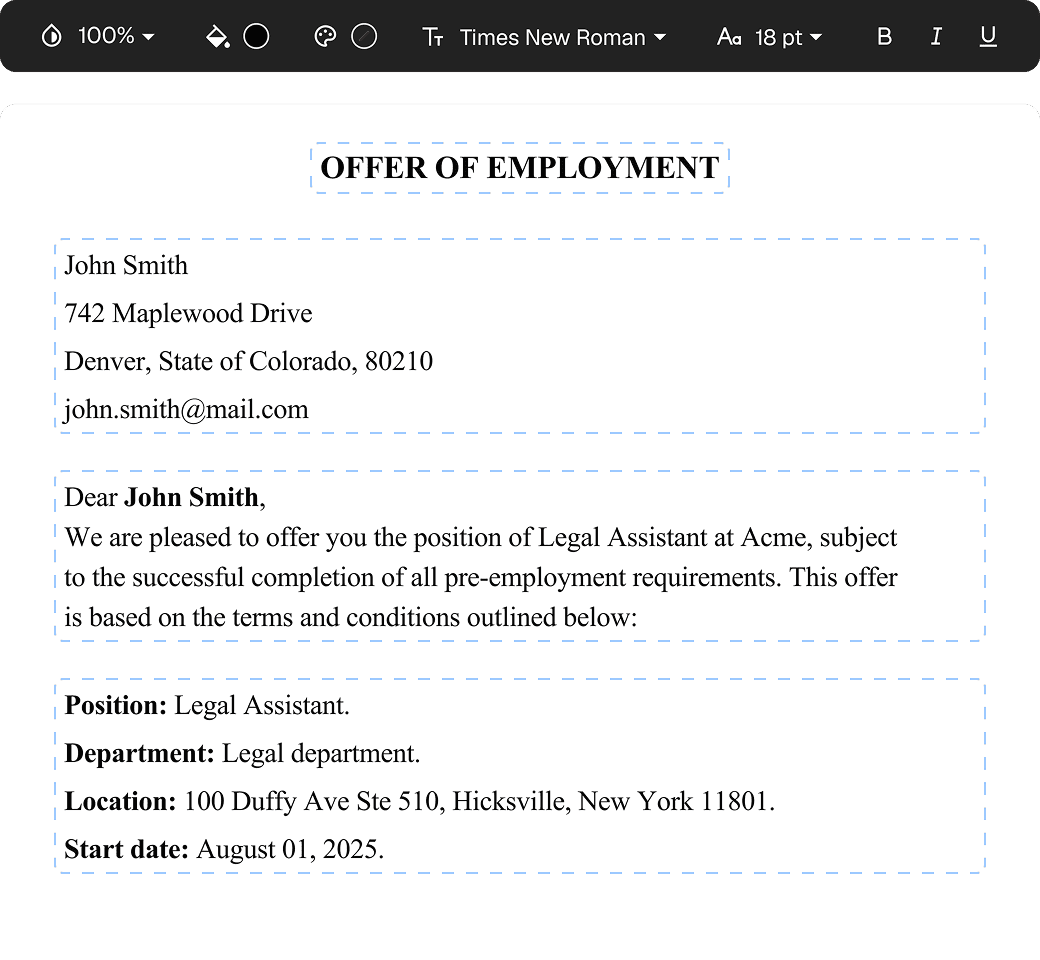
Tweak agreements before signing or sending for signatures. Update details, add or remove clauses, adjust formatting, and redline changes instantly.
eSign legally and securely
Sign documents and collect legally binding signatures. Invite up to ten people to sign in any order, track the progress, and send reminders.
Request legally binding signatures
Invite up to ten people to sign your document in any order. Get a finalized, audit-ready copy without chasing signatures.
Skip the drafting.
Choose from 2,500+ templates
Browse templatesChoose a template
Fill in details
Sign and download