Updated July 20, 2026
What Is an Assignment of Contract? Rights, Duties, and Consent

What Is an Assignment of Contract? Rights, Duties, and Consent
- What Is an Assignment of Contract?
- What Determines Whether a Transfer Is Allowed
- What Contract Rights Can Usually Be Assigned?
- What Duties Stay With the Original Party?
- When Do You Need Novation Instead of Assignment?
- When You Need the Other Party’s Consent
- What an Assignment of Contract Agreement Should Include
- Simple Process To Assign a Contract Safely
Content
You signed a contract, but now someone else needs to take your place, receive the payment, use the lease, take over the client work, or receive the rights under that agreement. This can happen when a freelancer changes business structure, a small business sells part of its operations, a tenant wants someone else to take over a lease, or a company wants to transfer a customer or vendor contract.
Passing a contract to another person sounds simple until you actually try to do it. Many people assume that if both sides are friendly, the transfer is just a paperwork step. In reality, the contract may restrict assignment, the other party may need to consent, and the original party may stay liable even after someone else steps in.
That is where many people get stuck. Can you just “pass” the agreement to another person, or do you need permission? Does the other party have to agree? Are you still responsible if the new person fails to perform?
The answer depends on whether you are transferring rights, duties, or the entire contract relationship. This guide explains what is an assignment of contract and what does it mean to assign a contract, when assignment works, when novation is needed, what contract rights can usually transfer, and what document to use before you act.
What Is an Assignment of Contract?
An assignment of a contract is the transfer of contract rights, property, or other benefits from one party to another. The party transferring the rights is the assignor. The party receiving them is the assignee.
In simple terms:
The assignor is the person or business transferring the rights.
The assignee is the person or business receiving the rights.
The obligor is the party that still owes payment, performance, or another duty under the original contract.
The assignment agreement records the transfer.
For example, if a contractor is owed $8,000 under a completed service contract, the contractor may assign the right to receive that payment to another person or company. The client, as obligor, may then need to pay the assignee instead of the original contractor.
✅An assignment usually transfers rights, not the full contract relationship. Duties may require delegation, assumption, consent, or release. Obligations the assignor still owes may remain unless the contract and the other party allow a broader transfer.
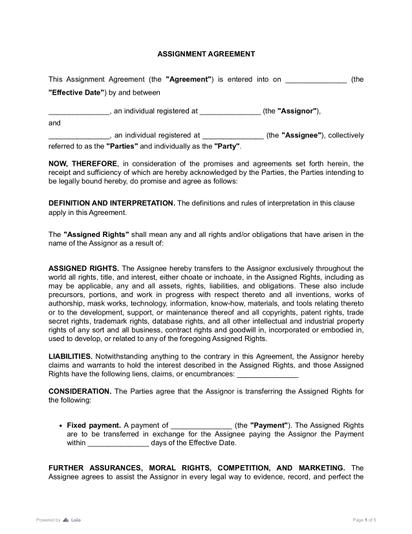
An assignment agreement should identify the original contract, the assigned rights, the parties involved, and any notice required. It covers related transfer types, including IP, lease, invention, and trademark assignments.
What Determines Whether a Transfer Is Allowed
The short answer is: sometimes, but it depends on four things.
- 1
What the contract allows. Many commercial contracts include an assignment clause. That clause may allow assignment, require written consent from the other party, limit assignment to specific situations, or block assignment entirely. If you skip this step, the transfer may be disputed, ineffective under the contract, or treated as a breach.
- 2
Whether you are transferring rights, duties, or both. Rights and duties are not the same thing. A right is something owed to you, such as payment, delivery, royalties, or another contract benefit. A duty is something you owe, such as completing a project, delivering goods, making payments, honoring warranties, or providing support. This distinction matters because a transfer of benefits does not always move the work, payments, warranties, or other obligations attached to the contract.
- 3
Whether the other party must consent. Some transfers require written approval to be valid under the contract. Others only require notice. The difference matters and is covered in detail below.
- 4
Whether assignment or novation is the right tool. Assignment transfers contract rights. Novation replaces one party with another. If the goal is to fully leave the contract and be released from future obligations, assignment may not be enough.
If the contract does not mention assignment at all, the general rule is that contract rights can usually be transferred, but personal performance duties cannot. When in doubt, treat silence as a reason to confirm with the other party before acting.
✅A transfer may involve one right, several contract benefits, a duty to perform, or a full party replacement. Before acting, identify exactly what you want to move and whether the original party should remain responsible after the transfer.
Look for terms such as assignment, delegation, successors and assigns, change of control, prior written consent, notice, and release. Those clauses usually tell you whether the transfer is allowed, whether permission is needed, and whether the original party remains responsible.
What Contract Rights Can Usually Be Assigned?
Contract rights can often be assigned, but the original contract may limit or block contract assignments. This is why an assignment of a contract agreement should identify the exact rights being transferred instead of saying “the contract” in a vague way.
Assignable rights usually involve money, access, use, ownership, or another contract benefit. They may include:
The right to receive payment: A contractor, vendor, or seller may assign the right to receive money owed under a contract.
Invoice or accounts receivable rights: A business may assign receivables as part of a financing or sale arrangement.
Royalty rights: A creator, inventor, or licensor may assign the right to receive future royalties.
Lease benefits: A tenant may transfer lease rights if the lease allows assignment and the landlord gives any required consent. The rules around assignment agreements in commercial leases can differ from standard contract assignments.
Vendor or customer contract benefits: A business buyer may want to benefit from existing customer or supplier agreements.
IP rights: Copyrights, trademarks, inventions, software, or creative work often need a specific IP assignment rather than a general contract assignment.
A small business sale shows why this matters. The buyer may want the seller’s customer contracts, supplier terms, lease rights, brand assets, and software rights. But each document may have its own transfer rule. A vendor agreement might allow assignment to a successor. A lease might require landlord consent. An IP asset might need a separate IP assignment agreement.
If the transfer involves intellectual property, a dedicated IP assignment document is usually clearer than a general contract assignment. An IP assignment is designed to transfer intellectual property rights from one person or company to another and can cover assets such as inventions, designs, software, logos, names, and written work.
If the transfer involves a business name, logo, slogan, or other brand identifier, a trademark assignment may be more specific than a general IP assignment. For example, when a business is sold, the buyer may need the right to use the brand name and related marks, not just the customer contracts or vendor agreements. In that case, a trademark assignment agreement can help document the transfer of trademark rights separately from the broader contract assignment.
- IP Assignment Agreement
 5498 downloads
 - Trademark Assignment Agreement
 5347 downloads
For copyright specifically, the U.S. Copyright Office states that copyrights can be transferred like other property, in whole or in part. This is one reason creative work, software, written content, and design assets should be handled with clear IP transfer language instead of vague contract wording.
What Duties Stay With the Original Party?
The biggest misunderstanding is that the assignment automatically moves the whole contract, but it often does not. An assignment usually transfers rights. Duties are different and may include:
Providing services.
Delivering goods.
Making payments.
Maintaining quality standards.
Providing support.
Honoring warranties.
Protecting confidential information.
Even when duties can be delegated, the original party may remain liable unless the other party clearly releases them.
Personal-service contracts are different because the client may have hired a specific person for their skill, style, judgment, or reputation. For example, a designer may be granted the right to receive payment for a completed project but may not be able to transfer unfinished design work to another designer without the client’s approval.
The same applies to leases. The original tenant may remain liable without a written release, even after another tenant takes over. Lease assignment describes a lease assignment agreement as a document that transfers lease rights and obligations from a current tenant to a new tenant and addresses landlord consent.
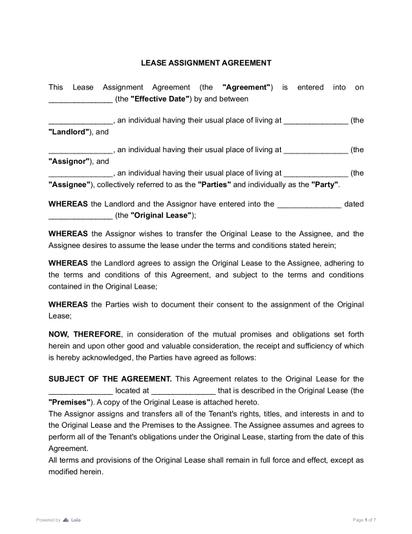
This is where contract review matters. If the contract is long, an AI summary can help locate transfer, consent, delegation, and release language before you decide whether the assignment is enough.
When Do You Need Novation Instead of Assignment?
Novation is the right tool when one party wants to fully exit the contract and be replaced by someone else. An assignment may transfer rights, but novation changes the party relationship itself.
Cornell’s Legal Information Institute defines novation as an agreement that allows a new party to substitute for an existing party. Cornell also notes that the replaced party is excused by the novation and that both original contracting parties must agree to it.
Use novation when:
One party wants to fully leave the contract.
Another person or business will replace that party.
The remaining party must accept the replacement.
The original party needs a written release from future duties.
The new party will take over both benefits and duties.
A novation replaces a party in an existing contract when the parties agree that the new party takes the old party’s place.
The practical difference matters more than the legal label. If a business owner sells a company and wants the buyer to take over active vendor contracts, assignment alone may transfer some benefits. But if the buyer will also assume service duties, payment obligations, support commitments, or future performance risk, the parties may need novation.
Without novation, the original party may think they are out while remaining responsible if the new party fails to perform. That is why assignment works best for transferring rights, while novation is safer when the goal is full contract exit.

When You Need the Other Party’s Consent
Many contract transfers fail because someone assumes notice is enough. Notice is not the same as consent.
Start by checking the existing contract for language such as:
“No assignment without written consent.”
“Prior written consent required.”
“Consent may not be unreasonably withheld.”
“Successors and assigns.”
“Assignment to affiliates or successors permitted.”
“Change of control is considered an assignment.”
“Notice must be sent to…”
“Release of liability.”
Consent is especially common in risk-heavy contracts, including leases, service contracts, licenses, franchise agreements, contracts involving confidential data, and agreements based on personal skill, trust, licensing, or reputation.
"The sequence matters. If the contract says "prior written consent," get consent before the transfer takes effect. A consent form can help document that approval before the assignment moves forward. If the contract says "notice," follow the notice method, deadline, and delivery address listed in the agreement.
A lease is a good example. A tenant may want another tenant to take over the space, but the landlord may need to approve the new tenant’s finances, business use, insurance, and risk profile. Even if the landlord agrees to the transfer, the original tenant may still need a written release to avoid future liability.
The same issue can appear in service contracts. A client may agree to work with one agency because of that agency’s team, portfolio, or specialized knowledge. The agency should not assume it can hand the client relationship to another provider unless the contract allows it or the client agrees.
💡Government contracts can have separate anti-assignment rules, so they should not be treated like ordinary private commercial contracts. For example, federal law restricts transfers of certain federal government contracts or interests in those contracts. This is a narrow but important exception for businesses working with government agencies.
What an Assignment of Contract Agreement Should Include
An assignment agreement documents the transfer of contract rights, but it should also prevent confusion about duties, consent, and release.
A practical assignment of a contract agreement should include:
Original contract details: contract title, date, parties, contract number, project name, lease address, invoice number, or other identifying details.
Assignor and assignee: full legal names, addresses, and business names if applicable.
Exact rights being transferred: payment rights, lease rights, IP rights, customer contract benefits, vendor rights, or other specific contract benefits.
Duties that stay or transfer: whether performance obligations remain with the assignor or are assumed by the assignee.
Consent from the other party: written approval, if required by the contract.
Notice rules: who must receive notice, how notice must be sent, and when it becomes effective.
Payment or consideration: whether the assignee pays for the assignment or receives it as part of another deal.
Release language: whether the assignor is released from future obligations or remains liable.
Representations from the assignor: confirmation that the assignor has the right to assign, the contract is still active, and no known default prevents the transfer.
Assumption language: whether the assignee accepts any duties connected to the assigned rights.
Effective date: when the assignment starts.
Attachments: the original contract, written consent, notices, or related exhibits.
Signatures: assignor, assignee, and any other party whose consent is required.
A vague agreement can create problems later. If the document says “the contract is assigned” but does not identify the exact rights, the parties may disagree over whether payment rights, service duties, warranty duties, lease obligations, or renewal rights moved to the assignee.
A PDF editor can help mark the assignment clause, consent language, notice deadline, and signature pages before the assignment agreement is prepared.

The Uniform Commercial Code applies most to contracts involving the sale of goods, such as inventory, equipment, materials, or products.
The UCC is not a federal law. The Uniform Law Commission describes it as a uniformly adopted state law governing commercial transactions in the United States.
Under UCC § 2-210, unless the parties agreed otherwise, rights of either the seller or buyer can generally be assigned. But an assignment may be limited if it would materially change the other party’s duty, materially increase their burden or risk, or materially impair their chance of receiving return performance.
In plain English, this means a right may be transferable when the other party is not put in a worse position. But the assignment may become a problem if the transfer changes delivery risk, payment risk, credit risk, quality expectations, or the practical burden of performance.
For example, a buyer may assign the right to receive goods if the seller’s work does not materially change. But if the new party changes where goods must be delivered, increases payment risk, or alters the seller’s expected return performance, the assignment may be disputed.
State versions of UCC rules may also matter because states adopt and apply UCC provisions through their own laws. Cornell LII provides a state-by-state UCC table showing where each jurisdiction’s commercial code can be found. If a sale-of-goods contract is important to a business transfer, financing arrangement, or supplier relationship, the parties should review the contract language and the applicable state rules before assuming the assignment is safe.
Simple Process To Assign a Contract Safely
You do not need to turn every contract transfer into a legal research project. But you should follow a clear process before acting on the transfer.
1. Review the assignment clause
Look for terms such as “assignment,” “delegation,” “successors and assigns,” “change of control,” “prior written consent,” “notice,” and “release.”
This step matters because the contract may allow assignment freely, allow it only with consent, allow it only to certain parties, or prohibit it completely.
2. Decide whether you are transferring rights, duties, or both
As covered above, rights and duties are not the same thing and do not always transfer together. Do not assume that one document moves both.
3. Check if consent is required
If the contract requires prior written consent, get it before the assignment takes effect. If it requires notice, send notice in the required form and keep proof of delivery.
Consent and notice should be tracked carefully because they may decide whether the transfer is valid or disputed.
4. Choose assignment or novation
Use an assignment agreement when the main goal is to transfer contract rights. Use novation when the goal is to replace one party with another and release the original party from future duties.
If you are unsure which one fits, ask one practical question: “Will the original party still be responsible if something goes wrong?” If the answer should be no, assignment alone may not be enough.
5. Write the assignment agreement clearly
The agreement should identify the original contract, the assignor, the assignee, the exact rights transferred, whether duties stay or transfer, and whether the other party has consented.
This is where clarity saves time later. If the assigned right is the right to receive payment from one invoice, say that if the assigned right is the benefit of a service contract after a business sale, say which contract and what rights are included.
6. Notify the other party if required
Follow the notice method in the contract. That may mean email, certified mail, delivery to a specific address, or notice to a specific department.
If payment rights are assigned, the notice should clearly tell the obligor where future payments should go.
7. Sign and store the final documents
Keep the original contract, assignment agreement, consent, notices, proof of delivery, and any release or novation together.
This is not just recordkeeping. If the other party disputes the transfer later, the documents show what was transferred, when it became effective, who approved it, and whether the original party was released.
You can sometimes transfer a contract to someone else, but first define what you want to transfer. Assignment works best for contract rights, such as payment rights, lease benefits, or royalties. Novation is usually needed when one party wants to leave the contract completely and be replaced.
Before you act, review the contract, check consent and notice rules, and confirm whether the assignor remains responsible after the transfer.
More guides
September 15
10 min read
Who Can Sign a Contract on Behalf of a Company?

September 15
What Is Contract Redlining?

September 1
7 min read
How to Provide Proof of Employment: Documents and Steps

October 15
How to Start a Staffing Agency: Licensing, Pricing, and Cash Flow

July 20
4 min read
Addendum vs. Amendment: Change Your Purchase Agreement Properly

July 21
8 min read
Statement of Work vs Scope of Work: Differences and How They Work Together

One home for your
agreements
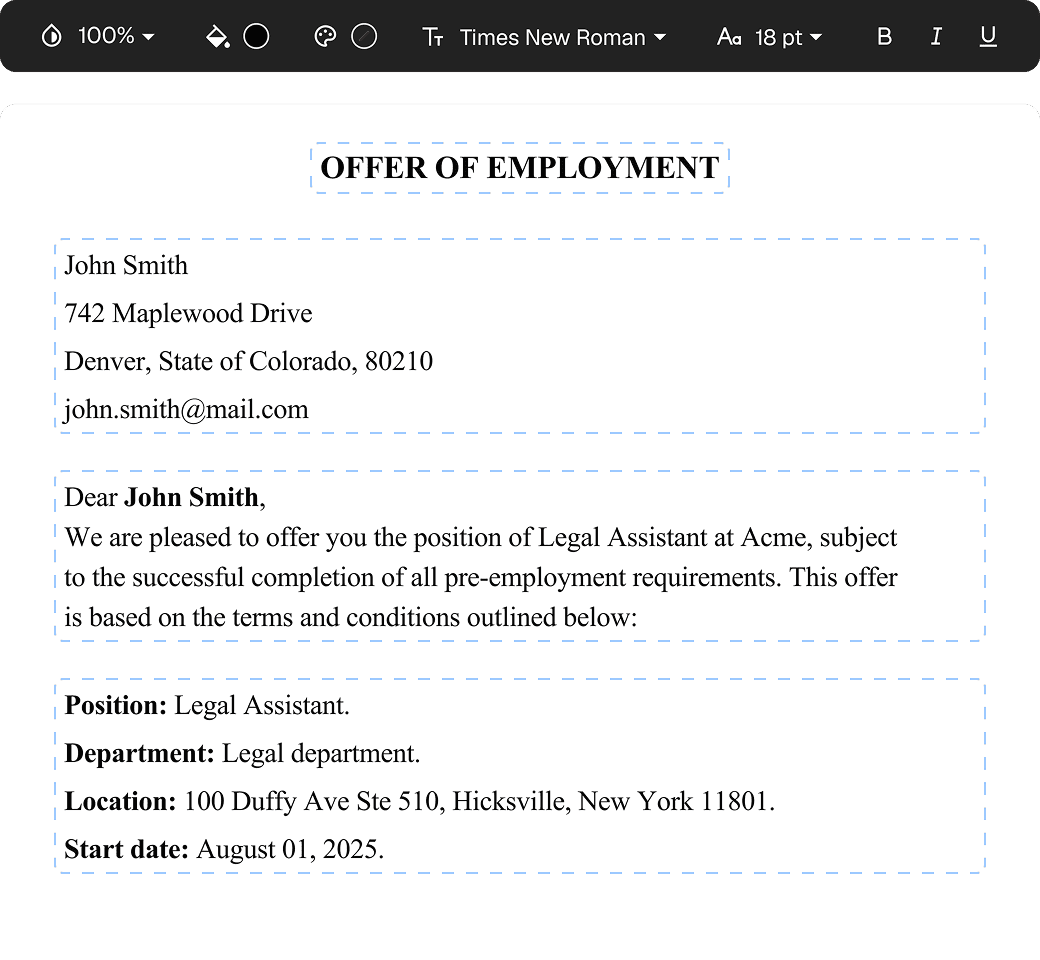
Edit PDFs seamlessly
Tweak agreements before signing or sending for signatures. Update details, add or remove clauses, adjust formatting, and redline changes instantly.
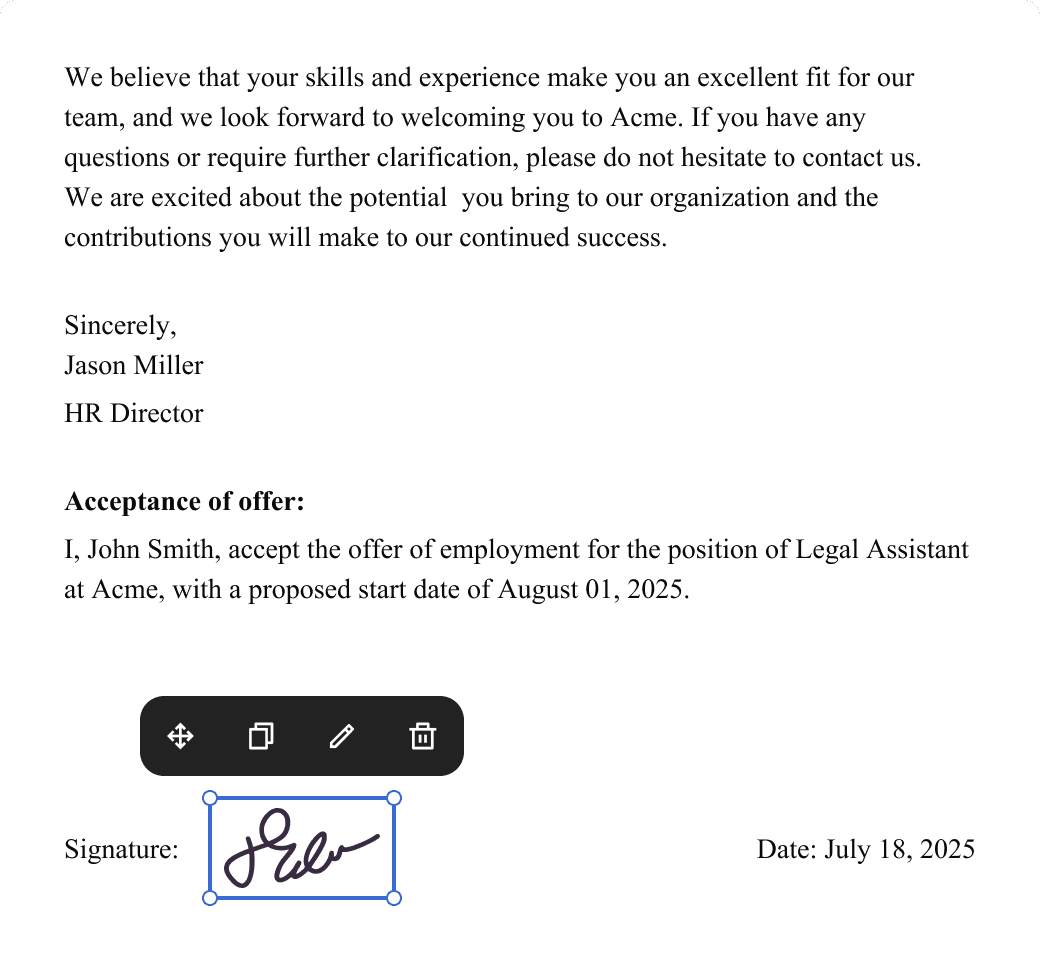
eSign legally and securely
Sign documents and collect legally binding signatures. Invite up to ten people to sign in any order, track the progress, and send reminders.
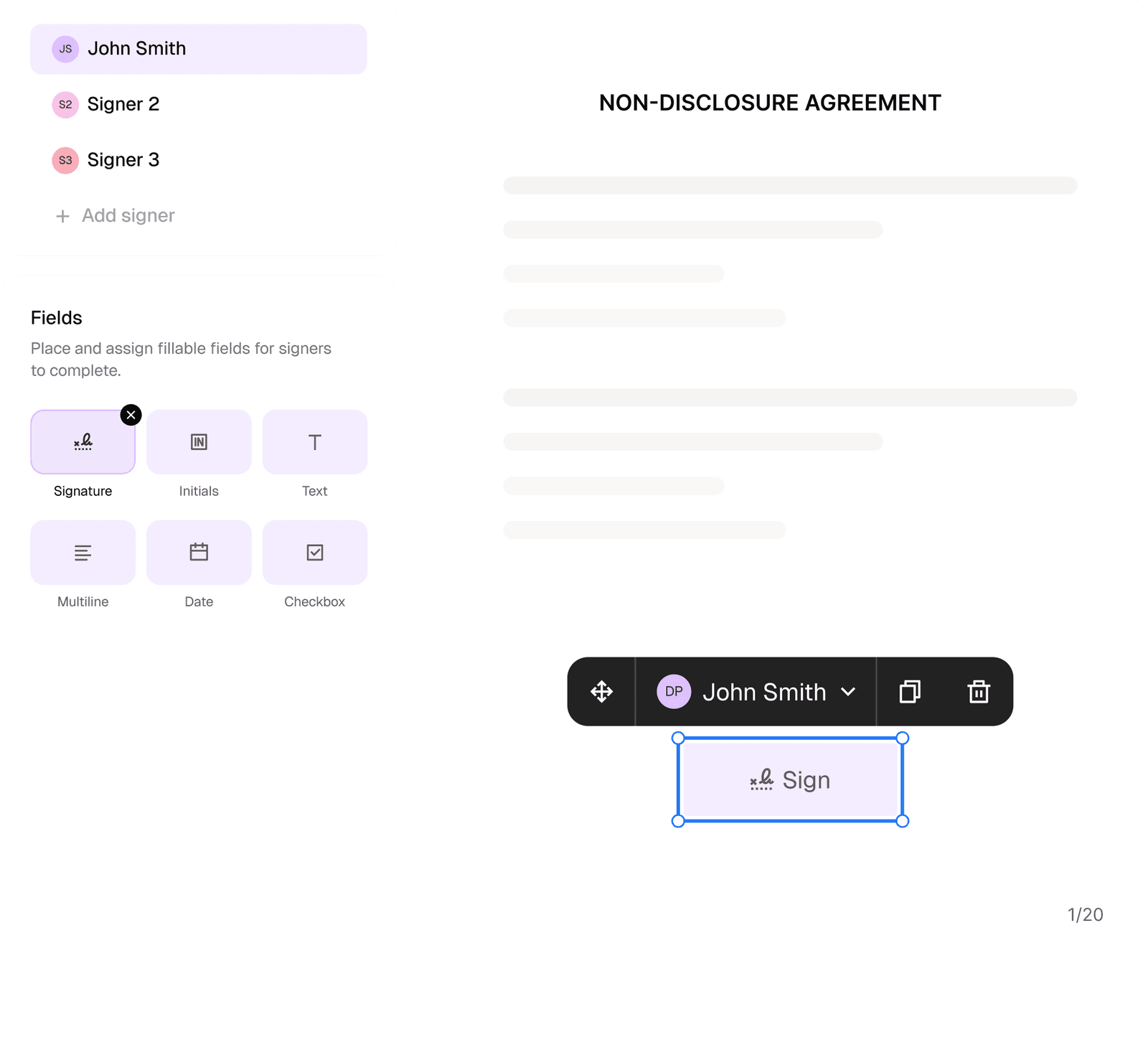
Request legally binding signatures
Invite up to ten people to sign your document in any order. Get a finalized, audit-ready copy without chasing signatures.
Skip the drafting.
Choose from 2,500+ templates
Browse templatesChoose a template
Fill in details
Sign and download