Updated July 26, 2026
12 min read
How to Read a Profit and Loss Statement

How to Read a Profit and Loss Statement
- Why You Need to Know How to Read a P&L Statement
- How to Read P&L Statement: Revenue
- How to Read a P&L: Costs of Goods Sold
- How to Read a P&L to Calculate Your Gross Profit
- How to Read a P&L Report: Operating Expenses
- What Is a Business P&L Made For: Net Profit/Loss
- What Does This Tell a Business Owner?
- Moving Forward
Content
In 2026, more American businesses are struggling to remain positive about their finances. According to research from the National Federation of Independent Business, the optimism index has fallen across almost all small-business industries. This trend appears exactly at a time when 75% of firms cite financial issues as the core challenge in their operations. Money is what keeps any business running, so understanding whether your cash flow helps you adjust your business behavior to prevent financial loss is crucial. That’s when a question, “What is a P&L statement?” finally emerges. Today, we’ll explain how to read a Profit and Loss statement and how to use your findings to move your business forward.
Why You Need to Know How to Read a P&L Statement
Before we dive into the “how,” let’s briefly examine the question, “What does P&L stand for?” and the benefits of this document.
What is a business P&L statement?
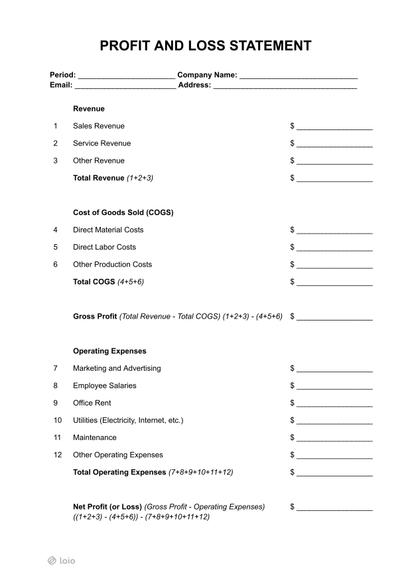
A Profit and Loss (P&L) statement is a financial document that summarizes the revenue, costs, and expenses that your business has accumulated during a certain period (usually a month, quarter, or fiscal year). It gives you a snapshot of your company’s ability to make money. The PnL meaning in business is far deeper than a simple list of numbers, however. It gives potential investors proof of your reliability for a potential partnership.
What are P&L statements for?
Now that you know the P&L meaning, you can explore its benefits. A P&L helps you:
Identify trends. A P and L statement allows you to identify exactly where your money is disappearing. You might see that while your revenue is increasing, your net income is decreasing. This usually indicates profit leaks, such as rising operating costs or inefficient utility use. By seeing these numbers side by side, you can proceed thoughtfully rather than act blindly.
Prepare taxes. Tax season is far less painful when you have a monthly P&L history. It helps you categorize deductible operating expenses in real-time rather than rummaging through your receipts when you forget something.
Secure funding. Lenders and investors will demand a clean P&L to assess your creditworthiness. As Forbes’ special feature points out, your P&L statement is one of the core financial documents that prove your business vitality, and it can be requested when you apply for credit.
A monthly review is essential for spotting seasonal trends. For example, you might notice your utilities spike every July, or your sales revenue dips every January. If this happens regularly, you can adjust your budget in advance. This way, a small seasonal trend won’t become a permanent deficit. Otherwise, a quarterly report will be sufficient to stay informed.
How to Read P&L Statement: Revenue
When reading your P&L statement, always start at the top. Revenue represents your business’s top-line income before any expenses are subtracted. You need to check how much your company has earned before moving further.
Sales revenue
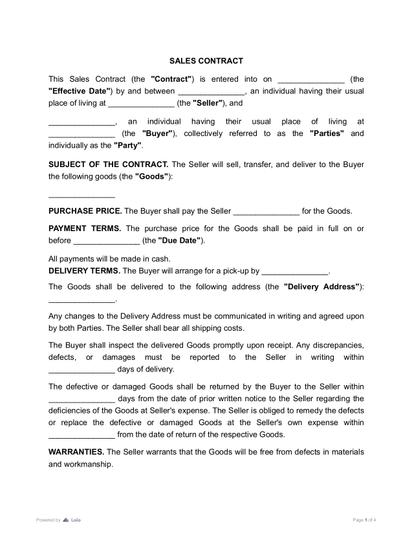
This is the total amount generated from the sale of goods. While we’re used to associating this section with physical goods, it’s not always the case. Many small companies sell digital products, such as customized time trackers, personal Excel/Google Sheets schedules, or games. Whatever product you sell, it goes here. If you need documentation to prove important/expensive sales, take it from your sales contract, which secures your deal with a buyer. It can even be eSigned to ensure your clients’ comfort while still providing the necessary paper trail.
Service revenue
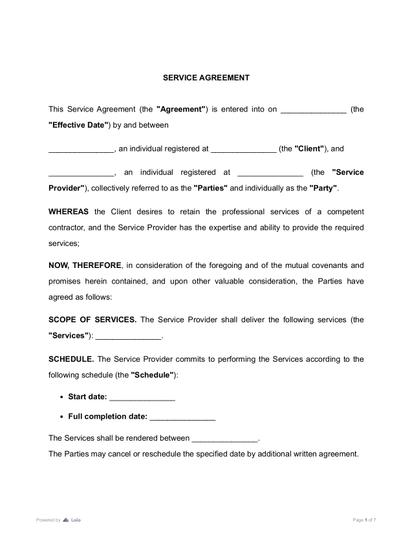
For consultants, freelancers, or agencies, service revenue is frequently tied to time and billable hours. However, there is a potential risk, too: you may face scope creep, where service providers do more work than was agreed upon beforehand. When you track revenue from services, you can later compare it to your direct labor costs. It will tell you whether your hourly rate actually covers the time you spend with your clients. That is why it’s useful to have a Service Contract that outlines the exact hours and conditions in your agreement with your clients.
The “other” category
This is where you can generalize all the income that doesn’t come from your core business operations. It can include:
Rental income
Asset sales
Interest gains
While this section is great for cash flow, your business shouldn’t rely on it to survive. If it remains a huge part of your company’s revenue, it may be time to review your business model.
How to Read a P&L: Costs of Goods Sold
To find out if your pricing model actually works, you must subtract the cost of the goods (COGS) that you sold from your revenue.
Direct material costs
These are the specific components that make up your finished product. This year is expected to bring significant supply chain volatility, making prices highly dynamic — make sure to keep this section in check.
Direct labor costs
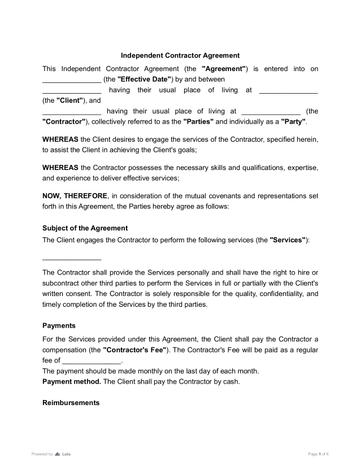
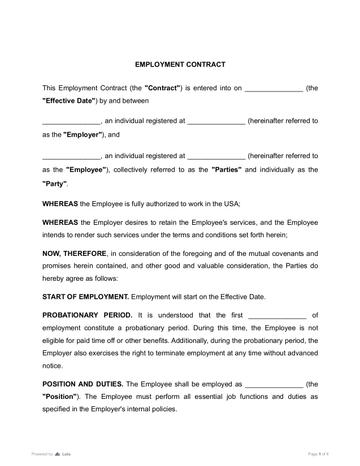
Put your employees’ wages, payroll taxes, and benefits here. It’s slightly easier to track these costs for full-time employees, since they’re covered by the employment contract, which rarely changes. With independent contractors, record the costs in the Independent Contractor Agreement or the Employment Contract; this way, you have all the receipts.
- Independent Contractor Agreement
 7238 downloads
 - Employment Contract
 4396 downloads
Other production costs
Here, put all the expenses that fall outside of the two categories above. It can be something like the depreciation of the tools needed to make the goods or, for instance, electricity at the manufacturing location.

How to Read a P&L to Calculate Your Gross Profit
Gross profit is the profit your company makes after deducting the costs associated with making and selling its products or providing its services. It tells you how efficient your production process is. If your gross profit is negative, it means you are losing money on every sale.
The formula for your gross profit is pretty straightforward. Your gross profit gives you only a limited amount of information, so it’s also useful to calculate your gross margin.

Gross margin gives you a bit more knowledge of your financial health.
A low margin. If your gross margin is, say, 20%, it means that for every $1.00 you earn, only $0.20 is left to cover your rent, staff, and your own expenses. This is considered risky in a volatile economy.
A high margin. If your gross margin is, instead, higher — something like 60% — you have far better chances. This means you have $0.60 left for each dollar earned. This gives you a cushion to survive unexpected market changes.
How to Read a P&L Report: Operating Expenses
Operating expenses represent the administrative and maintenance side of your company. Unlike your COGS, this is everything that helps to keep your business running.
Marketing & advertising. These expenses include everything from social media ads to physical signage.
Employee salaries. This isn’t the same as direct labor costs in COGS — it’s for staff who aren’t engaged in making a product but still perform valuable activities. Tracking all of this might be distracting. It may be a good idea to have a separate document to track this information and to edit your PDF every time you change/delete something.
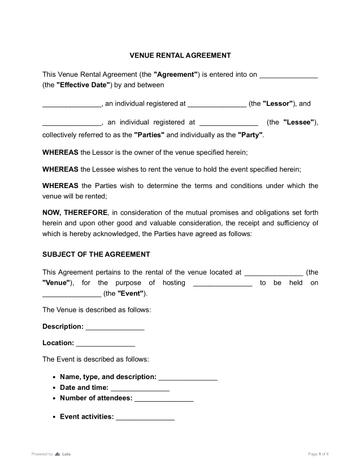
Office rent. These costs include rent for office or retail space. If you rent a temporary location due to an event, you can use a venue rental agreement that covers the fees you agreed on with a property owner. This allows you to track one-time rent expenses and quickly check in on them later, even for an annual P&L statement.
Utilities. Utilities account for electricity, water, internet, and phone services.
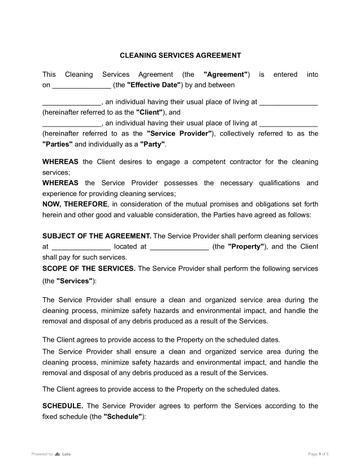
Maintenance. Maintenance includes everything from (non-manufacturing) equipment lease to office cleaning and software updates. When it comes to finding the exact numbers for various maintenance services, it’s useful to have documents to back this up. For example, having a cleaning contract to track how much you spend on cleaning your site will help you determine the terms, frequency, and fees. Maintaining the same standards for other spending ensures reliable reporting.
Other.
- Venue Rental Agreement
 6081 downloads
 - Cleaning Service Contract
 4328 downloads
What Is a Business P&L Made For: Net Profit/Loss
Net profit is the most important figure in your income statement. It indicates whether the business is truly profitable or effectively paying to stay in operation.
To get this final number, you subtract your operating costs from your gross profit.

How to interpret your calculations
The numbers provide a clear illustration of your business’s financial health:
Positive net profit. If you have a positive net profit, it means your business is healthy and generating value. This money can be reinvested into the company, used to pay off debt, or distributed to owners as a reward for their risk.
Negative net profit. If your business shows a net loss, you are essentially burning your money. Since 2025 and 2026 have already shown that most companies are struggling financially, a net loss underscores a critical need for change.
Zero net profit. This result means you’re breaking even — sometimes, it’s a possible outcome for a new business. While you aren’t losing money, you also aren’t building a safety net for future market shifts.
What Does This Tell a Business Owner?
Once you have all the information and know how to read it, what do you do with it? Using the information wisely explains how to grow your business.
If you are profitable
A positive net income indicates a sustainable business model. It’s a good time to maintain this momentum.
Build a cash reserve. Use your profits to create a 3-6-month cushion to protect your business in the event of unfavorable events.
Consider an upgrade. Explore current operational expenses and ask yourself whether you can upgrade equipment or software.
If you are breaking even
If your net profit is around zero, your revenue is being consumed by COGS and operating costs. This places your business in a vulnerable position.
Renegotiate your overhead costs. Examine your operating expenses: can you downsize?
Analyze your labor costs. Your business might be overstaffed, especially during slow periods. Consider decreasing your expenses here.
If you are seeing the loss
A net loss requires businesses to move swiftly.
Identify the culprit. Evaluate what might be causing the problem: the lack of revenue or too high production expenses. If you’re inundated by the sheer size of documents to read, consider using an AI contract review to do it more quickly.
Decrease your low-margin products. If a specific product has high direct material costs but low sales, stop selling it. Focus your remaining resources on the services that provide the highest gross profit.
In 2026, we are experiencing severe inflation, and it is projected to worsen. Many businesses today observe that staying small and profitable is better than risking significant growth.
Moving Forward
While some numbers might feel disheartening, business owners need to remember that their Profit and Loss statement is, first of all, information. It only highlights what is already there. When the company’s financial state becomes apparent, you can move from guessing to making specific production or operational changes.
More guides
September 1
7 min read
How to Provide Proof of Employment: Documents and Steps

September 10
14 min read
How to Protect Your Small Business from Lawsuits

July 20
4 min read
Addendum vs. Amendment: Change Your Purchase Agreement Properly
July 22
4 min read
Income Statement vs Profit and Loss Statement: Is There a Difference?
July 21
8 min read
Statement of Work vs Scope of Work: Differences and How They Work Together
July 20
9 min read
Financial Documents Checklist for Small Businesses: 2026 Guide

One home for your
agreements
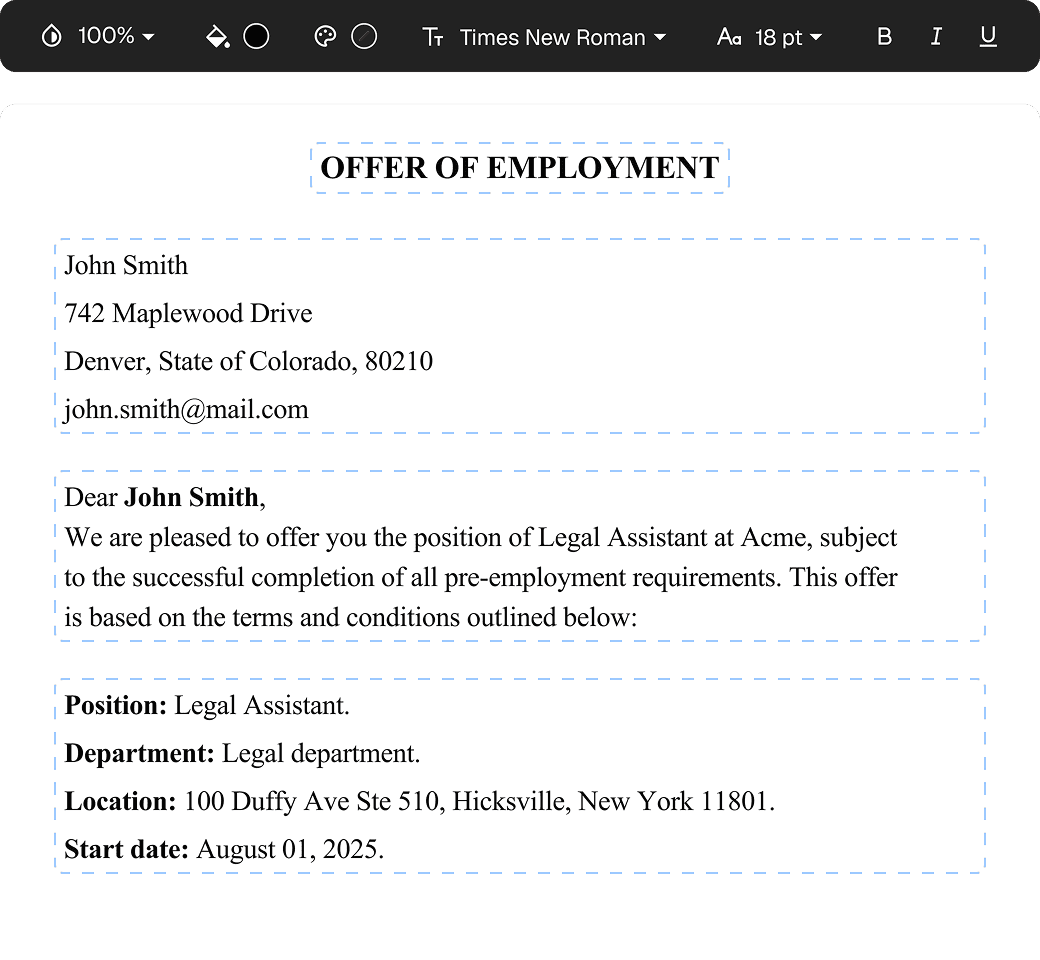
Edit PDFs seamlessly
Tweak agreements before signing or sending for signatures. Update details, add or remove clauses, adjust formatting, and redline changes instantly.
eSign legally and securely
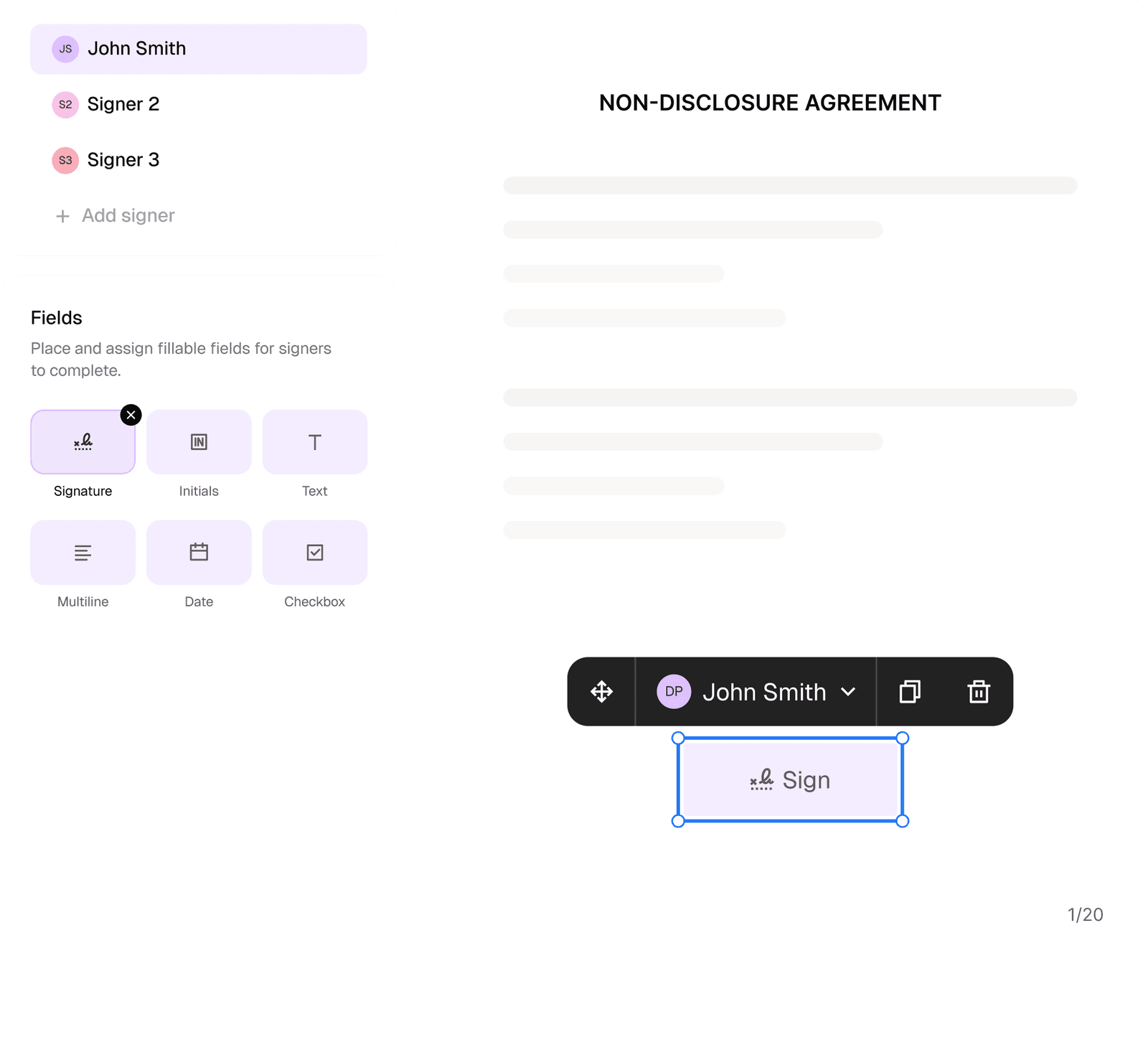
Sign documents and collect legally binding signatures. Invite up to ten people to sign in any order, track the progress, and send reminders.
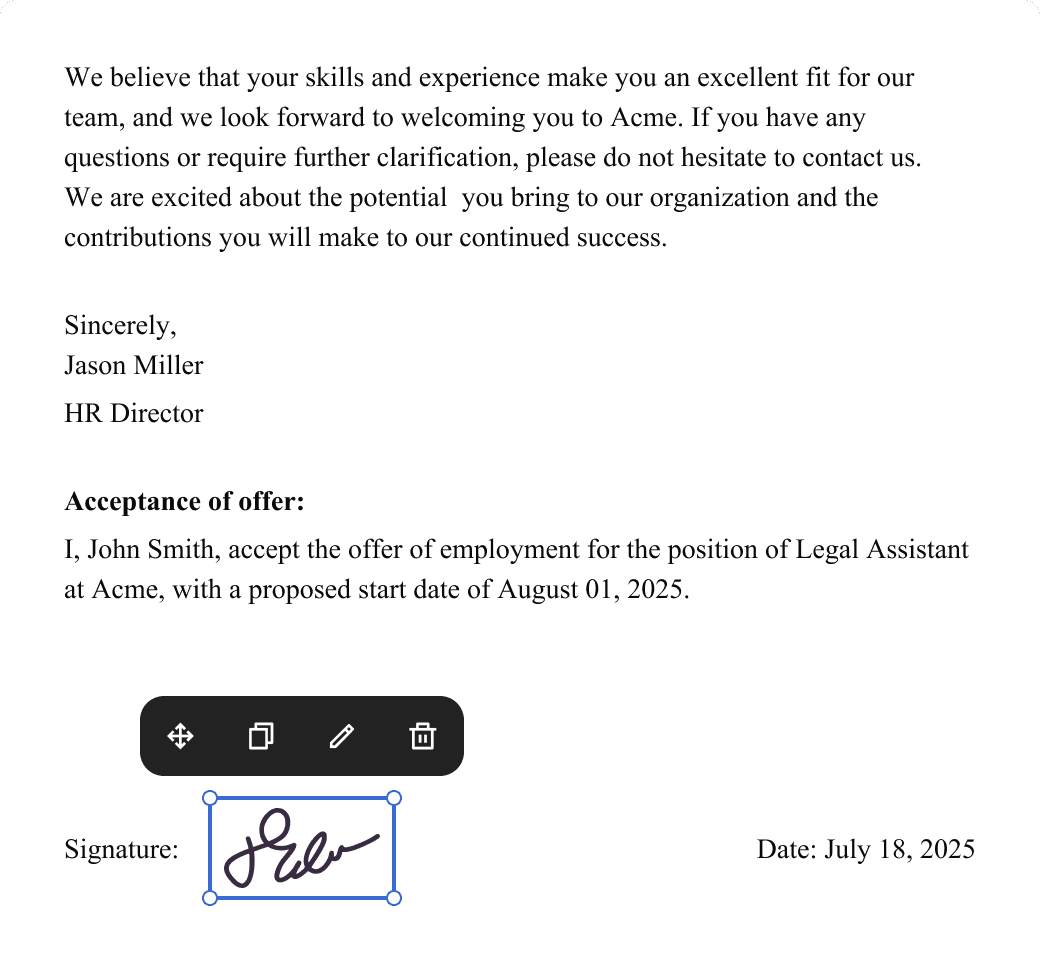
Request legally binding signatures
Invite up to ten people to sign your document in any order. Get a finalized, audit-ready copy without chasing signatures.
Skip the drafting.
Choose from 2,500+ templates
Browse templatesChoose a template
Fill in details
Sign and download