Updated September 8, 2026
14 min read
Equipment Leasing Guide: How It Works and How to Save Money in 2026
Equipment Leasing Guide: How It Works and How to Save Money in 2026
Content
To work effectively, every business needs not only people and money, but tools. Whether your company builds houses or organizes parties for kids, you cannot do it without proper equipment: computers, cars, machinery, or even a bubble machine.
While purchasing them is an option available to a few, equipment leasing becomes the best choice. It allows you to get the gear your business needs without large expenditures or significant risk. In this guide, you’ll learn how equipment leasing works and what benefits it offers, especially for small and mid-sized businesses looking to grow without unnecessary financial strain.
What Is Equipment Leasing?
Equipment leasing is an agreement between your business and a leasing company that lets you use equipment without buying it. Instead of paying the full price upfront, you make regular payments — usually monthly — for a set period.
Equipment leases are generally governed by applicable state law, often based on UCC Article 2A; certain qualifying consumer leases are also subject to the federal Consumer Leasing Act and Regulation M.
Leasing helps you get the tools you need, like machines, computers, or vehicles, and keep money for other business expenses. Besides, if you work in industries where machinery and devices experience depreciation — lose value because they become outdated — leasing is a wise option.
Types of equipment lease
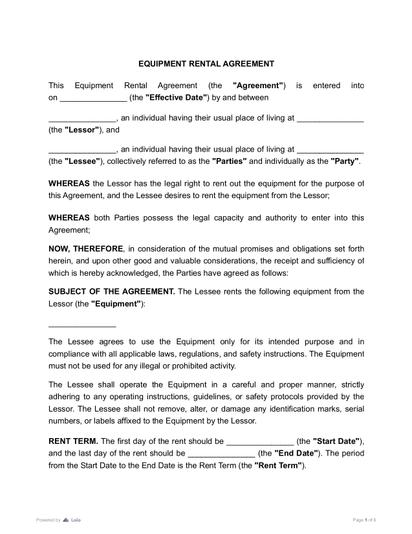
There are two main types of equipment leases you can choose from, depending on your business goals and how long you plan to use the assets.
- 1
Capital lease, or finance lease, is mostly used by businesses that use massive assets, like manufacturing machines or trucks, and plan to have them for most or all of their useful life.
- 2
Operating lease is most suitable for short-term use or equipment that becomes obsolete quickly, like office devices or computers. You pay to use the items, but ownership and maintenance stay with the leasing company.
Equipment leasing vs. equipment financing
Equipment leasing and financing are two options available for businesses that need machinery or commercial devices for a long time. Though these terms are often used interchangeably, it’s important to differentiate between them:
With equipment leasing, you pay a fixed sum monthly or weekly to use the assets for a set period, but ownership remains with the leasing company. It usually requires little to no upfront payment and is ideal for assets that lose value quickly, need frequent upgrades, or serve short-term purposes, such as IT hardware, medical devices, or office equipment.
Meanwhile, equipment financing means you take out a loan to buy the equipment and acquire the ownership rights either immediately or after you fully repay the loan. This option works best for equipment you plan to use for many years, like construction machinery or delivery trucks.
Just like with leasing, you also make monthly payments in accordance with your payment plan, but they are usually bigger. In equipment lease financing, the interest rate, which is the percentage charged by the lessor for the use of the equipment, directly affects your monthly payment calculation and total lease cost.

What Types of Equipment Can You Lease?
You can rent any type of commercial equipment, from heavy machinery to a DJ controller. Here are the most common categories of assets businesses use:
- 1
Heavy machinery & industrial equipment: Cranes, bulldozers, loaders, excavators, trailers.
- 2
Office and administrative equipment: printers, copiers, office furniture, projectors.
- 3
IT equipment and computer hardware: laptops, desktops, workstations.
- 4
Commercial & retail equipment: POS systems, refrigerators, freezers, shelving, and display units.
- 5
Transportation and delivery equipment: box trucks, cargo vans, semi-trucks, utility trucks.
- 6
Health & fitness equipment: treadmills, rowing machines, stationary bikes, and physical therapy machines.
- 7
Maintenance & cleaning equipment: industrial vacuums, steam cleaners, window washing systems.
- 8
Medical & scientific equipment: ultrasound machines, CT scanners, dental chairs, X-ray systems, lab analyzers. According to the latest report by the Equipment Leasing & Finance Foundation, medical equipment is most likely to be financed.

Benefits of Business Equipment Leasing
No matter whether you’re a startup with a limited budget or a huge company opening a new office, leasing can offer you many benefits:
Lower cost
Instead of paying full price up front, you spread the cost over monthly payments and have more free cash for payroll, marketing, or unexpected expenses.
Tax benefits
Lease payments for equipment used in a business may generally be deductible as rent or lease expenses. However, if the agreement is actually a conditional sales contract, different tax rules apply.
Flexible terms
The lease period may range from 6 months to several years, depending on the type of asset. You can always discuss and adjust the terms to your needs and financial opportunities.
Predictable monthly expenses
You always know what sum you need to pay every month and can plan your budget precisely. Besides, for companies using heavy equipment, leasing helps manage depreciation more effectively, which in turn supports steady cash flow preservation for your business.
Easier approval process
Leases usually have more lenient credit requirements compared to loans. A small business with limited credit history may qualify for heavy equipment leasing more easily than for bank financing.
Maintenance and support
Many lease contracts include maintenance, repairs, or replacement. So, you do not need to spend time and money on companies that will repair your equipment.
How Does Equipment Leasing Work?
The process is usually quite simple, but it requires attention to detail, especially when high-cost items are involved. Here are the key steps for you to follow to rent machinery and devices for your business needs:
1. Define your budget.
You should clearly know the sum you’re ready to spend each month. For this, consider:
Your current cash flow.
How much money you return with this equipment in the long term.
How much time the asset will be in use.
Remember, any equipment is worth financing only if it will generate revenue and improve your company's productivity. It’s not something nice to have; it’s something you cannot work well without.
2. Find a reliable leasing company.
Be very attentive while choosing an equipment provider. They should offer fair terms, fast approvals, helpful service, and transparent pricing. Find the contact information of several companies. Look for reviews, ask your network, and contact the best one directly to specify details.
Ask questions:
What types of leases do they offer?
Do they serve your industry or equipment category?
Can you upgrade equipment mid-term?
What are their end-of-term options — purchase, renewal, or return?
Do they provide a warranty?

3. Document the deal.
Whatever devices you need, big or small, your deal should be secured with reliable equipment rental agreement. It is a legal document that outlines the responsibilities of you and the leasing company and contains information about:
Leased item (name, color, size, registration number);
Rent term;
Payment details, like method and monthly installments;
Size of the security deposit;
Termination terms;
Maintenance and repair obligations;
Insurance;
Force majeure situations.
If you want to lease a vehicle, you’ll need a special kind of agreement that provides details about the car, like its make, model, color, year, and license plate.
To approve your application, the leasing company may ask you to provide such documents:
Tax returns for the last 1–2 years;
Financial statements (balance sheet, income statement) to ensure you’re a reliable client;
Credit history reports for your business;
Business licenses or incorporation documents.
Once the application is approved, you receive the lease agreement to review and sign online. Read every clause carefully, and pay special attention to provisions for cancellation, damage, upgrades, and service.
4. Make the payment.
Once the lease is signed, and you have received the equipment, you’re obliged to make monthly payments in accordance with the agreed schedule. The first payment should be made immediately or within 30 days, depending on the contract.
Keep lease invoices and payment records for as long as needed to substantiate deductions reported on your tax return. The general IRS limitation period is usually three years from filing the return, although longer periods can apply in specific cases.
5. Return the equipment.
When the lease term ends, you may follow one of these scenarios:
Return the equipment with no further obligation.
Purchase the equipment at fair market value or for a pre-agreed amount.
Renew the lease if you still need the item but don’t want to replace it.
- Vehicle Lease Agreement
 6786 downloads
 - Bill of Sale for Equipment
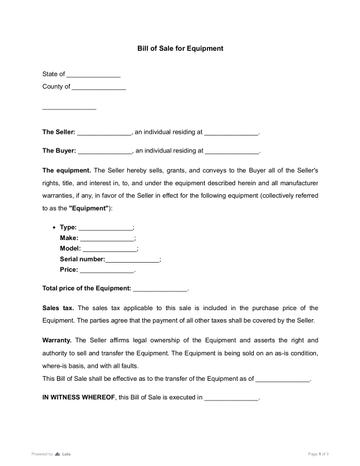 4271 downloads
How to Avoid Equipment Leasing Scams
We all want to save some money and get the best equipment. However, sometimes, it can be a trap that will cost your money and reputation. Here are the most common equipment lease scams you would be aware of:
Bait-and-switch contracts: The lessor promises one set of lease terms, but the final contract includes different, often unfavorable, conditions, like a longer lease term and termination penalties.
Undisclosed fees: The contract implies charges for setup, processing, maintenance, or early cancellation written in fine print.
Evergreen clauses: The lease automatically renews without notification, and the lessor continues to charge you unless you cancel exactly as specified.
Fake leasing companies: Some scammers pose as lessors but disappear right after they receive upfront "application" or "processing" fees from you.
Locked-in upgrades: The lease may force you into overpriced equipment upgrades you didn't request or agree to.
Red flags that signal you should be attentive while leasing equipment:
- Vague contract language;
- Unclear lease and termination terms;
- Unusually high interest rates;
- Pressure to sign quickly;
- No information about equipment ownership.
Always read the fine print, verify the lessor's credentials, and consult legal or financial professionals if you hesitate.
Leasing is a convenient and financially alternative to buying. It allows businesses to get critical equipment, modernize manufacturing, and grow without huge investments.
Whether you run a factory, a retail shop, or a design studio, modern leasing companies can supply any devices or machinery you need for short or long terms. However, your responsibility is to choose a trustworthy lessor and read the lease agreement carefully. Check every clause, fee, and condition. A clear document ensures you can use the leased equipment safely and avoid legal or financial trouble.
More guides
September 1
7 min read
How to Provide Proof of Employment: Documents and Steps
July 26
10 min read
Commercial Real Estate Leasing Process: 2026 Guide
July 25
12 min read
How to Register a Company in the US: What No One Tells You in 2026
July 26
12 min read
How to Read a Profit and Loss Statement
September 10
14 min read
How to Protect Your Small Business from Lawsuits
July 21
11 min read
What Taxes Do Businesses Have to Pay? Federal Tax Checklist
One home for your
agreements
Edit PDFs seamlessly
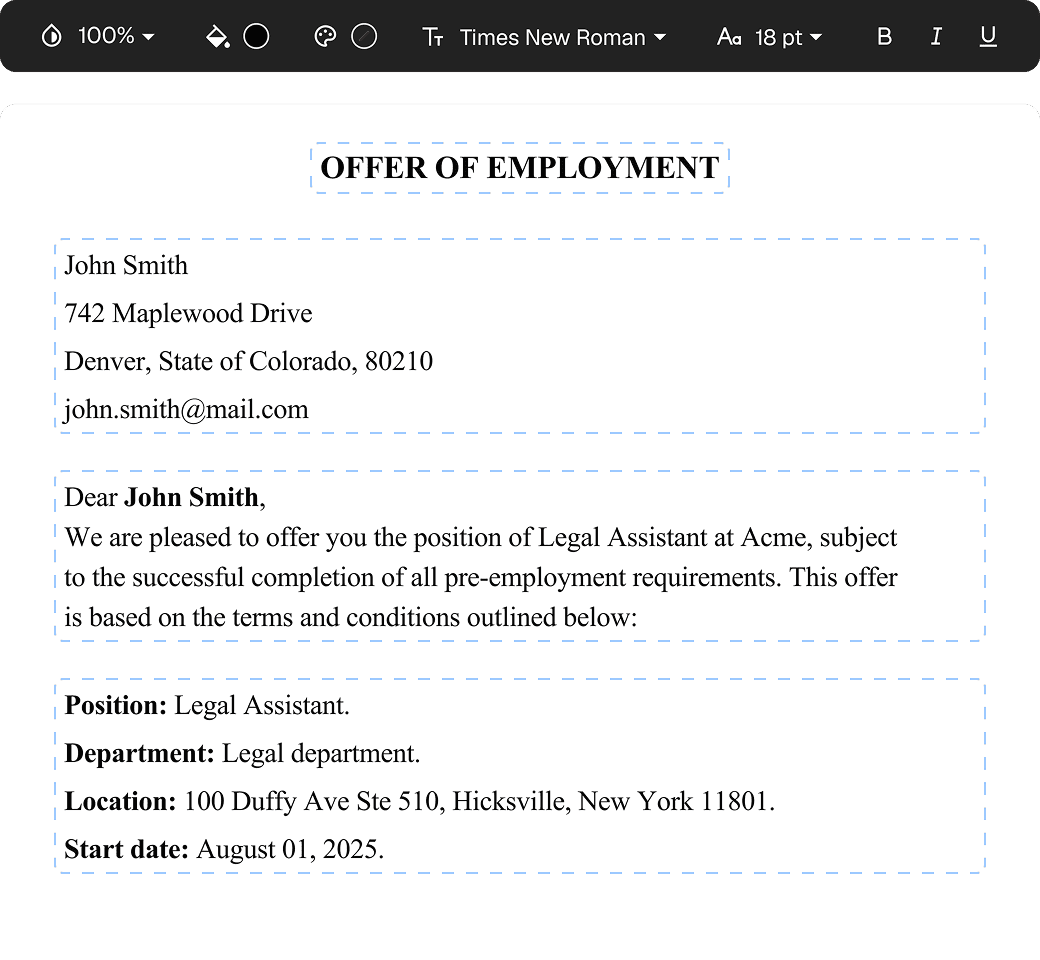
Tweak agreements before signing or sending for signatures. Update details, add or remove clauses, adjust formatting, and redline changes instantly.
eSign legally and securely
Sign documents and collect legally binding signatures. Invite up to ten people to sign in any order, track the progress, and send reminders.
Request legally binding signatures
Invite up to ten people to sign your document in any order. Get a finalized, audit-ready copy without chasing signatures.
Skip the drafting.
Choose from 2,500+ templates
Browse templatesChoose a template
Fill in details
Sign and download