Free template
Free IRS Forms 1099
4.8 (24 reviews)
Updated Feb 23, 2026
~ 6 pages
PDF
5.2K downloads
Form 1099 is a federal tax document between a payer and a recipient that reports income earned outside traditional employment. It is used by freelancers, contractors, and investors to disclose non-wage income for tax purposes.
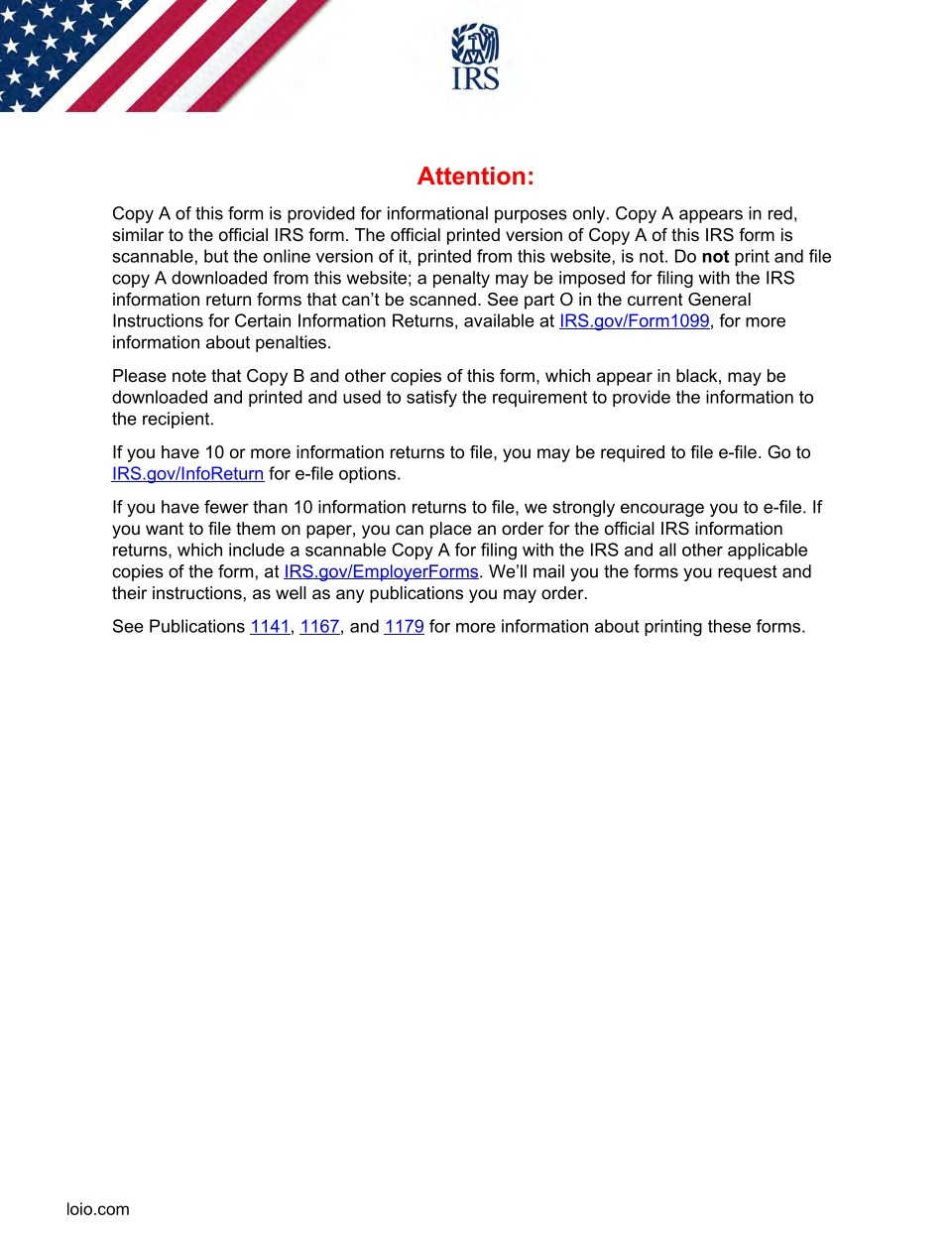
Preview
Reviewed by Kate Adkham, LLB
Template Types
Form 1099-INT
This form reports interest income to the IRS and payment recipients.
Form 1099-SB
This form is used to report life insurance policy transfers to the IRS and recipients.
Form 1099-K
This form reports payment transactions for goods and services processed through third-party networks.
Form 1099-B
This form reports proceeds from the sale of securities or certain barter transactions.
Form 1099-A
This form reports the acquisition or abandonment of secured property.
Form 1099-PATR
This form is used to report taxable distributions or patronage dividends from cooperatives.
Form 1099-NEC
This form reports payments to independent contractors or self-employed individuals.
Form 1099-G
This form reports taxable payments from government agencies.
Form 1099-LS
This form reports the transfer or acquisition of a life insurance contract.
Form 1099-DIV
This form reports dividends, capital gain distributions, and other investment income.
Form 1099-QA
This form documents distributions from ABLE accounts for tax and eligibility purposes.
Form 1099-Q
This form reports distributions from education savings programs to the IRS and recipients.
Form 1099-MISC
This form reports an income that is not classified as wages, salaries, or tips.
Form 1099-R
This form is used to report retirement and pension distributions to the IRS and recipients.
Form 1099-SA
This form is used to report distributions from health or medical savings accounts.
Form 1099-H
This form reports HCTC advance payments for the recipient.
Form 1099-CAP
This form reports corporate changes that result in distributions to shareholders.
Form 1099-C
This form reports canceled debts of $600 or more, which may be considered taxable income.
Form 1099-S
This form is used to report real estate transaction proceeds.
Form 1099-LTC
This form reports long-term care and accelerated death benefit payments.
Form 1099-OID
This form reports OID income from financial instruments like bonds or notes.
Template Description
Copy section link
Requirements for the IRS 1099 Forms
Copy section linkHow To File
Copy section link