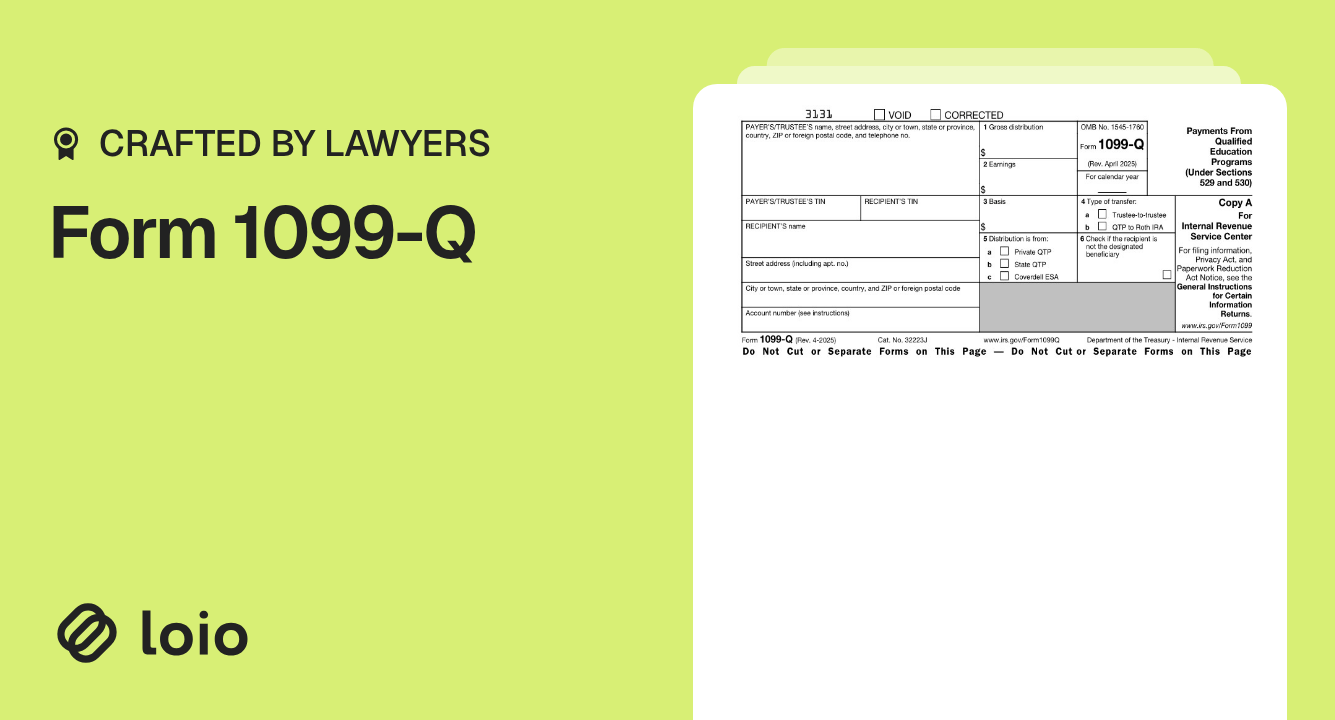
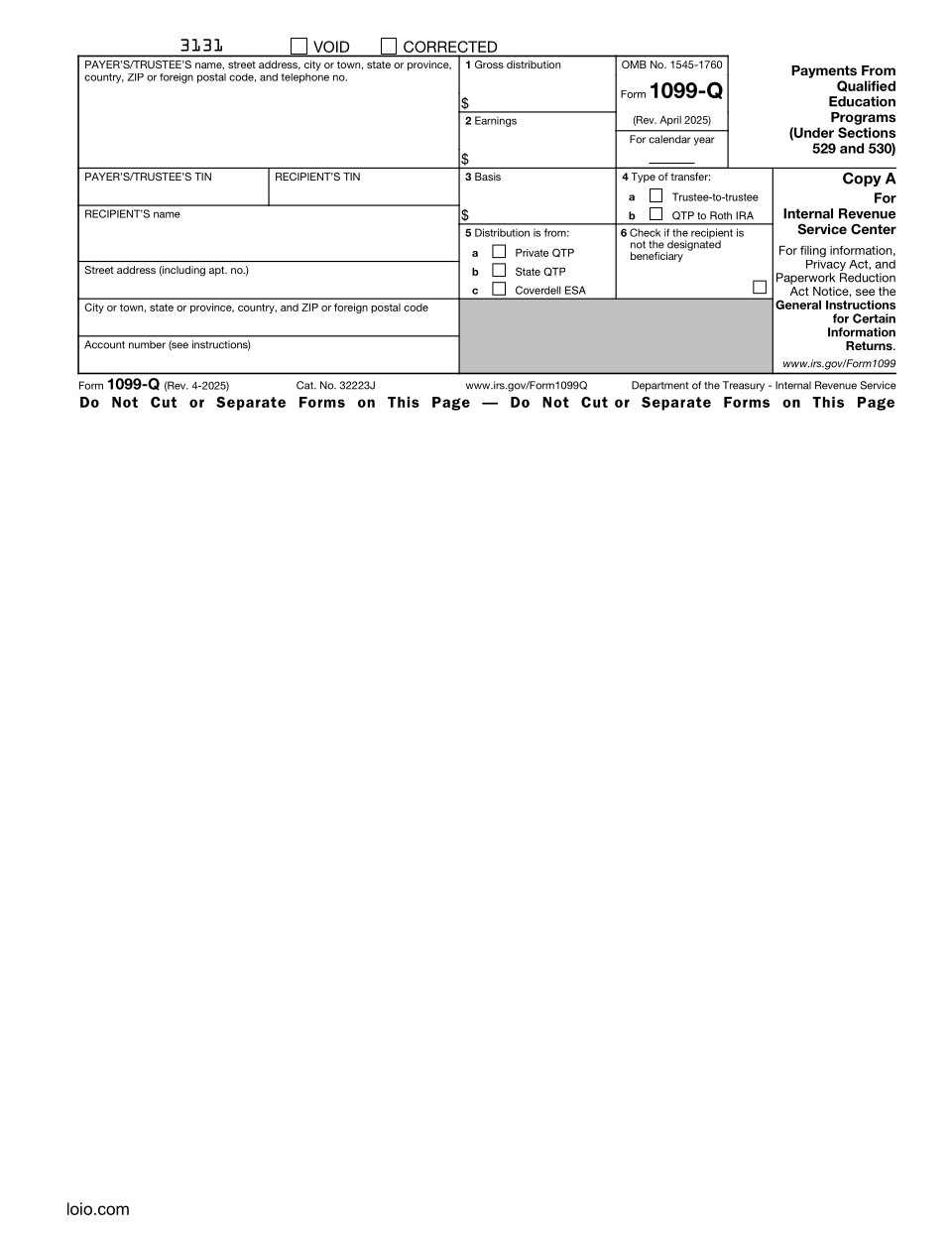
Form 1099-Q is an education-related form between a financial institution and a beneficiary showing distributions from qualified tuition programs. It is used to report withdrawals from 529 plans or Coverdell accounts for tax purposes.
Education costs are a significant concern for many families, and using tax-advantaged savings plans can ease this financial burden. To ensure you don't have to pay taxes for the money you spend on educational expenses, you have to provide clear IRS documentation, namely form 1099-Q.
The 1099-Q form details how much money is taken from educational savings accounts managed by banks or similar entities. It is crucial for taxpayers and the IRS as it records funds used from accounts meant for learning purposes.
You need the 1099-Q form when you withdraw funds from a qualified tuition plan or a Coverdell account. This form clarifies whether the money involves tax reporting. Whether for classes, supplies, or other costs, the 1099-Q ensures you meet IRS rules.
Confirm eligibility: Ensure your withdrawal qualifies under IRS rules.
Request from custodian: Obtain the form 1099 Q from your financial institution or upload it from the Loio platform.
Review details: Check the 1099-Q example for accuracy.
Submit to IRS: Use 1099 Q instructions to provide details on your taxes.
Handling funds for education can be complex, but the IRS form 1099-Q helps make things clearer. The 1099 Q form ensures you maximize benefits from savings accounts. With rising education costs, a clear account of the 1099-Q form is essential for avoiding tax complications. This tool supports a family's educational goals without financial obstacles.