Free template
Free Letter of Intent (LOI) Template
4.9 (180 reviews)
Updated Jul 24, 2026
~ 1 page
PDF
4.6K downloads
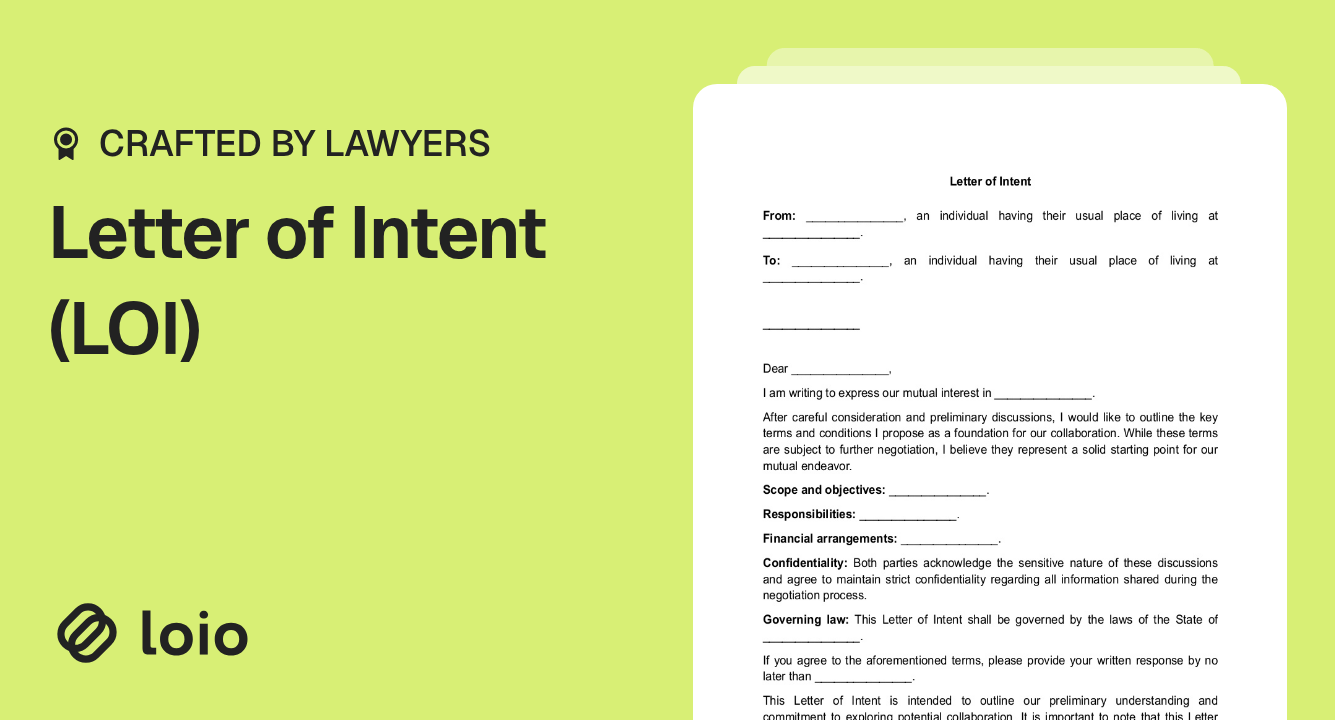
A letter of intent is a preliminary document between two parties that outlines the key terms of a proposed deal before a formal contract is signed. It is used to confirm mutual interest, set expectations, and guide negotiations.

Preview
Written by Megan Thompson, LLB - Reviewed by Kate Adkham, LLB
Template Types
Graduate Letter of Intent (LOI)
This form helps ensure you deliver the right impression for a graduate program.
Letter of Intent to Marry
This letter of intent to marry clearly states a couple's intention to get married.
Letter of Intent to Sue
This document conveys a party's intention to initiate a lawsuit against another party.
School Letter of Intent
This letter communicates a student's intention to attend a specific school.
Business Purchase Letter of Intent
This LOI is typically necessary when there are serious intentions to acquire a company.
Real Estate Letter of Intent (LOI)
This type of LOI is necessary for prospective buyers who decide to purchase a property.
What Is a Letter ofI Intent?
Copy section linkWhen to Use a Letter of Intent Template
Copy section linkParties to the Letter of Intent
Copy section linkWhat Are the Key Components of a Letter of Intent?
Copy section linkWhat Are the Key Terms in a Letter of Intent?
Copy section linkHow to Fill Out a Letter of Intent Template?
Copy section linkSources
This template is intended for general use across all 50 U.S. states+DC. Local procedures — such as notarization, witnessing, or filing requirements — may still apply, so check your state's specific rules before signing.
Also read