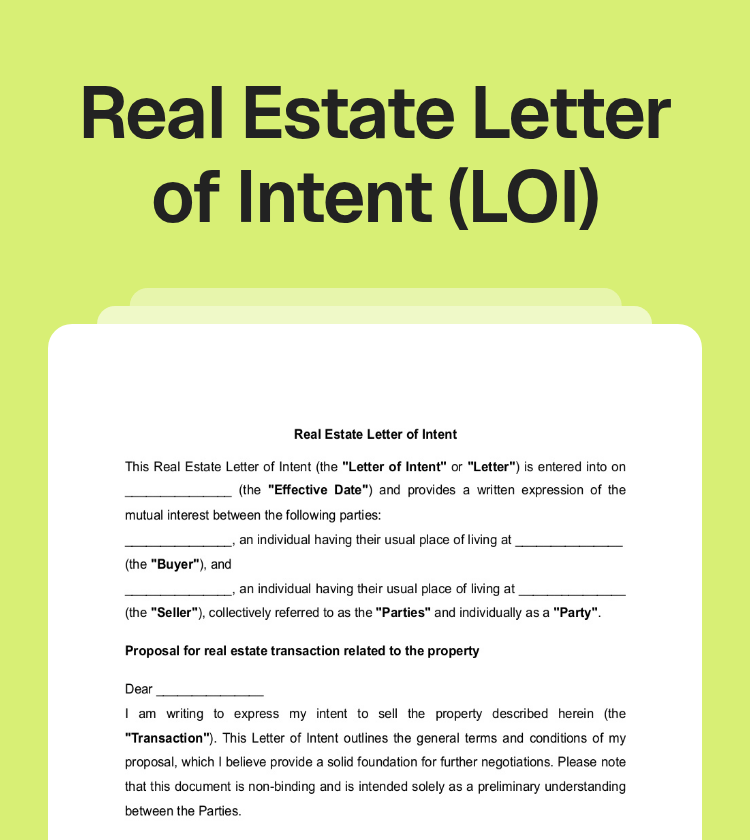
Free template
A real estate letter of intent (LOI) is a document that summarizes the proposed terms of a property sale before either side commits to a binding purchase agreement. It typically covers the property description, purchase price, and any conditions that must be met before the deal can proceed.
A letter of intent for a real estate transaction is most common in commercial property deals, where the buyer and seller want to confirm they agree on the basics before spending time and money on legal review, financing, and due diligence. Some parties use the terms real estate LOI and loi in real estate interchangeably with a letter of intent for real estate, though the structure and purpose remain the same across all versions.
Most of an LOI is non-binding — it expresses intent rather than creating enforceable obligations to complete the sale. However, specific clauses within the letter, such as confidentiality or exclusivity, can be written as binding even when the rest of the document is not. That distinction matters, since it determines what each party can actually walk away from if the deal doesn't move forward.
Use a real estate letter of intent when:
A buyer has decided to move forward with a property purchase, but the full terms haven't been negotiated yet. A loi template real estate professionals use can help structure this stage consistently.
Both sides want a documented starting point before spending money on legal review or due diligence.
The transaction involves commercial property, where an LOI is a standard first step before a formal purchase agreement.
The buyer wants an exclusivity period to complete due diligence without the seller entertaining other offers.
Either party wants a record of the agreed-upon terms in case negotiations stall or memories differ later.
When not to use a real estate letter of intent:
Use a real estate purchase agreement instead if the price and terms are already agreed upon, and both sides are ready to sign a binding contract.
Use a land purchase agreement instead if price and terms for a land sale are already agreed upon, and you're ready to document the deposit and closing terms directly.
Use a contract for deed instead if the seller is financing the purchase directly and transferring the property over time as payments are made.
Once all terms and conditions are met, the seller transfers ownership by deed, which is recorded with the county recorder or the relevant local authority. This recording is what makes the transfer of ownership part of the public record.
Non-binding: Describes a document or clause that expresses intent without creating an enforceable obligation to complete the transaction.
Binding clause: A specific provision within an otherwise non-binding LOI — commonly confidentiality or exclusivity — that is enforceable on its own.
Due diligence: The buyer's process of investigating the property's condition, title, zoning, and finances before committing to the purchase.
Earnest money: A deposit a buyer makes to demonstrate serious intent, typically held in escrow until closing.
Exclusivity (no-shop clause): A commitment from the seller not to negotiate with other buyers for a defined period.
Contingency: A condition that must be satisfied before the transaction can close, such as financing approval or a clean inspection.
Whether you're using a letter of intent real estate template or a loi real estate template, the same core steps apply:
Requirements for this document vary by state. Review your state's laws and procedures — or consult a licensed attorney — before using this template to ensure it's valid and enforceable where you live.