Free template
Free Employment Verification Letter Template

What Is an Employment Verification Letter?
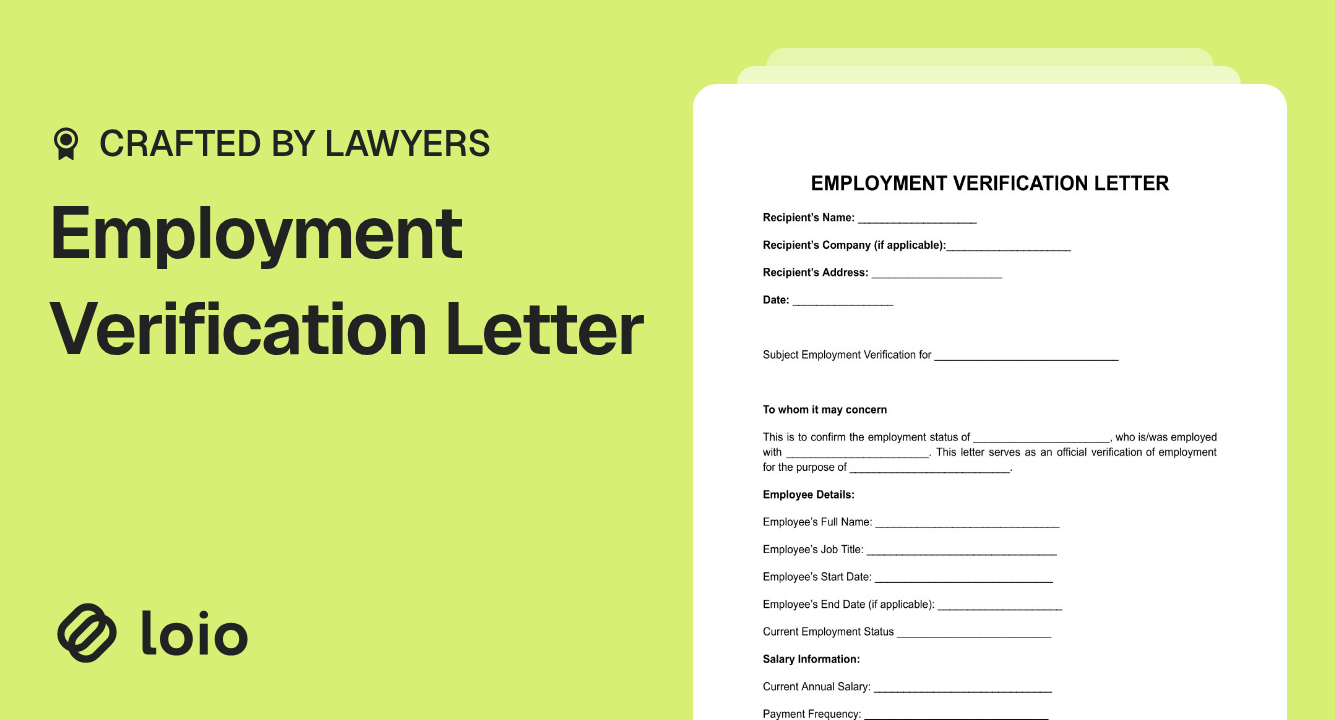
Copy section linkAn employment verification form is a document used to confirm that a person works or has worked for a specific employer. Employers can use the same basic format as a proof of employment letter template when employees need confirmation for rentals, loans, visa applications, or benefits.
This document is also called an employment verification letter, a verification of employment letter, a proof of employment letter, or a verification of employment form. The name may change depending on who requests it, but the purpose is usually the same: to provide reliable proof of employment to a lender, landlord, government agency, visa office, or background-check provider.
Employment verification is often required when applying for a mortgage, a loan, an apartment, a green card, a travel visa, unemployment benefits, or a new job. Banks and landlords may use it to check income stability. Government agencies may use it to confirm work history or eligibility. Employers may also use it during hiring or background-check processes.
An employment verification letter should be accurate, limited to the information requested, and consistent with company policy. If salary, Social Security details, Form W-2 information, or tax-related records are involved, the employer should confirm that disclosure is allowed and properly authorized.
When to Use an Employment Verification Letter?
Use an employment verification form when:
A lender needs confirmation of employment before approving a mortgage, loan, or credit application.
A landlord needs proof that a tenant can pay rent under a lease agreement.
A visa office or immigration agency may request proof of employment for a visa, green card, or sponsorship application.
A background-check provider needs to confirm job title, dates of employment, or employment status.
An employee needs proof of income for financial services, banking, or personal finance records.
A government agency needs employment information for unemployment benefits or public assistance.
A former employee needs written confirmation of past work history.
An employer needs a standard letter of employment verification template for HR records.
When not to use an employment verification form:
Use an employment contract if the goal is to define job duties, compensation, benefits, confidentiality, and termination terms.
Use an offer letter if the goal is to confirm a new job offer before employment begins.
Use a recommendation letter if the goal is to describe performance, skills, or character.
Use a non-disclosure agreement if the goal is to protect confidential business information.
Use Form I-9 if the goal is to verify identity and authorization to work in the United States.
Who Are the Parties to an Employment Verification Form?
Copy section linkEmployer or HR representative: The company or authorized person who confirms the employee’s job information.
Employee: The current or former worker whose employment status, income, job title, or work history is being verified.
Third-party recipient: The lender, landlord, visa office, government agency, background-check provider, or other organization requesting the verification.
Verifier: A person or service that reviews the employment verification form and may contact the employer to confirm details.
Authorized signer: The HR manager, payroll representative, supervisor, or company officer who signs the letter on behalf of the employer.
What are the Key Components of an Employment Verification Form?
Copy section linkEmployer information: Add the company name, address, phone number, email, and any official contact details so the recipient can verify the source.
Employee information: Include the employee’s full legal name and any identifying information that is appropriate for the request.
Employment status: State whether the person is currently employed, formerly employed, full-time, part-time, temporary, seasonal, or contract-based.
Job title: Add the employee’s current or most recent position to show the role being verified.
Employment dates: Include the start date and, if applicable, the end date of employment.
Salary or wage information: Add salary, hourly rate, bonus, commission, or pay frequency only if the employee authorized disclosure or the recipient requires it.
Work schedule: Include full-time, part-time, weekly hours, or expected schedule if the recipient needs proof of income or stability.
Reason for verification: State whether the form is being used for a loan, rental application, visa, background check, unemployment benefits, or another purpose.
Recipient information: Add the name, address, or department of the lender, landlord, agency, or other third party receiving the letter.
Authorization statement: If required, confirm that the employee authorized the employer to release the information.
Employer statement: Add a short statement confirming that the information is accurate based on company records.
Signature and date: The authorized employer representative should sign and date the form.
Contact for follow-up: Include the name, title, phone number, or email of the person who can answer verification questions.
What are the Key Terms in an Employment Verification Form?
Copy section linkEmployment verification: The process of confirming a person’s current or past job details.
Employment status: Whether a person is currently employed, formerly employed, full-time, part-time, temporary, seasonal, or inactive.
Salary verification: Confirmation of an employee’s income, pay rate, pay frequency, or compensation history.
Proof of income: Documents or written statements that show a person’s earnings, such as pay stubs, Form W-2, tax returns, or an employment verification letter.
Proof of employment: Written confirmation that a person works or worked for a specific employer.
Verification of employment letter: Another name for an employment verification letter or employment verification form.
“To Whom It May Concern”: A generic greeting used when the employer does not know the exact recipient.
FCRA: The Fair Credit Reporting Act, a federal law that may apply when employment verification is part of a background check using a consumer reporting agency.
Form W-2: An IRS wage and tax statement that reports annual wages and taxes withheld for an employee.
Form I-9:A USCIS form used by U.S. employers to verify identity and employment authorization for employees hired in the United States.
How to Fill Out an Employment Verification Form?
Copy section link- Add the employer’s legal name, address, phone number, and email.
- Enter the date when the employment verification form is prepared.
- Add the recipient’s name, company, agency, or department if known.
- Use “To Whom It May Concern” if the recipient is unknown.
- Enter the employee’s full legal name.
- Add the employee’s job title or most recent position.
- State whether the employee is currently employed or formerly employed.
- Add the employee’s start date.
- Add the end date if the employee no longer works for the employer.
- Include full-time, part-time, temporary, seasonal, or contract status if relevant.
- Add salary, hourly wage, pay frequency, bonus, or commission only if authorized and required.
- Include work schedule or weekly hours if needed for proof of income.
- State the reason for the verification, such as loan approval, rental application, visa application, background check, or benefits review.
- Add a short employer confirmation statement based on company records.
- Include the authorized signer’s name, title, phone number, and email.
- Sign (by hand or with eSign) and date the employment verification form.
- Keep a copy in the employer’s HR or personnel records if company policy requires it.
How to Request an Employment Verification Form
Copy section linkAn employee can request an employment verification form from HR, payroll, a manager, or the employer’s designated verification service. Many employers use a standard verification of employment template for these requests, so the employee should explain who needs the form, what information must be included, and the deadline.
The employee should also confirm whether salary, Social Security information, Form W-2 details, or other sensitive information may be shared. Some employers require written authorization before releasing income or employment details to a third party.
A simple request can say:
“Please provide an employment verification letter confirming my job title, employment status, start date, and salary for my rental application. I authorize the release of this information to the landlord listed in my request.”
This template is intended for general use across all 50 U.S. states+DC. Local procedures — such as notarization, witnessing, or filing requirements — may still apply, so check your state's specific rules before signing.
Sources
Related documents
Also read