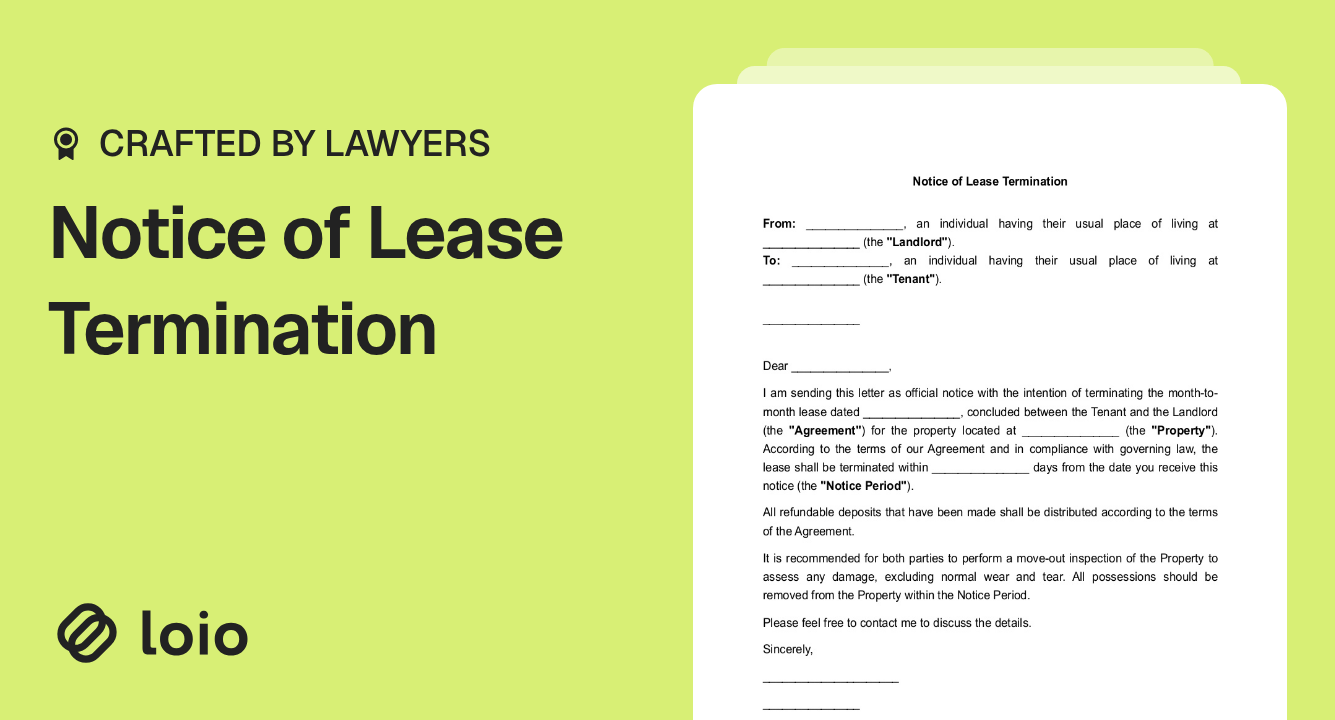
Free template
Free Lease Termination Letter Template

Template Types
Lease Termination Letter Template and Sample
Copy section linkThis letter serves as formal proof that the required notice was given, as outlined in most lease agreements and dictated by state law. A well-crafted lease termination letter is essential not only for fulfilling legal obligations but also for ensuring a smooth transition, facilitating the return of the security deposit, and preventing potential disputes or even a lawsuit. This guide will walk you through everything you need to know to terminate your lease correctly.
Why You Must Formally Terminate Your Lease
Copy section linkSimply moving out at the end of your lease term isn't enough. Formally notifying your landlord with a lease termination letter is a critical step that protects all parties involved.
The legal importance of proper notice
Your lease agreement is a legally binding contract, and the landlord-tenant law in your jurisdiction has specific rules about how to terminate a lease. Providing a formal termination notice fulfills these legal requirements. Failing to provide proper notice can have serious consequences. A landlord could claim you abandoned the property, which might allow them to keep your entire security deposit and pursue you for additional rent.
Protecting both landlord and tenant
This formal communication is a safeguard. For the tenant, the letter creates a dated record of their intent to terminate the lease, preventing a landlord from claiming they were never notified. For the landlord, receiving this notice provides adequate time to market the rental property, screen a new tenant, and avoid a costly vacancy period. It formalizes the end of the leasehold estate and sets a clear timeline for the move-out inspection and final steps.
When to Use a Lease Termination Letter
Copy section linkThe specific timing and circumstances for sending a lease termination letter depend on your type of lease.
Ending a fixed-term lease
For a fixed-term lease (e.g., a one-year lease), the tenant must typically provide notice before the lease expiration. You must review your lease to find the required notice period, which is often 30, 60, or 90 days before the lease end date. Sending the letter ensures the lease doesn't automatically renew into a new lease or a month-to-month lease.
Terminating a month-to-month lease
A month-to-month lease offers more flexibility but still requires proper notice. In most states, a tenant to end a month-to-month lease must provide the landlord written notice at least 30 days before they plan to move.
For early lease termination
Life is unpredictable, and sometimes a tenant needs to terminate their lease early. This is often called breaking the lease. Some situations are legally protected, allowing you to end the lease early without penalty. These often include:
Active Military Duty: Federal law allows service members to terminate a lease if they are called to active duty.
Domestic Violence: Many states have laws that allow victims of domestic violence to break their lease to ensure their safety.
Lease Violations by the Landlord: If the property becomes uninhabitable and the landlord fails to make necessary repairs, this can be considered a breach of the lease agreement, allowing you to terminate.
If your situation isn't legally protected, review your lease agreement for an early termination clause. This clause will outline the fees or conditions for ending the lease ahead of schedule. Without this clause, you may need to negotiate with your landlord or property manager or risk being responsible for the rent until a new tenant is found. This is where an early lease termination letter template can be helpful.
How to Write a Lease Termination Letter
Copy section linkA professional lease termination letter is clear, concise, and contains all necessary information.
Step 1: Review your lease agreement first!
Before you write anything, read your lease carefully. The requirements of your lease agreement are paramount. Look for the specific notice period required, any rules about how notice must be delivered, and any penalties or procedures for an early termination. Understanding the terms of the lease is the most important first step.
Step 2: Gather key information
Your lease termination letter from tenant to landlord must include several key pieces of information. At the top of the letter, include:
- Date: The date you are writing the letter.
- Your Information: Your full name and the full rental unit address, including any apartment number.
- Landlord Information: The name of your landlord or property manager and their official address.
- A Clear Statement: A direct sentence stating your intent. For example: "This letter serves as formal notice of my intent to terminate my lease for the property located at [Your Address]."
- The Termination Date: The specific date you will move out of your rental and return the keys. This should be the last day of your lease term or the end of your notice period.
- Reason for Termination: You don't always have to provide a detailed reason for termination. A simple statement like, "I am terminating my lease as required by the lease agreement," is usually sufficient unless you are breaking the lease for reasons that are legally protected.
- Security Deposit and Forwarding Address: State the amount of your security deposit and provide a forwarding address where the landlord can mail it.
- Move-Out Inspection: Mention that you would like to schedule a final walk-through inspection.
Step 3: Keep the tone professional
Your communication with your landlord should always be professional. This document is a formal record, so avoid emotional language. A polite and respectful tone will help ensure the termination process goes smoothly.
How to Deliver Your Lease Termination Letter
Copy section linkHow you deliver the letter is as important as what it says. You need proof that your landlord received it.
- Certified Mail/Registered Mail: This is the best method. The post office will provide you with a receipt proving you sent the mail and another confirming its delivery.
- Hand Delivery: If you deliver the letter in person, bring a second copy and ask your landlord to sign and date it as proof of receipt.
- Email: Only use email if your lease specifically states it's an acceptable method for formal notices. Even then, it's wise to request a reply confirming they received your message.
What happens after you send the letter
Once you wish to end your lease and have sent the letter, a few things will happen.
Landlord's Response: Your landlord should acknowledge receipt of your letter and may contact you to schedule the inspection.
Move-Out Inspection: The landlord will inspect the property for any damages beyond normal wear and tear. It's best to be present for this.
The Security Deposit: According to state law, your landlord has a specific amount of time (often 14 to 30 days) to return your security deposit. The landlord may make deductions for unpaid rent or damages. If they do, they must provide you with an itemized list of those deductions.
Frequently Asked Questions
Copy section linkCan I terminate my lease if my landlord breaches the lease agreement?
Yes. If your landlord commits serious lease violations, such as failing to provide a safe and habitable living environment, you may be allowed to end your lease. You will likely need to provide the landlord with a formal notice of the violation and an opportunity to fix it before you can terminate.
What is the penalty if I break a lease without a valid reason?
If you break a lease without a legally protected reason or a specific agreement early clause, you could be responsible for paying a fee or even the rent for the remaining months on the lease until a new tenant is found. It can also impact your credit and rental history.
Do I need a lawyer to write a lease termination letter?
For a standard lease termination, you typically do not need a lawyer. However, if you are in a complex situation, such as dealing with an eviction notice or significant breaches of the lease agreement by your landlord, consulting with a lawyer is a good idea.
Also read