Updated September 13, 2026
13 min read
How to Buy an Existing Business in 2026: Step by Step Instructions
How to Buy an Existing Business in 2026: Step by Step Instructions
Content
When you buy an existing business, you also buy customers, revenue, employees, and operational systems. It’s a perfect option for those who, for any reason, do not want to build everything from scratch: no need to build a team, set up operations, or figure out how to reach the target audience. You just pay and get everything prepared. However, you inherit not only the strength of a business but also its weaknesses: debts, reputational risks, and damaged equipment. So, let’s figure out how to buy an existing business legally without risking losing your money?
In Q2 2026, 2,117 businesses changed hands, representing $1.8 billion in total enterprise value. The median sale price was $349,250, according to BizBuySell.
Pros and Cons of Buying a Small Business
Just like other business expanding strategies, the purchase of an operating company has both advantages and disadvantages that should be considered before the deal:
- Immediate cash flow.
- Proven business model tested in the real market.
- A loyal base of customers and predictable income.
- Trained staff and reduced onboarding costs.
- More chances to get a loan with better terms.
- Reliable suppliers offering favorable payment terms.
- Higher entry cost that includes goodwill, brand equity, and salaries.
- Hidden problems, like undisclosed debts, lawsuits, or broken equipment.
- Possible employee and customer resistance.
- Overpayment risk.
- Reputation issues.
How to Evaluate a Business Before Buying It
Before you think of how to buy a business from someone, you need to make sure the price the seller sets is reasonable and fair. If not, you have the right to offer your own. Without an accurate valuation, you risk to overpay or, worse, buy a company that cannot sustain itself.
There are three key approaches to how to buy a business at a reasonable price:
- 1
Asset-based valuation: Add all assets (equipment, inventory, real estate, intellectual property), then subtract liabilities. This approach is best for manufacturing, construction, or real estate companies that have many physical assets.
- 2
Income-based valuation: This approach includes two methods:
- The discounted cash flow (DCF) method presupposes that you calculate the earnings you expect to get in the next years (3-10) and discount them to today's value.
- The capitalization of earnings method suggests dividing annual earnings by a risk-adjusted rate — typically 15% to 30% for small businesses.
- 3
Market-based valuation: Compare recent sales of similar companies. Small service businesses typically cost 2-3 times annual discretionary earnings, which are the financial benefit one full-time owner receives from a company within a year. The market multiple varies depending on the industry, location, and profitability.

Key Steps to Buying a Business
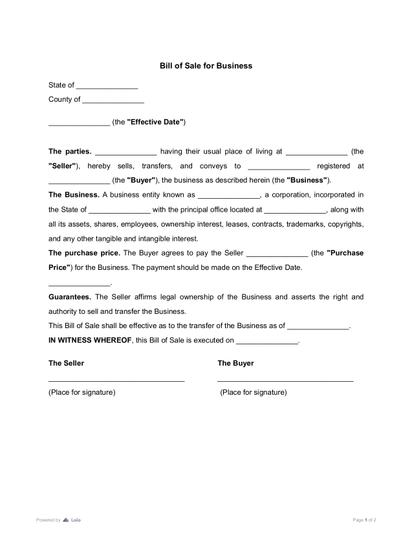
The procedure of a company purchase is not limited to signing a business bill of sale. It includes multiple stages, each with its own requirements and pitfalls. By skipping any of them, the buyer risks facing unpleasant surprises after the deal closes. So, here are the most important steps in buying a business you should follow.
1. Define the type of business you want to buy
Businesses vary by industry, size, structure, and many other aspects. Therefore, before buying, you need to narrow the pool of companies you can consider purchasing. For this, ask yourself these questions:
What industry do you want to enter or expand within?
Do you prefer a product-based business or a service-based operation?
What size of company fits your budget and management capacity?
Do you want a local business, a regional chain, or an online company?
How much involvement do you plan to have in daily operations?
While answering, consider your existing skills and resources. If you already own a marketing agency, acquiring another agency can be a good way to grow your network. At the same time, a company from a different yet related industry can help you expand the choice of services you offer.
Think of the budget you can spend on the deal. It is not just the purchase price but also working capital needs, transition costs, professional fees, and a reserve for unexpected expenses. Add 10% to 20% of the purchase price as a reserve to avoid finding out you have no money to cover the new business’s expenses right after the acquisition.
2. Browse businesses for sale
Once you know what to search for, check the market. Businesses for sale can be found with multiple channels:
Online marketplaces, such as BizBuySell, BusinessBroker.net, and LoopNet, aggregate thousands of listings. You can filter by industry, location, price range, and revenue.
Business brokers act as mediators between sellers and buyers: they provide access to off-market deals, handle negotiations, and guide you through the process. They typically charge a commission of 8-15% of the sale price, usually paid by the seller.
Industry contacts may know owners who plan to sell but have not yet listed their businesses. Attend trade shows, join industry associations, and inform your network that you’re interested in purchasing a business.
Direct outreach to business owners can also be useful. If you have a specific company in mind, contact the owner directly. You may never know what they plan, but a simple conversation can unlock new possibilities for both of you.
Franchise purchase may become another option. Owners of such businesses often have lists of franchisees who want to exit. In such a way, you buy an established brand and support system.
3. Explore why the business is being sold
Sellers may have many reasons to exit. There’s nothing to worry about if they search for a new owner for their business due to:
Retirement;
Health issues;
Relocation;
Desire to pursue a new opportunity;
Burnout or lifestyle change;
Partnership disputes.
However, the most important thing is not to miss the red flags that can turn into problems once you sign the deal. So, be careful if:
The company’s revenue declined for two or more consecutive years;
Major customer left, or contract expired;
A new competitor has recently entered the market;
Regulatory changes have been applied that threaten the business model;
The business has a pending lawsuit or government investigation.
First, ask the seller directly why they want to sell. Then verify their answer through independent research: review financial trends over the past 3-5 years, speak with employees, customers, and suppliers, and check court records for pending litigation. Forewarned is forearmed.
Watch for acquisition fraud. Verify that the seller has authority to sell the business and independently confirm ownership of major assets. Compare financial statements with tax returns and bank records, use a reputable escrow service for closing funds, and independently verify any last-minute changes to payment instructions.
4. Do your due diligence
Due diligence is the formal investigation phase: a buyer conducts it on an existing business to confirm that the seller's representations match reality. This process protects you from fraud, misrepresentation, and hidden problems.
Due diligence typically covers several areas:
- 1
Financial: verifies revenue, expenses, assets, and liabilities. For this, you should review audited financial statements, check bank statements to confirm reported cash flow, and analyze accounts for collectability. Identify any off-balance-sheet obligations.
- 2
Legal: uncovers potential legal exposure. At this stage, you should review all contracts: with customers, suppliers, employees, and landlords. Check whether they are valid, properly signed, and whether they require third-party consent to transfer. Make sure the business has all required licenses and permits.
- 3
Operational: assesses how the business functions day to day. Visit the commercial spaces the business leases or owns, talk to key employees, and check if the equipment is in good condition. You will "inherit" all of them with the business, so you should know exactly what you get.
- 4
Tax: confirms that the business is compliant with federal, state, and local tax obligations. Check for outstanding federal and state tax liens and ask the seller to provide relevant tax records or transcripts. Depending on the transaction and state law, consider using an escrow holdback for unresolved tax liabilities.
- 5
Environmental: matters when the transaction includes real estate or operations involving hazardous substances. A buyer seeking CERCLA’s bona fide prospective purchaser protection generally must complete All Appropriate Inquiries before acquiring the property. The inquiry must generally be completed or updated within one year before acquisition, with certain components updated within 180 days. A compliant Phase I Environmental Site Assessment is commonly used for this purpose.
What exactly should you check before you buy a small business in the United States? Here is a short must-check list:
Three to five years of tax returns;
Profit and loss statements;
Balance sheets;
Customer concentration (is one client responsible for most revenue?);
Employee turnover rates;
Lease terms and transferability;
Outstanding debts and liens;
Pending or threatened lawsuits;
Regulatory compliance status;
Intellectual property ownership.
The due diligence process may take weeks. To speed it up and ensure each document is valid and does not contain any issues, you can use reliable contract reviewing tools that will detect all the red flags in seconds and outline the clauses that require special attention.
5. Submit your letter of intent
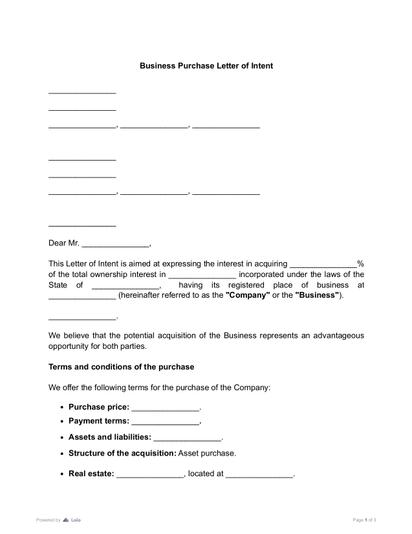
Once due diligence confirms that the deal is safe and your interest remains strong, you may wonder how to purchase a company without legal troubles. First, you need to submit a letter of intent (LOI) to the seller. This document will serve as official proof of your plans to buy the business and outline the proposed terms of the deal before you sign the final contract.
A letter of intent to purchase a business typically includes such information:
Purchase price and payment terms;
Assets or shares to be acquired;
Key terms and conditions;
Due diligence period and access requirements;
Confidentiality provisions;
Exclusivity period (during which the seller agrees not to negotiate with other buyers);
Deadline for transaction completion;
Conditions precedent (events that must occur before the deal closes).
Most LOIs are non-binding, except for specific provisions such as confidentiality and exclusivity. It means the buyer can change their mind and reject the deal without penalties. This gives both parties room to negotiate without legal obligation and the terms of the deal.
6. Review all legal and financial documents
Once the seller accepts your LOI, it's time for a detailed document review. This phase builds on your earlier due diligence but focuses on preparing for deal closing.
Here are the main documents you need to request from the seller:
- 1
Articles of incorporation or organization;
- 3
Shareholder or member agreements;
- 4
Minutes from board and shareholder meetings;
- 5
All material contracts (customer, supplier, employment, lease);
- 6
Intellectual property registrations (trademark licenses, patents, copyrights);
- 7
Litigation history and any ongoing dispute files;
- 8
Regulatory filings and correspondence with government agencies;
- 9
Insurance policies and claims history.
- Corporate Bylaws
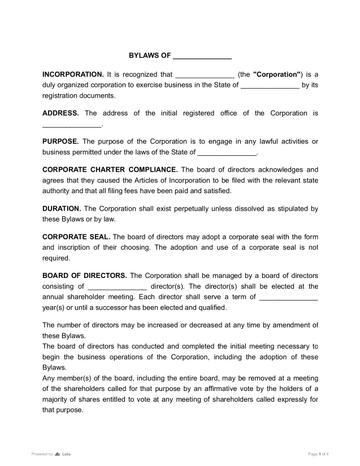 3995 downloads
 - LLC Operating Agreement
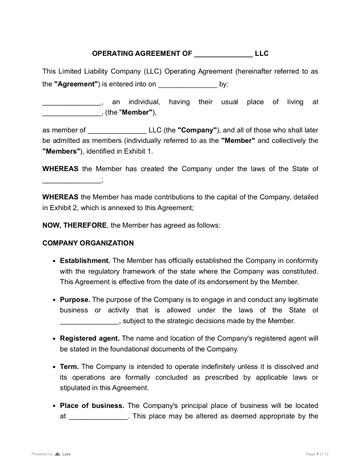 4046 downloads
 - Trademark License Agreement
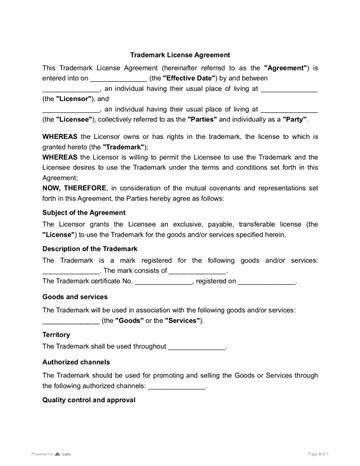 5395 downloads
Besides, request these financial documents to review:
- 1
Financial statements;
- 2
Tax returns (federal, state, local) for at least three years;
- 3
Accounts receivable and payable aging reports;
- 4
Inventory records;
- 5
List of assets;
- 6
Debt agreements and security interests;
- 7
Payroll records and employee benefit plans.
Once all documents have been reviewed, and nothing questionable has been detected, you can move forward with the deal. Many of these records — especially older tax returns, meeting minutes, or leases — exist only as scanned paper files. Make the scanned PDF searchable before your due-diligence team goes through them, so nothing gets missed in an image-only file.
7. Close the deal
To transfer ownership of a business from the seller to the buyer, the parties need to document their arrangement in a business purchase agreement. To make the deal legally binding and protect both parties, this document must include:
- 1
Parties: Full legal names and addresses of buyer and seller.
- 2
Assets or share: Specify exactly what the buyer will receive: equipment, inventory, intellectual property, customer lists, goodwill, or shares of stock.
- 3
Purchase price and payment terms: State the total price, the down payment, and any seller-financing or earn-out provisions.
- 4
Representations, warranties, and covenants: State key facts about the business and the parties’ continuing obligations, including the accuracy of financial statements, ownership of assets, undisclosed liabilities, legal compliance, and any enforceable post-closing restrictions.
- 5
Indemnification: The seller agrees to compensate the buyer for losses that arise from breaches of representations or undisclosed liabilities.
- 6
Conditions precedent: Events that must occur before the transaction completes, such as landlord consent to lease assignment, regulatory approvals, or release of liens.
- 7
Dispute resolution: Specify whether disputes will be resolved through arbitration, mediation, or litigation, and identify the governing law.
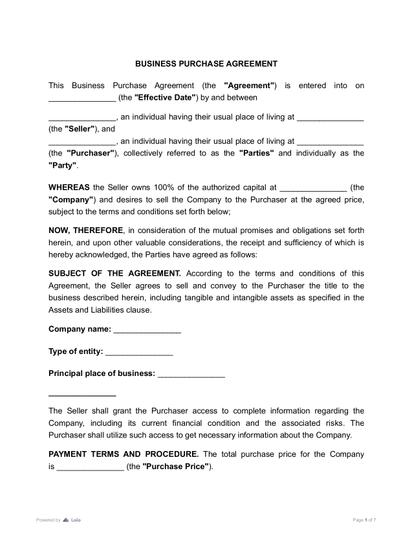
At closing, both parties should electronically sign the agreement and keep copies for at least 7 years after the deal. After that, the buyer pays the purchase price (often through escrow) and receives the keys to their new business, along with all necessary documents.
Things to Consider Before You Purchase a Business
Beyond the formal steps, keep these practical tips in mind while buying a business:
- 1
Get secure financing early. For an SBA 7(a) loan financing a complete change of ownership, SBA currently requires an equity injection of at least 10% of total project costs. SBA’s stated turnaround time is generally 5–10 business days for Standard 7(a) and 2–10 business days for 7(a) Small, although the lender’s full underwriting process may take longer.
- 2
Negotiate seller financing. When sellers finance part of the deal, they are just as interested in it as you are. If they refuse, it may signal hidden problems.
- 3
Use earnouts to reduce risk. Tie 10-25% of the price to future performance. Let the seller prove their business is truly profitable.
- 4
Choose an asset purchase over a stock purchase. Asset deals let you pick which liabilities to assume. Stock deals transfer everything, including unknown debts.
- 5
Consider a seller non-compete where enforceable. State law varies significantly, so the restriction should be tailored to applicable law and the transaction. For example, California generally restricts non-competes but recognizes a limited exception connected with the sale of a business and its goodwill.
- 6
Verify license transfers. Some permits require new applications that take weeks or months to process.
- 7
Update insurance before closing. Assess whether coverage is adequate for your needs. Notify insurers of the ownership change to avoid coverage gaps.
- 8
Plan your first 90 days. Meet every employee, call top customers, visit key suppliers. You should know how everything works before you apply any changes.
Buying an existing business is a great way to accelerate your growth in 2026. You gain immediate revenue, established operations, and a customer base that took years to build. However, your success depends on how carefully you choose the business and how attentive you are during the contract signing. Don’t let anyone sell you a pig in a poke.
More guides
September 15
10 min read
Who Can Sign a Contract on Behalf of a Company?
September 15
What Is Contract Redlining?
September 1
7 min read
How to Provide Proof of Employment: Documents and Steps
October 15
How to Start a Staffing Agency: Licensing, Pricing, and Cash Flow
July 20
4 min read
Addendum vs. Amendment: Change Your Purchase Agreement Properly
July 21
Commission vs Bonus in Sales: Pay Rules, Taxes, and When to Use Each
One home for your
agreements
Edit PDFs seamlessly
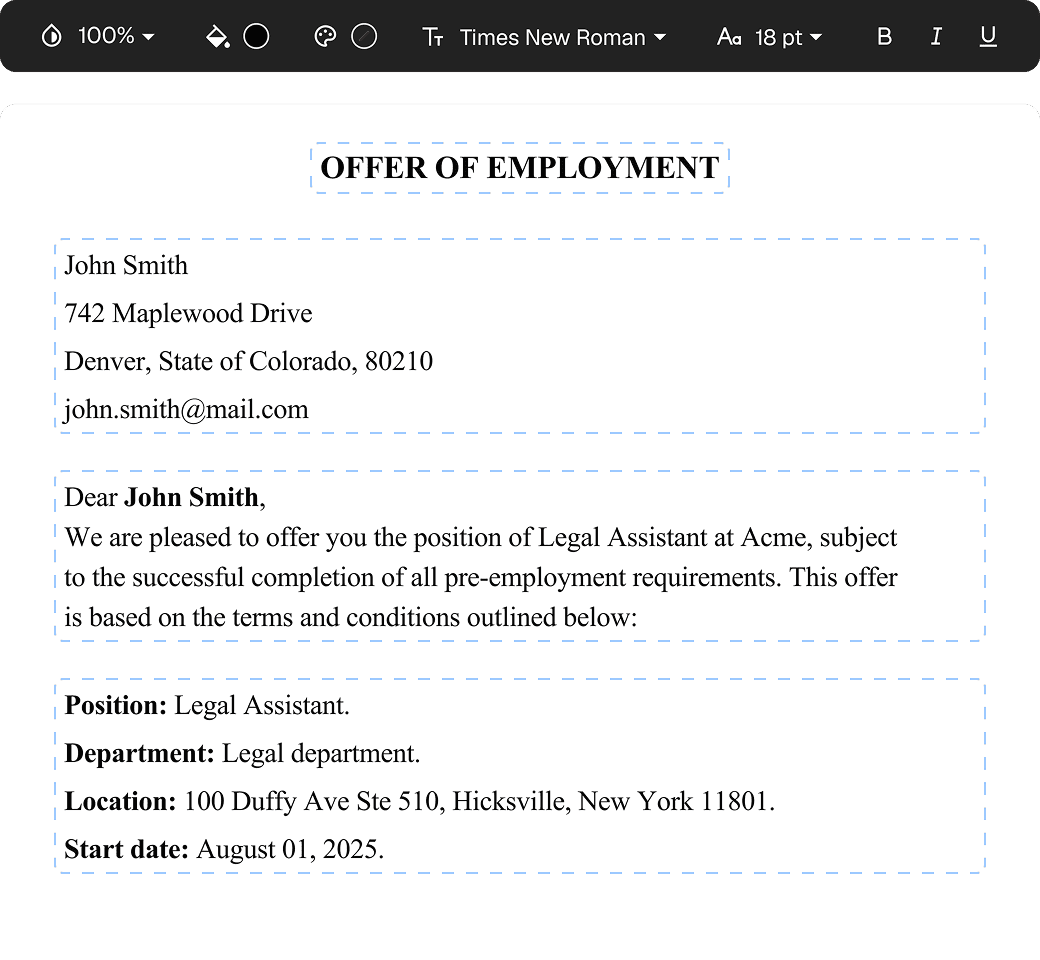
Tweak agreements before signing or sending for signatures. Update details, add or remove clauses, adjust formatting, and redline changes instantly.
eSign legally and securely
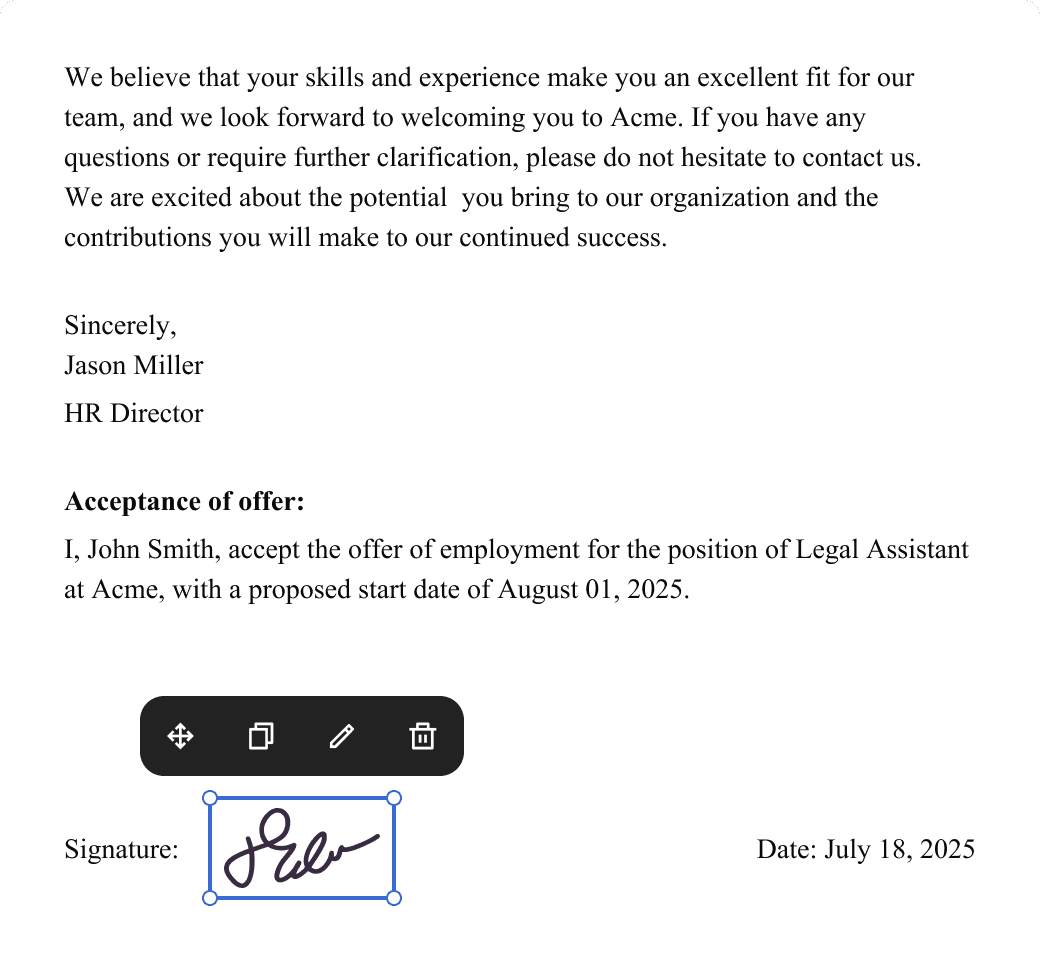
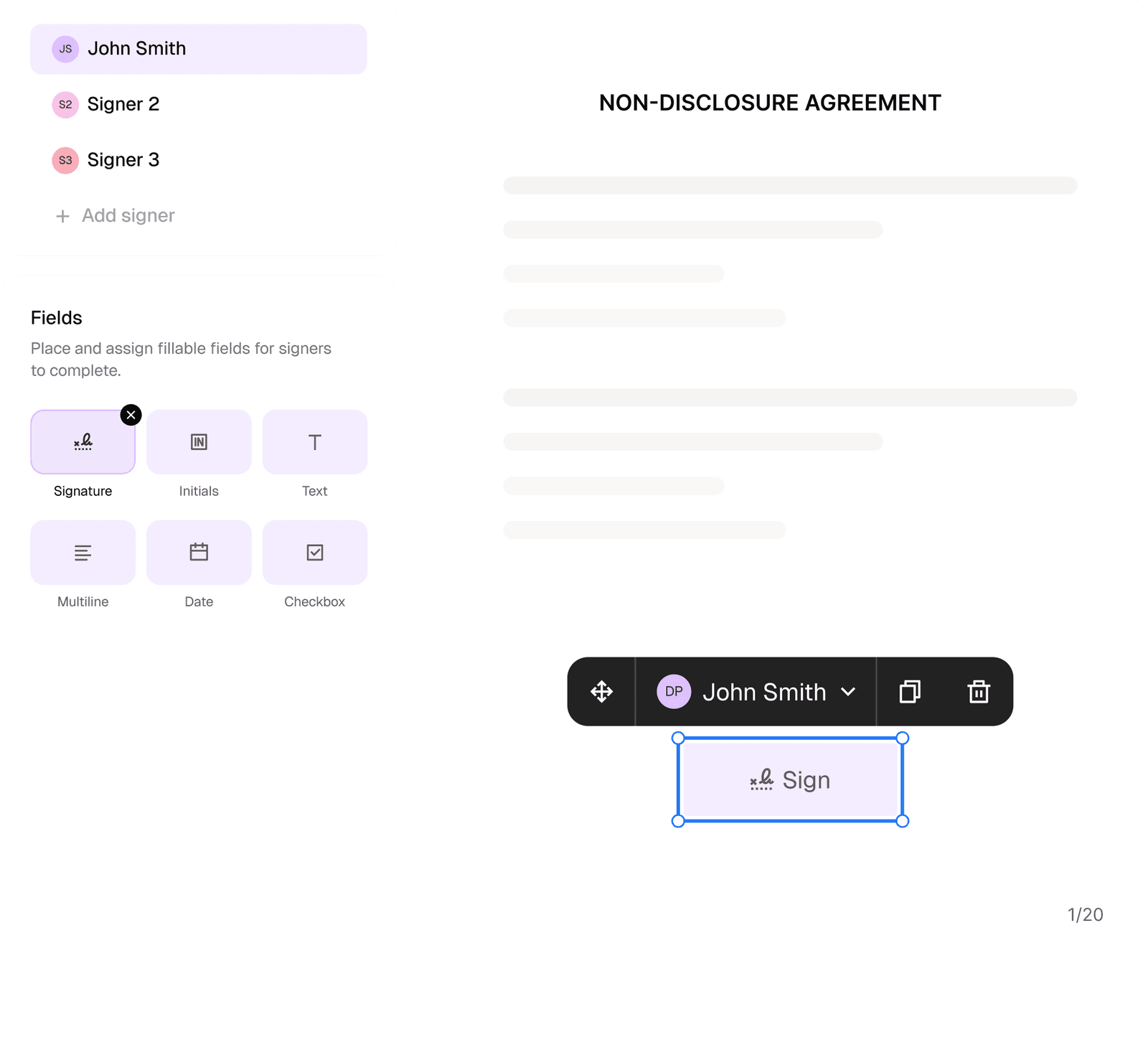
Sign documents and collect legally binding signatures. Invite up to ten people to sign in any order, track the progress, and send reminders.
Request legally binding signatures
Invite up to ten people to sign your document in any order. Get a finalized, audit-ready copy without chasing signatures.
Skip the drafting.
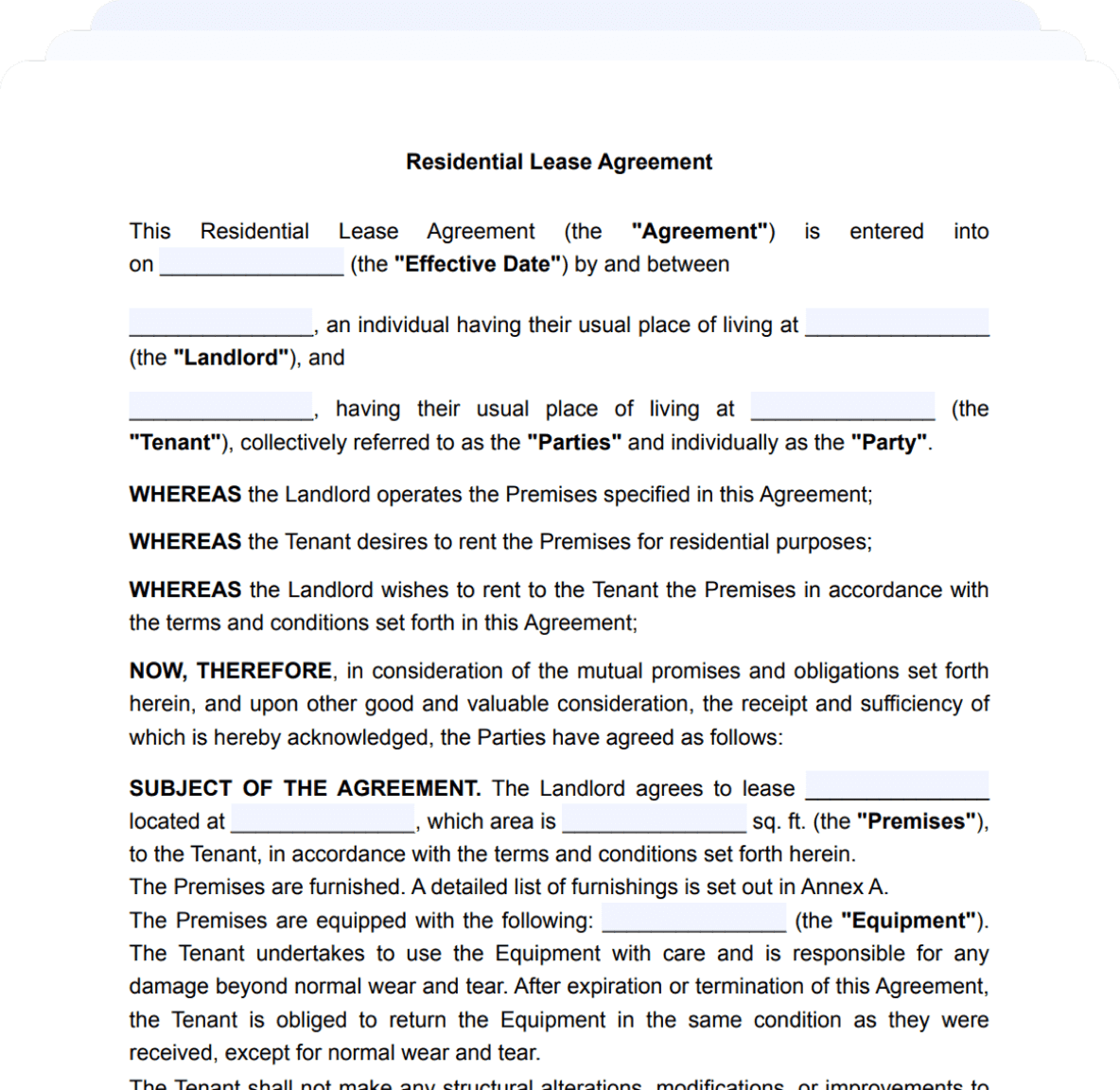
Choose from 2,500+ templates
Browse templatesChoose a template
Fill in details
Sign and download