Updated July 21, 2026
8 min read
Statement of Work vs Scope of Work: Differences and How They Work Together

Statement of Work vs Scope of Work: Differences and How They Work Together
Content
Project managers often overestimate their resources and underestimate the potential obstacles. In 45% of IT projects, for instance, managers struggle with cost overruns, the majority of which stem from the lack of focus (13%), content issues (9%), execution issues (11%), and skill issues (6%). Often, projects fail because they aren’t clearly defined or because the team didn’t estimate the milestones correctly.
This lack of clarity often stems from documentation issues. Without a clear source of truth, a project becomes a moving target. To keep costs under control and execution on track, project managers rely on two fundamental documents: the Statement of Work (SOW) and the Scope of Work. Understanding the difference between the two and how to use both will help you move toward a strong plan.
What Is SOW in Business?
A statement of work (sometimes referred to as SOW) is a document that usually comes with your contracts and defines the main terms for project completion. It creates a blueprint that sets clear expectations between a client and a contractor, ensuring that both sides are aware of pricing, objectives, and accountability.
Statement of work and contract — what’s the difference?
A contract is a legally binding document that covers the general terms of a client-contractor cooperation. A statement of work, on the other hand, is a more specific document that focuses on the nuances and provides direction on what needs to be done. A professional services agreement is such a document; it sets the legal foundation for the principles that are also used in the statement of work. A professional services agreement defines project goals and contractor compensation, and also covers details such as confidentiality and contractor status.
In many cases, a statement of work includes contractual terms that allow it to stand alone. In complex or high-risk business projects, a statement of work is often treated as a formal contract because it binds the work, its pricing, and the legal consequences in the event of a breach. It is risky, however, to rely solely on this document because it rarely offers the same legal protections as a contract, which it strengthens rather than replaces.
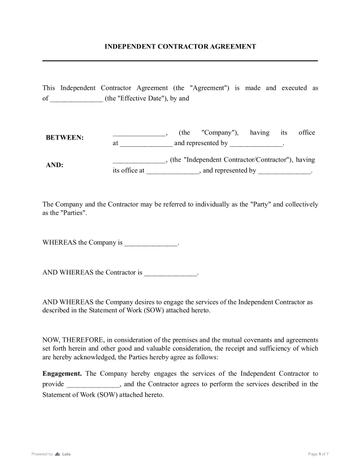
- Professional Services Independent Contractor Agreement
 4043 downloads
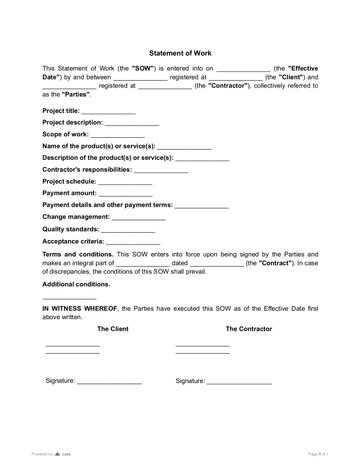
 - Statement of Work (SOW)
 4157 downloads
Key components
A professional statement of work acts as the foundation of your business relationship. Typically, this document should include:
Project and schedule
Payment terms
Quality standards
Governance
This document is highly detailed, which helps prevent legal loopholes that could allow a client to request more without an increase in pay. Rather than being generic, it details all the crucial points in great depth. The statement of work sets legal parameters for the relationship between a client and a business. It can be signed in person or through an eSignature to seal the legal document.
What is a Scope of Work?
A scope of work is a document that defines certain tasks, timelines, and project deliverables. It is detailed and essentially tells the team working on a project what tools to use, how much time each step should take, and what limitations team members might have. While the statement of work addresses the obligations within the project, the scope of work meaning is different: it focuses on how to execute them.
The core elements
A good scope of work should be practical since it helps you grow your business realistically. A seasoned project manager uses scope statements to control execution through these four pillars:
Project deliverables. Here, deliverables are very clear, tangible or intangible outputs. For instance, if you are building a website, your deliverables might include a responsive homepage or a user database.
Milestones and timelines. The scope of work breaks the project timeline into specific phases, making it easier to divide the workload into logical, manageable steps.
Technical details and systems. The document clarifies which tools will be exploited to help the team reach its goals. For a website developer, it can be a particular programming language; for a farmer, a specific tractor model; for a tailor, a certain sewing machine.
Project boundaries. The scope of work clarifies which instructions aren’t included. To illustrate, it may say something like, “This project includes social media graphic design but does not include ad spend management or community moderation.”
What does scope of work mean for managers?
On a daily basis, the scope of work is a practical document that stays on your desk even when your statement of work isn’t. Project managers use it to:
Direct the team
Manage expectations
Validate progress
Provide clarity
Simplify project planning
While they sound similar, a standard operating procedure (SOP) and a statement of work serve entirely different purposes. An SOP is a well-defined, written manual that describes step-by-step instructions for commonly occurring tasks.
An SOP allows you to:
- Standardize recurring task
- Support consistent effort and quality
- Secure business knowledge within a team
The Difference Between Statement of Work and Scope of Work
Although both documents are detailed, it may help to think about them in terms of layers. While the statement of work addresses legal and financial protections, the scope of work is the inner gears that make things happen.

Tips for Project Managers
Both documents have their clear use for project managers.
When do you need one or both?
Internal projects between departments/teams: the scope of work. There is no money changing hands and no legal risk, so you only need to control execution and expectations.
Managing independent contractors: both. A statement of work protects the legal side of your relationship. The more decentralized your team is, the more you need a scope of work.
Collaboration with external vendors: both. When you are paying someone else, you need the statement of work to establish legal accountability and the scope statement to ensure you actually get the quality of work you paid for. If you are struggling with extra documentation, consider using an AI contract review to save time.
Request for proposal (RFP): the statement of work. If you are looking for a new partner and sending out an RFP, it may be wise to use a draft statement of work. You will ask potential applicants to tell you how they intend to do the job.
How the documents manage project change
No matter how meticulous your planning is, projects evolve. A client might request a new feature, or a supply chain delay might push back a milestone. When these shifts occur, your statement of work and scope statement can help you maintain your goals.
- 1
Agree on a change. If you have the opportunity to legally document the change, do so before editing your documents. Some industries require such documents to help clients avoid contractor scams, while others do not require a statement of work. For example, if you own a residential construction company, begin with a construction change order form, which legally cements project modifications. Use the corresponding change forms based on your industry.
- 2
Adjust the scope statement. Starting with it allows you to change the project deliverables. If you are adding a new task, you must explicitly document what is being added and, more importantly, what is being traded off.
For example, “To add Feature A, we must remove Feature B to stay within the budget.” - 3
Revise your statement of work. Review your statement of work to adjust the payment terms and clarify legal accountability as you edit your PDF or document file with a prior agreement. Often, you will edit this agreement to set new prices or re-evaluate the project deadline.
- 4
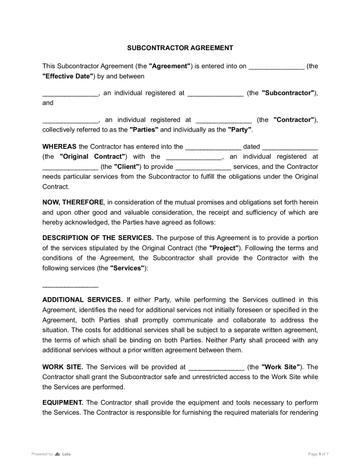
Make practical adjustments. Once you’ve adjusted your project in theory, you can start with other documents. For example, if your team needs extra hands, use a subcontractor agreement that outlines specific tasks and the terms the newbie must follow on your project.
If you change the scope of work without updating the statement of work, you are losing profit because you haven’t adjusted the payment terms. If you update the statement of work without updating the scope, you are creating a legal vacuum where the client doesn’t know what they are paying for. You need both to survive a project shift.
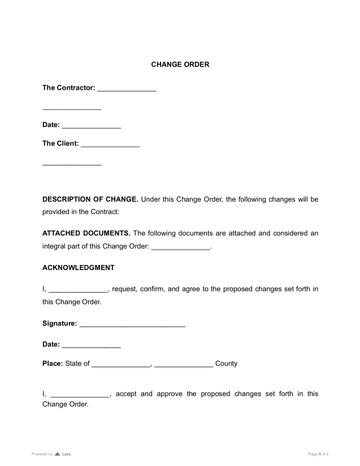
- Change Order Form
 4206 downloads
 - Subcontractor Agreement
 4111 downloads
The Document Flow

Structure Your Vision
The statement of work protects you from underpayment or excessive demands, while the scope of work turns a strategic vision into a practical map. These tools save you time and money loss and give you much more control over your project. With the correct timeline and legal protection, you have a plan with the fewest unpredictable variables and a defined path ahead.
More guides
September 1
7 min read
How to Provide Proof of Employment: Documents and Steps

September 10
14 min read
How to Protect Your Small Business from Lawsuits

September 12
13 min read
Construction Change Order Process: How to Avoid Scope Creep

October 7
How to Start a Staffing Agency: Licensing, Pricing, and Cash Flow

July 20
4 min read
Addendum vs. Amendment: Change Your Purchase Agreement Properly

July 26
12 min read
How to Read a Profit and Loss Statement

One home for your
agreements
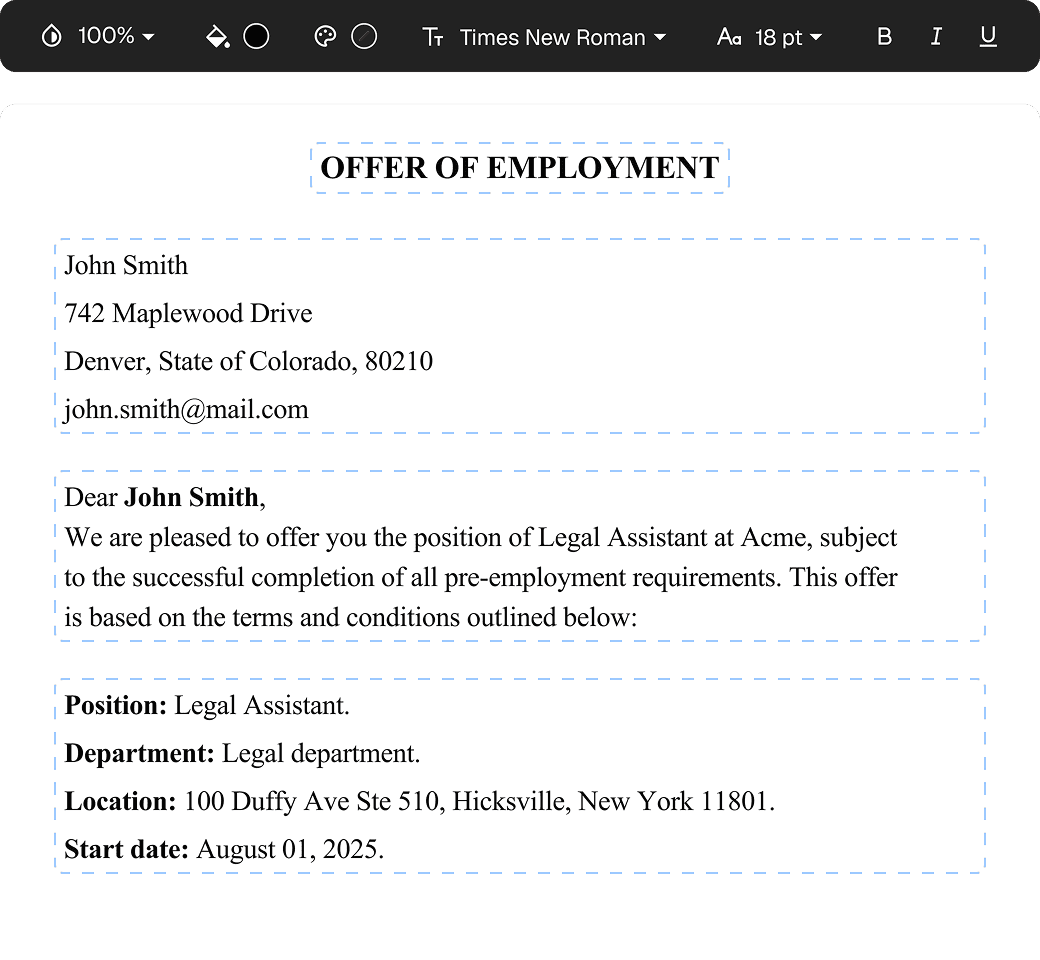
Edit PDFs seamlessly
Tweak agreements before signing or sending for signatures. Update details, add or remove clauses, adjust formatting, and redline changes instantly.
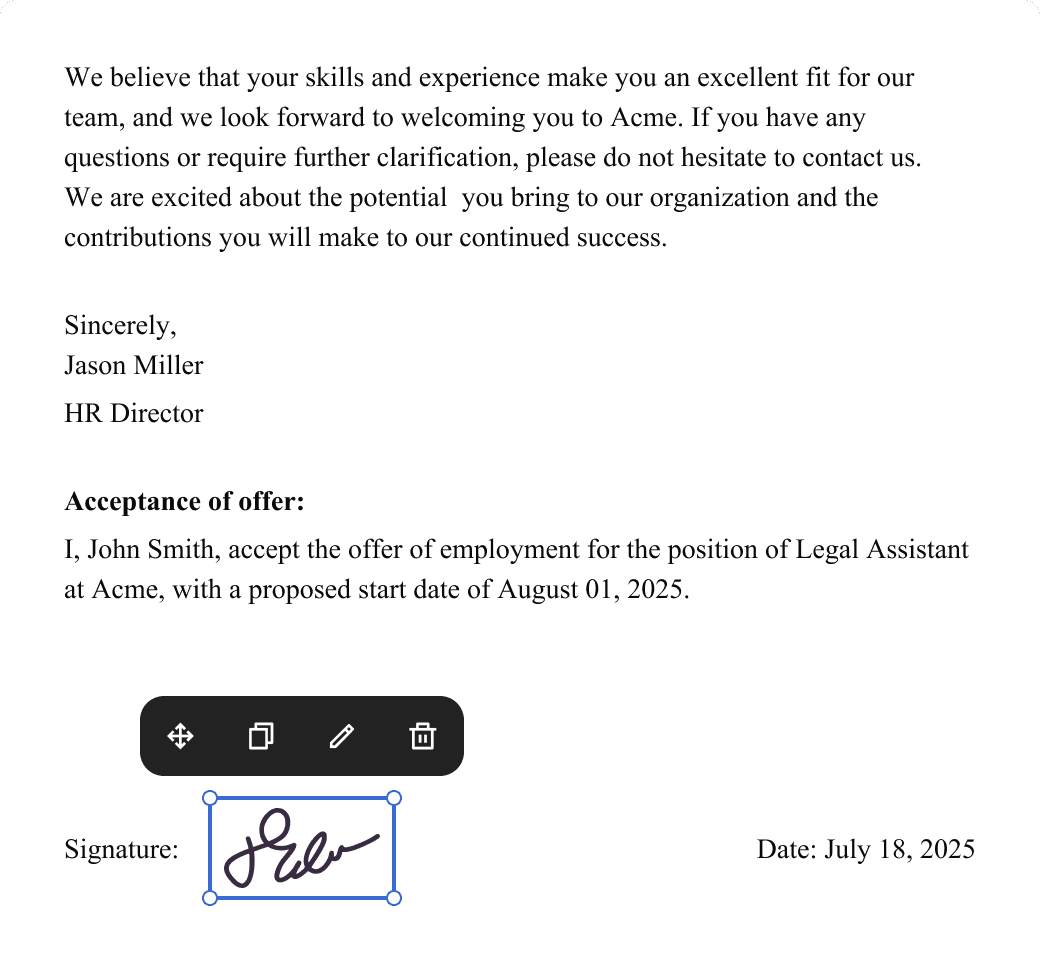
eSign legally and securely
Sign documents and collect legally binding signatures. Invite up to ten people to sign in any order, track the progress, and send reminders.
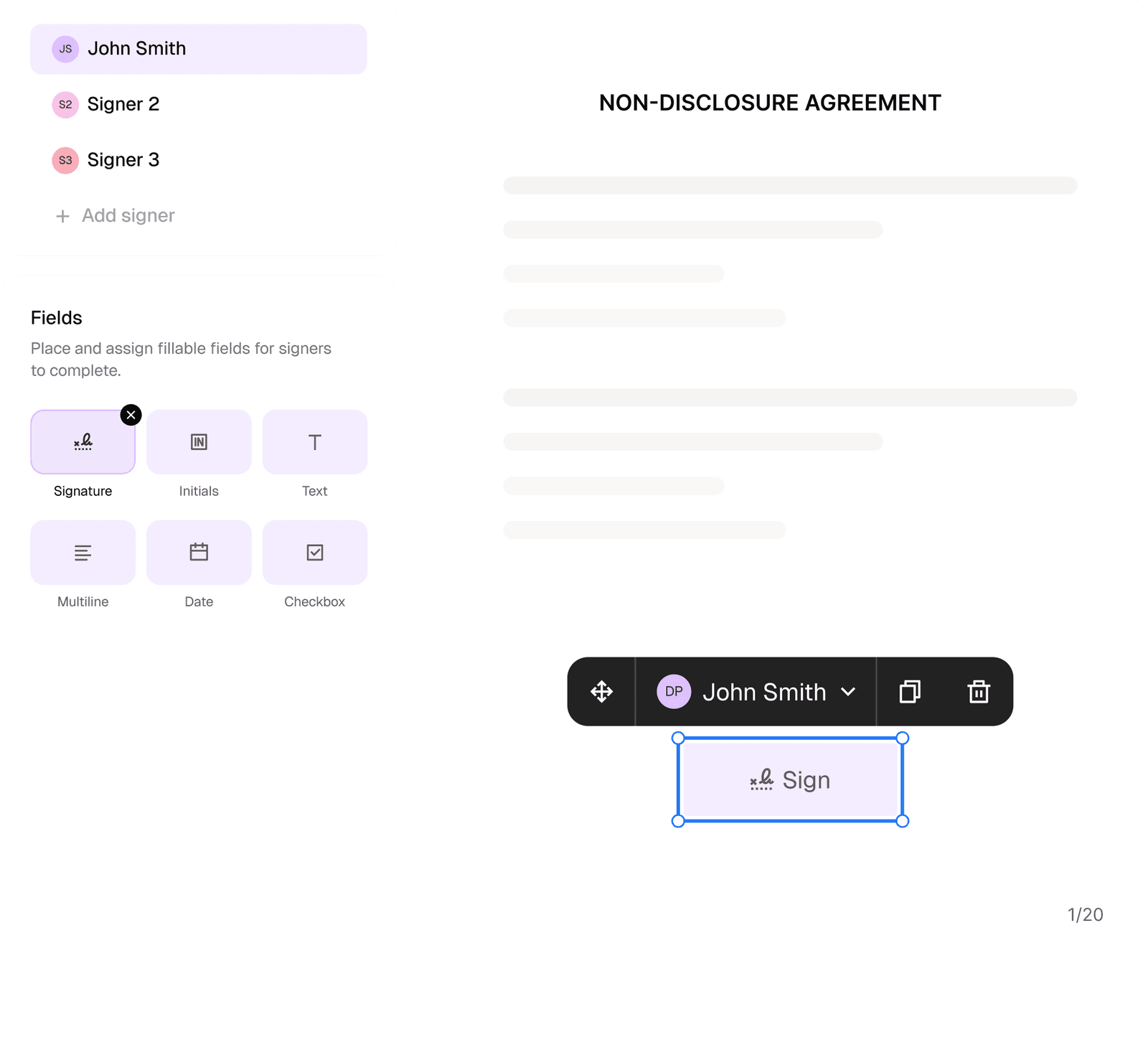
Request legally binding signatures
Invite up to ten people to sign your document in any order. Get a finalized, audit-ready copy without chasing signatures.
Skip the drafting.
Choose from 2,500+ templates
Browse templatesChoose a template
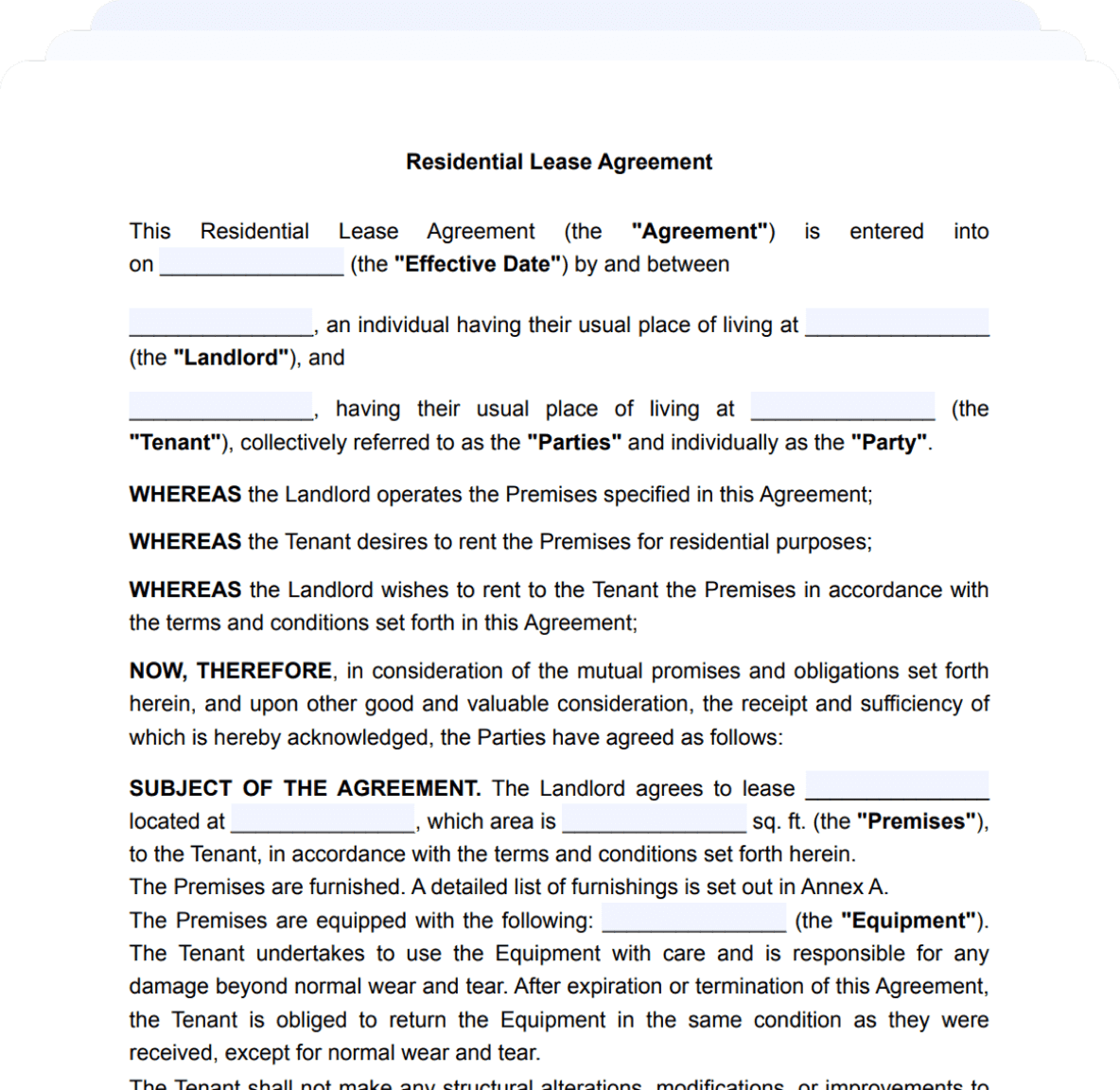
Fill in details
Sign and download