Updated October 15, 2026
15 min read
Independent Contractor Management: Compliance and Risk Guide

Independent Contractor Management: Compliance and Risk Guide
- Who Is an Independent Contractor?
- Types of Independent Contractors
- How to Find Independent Contractors
- Documents Needed to Hire Independent Contractors
- How to Pay Independent Contractors
- How to End a Contractor Agreement
- How to Manage Independent Contractors
- Common Mistakes to Avoid When Working with Contractors
Content
Independent contractors have become a powerful engine that moves businesses forward. From high-skilled specialists to short-term project help, they offer employers what in-house employees cannot: their unique expertise without the need to hire full-time staff.
This guide explains everything you, as a client, should know about how to work with a contractor — from finding top talent to managing contractors and handling international payments so that you can build a solid and mutually beneficial partnership.
Let’s take a look at the independent contractor statistics in the U. S.:
- Independent contractors currently make 45% of the U.S. workforce.
- 51,3% of them provide services occasionally;
- 37,8% work as independent contractors full-time;
- 10,9% work as independent contractors part-time, being employed.
Who Is an Independent Contractor?
An independent contractor is a self-employed individual hired to provide a specific service or complete a project. They work with clients autonomously, decide their own schedule, and often supply their own tools.
Independent contractors vs. employees
Legally, contractors and employees fall under different classifications, which affects everything, from your tax obligations to workplace regulations.
If you, as an employer, misclassify a worker, you risk facing fines and penalties. If you control how, when, and where the worker completes the job, you likely have an employee, not a contractor.

How does the U.S. Department of Labor check if employees and contractors are classified correctly? There is a standard economic reality test based on the analysis of six main factors, according to which a contractor can:
- 1
Opportunity for profit or loss depending on managerial skill.
- Negotiate the pay for the work provided;
- Accept or decline jobs;
- Make decisions to hire others;
- Market or advertise their services to secure more clients.
- 2
Investments by the worker and the employer.
- Invest in equipment, tools, or technology needed for the work;
- Invest in marketing or outreach to grow their client base;
- Take on financial risk.
- 3
Degree of permanence of the work relationship.
- Work on a short-term, project-by-project basis;
- Provide services to multiple clients simultaneously.
- 4
Nature and degree of control.
- Set their own schedule;
- Determine how the work is performed;
- Operate without direct supervision or mandatory monitoring;
- Avoid employer-imposed discipline policies.
- 5
Extent to which the work is an integral part of the business.
- Performs work that is not central to the company’s core operations;
- Handles specialized or one-time projects.
- 6
Skill and initiative.
- Bring specialized skills to the job;
- Operate without training provided by the hiring party;
- Use their expertise to grow their own business;
- Show business initiative beyond simply completing assigned tasks.
If a worker cannot do most of these actions, they should rather be classified as employees.
Types of Independent Contractors
Independent contractors come from many different professional backgrounds and a variety of industries. To organize your work correctly, you should determine which expert you need.
Freelancers
Freelancers are self-employed individuals who take on short-term or project-based work, especially in creative or digital fields. Here are a few examples of professions they represent:
Writers;
Graphic designers;
Web developers;
Photographers;
Animators;
Social media managers.
If you need a new logo, help with your blog content, or someone to design your website, you’re most likely to deal with freelancers. Most often, freelancers work with several clients at once and typically charge either by the project or by the hour. They can work remotely, which gives both of you flexibility.
Freelance economy statistics show that, in 2023, independent contractors brought $1.27 trillion to the U.S. budget.
In 2022, they generated $3.8 trillion in revenue globally.
Consultants
Consultants are independent professionals who offer expert advice in a specific area, such as:
Marketing;
Finance;
Information technology;
Operations;
Human resources.
Unlike freelancers, who usually focus on creating a product or content (like designing a logo or writing an article), consultants are hired to solve problems, offer strategy recommendations, or guide decision-making.
For example, your company might need a marketing consultant to develop a new campaign plan or a financial consultant to help with cash flow analysis. Many consultants work under short- to medium-term contracts and may be involved in one or several projects at once. Their rates are usually higher and depend on their experience and expertise.
Tradespeople
Tradespeople (or skilled trades contractors) work in hands-on, manual industries like construction that require specific training or certification. These are:
Electricians;
Plumbers;
HVAC technicians;
Carpenters;
Welders;
Mechanics.
You might hire tradespeople to remodel a commercial space, conduct urgent repairs, or install new equipment. Unlike consultants or freelancers, tradespeople typically work on-site and may also need to comply with specific building codes, licensing laws, or industry regulations.
It is important to differentiate between a general contractor and an independent contractor in the construction industry.
- A general contractor is a professional responsible for the whole process of constructing a building, who hires independent contractors to complete certain tasks.
- While working with a general contractor, you need to outline your expectations for the project as clearly as possible so that they understand what professionals to search for and what results they should demonstrate.
Gig workers
Gig workers take on short-term, on-demand tasks often arranged through mobile apps or digital platforms. You're probably familiar with this type of work through services like Uber, Lyft, Instacart, DoorDash, Handy, or TaskRabbit. These jobs are usually one-off or temporary and may involve services such as delivery, transportation, manual labor, or basic tech support.
What makes gig work different from traditional freelance or consulting work is that it's piecemeal — gig workers may work as in-house employees and occasionally take part-time tasks without long-standing contracts or business relationships.
For instance, an engineer may work as a taxi driver on weekends. It can be a problem for employers because they have to adjust their plans to the worker's main job schedule.
By 2027, over 86 million people in the U.S. are expected to participate in some form of gig work.
Specialized professionals
Specialized professionals are highly trained individuals who offer advanced or technical services. This group includes:
Certified public accountants;
Lawyers;
Software engineers;
Architects;
Data analysts;
Researchers.
These professionals hold degrees, licenses, or certifications that only a small number of people have. What sets them apart from other independent contractor types is the required expertise, which is rare and sometimes unique, and the responsibility their roles often carry.
How to Find Independent Contractors
It is what a quick Google search cannot help you with. You need to know precisely what specialist is required, where to look, and how to work with contractors who can deliver the results you're after. Here's a simple scheme for you to follow:
- 1
Get сlear on what you need.
Before you start searching, take some time to understand what kind of professional you want. What problems should they solve? What skills or experience should the contractor have? How long will the project take? What's your budget?
Write all this down. Once you have all the answers, you'll be able to filter out candidates who aren't a good fit and, consequently, choose the right contractor who truly understands what you're asking for.
Break your project scope into these parts:
- Deliverables (what you want done);
- Skills required (e.g., graphic design, copywriting, coding);
- Timeline (start and end dates);
- Budget (hourly or fixed rate).
- 2
Use several channels.
Once you know what you're looking for, it's time to find potential contractors. There are many platforms designed specifically for this purpose, and some work better than others depending on the job.
- 3
Review portfolios and samples.
Once you find several promising candidates, take a close look at their past work. Ask each of them to provide a portfolio that demonstrates their skills and expertise. Compare them not just on their work quality but also on how well they fit your project needs.
Here are a few things you need to look for:
- Relevant experience (have they done similar jobs?);
- Creativity and attention to detail;
- Reviews from previous employers, if any.
- 4
Look at reviews and references.
Most freelance platforms have a review system. Feedback from past clients can show you how well the contractor does their work: meets deadlines, communicates, and provides services.
If you're hiring outside a platform (like via LinkedIn or a referral), ask a candidate for a couple of references from their past employers. You may also contact the letter and ask:
- Did the contractor meet deadlines?
- Were they easy to work with?
- Would you hire them again?
- 5
Have a one-to-one conversation.
A short call or video chat before you sign the contract is a step that can help you and the independent contractor understand whether it's a match. Talk about the project, your expectations, and ask the contractor how they typically work with clients.
Ask about:
- How they like to work (tools, timeframes, communication media);
- Their availability;
- Their understanding of your project.
Besides, a short conversation will show you how well the two of you can find the common language, which is very important for effective cooperation.

Documents Needed to Hire Independent Contractors
Depending on the type of contractor you’re going to work with — freelancer or a general one — you may need different papers to legalize your cooperation. Here are the key documents a business needs to work with independent contractors:
1. Independent contractor offer letter
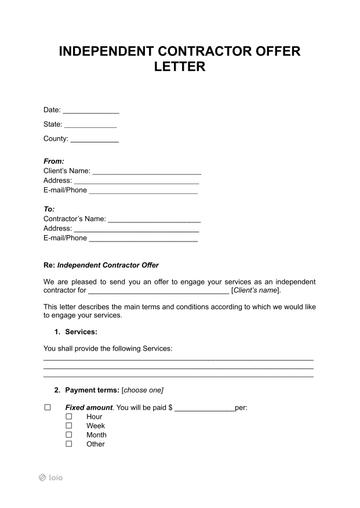
This is usually the starting point of your working relationship. An independent contractor offer letter isn’t a full contract; it’s more of a professional “yes, we’d like to work with you.” It outlines what you actually offer: project description, expected start date, payment, and, perhaps, some bonuses.
Although it’s not legally binding, an offer letter helps make sure both you and the contractor agree on the most important things before you jump into the details.
2. Independent contractor agreement
The independent contractor agreement is the core document that confirms the worker is a contractor — not an employee — and is hired for a project or a certain period of time. It includes all the key terms of the cooperation:
- 1
- Scope of work;
- Payment size and methods;
- Deadlines;
- Intellectual property rights;
- Early termination terms.
Pay attention to the difference between an independent contractor agreement vs. an employment contract:
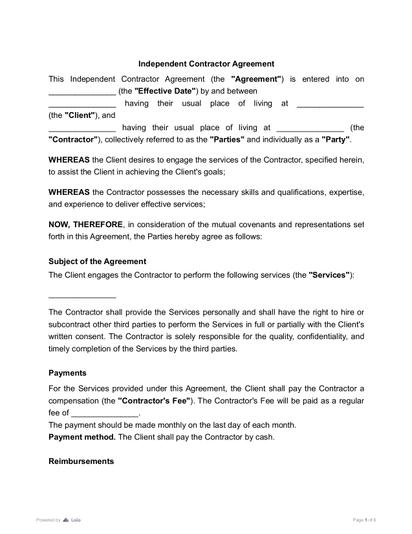
An independent contractor agreement outlines the terms between a business and a self-employed individual hired for specific tasks or projects. Contractors manage their own schedule, use their own tools, and are responsible for paying their own taxes.
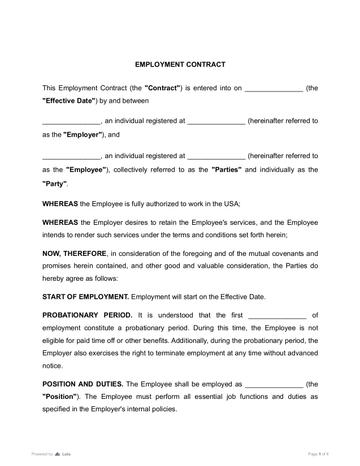
Meanwhile, an employment contract sets the formal relationship between a business and an employee. It typically includes set working hours, benefits, ongoing responsibilities, and the employer's obligation to withhold taxes.
In case any changes in the terms or nature of your cooperation arise, you must document them and edit the original contract or sign a new one.
Keep a copy of the document till the independent contractor provides all the services expected and for at least seven years after your cooperation ends.
3. Professional services agreement
A professional services agreement is used when you hire specialized professionals, such as consultants, legal advisors, or IT specialists. While it covers similar topics as the general independent contractor agreement — scope, deliverables, terms — it usually includes specific clauses around liability, insurance, warranties, and compliance with laws relevant to the contractor’s profession.
You might not need this level of formality for every contractor, but if you want to work with someone with advanced expertise or a role tied to regulatory requirements, a professional services agreement can give you additional protection.
- Independent Contractor Offer Letter
 8109 downloads
 - Employment Contract
 4456 downloads
 - Professional Services Independent Contractor Agreement
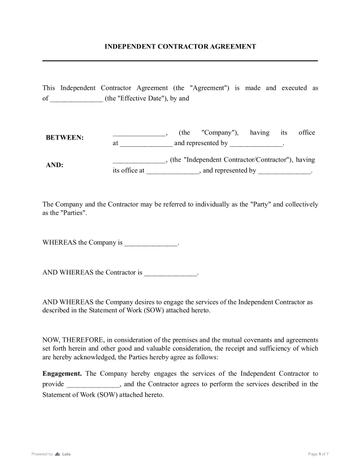 4080 downloads
4. Freelance contract
If you’re dealing with contractors in a creative field, like a writer, photographer, illustrator, or video editor, you’d better sign a freelance contract. It has the same function as a contractor agreement but tends to be tailored for creative projects, where usage rights, revisions, and deadlines are particularly important. For example, the contract might say how many rounds of edits are included, whether you (or the contractor) will own copyrights, and what happens if a project is delayed.
As freelancers often work remotely, it’s more convenient and safer to have them sign the contract online rather than send a paper version by mail.
5. Statement of work (SOW)
A statement of work defines what the contractor is going to do: the tasks, deliverables, deadlines, and the tools or platforms to be used. You may include a statement of work as an attachment to the contractor agreement or professional services agreement.
This document is especially helpful for larger or multi-phase projects that involve several people and require clear checkpoints. If there are any misunderstandings about what was supposed to be done or by when, the SOW is what you’ll come back to.
6. Non-disclosure agreement (NDA)
If you plan to share confidential business information with the contractor (such as customer lists, internal processes, financial data, or intellectual property), you need a non-disclosure agreement. It prevents the contractor from sharing or using your information without your permission.
This document enlists the data considered confidential, how long the confidentiality applies, and what legal action might follow if the agreement is broken. With it, you can be sure that no sensitive information about your project gets to the competitors or third parties.
- Freelance Contract
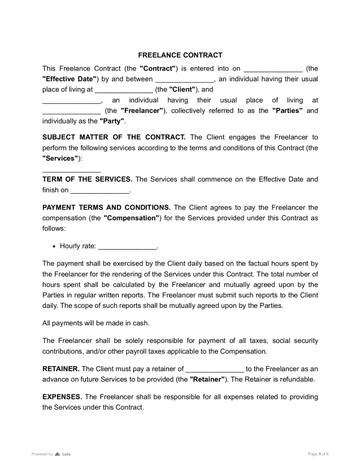 3991 downloads
 - Statement of Work (SOW)
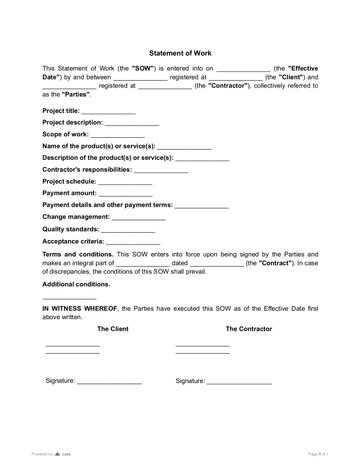 4197 downloads
 - Non-Disclosure Agreement (NDA)
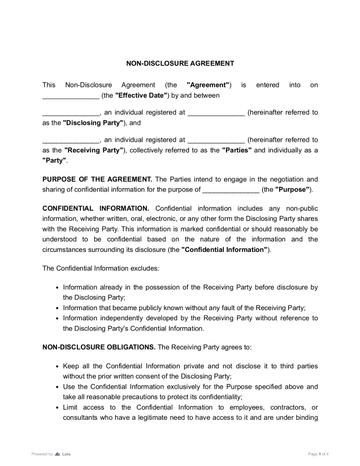 4721 downloads
How to Pay Independent Contractors
The payment size depends on many factors, from the expertise a contractor has to whether they use their tools or yours. Here are some widely used payment options that U.S.-based independent contractors prefer:
Bank transfers: Reliable and common, especially for local payments.
PayPal: Easy to use and fast, but fees can add up for larger payments.
Payoneer: Great for international contractors. Supports multiple currencies.
Wise (formerly TransferWise): Low fees and real exchange rates. Ideal for cross-border payments.
Direct deposit: Convenient for domestic workers if they’re based in the same country.
How often should you pay?
The payment schedule depends on what you agree to in the contract. Here are the most common options:
- 1
Per project: One payment after a contractor completes all the tasks.
- 2
Milestones: Payments are made after each key stage of the project is completed.
- 3
Weekly or monthly invoices: This option is most common for long-lasting projects.
Paying international contractors
For your cooperation to be fruitful, you need to follow the payment rules for independent contractors precisely. If you work with someone based in another country, consider currency exchange rates. Platforms like Wise or Payoneer usually have lower conversion costs and process transfers faster.
If you pay $1,500 USD to a contractor in Europe through a bank, they might lose over $50 in fees and currency conversion. Using a platform like Wise can lower that to under $10.
Tax responsibilities when hiring contractors
Unlike employees, independent contractors pay their own taxes. However, businesses hiring them, along with the standard set of tax documents, also have to file additional forms with the Internal Revenue Service:
If you work with U.S.-based contractors:
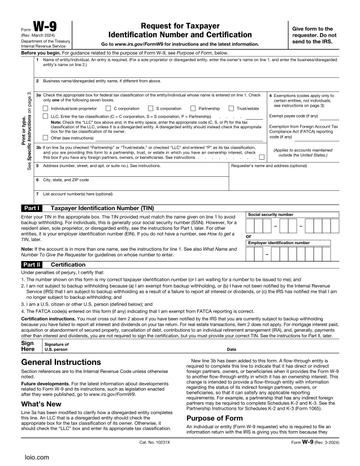
- Collect IRS W-9 to ensure you complete all the tax documentation properly;
- Issue Form 1099-NEC if you paid the contractor $600 or more in a calendar year;
- Keep track of all payments for accurate reporting.
If you work with international contractors:
- Collect W-8BEN for individuals, and W-8BEN-E for companies;
- Withhold taxes only if required by U.S. tax law or a tax treaty.
- IRS W9 Form
 17019 downloads
 - Form 1099-NEC
 5863 downloads
How to End a Contractor Agreement
If you decide to terminate the cooperation with the independent contractor earlier than your contract stipulates, you need to follow a strict procedure:
- 1
Check the contract first.
Before you inform the freelancer about your decision, read through the agreement you signed. Look for a termination clause — it usually explains how and when you can end the partnership. It may require you to give the contractor a written notice, often 7 to 30 days in advance.
If your agreement doesn’t include clear termination terms, ask a lawyer for contractor advice. Never assume you can cancel a contract at any time without consequences.
- 2
Send a written notice.
Inform the contractor in writing. Send it by email, mail, or give it in person if possible. Include the reason for ending the agreement, the end date, and any remaining expectations about their work.
- 3
Finalize all payments.
Pay for all work completed up to the termination date. This includes any remaining invoices, project milestones, or approved expenses. Keep the records of all the payments made.
- 4
Collect final deliverables.
Ask for everything outlined in the contract: documents, completed files, login details, licenses, and any other work-related materials. Make a checklist in advance so nothing gets missed.
- 5
Remove system access.
Protect your business by cutting off access to any of your tools or systems that the contractor used. This includes CRM platforms, company emails, shared folders, and project management software.
If your team uses tools like Slack, Trello, or Zoom, make sure to remove the contractor’s permissions as soon as the cooperation ends.
- 6
Ask for feedback.
Even when the job ends, there’s room to learn. Ask the contractor for thoughts on how the project went or how you handled things. It will help you to prevent problems and mistakes in the future.
How to Manage Independent Contractors
Unlike employees who are under constant control of the employer, independent contractors decide on their own when and how they work. Therefore, clear communication and strict planning are essential for effectively dealing with contractor problems. Here are a few contractor tips on how to manage 1099 contractors to make your cooperation clear and effective:
Use project management tools.
Platforms like Trello, Asana, or Monday.com can help you assign tasks, track progress, and set due dates.
Hold regular check-ins.
Even a 10-minute call once a week can make a big difference. Use this time to ask questions, clarify goals, and make sure everything stays on track.
Give clear, prompt feedback.
If something doesn't work, inform the contractor about it early. Fixing things before they are done is easier than making corrections in the whole project.
Respect their work style.
Contractors may work outside regular business hours, use their own tools, or take on other clients. That's normal. Focus on results, not how or when they work.
Build relationships.
Contractors often return for future projects when they feel respected and trusted. Treat them like a partner, not just a worker.
Common Mistakes to Avoid When Working with Contractors
- 1
Misclassifying employees as contractors which results in serious legal and tax consequences.
- 2
Using verbal agreements instead of signing contracts.
- 3
Giving strict instructions on how work must be done may change the contractor's legal status to an employee.
- 4
Ignoring tax obligations or misreporting payments can penalize your business.
- 5
Skipping background checks can lead to a situation where you hire a person who does not have the proper skills.
- 6
Late payments create mistrust and discourage top contractors from working with you again.
Cooperating with independent contractors is a great opportunity for businesses to get access to high-quality services and unique expertise at a minimal cost. At the same time, such a partnership requires special attention to legal details, effective independent contractor management, and a well-organized communication process that does not leave space for misunderstandings, delays, and mutual claims. By following the instructions on how to manage contractors provided in this guide, you can be sure your work together will be smooth and fruitful.
More guides
September 1
7 min read
How to Provide Proof of Employment: Documents and Steps

September 10
14 min read
How to Protect Your Small Business from Lawsuits

July 25
12 min read
How to Register a Company in the US: What No One Tells You in 2026

October 15
How to Start a Staffing Agency: Licensing, Pricing, and Cash Flow

September 7
9 min read
MSA vs SOW: Key Differences and Why You May Need Both

July 21
8 min read
Statement of Work vs Scope of Work: Differences and How They Work Together

One home for your
agreements
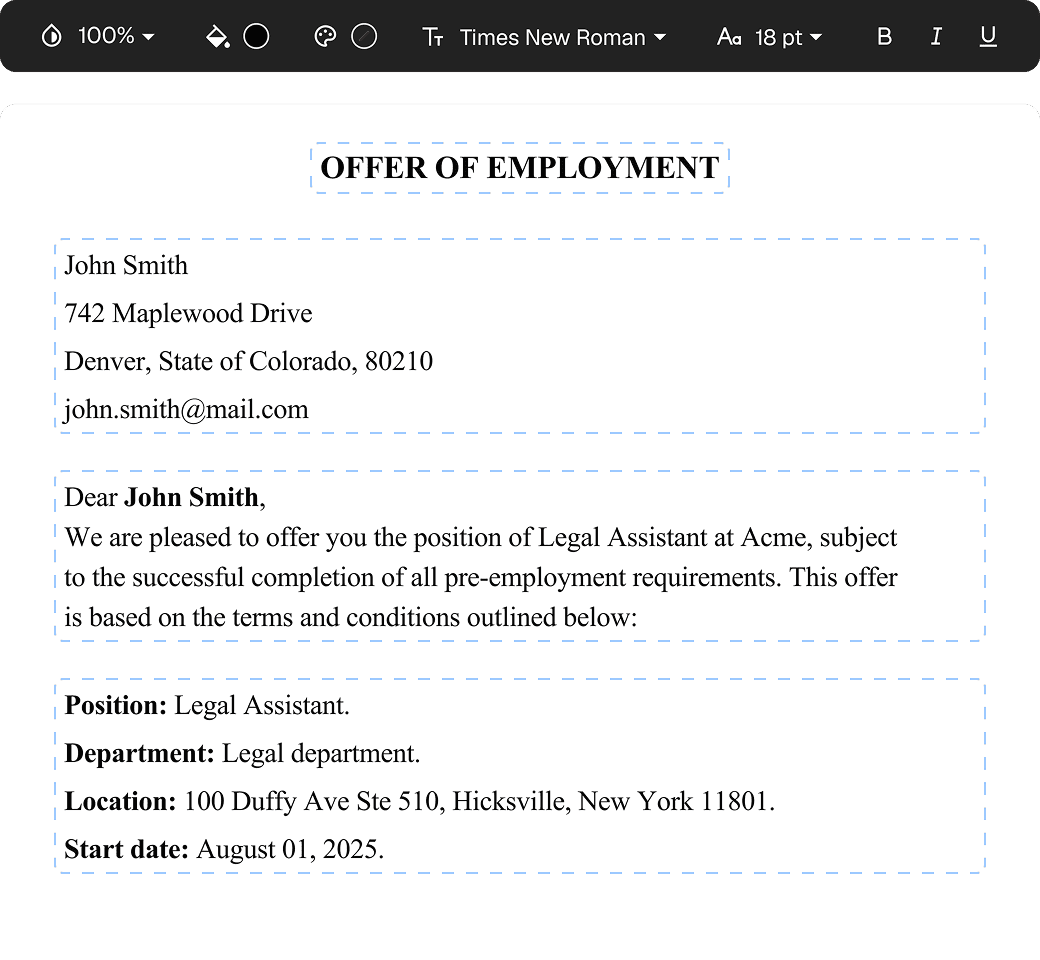
Edit PDFs seamlessly
Tweak agreements before signing or sending for signatures. Update details, add or remove clauses, adjust formatting, and redline changes instantly.
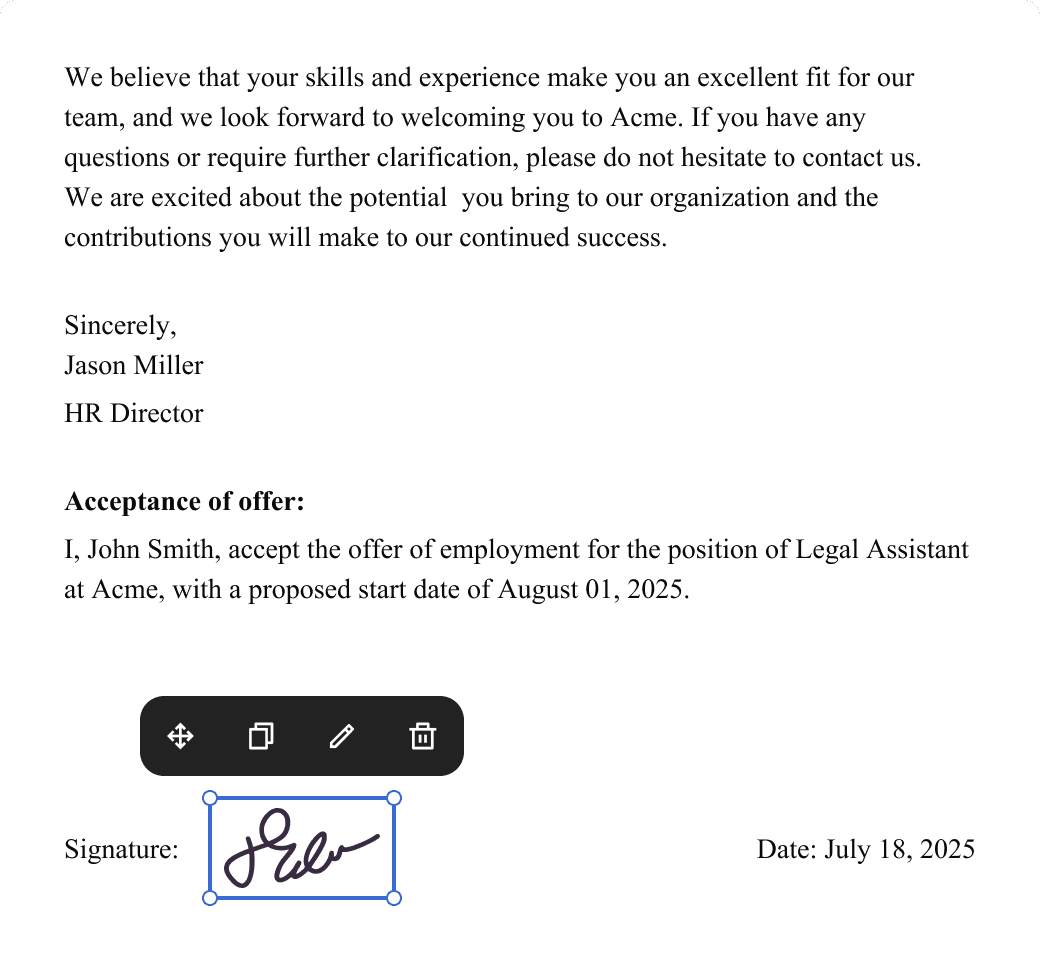
eSign legally and securely
Sign documents and collect legally binding signatures. Invite up to ten people to sign in any order, track the progress, and send reminders.
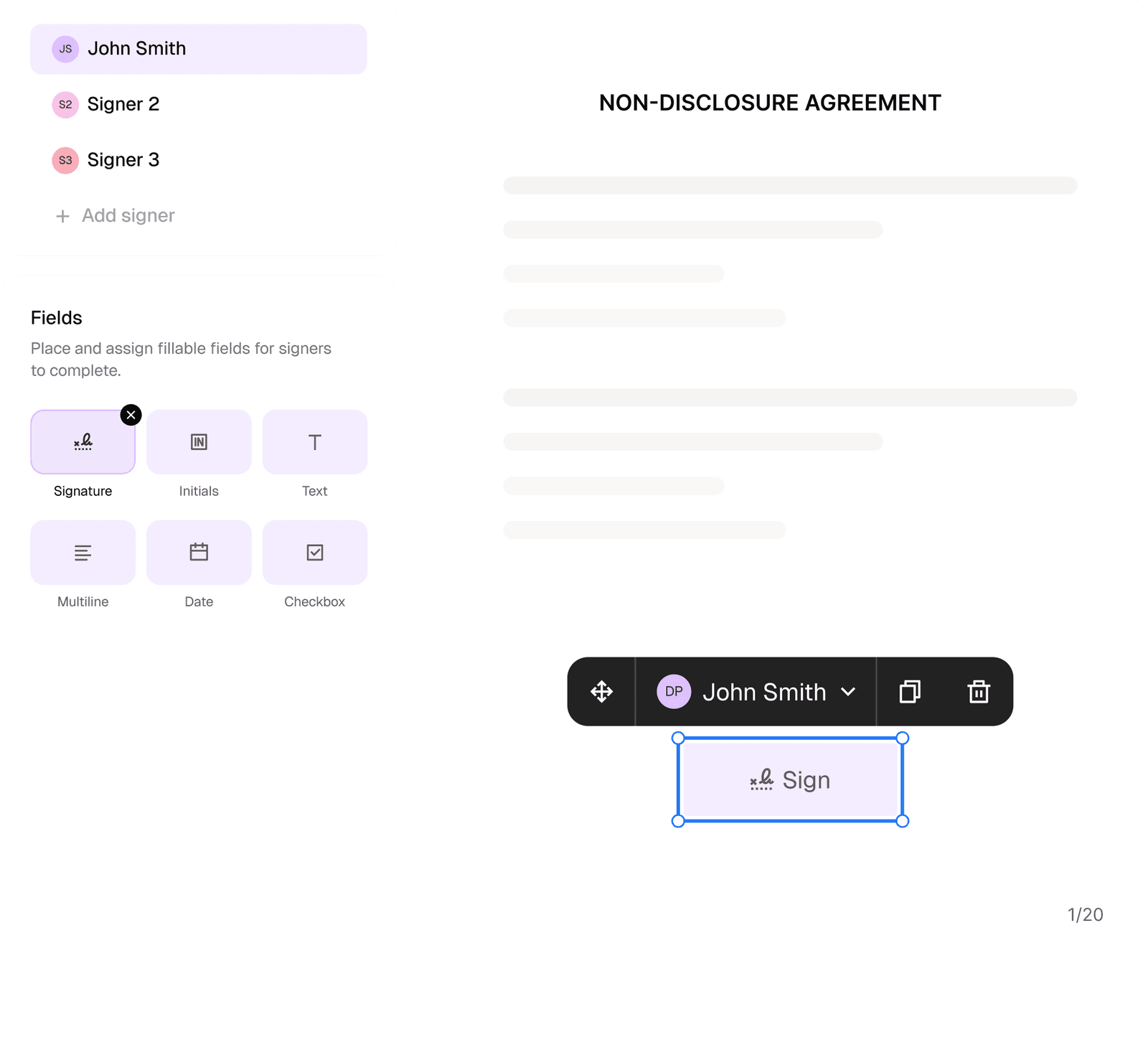
Request legally binding signatures
Invite up to ten people to sign your document in any order. Get a finalized, audit-ready copy without chasing signatures.
Skip the drafting.
Choose from 2,500+ templates
Browse templatesChoose a template
Fill in details
Sign and download