Updated October 7, 2026
How to Start a Staffing Agency: Licensing, Pricing, and Cash Flow

How to Start a Staffing Agency: Licensing, Pricing, and Cash Flow
- What Does a Staffing Agency Actually Do?
- Choose a Staffing Niche Before Looking for Clients
- Research Demand Before Opening a Staffing Agency
- Write a Staffing Agency Business Plan
- Check Licenses, Registration, and Legal Requirements
- Decide Whether To Form an LLC When Starting a Staffing Agency
- Plan Startup Costs and Payroll Funding
- Get Insurance Before Placing Workers
- Build a Recruitment Workflow for Your Staffing Agency
- Prepare the Documents You Need Before Sending Candidates
- Set Pricing and Payment Terms for Your Staffing Agency
- Choose Recruiting Tools and Systems
- How Much Can a Staffing Agency Make?
- Find Your First Staffing Clients
- Avoid Common Beginner Mistakes When Starting a Staffing Agency
Content
There is a moment most recruiters recognize. You are sitting across from a hiring manager, you know exactly who they need, and you also know the agency you work for is going to pocket a fee that took you ten phone calls to earn. The thought follows quickly: what if I just did this myself?
Opening a staffing agency means matching employers with candidates and earning a fee or markup. But it's the business mechanics behind it: money does not flow the way you'd expect, and the legal setup varies more by state than most founders realize.
This guide walks through how to start an employment agency or a staffing business from the beginning. What model to choose, how to validate demand, what the legal and financial setup actually requires, how to price placements correctly, and how to find the first clients without burning through your savings before revenue arrives.
What Does a Staffing Agency Actually Do?
A staffing agency, sometimes called an employment agency or recruitment agency, depending on the state and the niche, connects employers with qualified candidates faster than either side could manage alone. The surface answer to what that looks like day-to-day is easy: match people, collect a fee. But the business models underneath vary so much that two people can both call themselves staffing firm owners and run completely different operations.
With direct recruitment, you find a candidate, the client hires them, and you invoice a placement fee. No payroll costs, no ongoing obligations. The downside is a longer sales process and the fact that clients sometimes try to “back out” as soon as they get the names they need.
The temp staffing model is more involved. You act as the employer of record for workers placed at client sites, which means you handle payroll, taxes, and workers' comp for people doing work in someone else's building. You bill the client a markup on hours, but you pay the worker first, while the client pays you on Net 30 or 60 terms.
Temp-to-hire is a middle ground in which the worker starts as a temp and converts to a permanent role if the client wants to keep them. Contract staffing places longer-term professionals, often in IT, finance, or engineering, on project engagements.

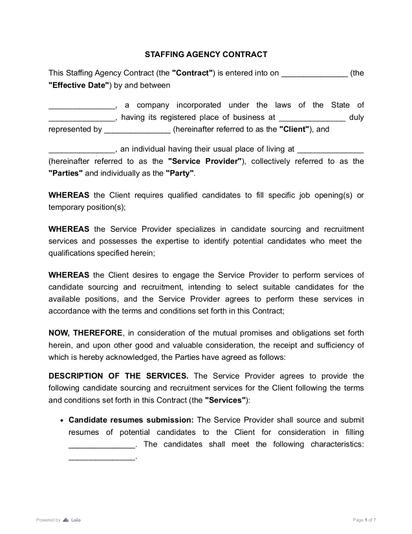
Most new agencies that try to run all four models at once end up doing none of them well. Pick one, get it working, then expand. And whatever model you start with, the contract you use with clients needs to reflect it. A staffing agency contract for a temp placement looks very different from one for a direct-hire search. If a client sends over their own version instead, run it through an AI contract reviewer before signing, or edit the PDF directly if it just needs a few terms adjusted.
Choose a Staffing Niche Before Looking for Clients
Every niche has its own pay rate norms, workers' comp classifications, compliance requirements, and client expectations. If you try to serve everyone, you end up being fluent in nothing.
The most common niches are healthcare, IT, light industrial, administrative, legal, finance, hospitality, construction, and executive search. They are not all the same:
Healthcare pays well but comes with credentialing headaches and expensive workers' comp.
Industrial runs on volume with thin margins, and physical risk directly affects your insurance costs.
IT staffing means higher pay rates and sophisticated clients, but payment terms tend to run long.
Executive search is slow money, these deals take months, but the fees are large.
Pick the niche where you can sit across from a client and actually back up what you're saying. Eight years of placing software engineers is a real credential. Having googled healthcare credentialing requirements last week is not, and clients can tell the difference within the first five minutes of a conversation.
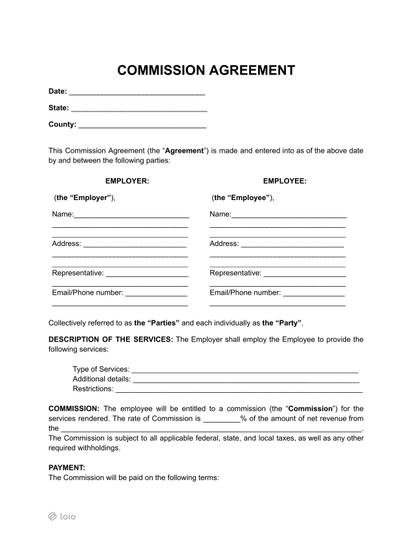
One practical note: if you plan to bring in other recruiters early on a commission basis, document the terms in the commission agreement before anyone places a candidate. Who gets credit for the placement, when does commission get paid, what happens if the client delays payment — these questions get uncomfortable fast when money is involved, and nothing is in writing.
Research Demand Before Opening a Staffing Agency
Most first-time agency owners invest in infrastructure before confirming that a real hiring problem exists in their market. Website, software, branding. None of that matters until you know someone will pay you to solve something.
The fastest way to check is job boards. Filter by your niche and your geography, and look for repetition. A company that has posted the same operations manager role four times in three months is not doing fine on its own. That is a real problem with real costs, and they know it.
Employer review sites like Glassdoor and Indeed are also useful, but not for what most people look for. High turnover ratings and reviews that repeatedly mention scheduling chaos or constant understaffing tell you that an employer hires constantly. They are not always easy clients, but the demand is genuine and recurring.
Check what existing agencies in your niche are doing badly. Slow fills, generic candidate submissions, and high no-show rates show up in online reviews and in the frustration of hiring managers who will talk if you ask. You do not need to outspend anyone. You need to fill a role they fumbled.
Before you commit to a niche, also check the pay rates. If the market rate is too low to support your markup and still attract decent candidates, the math never works, no matter how good your process is.
Write a Staffing Agency Business Plan
A business plan is useful if it forces you to answer the questions that will actually cost you money if you skip them.
What niche and model are you starting with?
Who are your first ten realistic target clients, and what do you actually know about their current hiring problems?
Where will your candidates come from, and how long will it take to build a reliable pipeline?
What are your startup and monthly costs, and what is your break-even point?
Which clients or jobs will you say no to?
That last one matters more in staffing than in most businesses. Clients with unrealistic pay rates will pressure you into sending weak candidates. Clients who pay on Net 90 terms can sink a temp agency's cash flow before the relationship ever becomes profitable. Know your limits before the phone starts ringing.
Startup costs for a staffing business can range from a few thousand dollars for a lean, do-it-yourself launch to $250,000 or more for an operation that outsources everything, depending on niche, location, and how much working capital you need to cover payroll while waiting for client payments.
Check Licenses, Registration, and Legal Requirements
Start with the universal basics: register your business entity with your state's secretary of state, get an EIN from the IRS, and open a dedicated business bank account before any money moves.
Staffing-specific rules vary sharply by state. Five worth naming directly:
Massachusetts. Agencies must be licensed or registered with the Department of Labor Standards under the Employment Agency Law, M.G.L. c. 140, §§46A–46R. Staffing firms are also covered separately by the Temporary Workers Right to Know Law, M.G.L. c. 149, §159C, which governs pay disclosures, transportation fee caps, and worksite notices.
New Jersey. Registration with the Division of Consumer Affairs is required under N.J.S.A. 34:8-43 et seq. The DCA's regulated business rules distinguish employment agencies from other personnel services, and misclassifying which category you fall into can mean fines.
California. No single staffing license exists, but every employment agency must file a $3,000 surety bond with the Secretary of State under Civil Code §1812.503. Employment counseling services need a separate $10,000 bond under §1812.510. W-2 versus 1099 worker classification is scrutinized closely here.
New York. Licensing is split by geography, not stacked. Outside New York City, the state Employment Agency License (Form LS 355) requires a $5,000 bond, or $10,000 for modeling agencies and overseas domestic-worker placement. Inside New York City, you license with the DCWP instead, with the same $5,000 to $10,000 bond structure naming the city as certificate holder.
Illinois. Private employment agencies are licensed through the Department of Labor under the Private Employment Agency Act, 225 ILCS 515.
Some states require no state-level employment agency license at all: Delaware, Georgia, Idaho, Maryland, Mississippi, Missouri, Ohio, Pennsylvania, and South Dakota among them, though local permits may still apply.
Direct-hire and executive search agencies are often regulated more lightly than temp staffing, since temp agencies act as the legal employer of record. Treat this list as a starting point, not a substitute for checking your own state department of labor. Licensing rules and bond amounts change.
Decide Whether To Form an LLC When Starting a Staffing Agency
Most staffing founders form an LLC before hiring their first worker, and for practical reasons. You are sitting in the middle of employment relationships that can generate claims from multiple directions: a client disputes a fee, a candidate alleges discriminatory screening, or a placed worker gets injured at the client's site. An LLC puts a wall between those claims and your personal bank account.
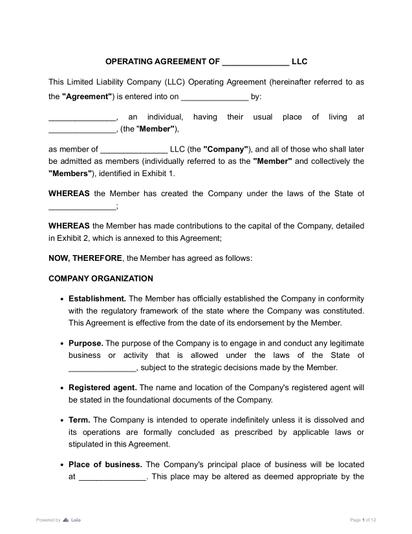
If you are starting with a partner, the LLC also forces a conversation you want to have while things are still calm: who owns what, how decisions are made, how profits are split, and what happens if one person wants to leave? An LLC operating agreement documents those answers before anyone is under financial stress.
What an LLC does not do: it does not protect you from personal liability on loans or leases you guarantee yourself. It does not replace insurance. And it only actually works when your business and personal finances stay completely separate, which means a business bank account from day one, not "I'll sort it later."
Plan Startup Costs and Payroll Funding
Most first-time staffing founders underestimate costs, not because they miss the obvious line items, but because they do not fully account for the payroll timing problem that is specific to temp staffing.
The visible costs are manageable: registration and licensing fees, legal documents, insurance premiums, a website, an applicant tracking system, job board subscriptions, background checks, and payroll infrastructure. For a lean direct-hire operation, you might get started for a few thousand dollars. For a temp agency with workers' comp coverage and proper payroll from day one, you are looking at significantly more.
Invoice factoring and payroll funding exist specifically to bridge that gap.
Invoice factoring means selling an outstanding client invoice to a factoring company for immediate cash, minus a fee. You don't go to a bank for this, you work with a factoring or payroll funding provider who specializes in staffing.
Payroll funding works similarly: you submit approved timesheets or invoices, and the funder advances up to 90% of the value to cover this week's payroll, releasing the rest once the client pays. Most temp agencies use one of these from the start, not as a backup plan but as the mechanism that makes weekly payroll possible while clients pay on net-30 to net-90 terms.
Get Insurance Before Placing Workers
Many commercial and institutional clients won't sign a vendor agreement without a certificate of insurance showing minimum coverage. Insurance here isn't back-office paperwork. It can decide whether a client works with you at all.

Build a Recruitment Workflow for Your Staffing Agency
Agencies lose clients less often over price, and more often because a candidate didn't show up, the intake call was too shallow, or the submission made it obvious nobody understood the role.
The intake call is where most of the real work happens. Most new owners spend ten minutes on it. The good ones spend forty, finding out why the role is open, what happened to the last candidate who came close, and what would make this placement a success six months out.
Sourcing depends on your niche. Industrial and administrative roles often fill faster through local job boards and community referrals than through LinkedIn. For IT and professional roles, passive outreach through LinkedIn and niche communities tends to be more effective.
Screening is where your reputation is made or lost:
- Confirm real skills and experience.
- Check the candidate is genuinely interested in this role at this pay rate.
- Talk to them long enough to judge how they communicate.
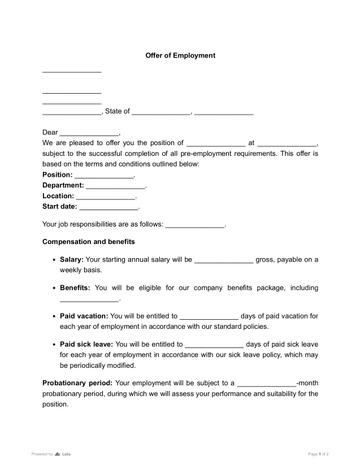
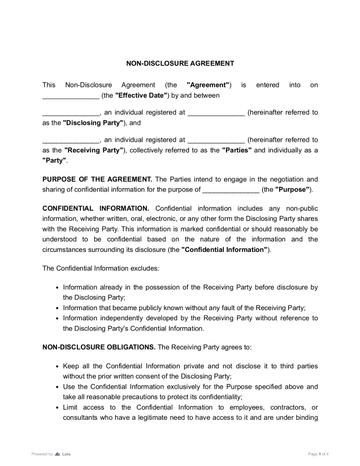
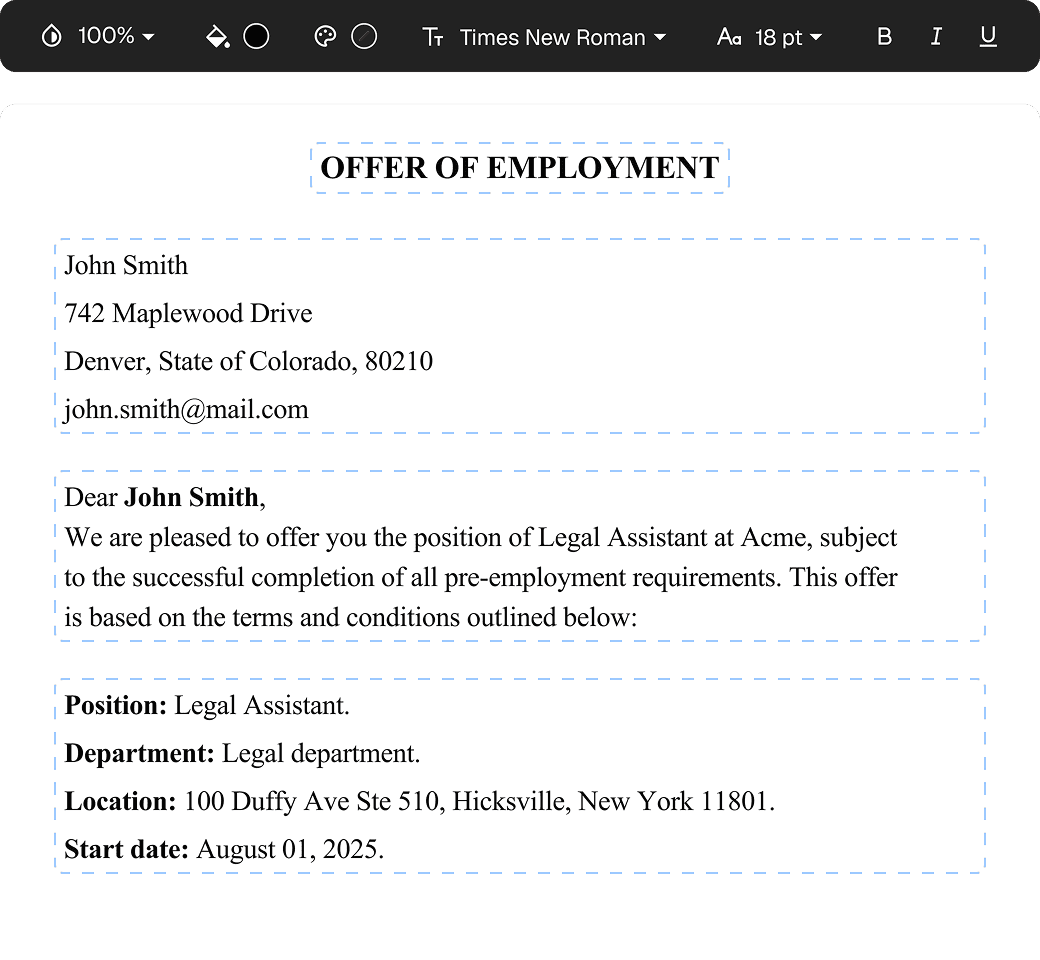
Two things that often get skipped before a candidate's first day: an offer letter that formally sets out the role, pay rate, and start date, and an NDA when the placement involves access to the client's confidential information or internal systems. Both are simple. Both prevent avoidable problems.
Follow up with both sides in the first week. Problems that surface early are almost always fixable. The ones you find out about at week six usually mean the relationship is already over.
- Offer of Employment
 4309 downloads
 - Non-Disclosure Agreement (NDA)
 4639 downloads
Prepare the Documents You Need Before Sending Candidates
Before sending resumes or placing workers, get your paperwork in place. Written terms protect your fee, payment timeline, candidate ownership, and replacement rules. Many new agencies skip this, relying on handshake agreements with clients they trust. Then an invoice gets disputed, and trust turns out not to be a legal document.
Staffing Agency Contract
Covers your fees and what triggers them, payment due dates, how long you own the candidate relationship after introduction, and what happens if the client hires the candidate outside the agreed process. Decide your replacement guarantee terms before a client asks. Every client will ask.
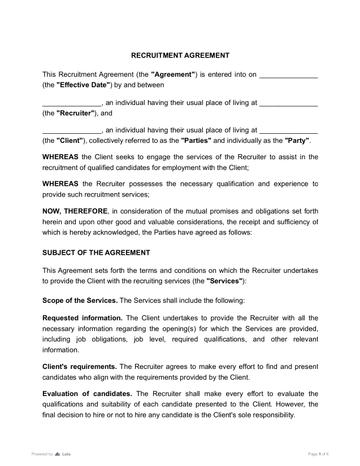
Recruitment Agreement
When a client relationship grows into an ongoing recruiting partnership rather than individual placements, a recruitment agreement formalizes that separately, covering scope, exclusivity, and how either side can end the arrangement.
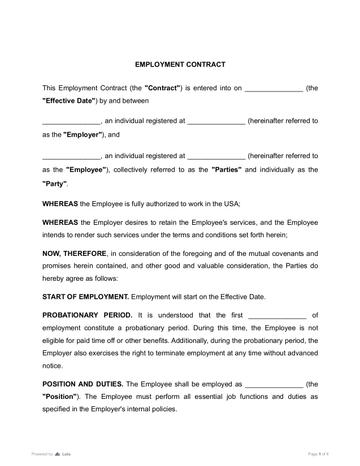
Employment Contract
Your own internal recruiters need an employment contract covering role, compensation, and non-solicitation terms. This protects your candidate database and client relationships if they leave.
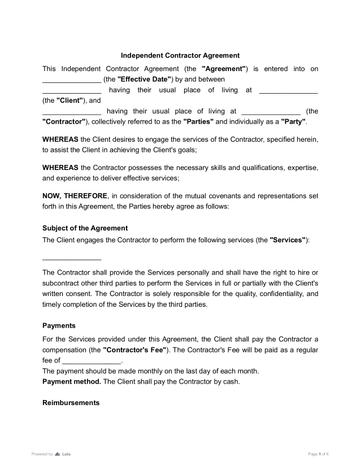
Independent Contractor Agreement
External recruiters or sourcers brought in for specific searches need an independent contractor agreement that keeps taxes, placement ownership, and deliverables clean.
Invoice Template and LLC Operating Agreement
A clear invoice template keeps billing and payment records unambiguous. If you have co-owners, the LLC operating agreement covers ownership, profit sharing, and exit terms.
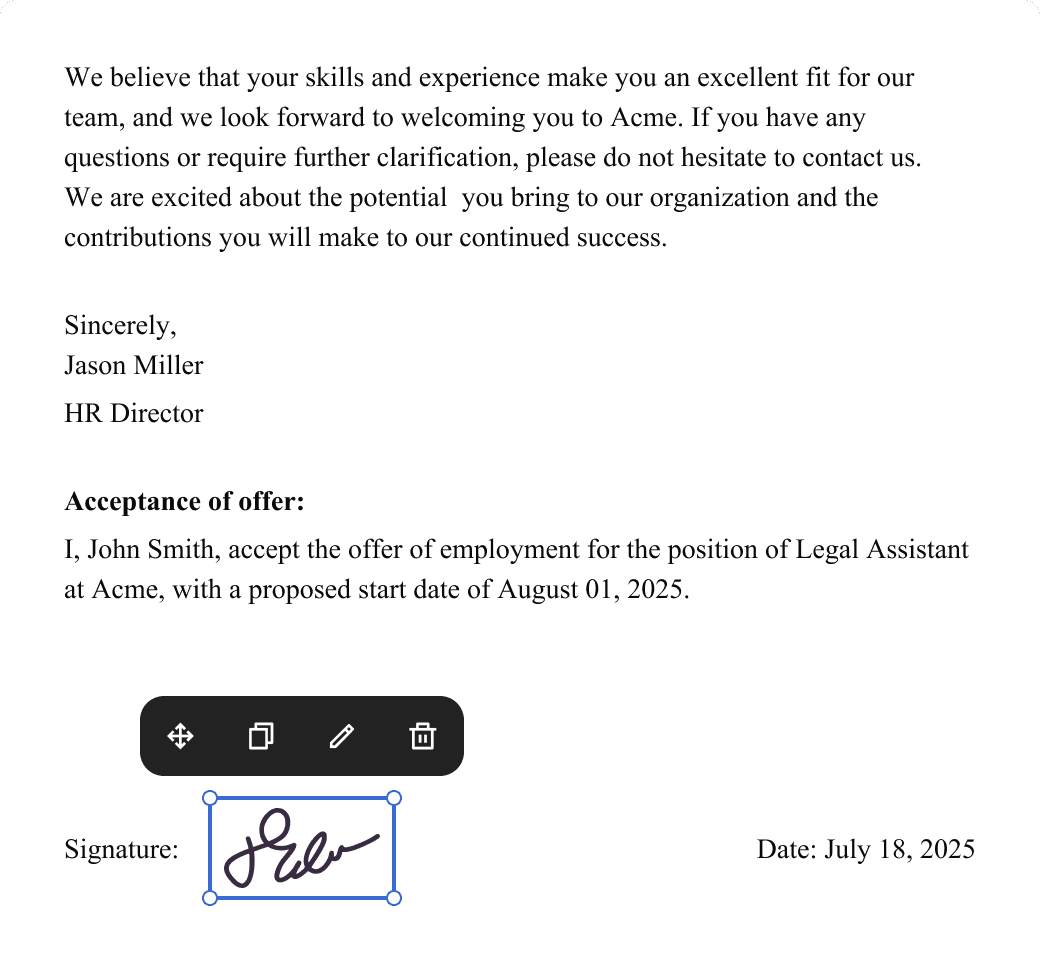
When placement terms change mid-process, get it in writing before continuing. A verbal "go ahead" on a scope change is not protection when the invoice arrives. eSign makes this easy to do on the spot, so you are not chasing a signature days after the conversation.
- Employment Contract
 4396 downloads
 - Independent Contractor Agreement
 7238 downloads
 - Recruitment Agreement
 5753 downloads
Set Pricing and Payment Terms for Your Staffing Agency
Staffing pricing mistakes tend to be quiet for a while. Business looks good, placements are happening, revenue is growing. Then the numbers stop adding up, and it is too late to reprice without losing the client.
For direct-hire fees, the standard range is 20 to 30 percent of first-year salary, with entry-level roles lower and specialized or executive roles higher. Retained searches, where the client pays a portion upfront, reduce your risk on a long search.
For temp staffing, the bill rate is what you charge the client per hour, and the pay rate is what the worker earns. Everything in between covers payroll taxes, workers' comp, general liability, recruiter time, and profit. The Bureau of Labor Statistics tracks occupational wages for the employment services industry, a useful starting point for pay rate baselines before you calculate your markup. Across multiple industry pricing analyses, markups generally fall into these ranges:
- Light industrial roles: 40 to 55%, driven by elevated workers' comp costs
- Healthcare roles: often 100% or more, driven by credentialing requirements and the highest workers' comp costs in the industry
- Professional and engineering roles: 25 to 40%, since pay rates are already higher and placement risk is more predictable
- Specialized or hard-to-fill roles in any category: 70% or more
- The most common mistake is setting a bill rate without calculating the full burden first: payroll taxes, workers' comp, benefits, and overhead. Pricing below that rate is not a strategy. It just means every hour worked loses money.
A large markup does not translate directly into profit. Most of it goes to statutory costs, benefits, and overhead before anything reaches the bottom line. The agencies that run profitably are not the ones charging the most. They are the ones who know precisely what everything costs before they quote anything.
Choose Recruiting Tools and Systems
You don't need an expensive tech stack to place your first candidate. For a one-person shop, two decisions matter more than the rest: pick an ATS that bundles basic CRM functionality so you're not paying for two systems on day one, and only add payroll and time-tracking software if you're running temp placements, since a direct-hire-only desk doesn't need it. Everything else below is worth having, but those two calls shape your monthly costs the most.
Applicant Tracking System (ATS)
The core of the operation. Holds candidate records, tracks where each person is in the process, and saves you from digging through email threads to remember who you submitted last week.
CRM
Tracks the client side: who you talked to, what they need, when you last followed up. Worth a standalone tool once you're managing a real pipeline on both sides.
Payroll and Time Tracking
Since you're the employer of record for temp placements, this covers pay, taxes, and withholding. Time tracking ties into payroll for hourly workers and flags issues, like a worker consistently logging fewer hours than expected, before they become disputes.
Sourcing: Job Boards and LinkedIn
Covers candidate sourcing. Background check providers handle screening; requirements vary by state and role, so confirm what's legally required for your niche.
Document Storage and E-Signature
Keeps contracts, offer letters, and NDAs organized and signed without chasing paper. Loio’s contract templates and eSign do double duty here: draft the agreement and get it signed in the same flow, instead of switching between a template library and a separate e-signature app.
None of this needs to be expensive at the start. A simple, consistently used system beats an expensive one that only gets touched occasionally. Candidate data deserves real attention here too: names, contact details, sometimes background check results, stored securely, not scattered across personal email and spreadsheets.
How Much Can a Staffing Agency Make?
When you start staffing agency operations, your success depends almost entirely on which model you are running and how tight your pricing discipline is.
Direct-hire desk. A solo recruiter placing ten to fifteen candidates a year at standard contingency fees of 20 to 30 percent of first-year salary can realistically bill $150,000 to $300,000 or more in placement fees, depending on the average salary level in your niche. Glassdoor data on independent recruiters shows a median income of around $147,000, with top earners well past $260,000, though the spread is wide and depends heavily on niche and fee structure. Since there is no payroll burden on placed workers, overhead is relatively low, and a large share of billings can become net income if you keep the operation lean.
Temp staffing. Margins per placement are thinner, but the model scales with headcount in a way direct-hire cannot. Consider a simplified weekly snapshot:
25 workers at $20 an hour, 40 hours a week, is $20,000 in payroll due every Friday. The same hours billed at a $30 bill rate generate a $30,000 client invoice for the week. That leaves $10,000 in gross margin before overhead, taxes, and workers' comp.
That math only holds if three things go right: workers show up, the client pays on schedule, and workers' comp claims stay within what you budgeted for. Net margins after overhead and statutory costs in temp staffing commonly land in the 10 to 20 percent range, not the much larger number the gross spread might suggest.
Market size. The US staffing industry generates well over $150 billion in annual revenue, and the American Staffing Association reports that staffing provided job and career opportunities for about 11 million employees in 2024. There's real money in the model for agencies that manage cash flow and pricing correctly. The ones that don't rarely make it long enough to enjoy the market size.
Find Your First Staffing Clients
Most agencies get their first few clients from people they already know, not from a website or a cold campaign. Staffing is a relationship business, and the first deal almost always comes from someone who has already seen you work.
So start with your own network before anything else. Think through every hiring manager, HR director, or operations lead you have dealt with over the years, even briefly, and reach out directly. Tell them you have started your own firm and what you are focused on. People who already trust your judgment do not need to be sold on you, just reminded that you are now available.
LinkedIn helps once you've exhausted direct contacts, but generic messages get ignored. Be specific instead: name the exact role type, the location, and your typical fill time. "I specialize in warehouse supervisor placements in Cleveland and typically fill a role in under two weeks" tells a hiring manager something concrete. "We offer staffing solutions" reads like the dozen other messages they got that week, and gets the same response: nothing.
Local business groups and industry events take longer to pay off, but they build the kind of reputation that brings in referrals later without you having to ask. Worth doing alongside direct outreach, not instead of it.
Once you place someone well, ask the client for a referral while the experience is still fresh in their mind. It is also worth being honest with clients when their pay rate is too low to attract good candidates. Most agencies will not tell them that. The ones who do tend to get remembered for it.
Avoid Common Beginner Mistakes When Starting a Staffing Agency
Most staffing agency failures trace back to a decision that seemed reasonable in the first sixty days: skipping a license check, going too broad on a niche, underestimating the payroll gap, rushing candidate submissions to look fast, or working without a signed contract.
None of these look dangerous in the moment. What connects them is the same pattern: a shortcut that saves a week now costs a client a lawsuit, or a quarter of cash flow later. One weak placement is fixable. A weak process, repeated across clients, is what actually ends agencies. Most owners who fail blame a bad market or a run of bad luck. Usually it was a process problem they never fixed. Agencies that make it past year two treat licensing, contracts, and payroll funding as core infrastructure from day one, not paperwork to handle whenever there's time.
More guides
September 1
7 min read
How to Provide Proof of Employment: Documents and Steps

September 10
14 min read
How to Protect Your Small Business from Lawsuits

September 15
What Is Contract Redlining?

July 21
8 min read
Statement of Work vs Scope of Work: Differences and How They Work Together

July 25
12 min read
How to Register a Company in the US: What No One Tells You in 2026

September 15
10 min read
Who Can Sign a Contract on Behalf of a Company?

One home for your
agreements
Edit PDFs seamlessly
Tweak agreements before signing or sending for signatures. Update details, add or remove clauses, adjust formatting, and redline changes instantly.
eSign legally and securely
Sign documents and collect legally binding signatures. Invite up to ten people to sign in any order, track the progress, and send reminders.
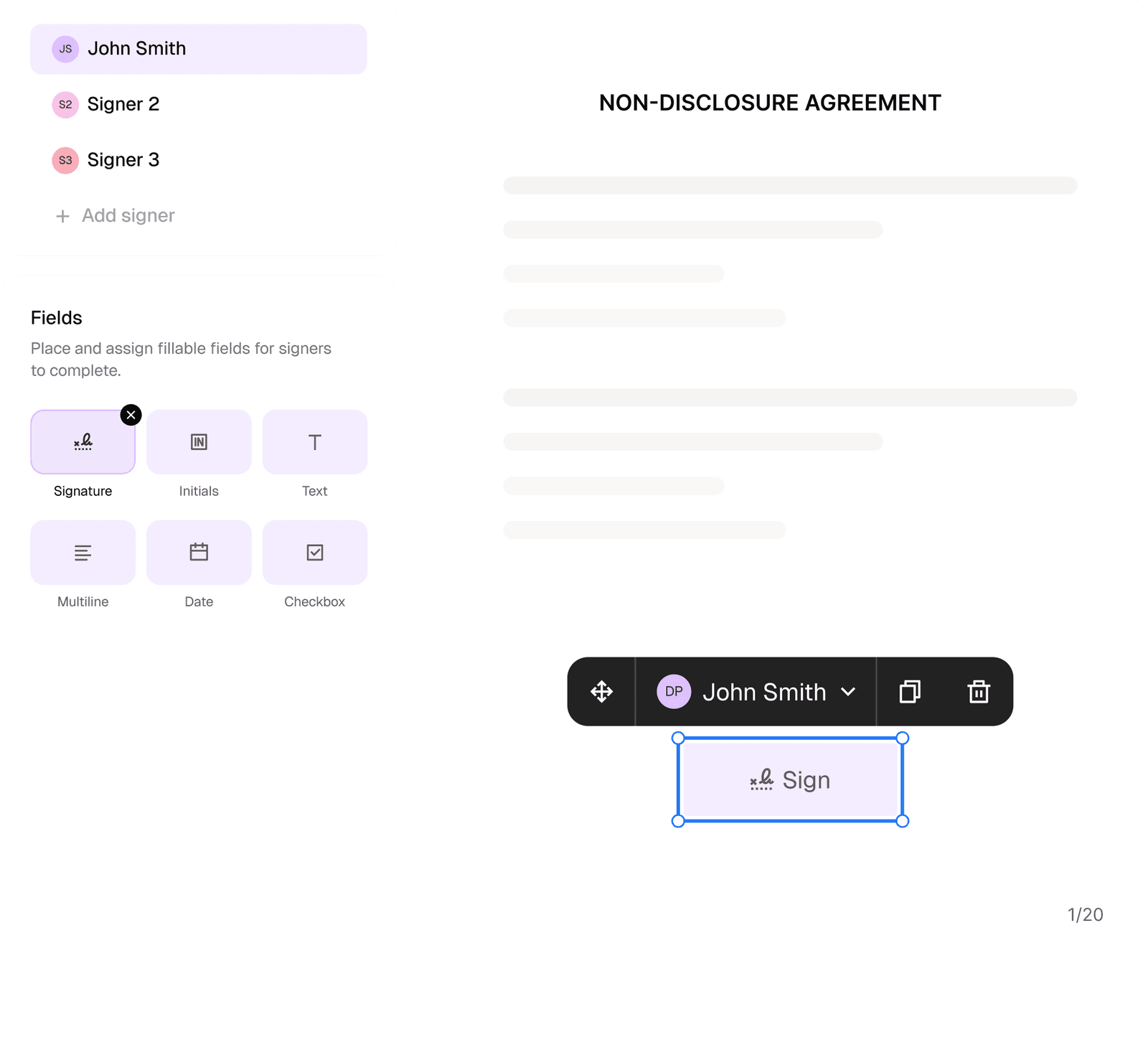
Request legally binding signatures
Invite up to ten people to sign your document in any order. Get a finalized, audit-ready copy without chasing signatures.
Skip the drafting.
Choose from 2,500+ templates
Browse templatesChoose a template
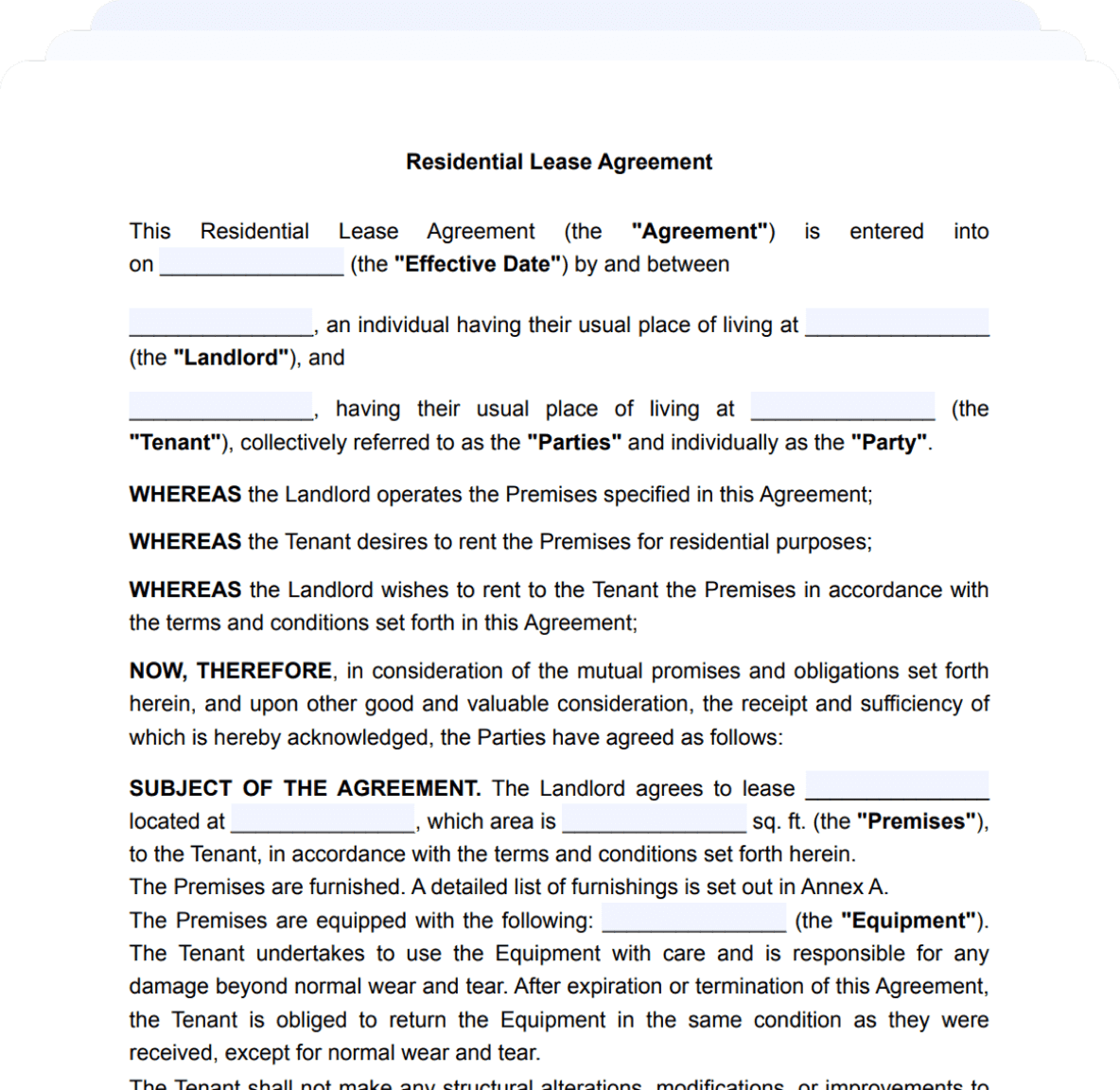
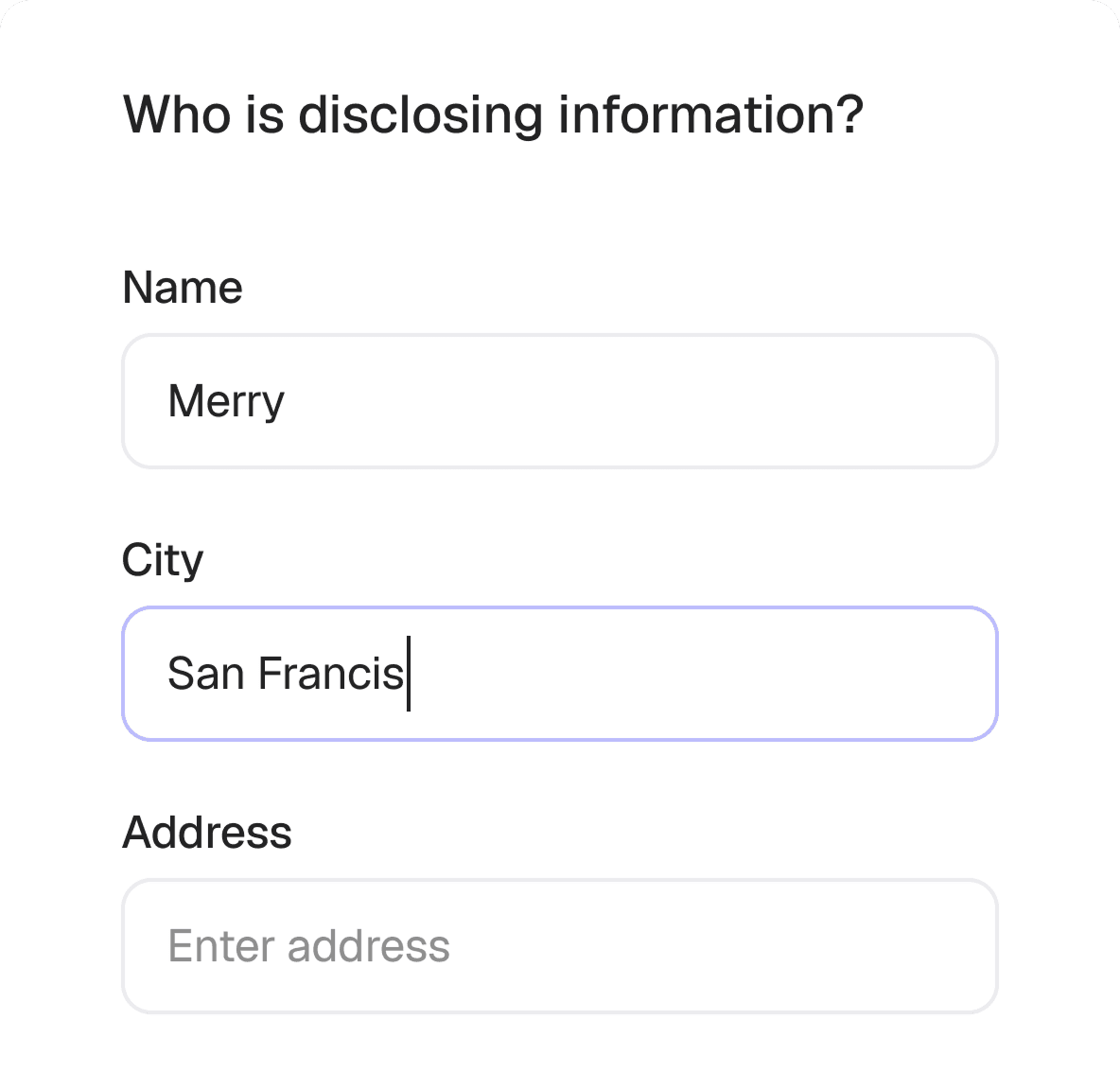
Fill in details
Sign and download