Updated September 1, 2026
7 min read
How to Provide Proof of Employment: Documents and Steps

How to Provide Proof of Employment: Documents and Steps
- How to Provide Proof of Current Employment
- What Can Be Used as Proof of Employment?
- How to Get an Employment Verification Letter
- How to Show Proof of Employment Without a Pay Stub
- How to Show Proof of Employment When Self Employed
- How to Get Proof of Employment From a Previous Employer
- Proof of Employment for Common Applications
- Proof of Employment vs. Employment Eligibility
- What to Do When Proof of Employment Is Rejected
- Wrapping it up
Content
A landlord, lender, or employer may ask you to prove where you work. The request sounds simple until you realize that “proof” could mean an employment letter, a pay stub, a tax form, or several documents submitted together.
In most cases, proof of employment is a document that confirms your employer, job title, employment dates, and current employment status. It may also include your salary when the recipient needs to verify income. An employment verification letter is often the clearest option, but pay stubs, W-2 forms, employment contracts, and tax records may also be accepted.
This guide explains how to get proof of employment from HR or a previous employer, and what to do when a standard letter is unavailable. It also covers how to show proof of employment when self employed and how to show proof of self employment income without traditional payroll records.
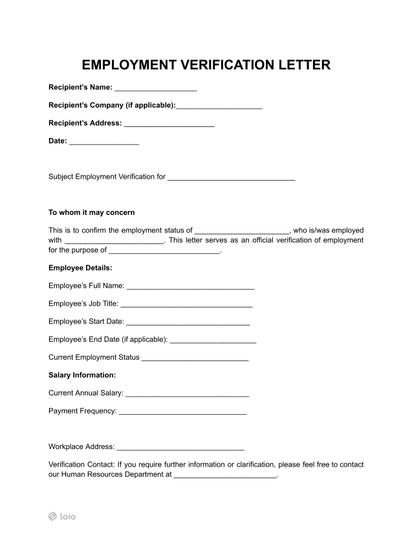
When a formal letter is required, Loio’s Employment Verification Letter Template helps an employer confirm the employee’s position, employment dates, status, and compensation in a clear format.
How to Provide Proof of Current Employment
To understand how to show proof of employment, first identify what the recipient needs to confirm. They may need evidence that you currently have a job, that your income is regular, or that your employment is expected to continue.
A lender may focus on your income and job stability. A landlord may ask whether your earnings are sufficient to cover the rent. A government agency may need to confirm your current wages or employment status before processing an application.
Follow these 3 steps:
- Ask what must be verified. Confirm whether the organization needs your current job title, employment status, start date, salary, or recent income.
- Choose an accepted document. Depending on the request, this could be an employment verification letter, recent pay stub, W-2, offer letter, employment contract, tax record, or third-party verification report.
- Review and submit it securely. Check names, dates, salary figures, and employer contact details before sending the document through the requested channel.
The recipient usually decides which records it they will accept. Before sharing a full tax return or bank statement, ask whether a less sensitive document, such as a recent pay stub or employer letter, would be sufficient.
The U.S. Treasury’s income verification guidance identifies pay stubs, W-2 forms, 1099 forms, tax filings, bank statements showing regular income, and employer attestations as possible supporting records. However, requirements vary by application and organization.
For proof of a job that has already ended, the process is different because the former employer may no longer have an active HR relationship with you. We address this further in the guide.
What Can Be Used as Proof of Employment?
Different documents answer different questions. A pay stub shows recent earnings, for example, while an employment verification letter can confirm a person’s job title and employment dates without disclosing a complete financial history.

How to Get an Employment Verification Letter
To understand how to get employment verification letter, first check whether your employer has a standard request process. Larger organizations may direct requests to HR, payroll, or an automated employment verification service. In a small business, the owner or direct manager may prepare the letter.
Contact the appropriate person in writing and explain:
- Why you need the letter;
- Who will receive it;
- Which employment details must be included;
- Whether salary information is required;
- How and when the letter should be delivered.
Do not assume that HR can release every detail automatically. Company policy or applicable privacy rules may limit what the employer shares, particularly when a third party requests salary information.
What to include in your request
Your request should identify you clearly and make the task easy for HR. Include your full name, department, job title, employee number when applicable, and the date by which you need the letter.
State what the recipient wants confirmed. For example, a landlord may request your current position, employment status, start date, and annual salary. A prospective employer may only ask about your previous job title and employment dates. Salary-related requests can be more sensitive, so it may help to review Loio’s guide to pay transparency laws by state before sharing salary history or expected pay details.
If the letter must be addressed to a particular person or institution, provide the correct name, mailing address, or email address. Mention whether the recipient accepts an electronic copy or requires a signed original.
What the letter should include
A standard proof of employment letter should generally contain:
- The employer’s legal name and contact details;
- The employee’s full name;
- The employee’s position;
- Full-time, part-time, temporary, or other employment status;
- The start date and end date, if applicable;
- Salary or compensation information, when authorized and required;
- The name and position of the person issuing the letter;
- The issue date and signature.
In the United States, a “certificate of employment” generally refers to the same type of confirmation as an employment verification letter. It is not a single standard federal form, so the exact format depends on the employer and recipient.
Once the information is entered, the employer can edit the employment verification PDF to correct names, dates, or formatting without recreating the document. When HR approval is needed, the employee or employer can also request an electronic signature and keep the completed copy for future applications.
How to Show Proof of Employment Without a Pay Stub
People often need to know how to show proof of employment without a pay stub when they have just started a job, are paid irregularly, or cannot access an old payroll account.
The strongest alternatives are:
- An employment verification letter;
- A signed offer letter;
- An employment contract;
- A W-2 form;
- Direct confirmation from HR;
- Bank records showing recurring payroll deposits.
Let’s consider Maya, who signs a lease 2 weeks before starting a new job. She has no paycheck or payslip yet, but her signed offer letter identifies the employer, position, start date, and salary. After confirming the landlord’s requirements, she submits the offer letter together with a short verification email from HR.
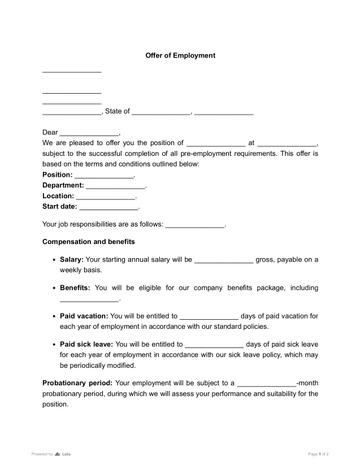
For someone in Maya’s position, a Job Offer Letter Template helps the employer document the job title, compensation, proposed start date, and main employment terms. Although the offer does not prove a past payment history, it may provide proof of employment for a new job when the recipient accepts the expected income.
- Offer of Employment
 4370 downloads
 - Employment Contract
 4465 downloads
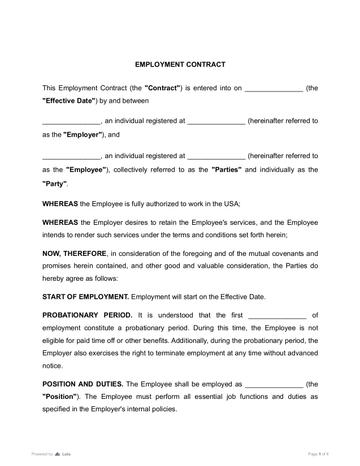
An Employment Contract Template can provide similar support because it records the agreed position, compensation, duties, and effective date. Still, an old contract may not prove that the person remains employed. The recipient may ask HR to confirm the current status.
Never create, alter, or purchase a misleading pay stub. If standard records are unavailable, explain the situation and ask for a written list of acceptable alternatives.
How to Show Proof of Employment When Self Employed
A self-employed worker does not have an HR department that can issue a traditional letter. Instead, the worker normally proves an ongoing business activity and the income it generates.
To show proof of employment when self-employed, use 2 or more records that connect your business activity to regular income.
This is not a minor exception. According to the U.S. Census Bureau’s 2023 nonemployer business data, the United States had 30.4 million nonemployer businesses with $1.8 trillion in receipts. Many of their owners must provide proof of self-employment without conventional payroll documents.
Documents that can prove self-employment
Let’s learn how to show proof of self employment income. Depending on the application, a self-employed person may use:
- Federal tax returns with Schedule C;
- Forms 1099-NEC, 1099-K, or other applicable 1099 forms;
- Recent business bank statements;
- Client invoices and payment records;
- Profit and loss statements;
- Business registration records or licenses;
- Signed client contracts;
- A letter from an accountant or long-term client.
The IRS self-employed individuals guidance explains that sole proprietors generally use Schedule C to report income or loss from their business or profession. A filed tax return with Schedule C can therefore be strong historical evidence of self-employment income.
A Form 1099 may show what a particular client or payment platform reported, but it does not always capture every source of business income. Bank statements and invoices can help demonstrate more recent activity.
Suppose Daniel is a freelance designer applying for a mortgage. His previous tax return proves that he operated a business, but his income has grown significantly since then. He provides the return together with a year-to-date profit and loss statement, recent bank statements, invoices, and signed client agreements.
That combination answers 2 questions: whether Daniel is genuinely self-employed and whether his current income is reasonably supported by business records.
The Loio guide to the financial documents small businesses should maintain explains how income statements, bank records, invoices, and related documents create a more complete financial picture. Independent workers can also follow the Independent Contractor Setup Checklist to organize their contracts, tax records, licenses, and payment documentation.
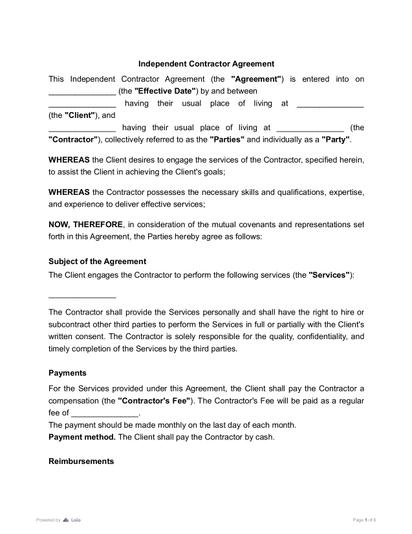
A signed Independent Contractor Agreement Template identifies the client and contractor, describes the services, and records payment terms. It does not prove that every payment was received, but it can support tax forms, invoices, and bank statements by showing where the work came from.
A W-9 is less useful for this purpose. It gives a client the contractor’s taxpayer identification information, but it does not prove how long the person has worked, how much they earned, or whether the business is currently generating income.
How to Get Proof of Employment From a Previous Employer
If you need to know how to get proof of employment from a previous employer, start with its HR or payroll department. Ask for a letter confirming your job title, start date, end date, and any other information required by the prospective employer or screening company.
Some employers only confirm basic facts, such as the position held and dates of employment. They may decline to discuss performance, salary, eligibility for rehire, or the reason the employment ended.
When a former employer does not respond, possible alternatives include:
- Old W-2 forms;
- Final pay stubs;
- Employment contracts;
- Tax returns;
- Offer or promotion letters;
- Benefits statements;
- Records from a payroll or employment verification service.
If the company has closed, explain that fact to the requesting organization. Submit records that show a clear connection between you, the employer, and the relevant period. A W-2 and final pay stub, for example, may be more persuasive together than either document alone.
Small discrepancies are common. Your résumé may show only the month and year, while HR records contain exact dates. A company acquisition may also cause the employer name on a tax form to differ from the brand name used on your résumé. Flag these differences early instead of waiting for a background checker to treat them as unexplained inconsistencies.
Keep your final pay stubs, W-2 forms, employment agreements, and verification letters after leaving a job. If any of these exist only as old scans or faxed copies, run them through OCR first so you can actually find the one you need later. Access to an employer’s payroll portal may disappear quickly after your employment ends.
Proof of Employment for Common Applications
The same document will not work equally well for every purpose. The following table shows what applicants are commonly asked to provide and which alternatives may be considered.

For a rental application, proof of employment is often reviewed together with income, identity, and rental history. Loio’s guide to documents needed to rent an apartment explains how pay stubs, W-2 forms, income statements, bank records, and personal references may support the application.
Mortgage lenders may conduct a more detailed review. Under 12 C.F.R. § 1026.43(c)(4), creditors must verify the income or assets they rely on using reasonably reliable third-party records, which may include IRS tax-return transcripts, tax returns, W-2 forms, payroll statements, financial institution records, or employer records. In some cases, a lender may also accept a written employer statement confirming an accepted job offer, start date, and expected salary, especially when the borrower has not received the first paycheck yet.
Always follow the requesting organization’s current checklist. A general proof of employment letter sample can help with the format, but it cannot override a lender’s, agency’s, or landlord’s specific documentation rules.
Proof of Employment vs. Employment Eligibility
Proof of employment and proof of employment eligibility are not the same.
Proof of employment confirms where a person works or previously worked. Employment eligibility documentation confirms the person’s identity and authorization to work in the United States.
U.S. employers generally use Form I-9 for employment eligibility verification. The employee presents acceptable documents from the official USCIS Form I-9 document lists. Depending on the documents chosen, these records establish identity, employment authorization, or both.
A landlord’s request for a pay stub is not an I-9 process. Similarly, a passport or employment authorization document may establish a right to work but does not necessarily prove current employment or income.
What to Do When Proof of Employment Is Rejected
A rejection does not always mean the underlying employment is in doubt. The document may be outdated, missing a required detail, or unsuitable for the particular application.
Take the following steps:
- Ask why the document was rejected. Find out whether the issue involves the date, employer contact information, income period, signature, or file format.
- Request the accepted-document list in writing. Do not keep sending different sensitive records without knowing what the organization needs.
- Provide complementary documents. Pair an employment contract with a current pay stub, or a tax return with recent self-employment bank statements.
- Correct inconsistencies. Check names, employment dates, job titles, and salary information across your application and supporting records.
- Ask for direct verification. HR, a former manager, an accountant, or a client may be able to respond to the organization directly.
- Dispute inaccurate third-party information. Obtain a copy of the report and submit records showing what should be corrected.
Employment and income verification services may qualify as consumer reporting companies when they provide reports used for employment, lending, or housing decisions. The Federal Trade Commission’s guidance on employer background checks explains that applicants can dispute inaccurate or incomplete information in an employment background report.
Do not send unredacted records merely because the first document was rejected. A tax return, bank statement, or W-2 may display account numbers, Social Security numbers, dependent details, or unrelated income. Ask which pages and fields are necessary, redact unrelated information when permitted, and use a secure submission method.
Wrapping it up
Ultimately, learning how to provide proof of employment means matching the document to the question being asked. An employer letter is usually the most direct evidence of a current or previous job. Pay stubs confirm recent income, while tax forms and business records are more useful for self-employed workers.
Before submitting anything, verify the recipient’s requirements, review every detail, and keep a copy of the final document. Good records can turn a stressful verification request into a routine task.
More guides
September 10
14 min read
How to Protect Your Small Business from Lawsuits

October 15
How to Start a Staffing Agency: Licensing, Pricing, and Cash Flow

September 12
13 min read
Construction Change Order Process: How to Avoid Scope Creep

July 21
8 min read
Statement of Work vs Scope of Work: Differences and How They Work Together

July 26
12 min read
How to Read a Profit and Loss Statement

August 20
9 min read
How to Set Up Payroll for Small Business: Employer Guide

One home for your
agreements
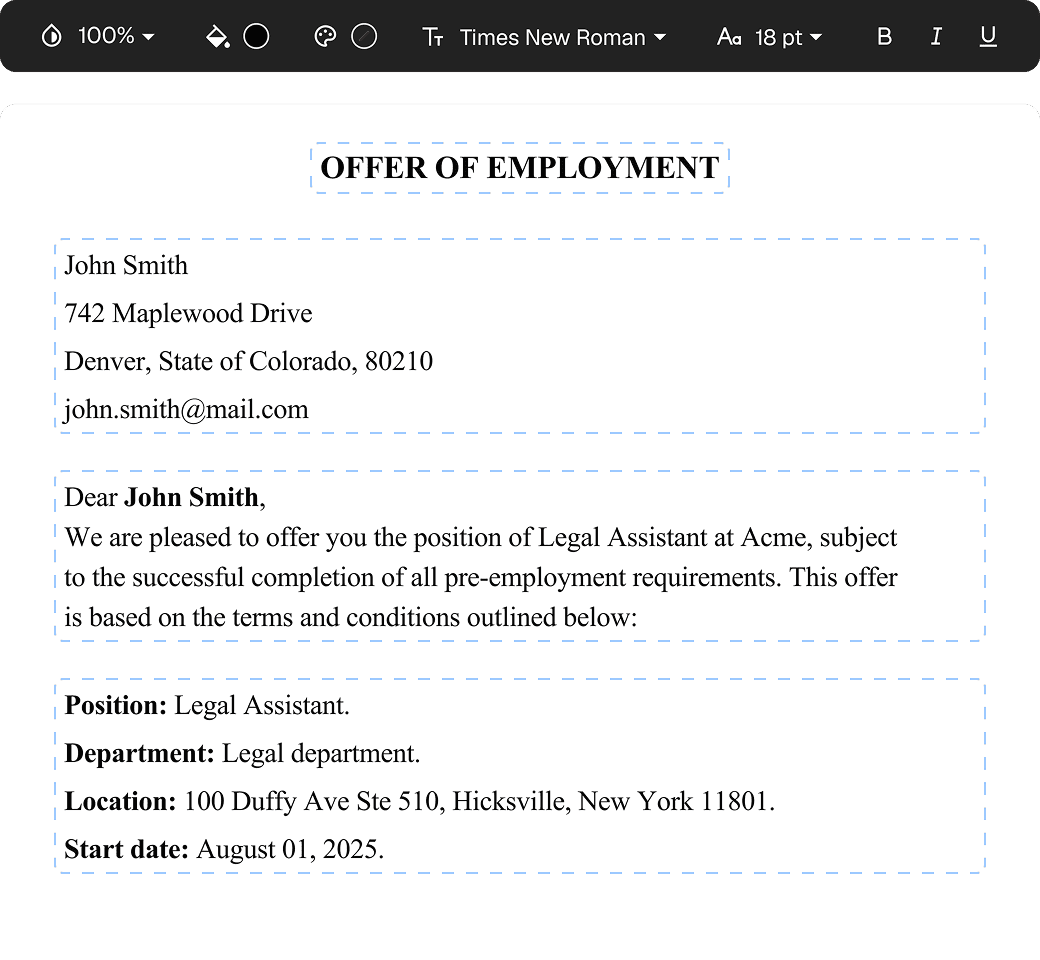
Edit PDFs seamlessly
Tweak agreements before signing or sending for signatures. Update details, add or remove clauses, adjust formatting, and redline changes instantly.
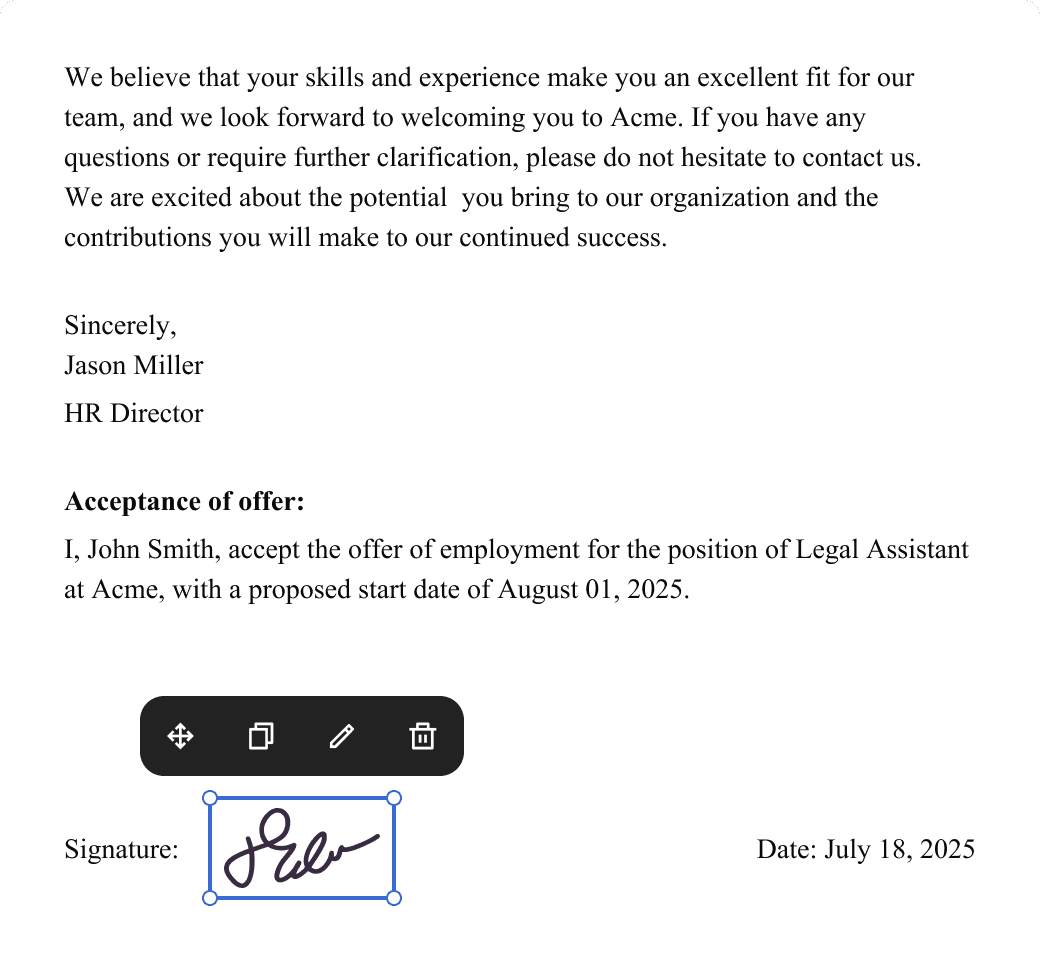
eSign legally and securely
Sign documents and collect legally binding signatures. Invite up to ten people to sign in any order, track the progress, and send reminders.
Request legally binding signatures
Invite up to ten people to sign your document in any order. Get a finalized, audit-ready copy without chasing signatures.
Skip the drafting.
Choose from 2,500+ templates
Browse templatesChoose a template
Fill in details
Sign and download