Updated September 12, 2026
13 min read
Construction Change Order Process: How to Avoid Scope Creep

Construction Change Order Process: How to Avoid Scope Creep
- What Causes Scope Creep in Construction Projects?
- What Is a Change Order in Construction and Why It Matters
- How to Avoid Scope Creep in Construction Projects
- The Construction Change Order Process: How to Make a Change Order Properly
- Why Uncontrolled Change Orders Lead to Scope Creep
- Tools and Technologies for Construction Change Order Management
- Conclusion
Content
Let’s imagine a $150,000 renovation that feels airtight at the start. The scope is clear. Work begins smoothly. Then the owner mentions upgrades: better materials, layout adjustment, and additional finishes. These changes, lacking a formal construction change order process, accumulate throughout the project lifecycle. Six months later: $195,000, three months over, zero profit. Predictable? Yes. Preventable? Absolutely.
Scope creep is common across projects. PMI’s 2018 Pulse of the Profession found that 52% of projects completed in the previous 12 months experienced scope creep or uncontrolled scope changes, up from 43% five years earlier.
Scope creep is a silent profit killer caused by a lack of administrative control. The good news is that every dollar lost to scope creep is preventable. This guide shows the three-part approach that protects your profit: 1) clear contracts, 2) detailed scope definitions, and 3) a formal construction change order process. Implement these, and your margins improve immediately.
What Causes Scope Creep in Construction Projects?
Poor construction change order management often starts with an unclear scope of work, but it can have several causes. Before we can prevent scope creep, let’s understand where it comes from.
Unclear scope of work
The #1 cause of scope creep is a vague or incomplete scope of work. When the original contract doesn't clearly define what IS and ISN'T included, every conversation becomes a negotiation.
Example: "Nice finishes throughout" sounds good, but let’s define "nice". Does it include painter-grade or premium paint? Standard outlets or designer outlets? A vague scope leaves room for conflicting expectations.
How can it be fixed? Your scope of work must specify deliverables, exclude items explicitly, and define quality standards upfront. This is your foundation for preventing scope creep.
Informal or verbal change requests
"While you're at it, can you..." is the enemy. Verbal approvals leave no paper trail, leading to disputes later over who approved what and for how much.
Many contractors and owners operate in a handshake culture: a quick conversation on site, maybe an email confirmation, and work begins. When things go wrong, the verbal approval becomes a "he said, she said" argument.
Verbal approvals without documentation create opportunities for disputes and misunderstandings. For a broader perspective on protecting yourself, review this guide on how to avoid contractor scams during home renovation.
Weak contract terms
Construction contracts often lack clear change order procedures. If your contract doesn't define:
Who can approve changes (and at what cost threshold),
How change requests are submitted and documented,
Whether work proceeds before approval is finalized,
How change order costs are calculated,
In this case, you’re at risk of scope creep.
Poor project management tracking
Even well-intentioned teams struggle when they don't track changes systematically. Without a centralized log of all change requests, approvals, and cumulative costs, the team doesn't see the full picture until it's too late.
The core idea is that the scope of work defines your original obligations. Everything beyond that must be controlled through a formal process. When you lack that control, costs and timelines spiral.
What Is a Change Order in Construction and Why It Matters
What is a construction change order? A change order in construction is a written agreement that modifies the original contract. It authorizes work outside the original scope and documents how that change affects cost, schedule, or both.
Understanding “what is a change order in construction?” is critical for protecting both the contractor and the owner.
When it's used
Change orders are used when:
Unforeseen site conditions appear (hidden damage, soil issues, existing utilities not marked)
The owner requests modifications or upgrades
Design errors or omissions are discovered
Regulatory or code requirements change mid-project
Why change order in construction protects both sides
A formal change order protects the general contractor by documenting additional costs before work starts. It protects the owner by preventing unauthorized work and surprise invoices. Without it, disputes are inevitable.
A proper construction change order includes:
Description of the change
Reason for the change
Itemized cost breakdown (labor, materials, overhead)
Impact on the project timeline
Signatures from all parties authorizing the change
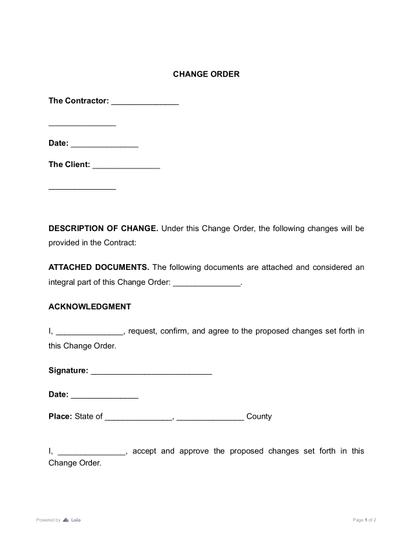
Use the Construction Change Order Form Template to properly document every change.
How to Avoid Scope Creep in Construction Projects
Effective change orders in project management require three foundational elements: clarity in scope, formality in process, and discipline in tracking. These strategies are your toolkit for keeping projects on track.
Define a clear scope of work from day one
Your scope of work is the foundation for controlling creep. It must specify:
Detailed Deliverables
What materials are included (and which are not)
Quality standards and finishes
Specific dimensions and locations
Allowances for items where owner choice is pending
Boundaries of Responsibility
What you're building, and what you're not
What existing conditions you're working with (and which are the owner's responsibility to address)
What site conditions are assumed (soil bearing capacity, utilities location, etc)
Who's responsible for permits, inspections, and code compliance
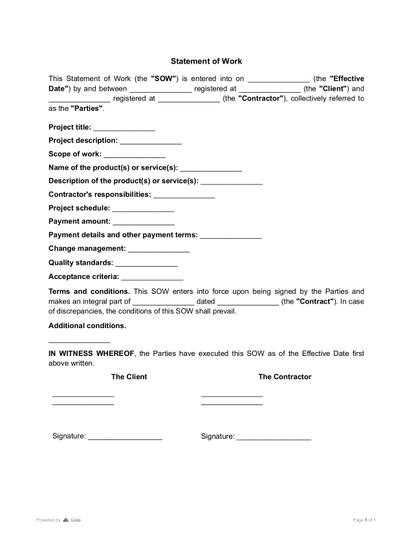
Use the Statement of Work Template to create crystal-clear scope boundaries:
An example of a vague scope would be "High-end kitchen remodel."
An example of a clear scope:
Scope of Work - Kitchen Remodel:
Included Services:
Custom cabinetry installation per attached specifications
Granite countertop installation (color options provided)
Stainless steel appliance installation (models from the approved list)
LED lighting package installation (fixture specifications attached)
Interior wall and trim painting (Benjamin Moore Premium Plus; color selection is due March 1)
Excluded Services:
Structural modifications
Electrical panel upgrades or modifications
Plumbing work beyond standard connection points
Use a formal change order process only
No verbal approvals or email-only confirmations. Every change goes through the formal construction change order process:
- 1
Change request submitted in writing
- 2
Cost and schedule impact estimated
- 3
Formal change order document prepared (using your Construction Change Order Form Template)
- 4
Owner approval obtained in writing with a signature
- 5
Only then does the work proceed.
This process discipline prevents scope creep from accumulating silently. It also creates a clear paper trail for disputes.
Strengthen your construction contract
Your construction contract must include clear change order clauses:
Change Order Procedures
How changes are requested (in writing, on specific forms)
Who can approve changes (and at what cost thresholds)
How costs are calculated (labor rates, material markups, overhead allocation)
Timeline for approval
Pricing Rules
Labor rates and how hours are billed
Material markup percentages
Overhead allocation for changes
Who bears the cost of delays caused by owner changes vs. contractor errors
Payment Terms
When change order costs are paid (progress billing, completion, or specific milestone)
When written approval is required before the changed work begins
Mechanics lien, preliminary notice, and payment rules vary by state and project type. Check the applicable state requirements rather than assuming that a signed change order alone preserves payment or lien rights.
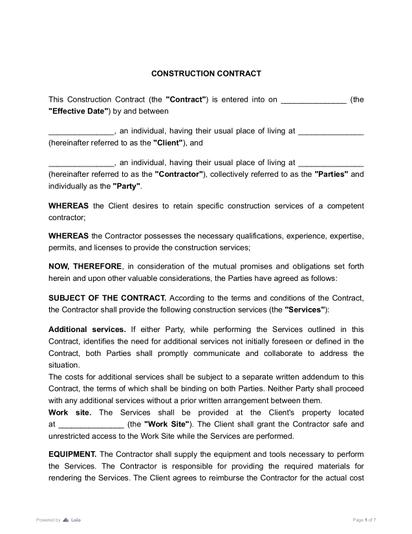
Use the Construction Contract Template to ensure that your agreement is clear and protective:
Understanding contract compliance in construction is essential for enforcing your change order clauses. This comprehensive guide on contract compliance in construction will help you avoid compliance issues.
Track and review every change request
Effective change order project management depends on centralized tracking throughout the project lifecycle. It would be thoughtful to track:
Change order number and date
Description of the change
Requested by (owner, contractor, designer)
Estimated cost
Approval status and date
Actual cost (after completion)
Review this log weekly with the owner and key team members. When everyone sees the cumulative impact of changes ("We're now at change order #5, total additional cost is $28,500") difficult conversations happen earlier, and scope becomes more controlled.
The change order log is also your historical record. It prevents disputes about what was approved, when, and for how much.
Align stakeholders before work begins
Miscommunication is a major source of scope creep. Before construction starts, ensure:
All parties have reviewed and approved the scope of work
Design decisions are locked in (or the decision process is documented)
Material selections are confirmed
Expectations about quality, timeline, and budget are aligned.
A pre-construction meeting with the owner, designer, and contractor (where the scope is reviewed line by line) prevents "surprises" later that turn into change orders.
If your project involves subcontractors or independent crews, ensure they understand the change order process. This guide on managing independent contractors in construction provides best practices.
The Construction Change Order Process: How to Make a Change Order Properly
Professional change order project management follows this five-step structured process to prevent disputes and control scope creep.

Step 1: Identify out-of-scope work
The first step is recognizing that something falls outside the original scope. This might be discovered during construction, requested by the owner, or identified in design reviews.
Document it immediately: Take photos, capture emails, note the date and who identified it. Early documentation prevents disputes.
Step 2: Document the change request
Put the request in writing. Even if the owner verbally approved it, document it formally. Include:
Clear description of what's changing
Why the change is needed
Who requested it
When it was discovered or requested
Step 3: Evaluate cost and schedule impact
Before requesting approval, estimate the impact. Calculate:
Labor: Hours needed, crew type, hourly rates
Materials: Actual costs plus delivery and expedite fees
Overhead: Management, equipment, site allocation
Schedule: How many days were added or removed from the timeline
A change order for structural repairs might be: Labor $2,500 + Materials $1,800 + Overhead $700 = $5,000 additional cost, with 5 days added to the schedule.
Step 4: Get written approval
As a project-control rule, do not start changed work until approval is documented. State requirements vary; for example, California home improvement contracts generally require applicable change orders to be in writing and signed by the parties before the changed work begins.
Submit the formal change order to the owner, architect, or whoever is authorized to approve (per your contract). Give them the review period stated in the contract or agree on a deadline in writing. Use Loio's E-Signature to speed up digital approvals if needed.
If the owner balks at the cost, show them the itemized breakdown. Be prepared to negotiate or adjust the scope.
Step 5: Update the contract and proceed
Once approved and signed, update your:
Project budget (running total of original contract + approved change orders)
Schedule (new completion date)
Change order log (cumulative tracking of all changes)
Then proceed with the work, tracking actual costs against the approved change order amount.
Why Uncontrolled Change Orders Lead to Scope Creep
Understanding how change orders in project management create cascading costs reinforces why prevention is critical.

Delays increase labor costs
Each change order adds time. If a change requires material procurement (which takes 2 weeks) or unforeseen rework (which adds 3 days), your crew schedule shifts. Extended timelines mean extended labor costs, extended equipment rentals, and extended site overhead.
A 5-day delay sounds small. But for a crew of 4 people at $50/hour = $8,000 in direct labor costs alone, plus equipment and overhead.
Rework inflates the budget
When changes compound, rework becomes common. Work that was done correctly per the original scope now needs to be redone because the scope has changed. This multiplies costs.
Example: The original plan specified vinyl flooring throughout. Midway through, the owner upgrades to hardwood in the main living area. Now crews need to remove the installed vinyl, patch subfloors, and install hardwood — a job that could have been done cleanly during the initial phase now requires demolition and rework.
Material changes add hidden costs
Changing materials mid-project means expedited ordering, potential restocking fees, and possible price premiums. A material change that seems like a $500 upgrade can become a $1,200 change order when expedite fees and waste are factored in.
Misaligned expectations create disputes
When changes aren't formally documented, different parties have different memories of what was approved. The owner thinks they approved a $3,000 upgrade verbally on-site. The contractor thinks it was a $5,000 change because of labor impact. Disputes follow.
Uncontrolled change orders also create a chain reaction across the project schedule and budget. Even one change can require written approval, new material sourcing, crew rescheduling, or rework if completed work is affected. Several unmanaged changes can easily add weeks to the critical path.
Delays then increase labor costs, site supervision, equipment rental, insurance, and rush fees for materials. Timeline shifts may also create conflicts with subcontractors already booked for other jobs, forcing the contractor to delay work or hire replacements at higher rates.
For residential projects, understanding broader contract management in home services helps you apply these principles across all home construction and renovation work.
Tools and Technologies for Construction Change Order Management
Modern construction change order management relies on standardized templates and digital tools to streamline approvals and maintain clear documentation:
Using Templates to Standardize Documents
A wide range of standardized templates ensures nothing is forgotten. When every change order looks the same, with the same fields and approvals, the process becomes automatic.
E-Signature for Faster Approvals
Waiting for owners to sign documents in person or return faxes slows everything down. Loio's E-Signature service lets you send change orders digitally and get approvals in hours instead of days.
PDF Editor for Quick Updates
When a change order needs minor tweaks or corrections, you can use Loio's PDF Editor to make updates quickly without reprinting or retyping.
AI Summary for Reviewing Agreements
Before sending a change order or reviewing vendor quotes, Loio's AI Summary tool can quickly extract key details (costs, timelines, terms), saving you time on a detailed review.
Project Management Software
For larger projects or teams, centralized project management software lets you track all change requests in one place, assign approvals, set reminders, and maintain the change order log digitally.
For teams ready to modernize their processes, learn how contract management with smart contracts can automate approvals and reduce disputes.
Conclusion
Scope creep is the silent killer of construction project profitability. It starts small (a few informal requests, some verbal approvals) and compounds into major budget overruns and timeline delays. But it's entirely preventable.
The foundation is a clear scope of work that defines exactly what you're delivering. The protection is a formal construction change order process that requires written approval before any work outside that scope begins. And the discipline is consistent tracking of all change requests, so the cumulative impact is visible to all parties.
When you combine these three (clarity, formality, and tracking), scope creep stops. Projects stay on budget, timelines are predictable, and relationships remain professional.
Get started today with the Construction Change Order Form and other templates to speed up approvals and keep all parties aligned. Your next project doesn't have to suffer from scope creep. Control it from the beginning.
More guides
September 1
7 min read
How to Provide Proof of Employment: Documents and Steps

September 10
14 min read
How to Protect Your Small Business from Lawsuits
July 21
8 min read
Statement of Work vs Scope of Work: Differences and How They Work Together

August 21
7 min read
Arbitration vs Litigation: The Right Path for Your Business

October 15
How to Start a Staffing Agency: Licensing, Pricing, and Cash Flow

August 5
8 min read
What to Do When Client Refuses to Pay

One home for your
agreements
Edit PDFs seamlessly
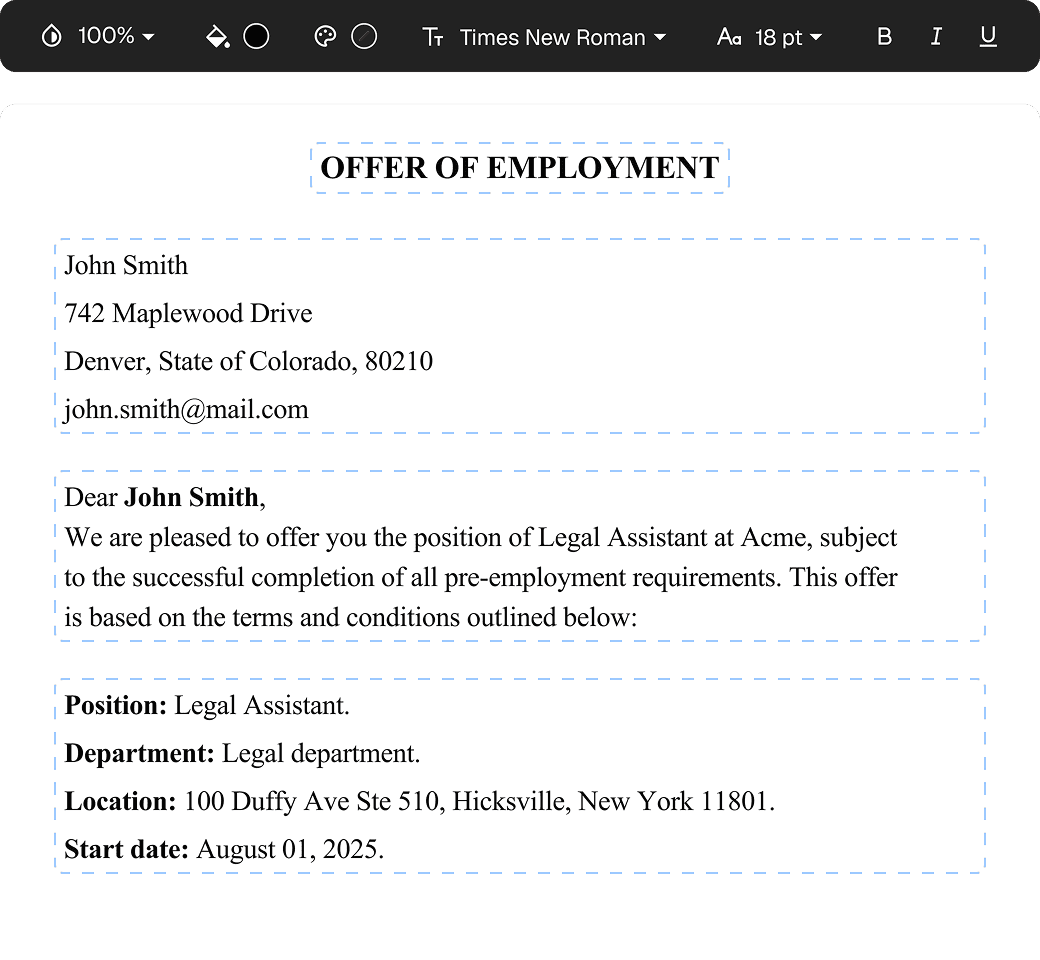
Tweak agreements before signing or sending for signatures. Update details, add or remove clauses, adjust formatting, and redline changes instantly.
eSign legally and securely
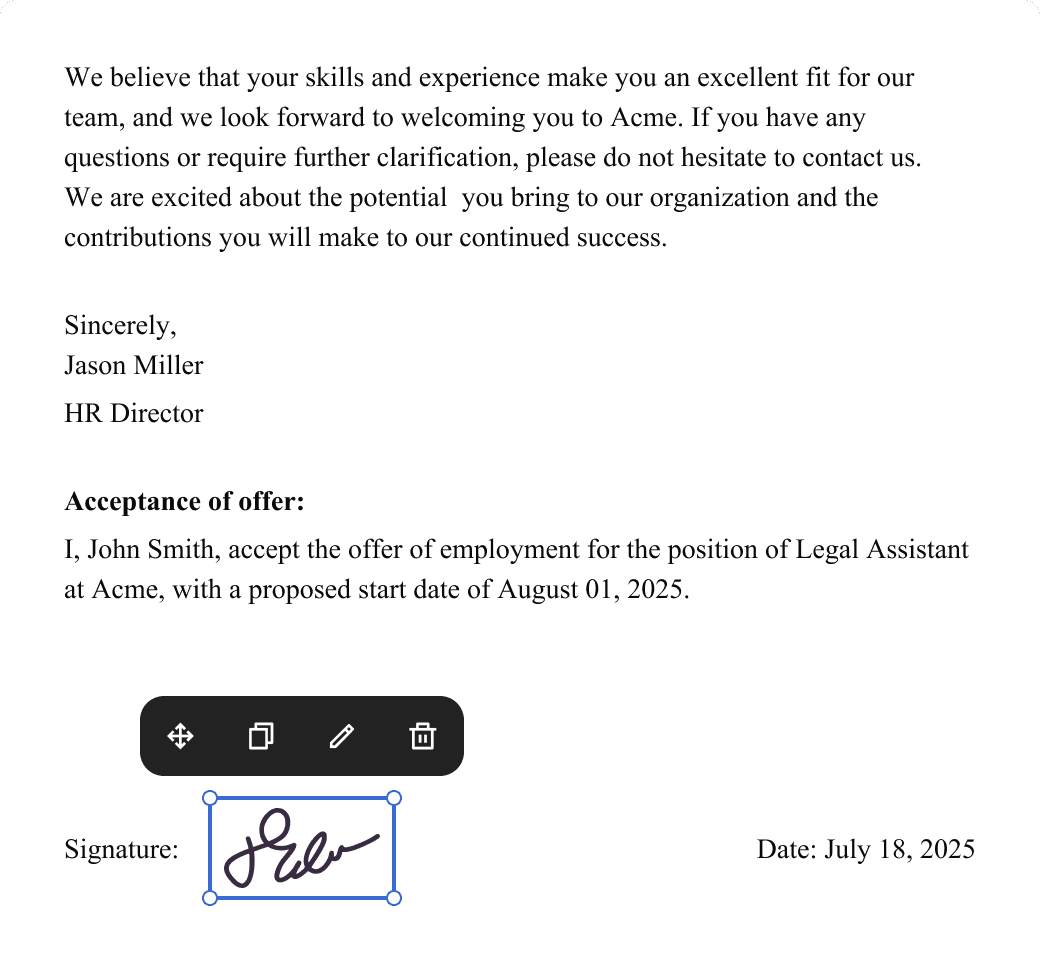
Sign documents and collect legally binding signatures. Invite up to ten people to sign in any order, track the progress, and send reminders.
Request legally binding signatures
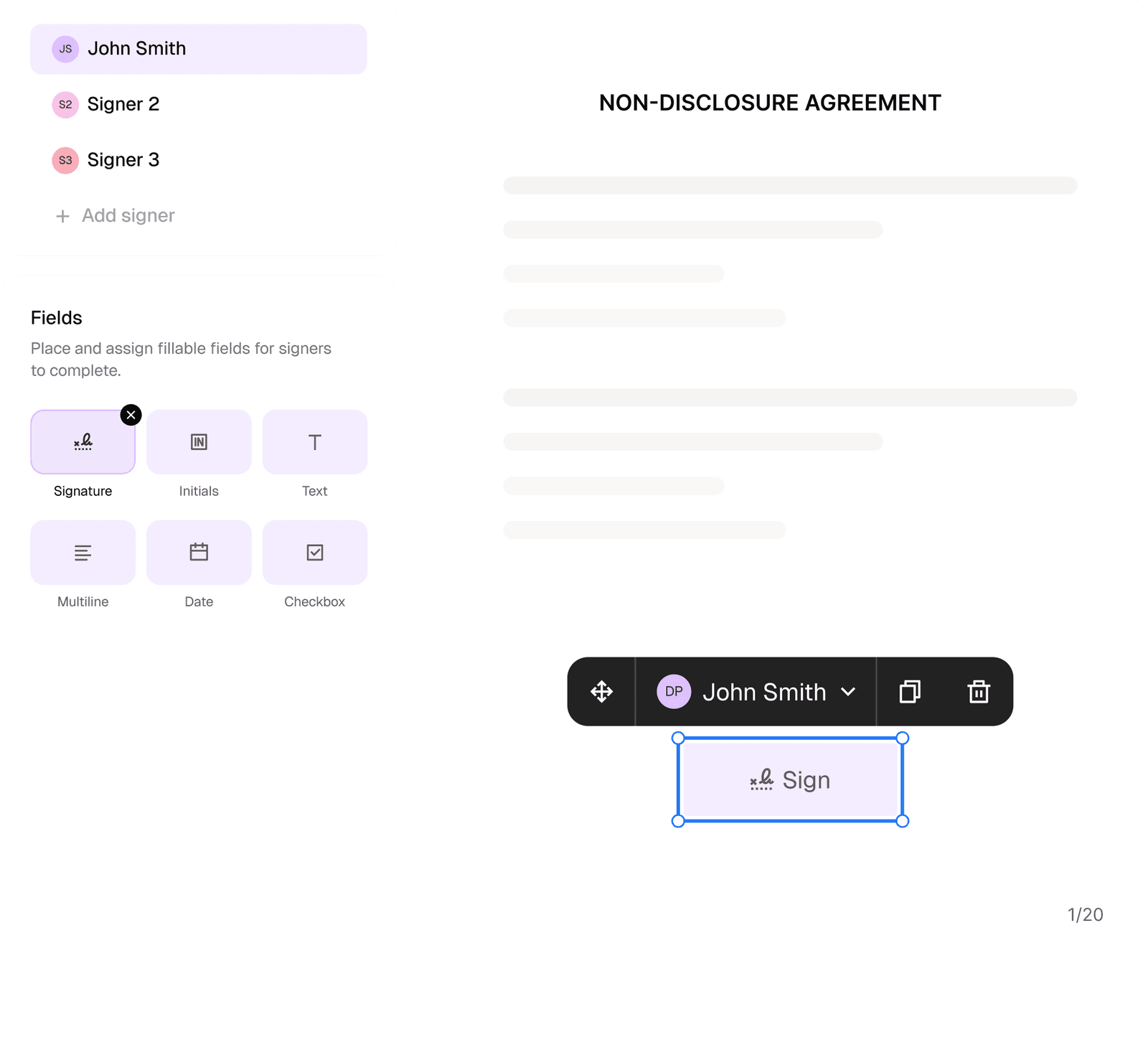
Invite up to ten people to sign your document in any order. Get a finalized, audit-ready copy without chasing signatures.
Skip the drafting.
Choose from 2,500+ templates
Browse templatesChoose a template
Fill in details
Sign and download