Updated September 9, 2026
3 min read
Are Verbal Agreements Legally Binding? The Truth About Oral Contracts

Are Verbal Agreements Legally Binding? The Truth About Oral Contracts
- What Makes a Verbal Contract Legally Binding Under US Contract Law?
- When Does a Verbal Agreement Have to Be in Writing?
- Why Does a Verbal Contract Need an Exchange of Value?
- What Proof is Needed to Enforce a Verbal Contract in Court?
- How Does a Court Decide Whether a Verbal Agreement Is Enforceable?
- The Quick-Check Guide: How Binding Is a Verbal Contract?
- Final Word
Content
Many people believe that your agreement isn’t valid until you write it on paper and sign it with ink. It can happen in a lot of daily situations when we need a certain sort of accord, like taking a loan or a grant, or shaking hands on a casual business deal. When there is no formal document, a conversation might feel like a simple talk with no official weight.
These are some common misconceptions, but the reality is slightly different. Verbal contracts can be legally binding, subject to applicable state law and any requirement that the agreement be in writing. A person’s spoken word holds real weight due to fundamental rules of commerce and communication.
The true challenge with oral agreements is not their legality, but how you prove they exist when something goes wrong. People might change their stories, forget what they have said before, or some misunderstandings might happen. All these reasons can make it difficult to enforce a broken promise in a courtroom.
This guide is covering the topic of verbal agreements and how to make them work for you.
What Makes a Verbal Contract Legally Binding Under US Contract Law?
So, is a verbal agreement a contract at all? The short answer is yes, but let’s probe deeper. A contract is an agreement between parties that creates mutual obligations enforceable by law. It can be a conversation over coffee or a formal document—it does not change the agreement’s fundamental nature.
A baseline rule under verbal agreement law establishes that a contract isn’t formed by accident, and it needs certain structural pieces. Specifically, a verbal contract requires offer, acceptance, and consideration.
So, if you wonder if a verbal agreement is legally binding, look through the three essential pillars:
mutual assent: one party makes a clear offer, and the other accepts it without changing the terms;
intention: both parties have the capacity and the intent to make a contract;
consideration: each side gives, promises, or gives up something of legal value as part of the bargain.
In the United States, contract law is primarily governed by state law. Agreements for the sale of goods are generally subject to each state’s enacted version of Article 2 of the Uniform Commercial Code (UCC), while service and other contracts are generally governed by state contract law. Whether a verbal contract is enforceable therefore depends on the applicable state law, the type of agreement, and whether the basic requirements for contract formation are met.
When Does a Verbal Agreement Have to Be in Writing?
Even though the law treats spoken promises seriously, there are some strict limits to them. Every state recognizes that some agreements of high stakes need writing down, as leaving them only to memory might come down to dangerous consequences.
State laws commonly require certain types of agreements to be in writing and signed to be enforceable. For example, California Civil Code § 1624 applies this requirement to agreements that cannot be performed within 1 year, certain guarantees, and certain real estate agreements.
Some types of agreements generally must be evidenced by a signed writing to be enforceable, although the exact rules and exceptions vary by state. Common examples include:
Real Estate Transfers: Any sale of land or real property.
Long-Term Leases: Any rental agreement lasting over one year.
Paying Another's Debt: Guarantees to take on someone else's financial obligations.
Contracts Over One Year: Any agreement that cannot physically be completed within exactly twelve months from the day it is made (e.g., a 14-month service contract).
High-Value Goods: Under UCC Section 2-201, the sale of physical goods valued at $500 or more.
If you need to put the agreement in writing or make last-minute changes, you can also edit a PDF online.
Why Does a Verbal Contract Need an Exchange of Value?
A lot of people wonder: is a verbal agreement legal if someone breaks a promise to do a favor?
For cases like this, the ‘consideration concept’ exists. It is the core detail that turns a casual promise into a binding contract.
So, an agreement can’t be a one-way promise or gift. For a contract to be official, there must be a bargained-for exchange where both parties give up something of value. It can be money for work, service for service, etc.
For example, if your friend promises to give you a car for free and then changes their mind, that promise normally is not enforceable as a contract because you gave nothing in return. But if they promise you the car in exchange for driving them around for 6 months, your labor can serve as consideration.
Depending on state law, however, a person who reasonably relies on a promise to their detriment may have another claim, such as promissory estoppel.
When disputes arise, courts rarely look at whether the deal was smart or fair. All they check is if the exchange took place. Judges do not take into account if the deal wasn’t beneficial for you; what matters is the fact that an accord really happened.
What Proof is Needed to Enforce a Verbal Contract in Court?
When considering how binding is a verbal contract, you have to remember that its strength entirely depends on the evidence you can gather. Without a written document, there might be conflicting stories instead of a legal dispute, and that’s when people turn to court.
To prove an oral agreement does exist, you must present the proof that judges and juries can piece together.
Performance is usually the most powerful evidence. When one of the parties has already begun fulfilling their part of the agreement, it shows the deal was in place.
Among other working sorts of evidence, there are:
digital trail: you can use text messages, emails, social media messages, and even voicemails referencing the deal;
financial records: bank statements, receipts, invoices showing money movements between the parties—all these processes can support your claim;
witness testimony: if there was anyone present at the moment when the agreement was being made, their words can serve as your proof.
How Does a Court Decide Whether a Verbal Agreement Is Enforceable?
If a dispute over a verbal agreement reaches court, the judge or jury will evaluate the available evidence to determine whether an enforceable agreement existed and what its terms were. The legal standard does not automatically change just because the contract was oral; the main challenge is usually proving the agreement without a written document that clearly records its terms.
Deadlines for bringing a contract claim also vary by state. For example, California generally allows 2 years for claims based on contracts not founded on a writing.
In a civil lawsuit, the party with the burden of proof generally must prove its claim by a preponderance of the evidence. This means showing that the claim is more likely true than not true.
When written evidence is limited, the court may consider the parties’ testimony and conduct to determine whether an agreement existed and what its terms were. How both sides acted after the alleged agreement can also help show whether their behavior was consistent with the contract they claim was made.
The Quick-Check Guide: How Binding Is a Verbal Contract?
If you need a quick analysis of your agreement, and you have it written, you can use the AI summary function online. But if you want a fast check of a verbal contract, go through a list of these simple questions:

Checking these is a fast way to tell if your oral contract can be taken legally or not.
Final Word
The legal system of the United States respects the power of a spoken word. So, the answer to the question “Are verbal agreements legally binding?” is “absolutely yes.”
Is a verbal agreement legally binding when it meets all the core pillars of a contract? Again, yes.
But there is a gap between what is practically smart and technically legal. While are verbal contracts binding under common law, relying on them can be uncertain. That’s why the best practice for a modern contractor would be to use a preventive strategy. You may follow up a verbal agreement with a quick written summary via text message or email, or even use an electronic signature if you want to take it to another level. This little step creates a permanent, secure paper trail and protects you from possible risks.
More guides
September 1
7 min read
How to Provide Proof of Employment: Documents and Steps

August 21
7 min read
Arbitration vs Litigation: The Right Path for Your Business

September 12
13 min read
Construction Change Order Process: How to Avoid Scope Creep

September 10
14 min read
How to Protect Your Small Business from Lawsuits

September 1
6 min read
Different Types of 1099: Who and When Files Them

August 27
4 min read
Forms W4 vs W2 vs 1099: What’s The Difference?

One home for your
agreements
Edit PDFs seamlessly
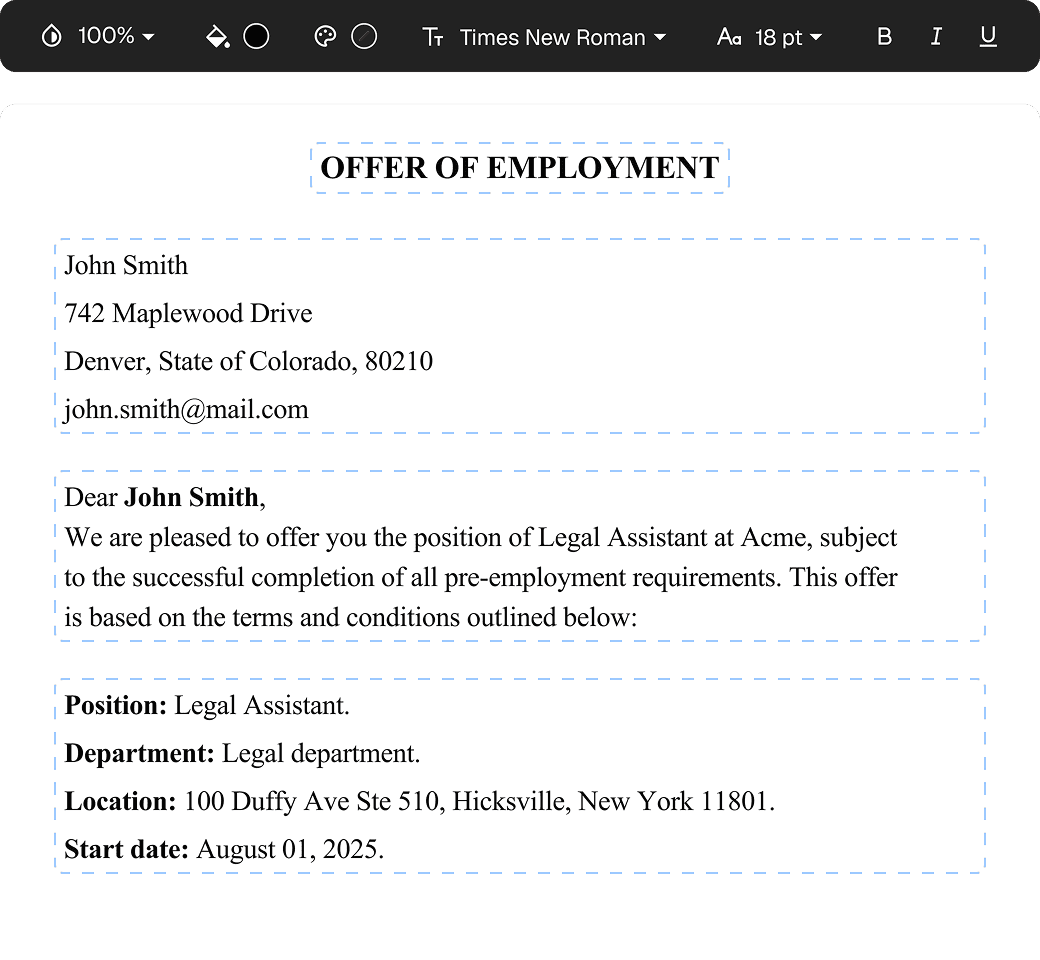
Tweak agreements before signing or sending for signatures. Update details, add or remove clauses, adjust formatting, and redline changes instantly.
eSign legally and securely
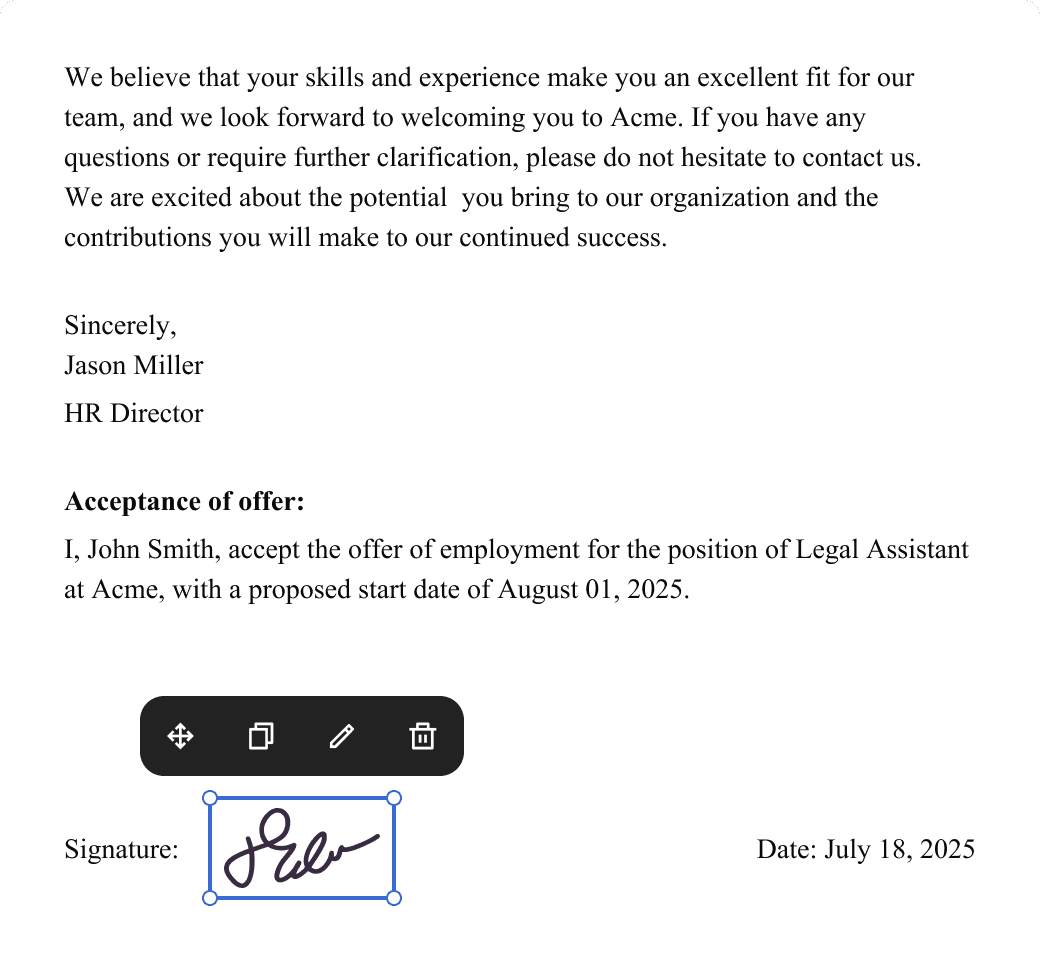
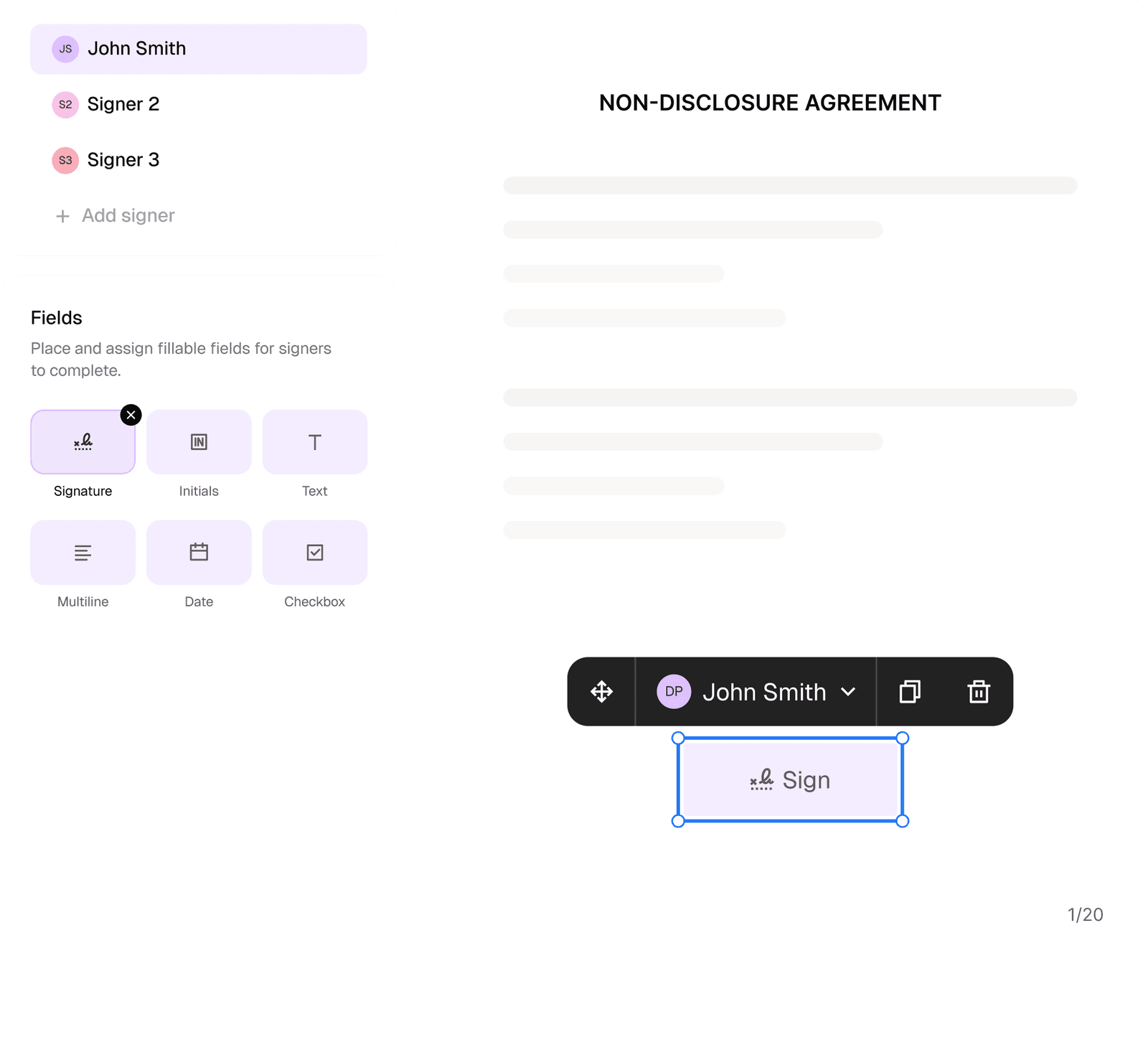
Sign documents and collect legally binding signatures. Invite up to ten people to sign in any order, track the progress, and send reminders.
Request legally binding signatures
Invite up to ten people to sign your document in any order. Get a finalized, audit-ready copy without chasing signatures.
Skip the drafting.
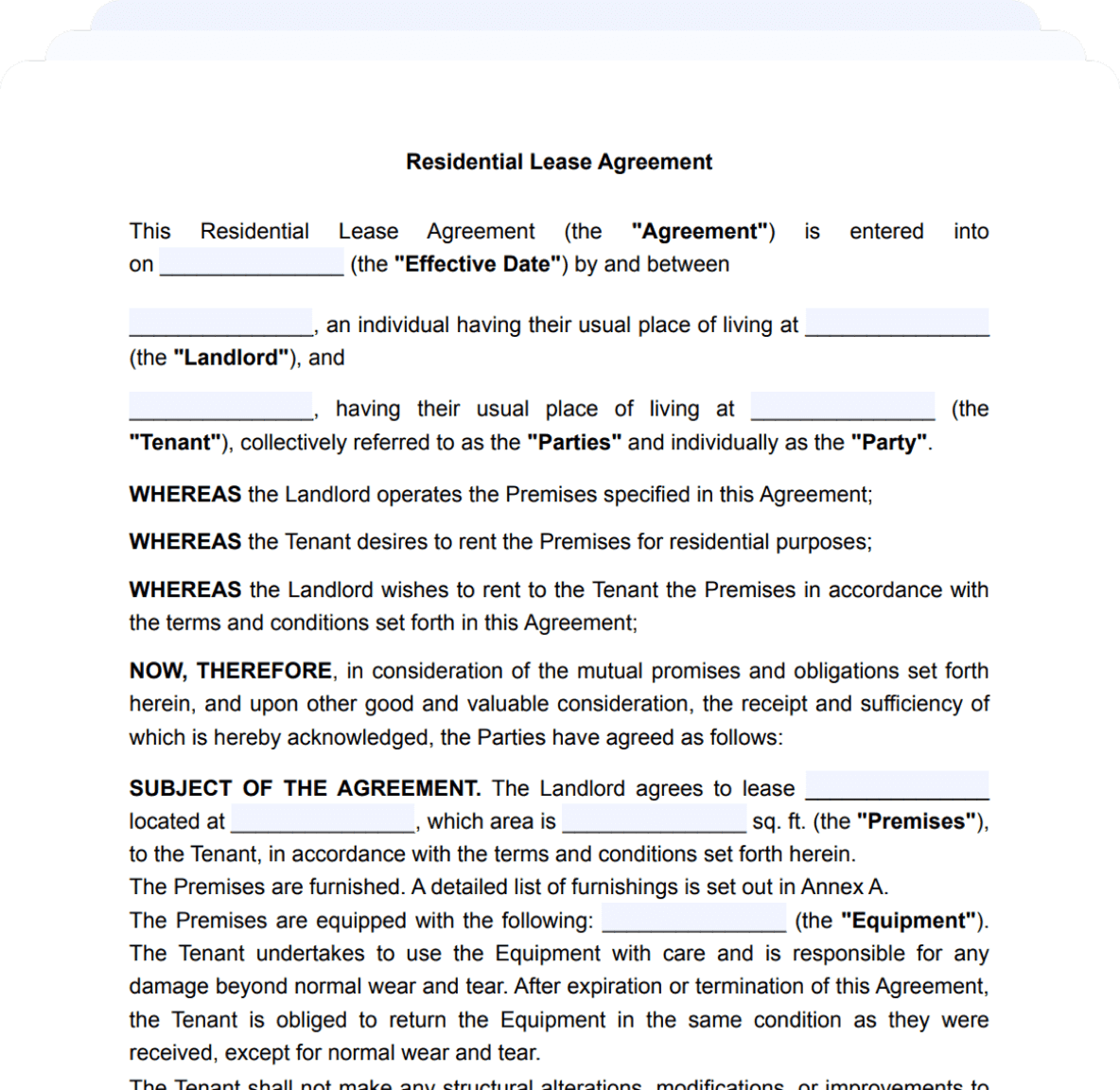
Choose from 2,500+ templates
Browse templatesChoose a template
Fill in details
Sign and download