Updated September 1, 2026
6 min read
Different Types of 1099: Who and When Files Them

Different Types of 1099: Who and When Files Them
- What Are the 1099 Forms & How Many 1099 Forms Are There?
- What Is a Form 1099 Used for in Business Operations & General Income?
- What Are the Different Types of 1099 Forms Used for Investments & Banking?
- Form 1099-B
- What Are the Different 1099 Forms Used for Real Estate & Debt Relief?
- What Are the Different Types of 1099 Forms Used for Digital Payments, Crypto, & Merchant Networks?
- What Types of 1099s Are Relevant to Retirement, Insurance, & Health Benefits?
- What Are the Different 1099 Forms for Corporate Actions & Government Payouts?
- Conclusion
Content
Businesses, independent contractors or freelancers, and those who receive unique payouts often face an entirely different set of tax forms to fill out — Forms 1099. Simply speaking, Form 1099 reports non-salary income to the Internal Revenue Service (IRS). There are different types of 1099 forms, each reporting different types of income and having various payer-payee relationships. The payment type you get determines the category of the 1099 form. This article breaks down all the Form 1099 types, what they are for, and how to file the right one to avoid legal trouble.
What Are the 1099 Forms & How Many 1099 Forms Are There?
Let’s do a quick overview of the 1099 Forms in general. Currently, the IRS manages over 20 distinct variations of Form 1099, with each covering different types of economic activity. Most of these can be edited in PDF or other document formats and sent electronically. The tax code requires that the payer file the correct 1099 form with the IRS and simultaneously provides an identical copy to the person or entity that received the money. This way, both sides have a paper trail that can be checked.
Before you submit your 1099 Form
As a payer, you need a correct Taxpayer Identification Number (TIN) before filing 1099 Forms. Since the IRS uses computer matching systems, it’s easy to trigger an error in its tracking process. If a payer submits a 1099 form without a TIN or with an incorrect one, the IRS will report this as an error. If this happens, the payer can face:
- A backup withholding “B” program (in particular CP2100 or CP2100A notices)
- Per-form penalties that escalate with each wrong return.
If the person has received the first notice, the payee must send a corrected W-9 form to the payer. For the second notice, the payee can stop backup withholding by providing a copy of their Social Security card or a Letter 147C.
If your Form 1099 gets too difficult to decipher, you can always use an AI document review to help you figure everything out.
Supporting income reporting
All 1099 forms support income reporting on a taxpayer’s federal tax return. When a payer files a 1099, the IRS adds it to the taxpayer’s master file. So when the recipient prepares their tax return, the gross income they reported must match the total of the 1099 forms the IRS has received under their TIN. If a person doesn’t report their income and the IRS detects the inconsistency, it can be flagged, and the person may receive a notice of underreported income. That’s why 1099 Forms serve as a reliable instrument for supporting income accountability. Now that we have this topic covered, we can begin answering a more complex question What are the different 1099 forms? Here’s how they fit in the 2026 tax checklist.
What Is a Form 1099 Used for in Business Operations & General Income?
These forms focus on general business spending related to operations, vendor management, and non-payroll trade expenses. Businesses often use these the most.
IRS Form 1099-NEC
Who files it: Businesses, nonprofits, and other entities
Recipients: Independent contractors, freelancers, gig workers, and professional service providers.
Concerning: Money paid for services performed in the course of a trade or business.
Filing threshold: $2,000 or more (a recent update has changed this sum from $600 to $2000).
IRS Form 1099-MISC
Who files it: Businesses, landlords, and commercial entities making non-employee payments that don’t fit into independent contractor labor.
Recipients: Landlords, attorneys, vendors, prize winners, or royalty recipients.
Concerning: Money paid for rent, royalties, prizes, awards, and specific gross legal proceeds.
Filing threshold: It depends entirely on the payment type:
- Rent, prizes, and awards: Typically at least $600.
- Royalties and broker payments: $10 or more.
What Are the Different Types of 1099 Forms Used for Investments & Banking?
This section covers 1099 Forms related to banking, personal savings, and wealth generation.
Form 1099-INT
Who files it: Banks, credit unions, brokerage firms, and government entities.
Recipients: Individual account holders, investors, and savers.
Concerning: Money paid for interest income earned on savings accounts, certificates of deposit (CDs), or savings bonds.
Filing threshold: $10 or more.
Form 1099-DIV
Who files it: Corporations, mutual fund companies, and brokerage firms.
Recipients: Shareholders and individual investors.
Concerning: Money paid for distributions, ordinary dividends, and qualified dividends paid out on corporate stock holdings.
Filing threshold: $10 or more.
Form 1099-B
Who files it: Stockbrokers, cryptocurrency platforms, and barter exchanges.
Recipients: Traders, investors, and individuals liquidating capital assets or selling shares of their company.
Concerning: Gross proceeds from the sale of stocks, bonds, commodities, mutual funds, or barter transactions.
Filing threshold: No minimum threshold. Brokers must report all qualifying sales because all sales influence a person’s capital gains.
Form 1099-OID
Who files it: Financial institutions, brokerages, and businesses.
Recipients: Bondholders and debt investors.
Concerning: Money representing Original Issue Discount income.
Filing threshold: $10 or more.
Form 1099-PATR
Who files it: Cooperatives (co-ops), such as agricultural co-ops or purchasing cooperatives.
Recipients: Co-op members and farmers.
Concerning: Money paid for taxable patronage dividends, allocations, and refunds that are being distributed back to members.
Filing threshold: $10 or more.
What Are the Different 1099 Forms Used for Real Estate & Debt Relief?
The documents we discuss here are related to significant property changes, foreclosures, and the formal restructuring or cancellation of debt.
Form 1099-S
Who files it: Real estate closing agents who help someone sell and buy property, commercial or residential.
Recipients: Property sellers and transferors.
Concerning: Proceeds from the sale or exchange of real estate (including land, commercial buildings, air space, or residential homes).
Filing threshold: No minimum threshold for standard transactions. Closing agents must report all real estate sales unless the seller provides a specific written certification that the home was their primary residence and the total capital gain is fully excludable under tax law (up to $250,000 for single filers or $500,000 if married filing jointly).
Form 1099-C
Who files it: Financial institutions, credit unions, commercial lenders, or federal government agencies.
Recipients: Individual or corporate debtors.
Concerning: This form concerns forgiving debt, so no money is exchanged. This rule is guided by 26 U.S. Code § 6050P. Form 1099-C is dedicated to reporting to both the IRS and the debtor that the debt is no longer owed.
Filing threshold: $600 or more.
Form 1099-A
Who files it: Lenders, banks, and financial institutions holding a mortgage or secured loan on a property.
Recipients: The borrower/debtor.
Concerning: The acquisition or abandonment of secured property. This document is triggered when a lender forecloses on a property, repossesses a vehicle, or when a borrower walks away from an asset used as collateral.
Filing threshold: No minimum threshold. A form must be filed for any property that is foreclosed upon or definitively abandoned, regardless of the dollar value.
What Are the Different Types of 1099 Forms Used for Digital Payments, Crypto, & Merchant Networks?
This Form 1099 category handles payment card companies, digital currencies, online marketplaces, and various payment apps.
Form 1099-K
Who files it: Payment card companies, online marketplaces, and payment apps.
Recipients: Online merchants, e-commerce sellers, freelancers, and individuals accepting digital payments for goods or services.
Concerning: Gross payment volume received from payment card transactions (credit/debit cards) and third-party network transactions.
Filing threshold: It depends strictly on how the customer paid:
- Payment card transactions. No minimum threshold. If you take direct payments by credit, debit, or gift cards, you get this form.
- Third-party network transactions. Online marketplaces and payment apps must send a form if the recipient’s income exceeds $20,000 in more than 200 transactions.
Form 1099-DA
Who files it: Cryptocurrency exchanges, brokerages, and various digital wallet providers.
Recipients: Traders, investors, and any taxpayer selling or exchanging digital assets.
Concerning: Gross proceeds from the sale, trade, or exchange of digital assets (e.g., cryptocurrency or stablecoins).
Filing threshold: No minimum threshold for standard crypto sales and trades. However, the law has some exceptions:
- Stablecoins. Only reported if annual aggregate sales are $10,000 and more.
- NFTs and PDAPs. Only reported if annual aggregate sales are $600 and more.
What Types of 1099s Are Relevant to Retirement, Insurance, & Health Benefits?
These documents deal with personal safety nets, healthcare savings distributions, and life insurance payouts.
Form 1099-R
Who files it: Financial institutions, employers, and/or organizations that manage individuals’ pensions, profit-sharing plans, or insurance contracts.
Recipients: Those who receive retirement, pension, or annuity distributions.
Concerning: Money paid out as distributions from pensions, annuities, traditional or Roth IRAs, 401(k) plans, profit-sharing architectures, or permanent life insurance contracts.
Filing threshold: $10 or more.
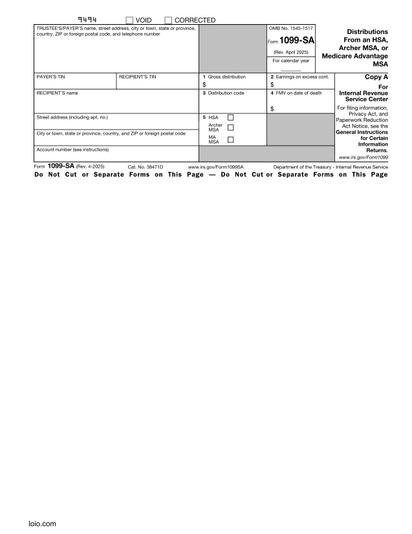
Form 1099-SA
Who files it: Trustees, banks, and custodians managing qualified healthcare savings accounts.
Recipients: Account owners who withdraw money to pay for medical bills or medical services.
Concerning: Money distributed from a Health Savings Account (HSA), Archer Medical Savings Account (Archer MSA), or Medicare Advantage MSA.
Filing threshold: No minimum threshold.
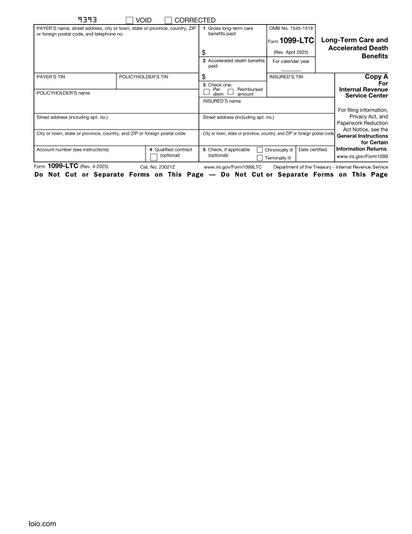
Form 1099-LTC
Who files it: Insurance companies and traditional healthcare indemnity underwriters.
Recipients: Policyholders, long-term care patients, or chronically/terminally ill individuals.
Concerning: Money paid out under long-term care insurance contracts or accelerated death benefit riders.
Filing threshold: No minimum threshold. All payments made under these policy guidelines must be reported to document tax-exempt limits.
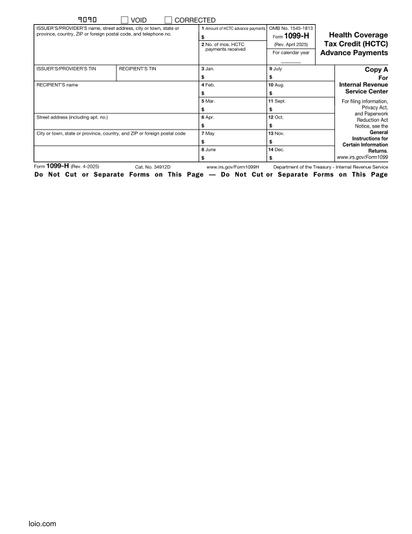
Form 1099-H
Who files it: Health insurance providers and health plan administrators.
Recipients: Individuals who qualify for specific public safety nets, such as Trade Adjustment Assistance (TAA) recipients or Pension Benefit Guaranty Corporation (PBGC) pension payees.
Concerning: Money received from the Department of the Treasury as advance payments for qualified health insurance premiums on behalf of eligible recipients.
Filing threshold: No minimum threshold.
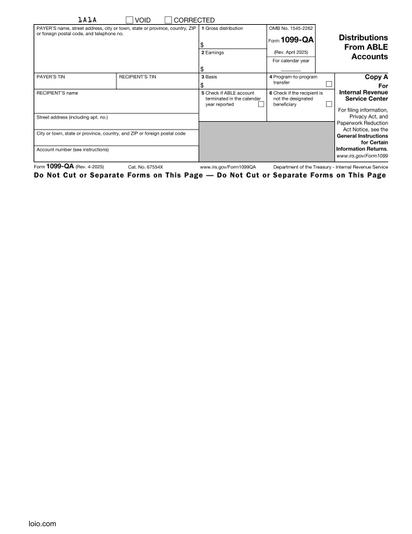
Form 1099-QA
Who files it: State agencies, administrators, and financial institutions that administer ABLE programs.
Recipients: Individuals who hold and withdraw funds from an ABLE savings account.
Concerning: Money distributed from an Achieving a Better Life Experience (ABLE) account.
Filing threshold: No minimum threshold. Institutions that file the form must report every distribution to ensure the spending aligns with the recipient’s qualified disability expenses.
What Are the Different 1099 Forms for Corporate Actions & Government Payouts?
This section focuses on 1099 Forms related to public assistance programs, academic funding, corporate equity changes, and the commercial transfer of existing life insurance contracts.
Form 1099-G
Who files it: Federal, state, and local government agencies.
Recipients: Individual citizens and business owners who receive government funds.
Concerning: Money paid for unemployment compensation, state or local income tax refunds, agricultural subsidies, or taxable government grants.
Filing threshold: It varies by the type of payment:
- Unemployment compensation. Any amount has to be filed.
- State or local tax refunds/income tax credits. $10 or more.
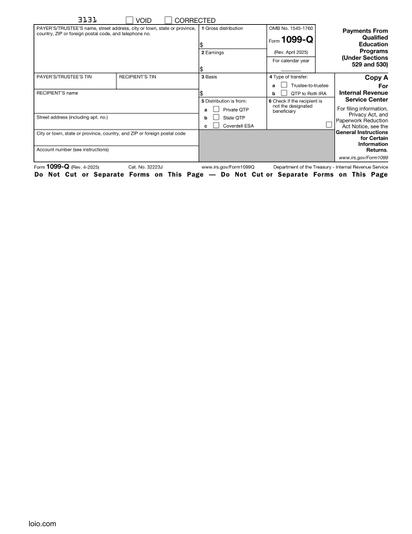
1099-Q Form
Who files it: States, designated educational institutions, and qualified tuition program (QTP) managers.
Recipients: Those who withdrew money from a tax-advantaged education savings account.
Concerning: Money distributed from Qualified Education Programs (e.g, a 529 plan or a Coverdell Education Savings Account).
Filing threshold: No minimum threshold ($0).
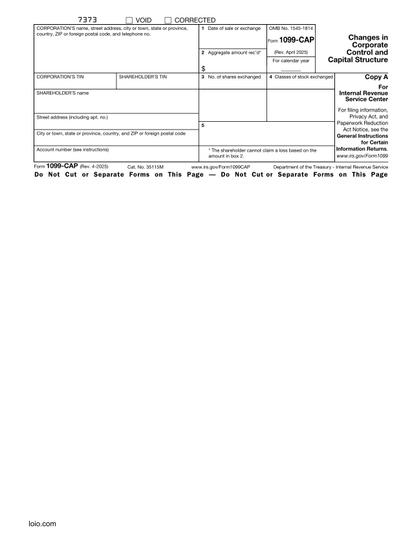
Form 1099-CAP
Who files it: Corporations going through massive structural transformations or the clearing brokers executing the transaction.
Recipients: Shareholders, executives, or controlling entities holding corporate stock.
Concerning: Changes in corporate control and capital structure. This form tracks instances in which a corporation undergoes a taxable acquisition, merger, or major recapitalization that results in shareholders receiving cash, stock, or other property.
Filing threshold: In most cases, transactions or agreements reaching $100 million or more must be filed.
Form 1099-LS
Who files it: The acquirer of a life insurance contract.
Recipients: The original policyholder or seller who transfers their life insurance contract.
Concerning: Money paid to purchase an existing life insurance contract, or any interest in a contract, via a reportable policy sale.
Filing threshold: No minimum threshold.
Form 1099-SB
Who files it: The life insurance company that originally issued the contract.
Recipients: The person or entity that sells, transfers, or surrenders a life insurance policy.
Concerning: The seller’s investment in a life insurance contract. When an insurance company receives notice of a policy sale or of a transfer of life insurance to a foreign person, it must file Form 1099-SB.
Filing threshold: No minimum threshold.
Conclusion
With more than 20 versions of Form 1099 in circulation, the fastest way to find the right one is to work backward from the payment itself — service fees point to 1099-NEC, interest or dividends to 1099-INT or 1099-DIV, a property sale or forgiven debt to 1099-S or 1099-C, and so on. Once you know the category, the form and its filing threshold follow automatically.
Before your next filing deadline, confirm two things for every payment you made this year: which 1099 form it maps to, and whether you have a verified TIN on file for the recipient. That single check prevents most of the compliance issues this guide covers.
Filled these out in FormSwift before? It's closing September 30, 2026 — here's how to keep editing your 1099s and W-9s in Loio.
More guides
September 1
7 min read
How to Provide Proof of Employment: Documents and Steps

July 25
11 min read
Charitable Donations Tax Deduction: Eligibility, Limits, and Records

July 24
4 min read
What Is a Fixed-Term Lease, and How Is It Different From an Automatic Renewal Lease?

July 22
4 min read
Income Statement vs Profit and Loss Statement: Is There a Difference?

August 27
4 min read
Forms W4 vs W2 vs 1099: What’s The Difference?

August 21
7 min read
Arbitration vs Litigation: The Right Path for Your Business

One home for your
agreements
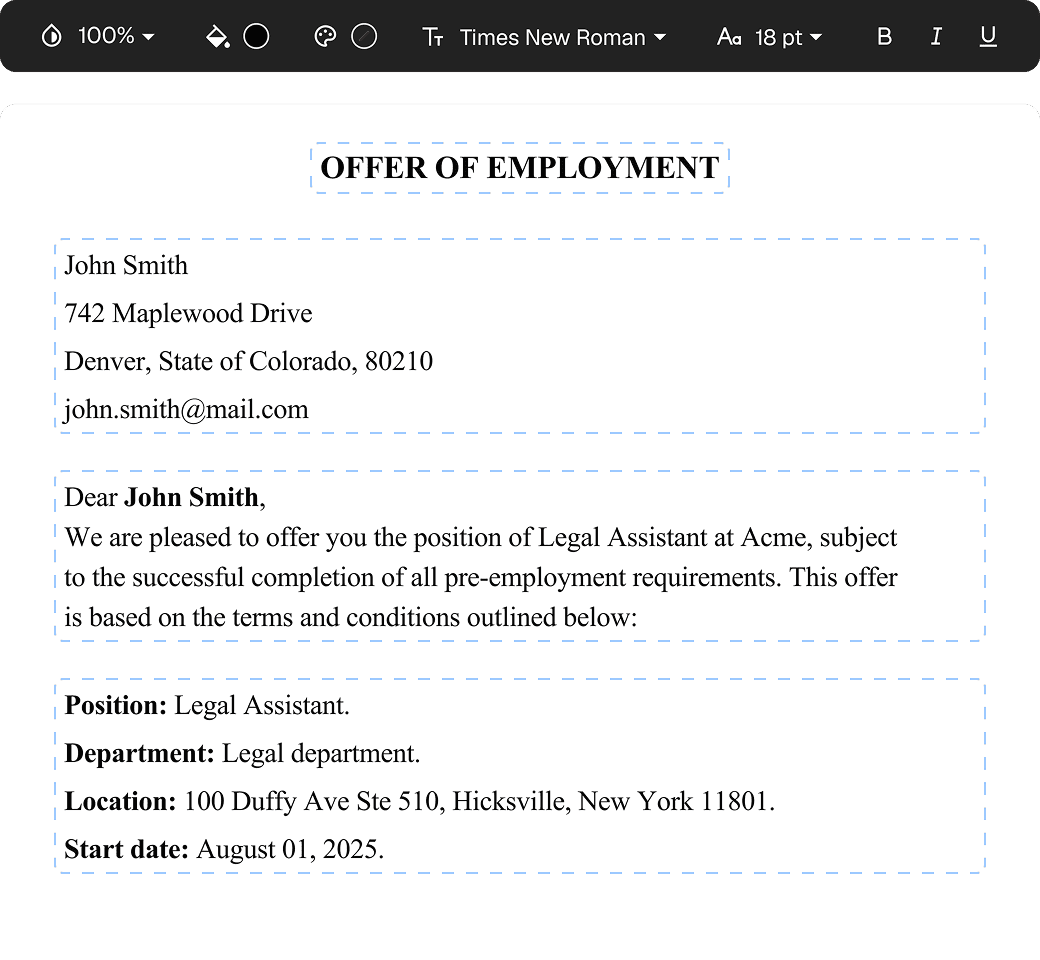
Edit PDFs seamlessly
Tweak agreements before signing or sending for signatures. Update details, add or remove clauses, adjust formatting, and redline changes instantly.
eSign legally and securely
Sign documents and collect legally binding signatures. Invite up to ten people to sign in any order, track the progress, and send reminders.

Request legally binding signatures
Invite up to ten people to sign your document in any order. Get a finalized, audit-ready copy without chasing signatures.

Skip the drafting.
Choose from 2,500+ templates
Browse templatesChoose a template
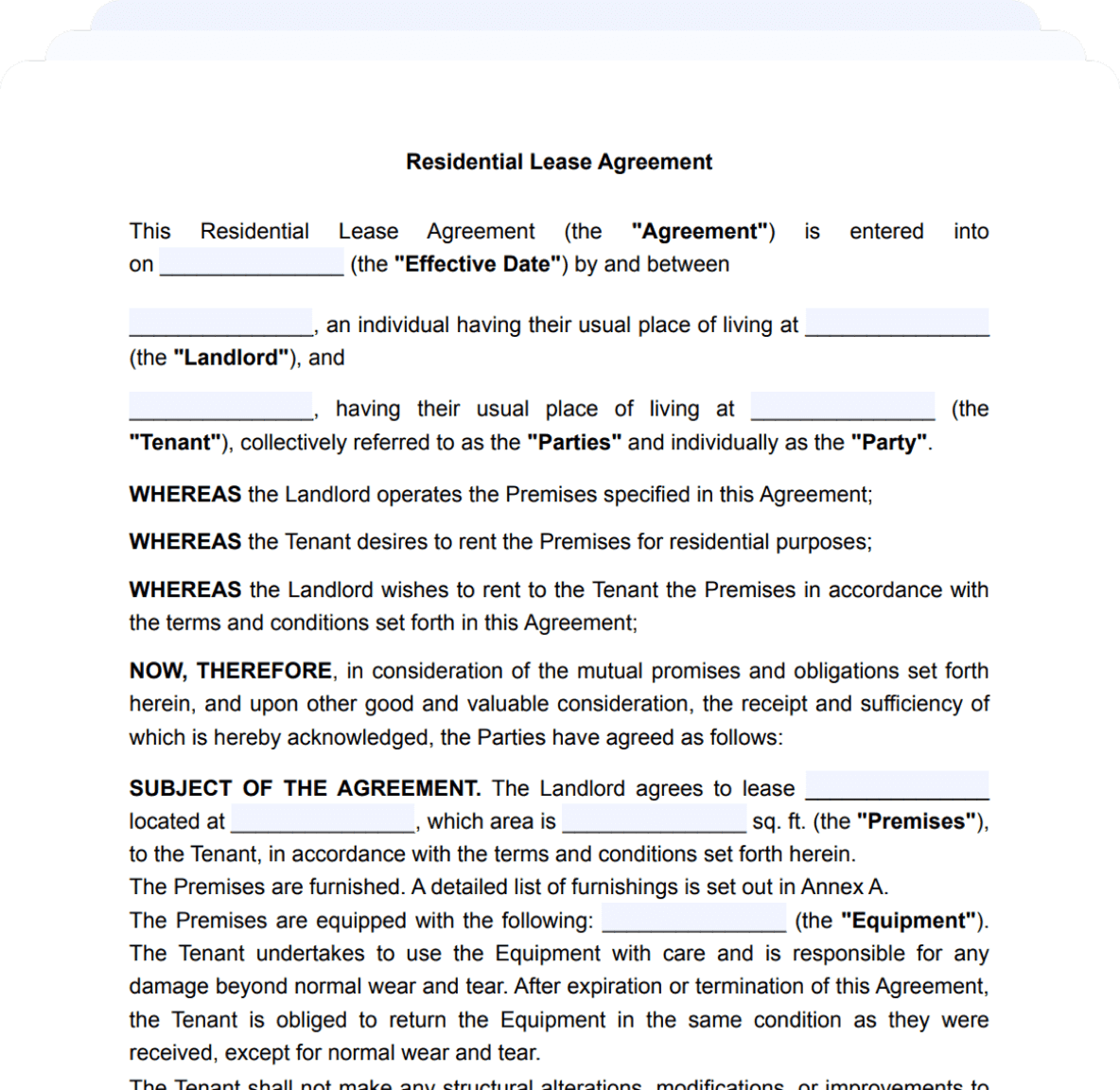
Fill in details
Sign and download