Updated July 24, 2026
4 min read
What Is a Fixed-Term Lease, and How Is It Different From an Automatic Renewal Lease?

What Is a Fixed-Term Lease, and How Is It Different From an Automatic Renewal Lease?
- What Is an Automatic Lease Renewal?
- What Is a Fixed-Term Lease Agreement?
- What Regulates Automatic and Fixed-Term Lease Agreement Conditions
- Is It Better to Have a Fixed or Periodic Tenancy?
- Lease Terms: Meaning and Usage in Specific Cases
- Automatic vs. Fixed-term Lease Agreement: Practical Considerations
- Navigating Stability and Flexibility
Content
Understanding the type of lease you’re signing up for isn’t always clear. A lease agreement defines rent, notice period, renewal clause, and termination terms. And so, misunderstanding how a rental agreement concludes or transforms can lead to avoidable legal disputes and financial liabilities.
Landlords who fail to track their lease end dates risk costly, unexpected vacancies or lock themselves into long-term arrangements that don’t benefit them. On their part, tenants might expect to vacate the property, only to be left on the hook for thousands of dollars because they didn’t look into their lease ending. Knowing exactly how these mechanisms operate before the clock runs out is an easy way to maintain control over your property or housing stability.
What Is an Automatic Lease Renewal?
An automatic lease is a rental agreement that automatically renews for the same period when the lease ends, or it might automatically convert into a periodic, month-to-month tenancy.
Essentially, an automatic lease renewal extends a tenancy after the original lease term closes, requiring zero additional paperwork to keep the arrangement active.
For the agreement not to be renewed, one party must explicitly provide written notice that they wish to terminate it.
This lease type has an opt-out window that covers a specific term before the lease expiration date, during which a tenant or landlord can decide not to renew.
If you plan to extend your lease after the initial term and want to make changes, consider using a PDF editor and sending the proposed changes to the other party to keep things quick and convenient. (FormSwift users: note the September 30 shutdown if your lease template lives there.)
Why should automatic renewal clauses comply with state landlord-tenant laws?
Residential leases are heavily regulated to protect tenants from deceptive or unfair practices. They help to resolve landlord-tenant disputes if these ever occur.
Complete invalidation. In many jurisdictions, if an automatic renewal clause does not meet statutory requirements, state law renders it completely void and unenforceable.
For instance, under New York Real Property Law § 230, automatic lease renewals don’t count unless your landlord reminds you in writing. Under the law, if your landlord wants to automatically renew your lease, they must send you a separate, written reminder before your decision deadline. If they forget or fail to send that official reminder, the automatic renewal is canceled.
Strict advanced notice windows. The law regulates when and how a landlord has to remind their tenants about the renewal. This ensures tenants don’t get stuck in long leases without their knowledge.
Some states require that a notice be a standalone disclosure that is delivered early, prior to the lease end. Many bills, including the North Caroline General Statutes §75-41, state that a renewal clause has to be disclosed openly and simply, without additional complexities.
Financial penalties. If a landlord violates tenant laws, they can face severe financial penalties, including returning all rent collected during the unauthorized period and paying the tenant’s legal fees.
What Is a Fixed-Term Lease Agreement?
A fixed-term lease has a specific start and end date written directly into the contract.
It creates a rigid, predictable legal window that binds both the landlord and the tenant to a strict set of rules for a set period, most commonly 6 to 12 months.
The defining characteristic of a fixed-term agreement is stability. Neither party can unilaterally alter the contract terms mid-lease.
The landlord cannot arbitrarily raise the rent or reclaim the property for sale, and the tenant cannot simply walk away or stop paying without facing severe financial penalties. It protects both parties, but it also restricts them.

What Regulates Automatic and Fixed-Term Lease Agreement Conditions
In general, state laws govern most standard residential and commercial leases. Nonetheless, certain regulatory forces are federally enforced and are critical for protecting renters’ and landlords’ rights.
Consumer Financial Protection Bureau (CFPB). The CFPB enforces the federal Consumer Leasing Act, as detailed in Regulation M. It requires that any lease with a consumer clearly disclose total costs, payment schedules, and penalties for early termination or automatic renewal.
Department of Housing and Urban Development (HUD). If a rental property involves any form of federal assistance, federal rules completely override standard state agreements. HUD controls how fixed terms operate and how automatic renewals are handled.
The U.S. Code. The U.S. Code also regulates unique situations, such as leasing buildings to government agencies or managing housing on tribal lands.
State regulations. State regulations govern most lease agreements. Because local laws vary wildly between states, generic contracts can leave you exposed, so it means you have to study your local landlord-tenant laws before drafting a contract.

Is It Better to Have a Fixed or Periodic Tenancy?
Once you sign (or eSign) your agreement with the other party, you must abide by its terms, so it is always wise to take the time to choose a contract that fits your priorities and long-term plans.
Advantages. Landlords get the financial predictability with a guaranteed stream of income for the duration of the term. They don’t have to worry about turnover costs or wait without pay for the property to find a tenant. In their turn, tenants get property security and don’t have to face rent increases.
Disadvantages. This agreement is entirely rigid. If any party wants to end the lease early, doing so is complex and financially painful.
Advantages. Landlords can easily exit the lease if they don’t like the tenant or want to increase the rent due to market changes. On the other hand, tenants don’t have to stay in one place for long, which gives them flexibility.
Disadvantages. Both sides face risks. A tenant can’t protect themselves if they have to vacate the property, and a landlord doesn’t have a guarantee they will have a tenant for the next leasing period.
Lease Terms: Meaning and Usage in Specific Cases
You can decide what type of lease you need based on your job, life, and financial conditions.
Temporary work allocations or extended business trips. Some professionals are sent to specific locations for long periods. They usually need the flexibility to end the lease while still expecting stability to remain in the same place during their stay.
A corporate consultant is dispatched to Chicago for an intensive engineering project. The contract was signed for 8 months, but project timelines in this industry are prone to change and extension. So, the consultant begins with an 8-month fixed-term lease that automatically becomes a month-to-month tenancy at the end of the fixed term.
Housing during living transitions. Many individuals or families get stuck between two major real estate milestones and need temporary housing. Such situations leave people vulnerable when they don’t need a long-term agreement but rather a quick, safe place to stay.
A family sells their home faster than anticipated, and their new home won’t be available for a few months. They look for a nearby property that allows a month-to-month lease: it is quick to secure and doesn’t penalize them if they can move into their new house.
Long-term and affordable stability. Some tenants are worried about market fluctuations that can affect rent prices and/or about needing to stay in a particular location. These people value stability and a guarantee that they can stay for long without any unexpected changes.
A family with a child entering middle school secures a rental home within an elite school district. They need to stay in this specific location. They sign a long-term fixed-term lease with an explicit automatic renewal clause extending the lease for a year.
Since it can be exhausting to reread a contract every time a change is made, consider using AI for contract review to simplify the process.
Automatic vs. Fixed-term Lease Agreement: Practical Considerations
When a lease ends or renews, you need to understand several factors that directly affect you.
What happens to rental property use when a lease term ends?
The end of a lease impacts who has the right to access the property. When the agreement ends, there are three main paths.
- 1
Complete vacation of the premises. In a standard fixed-term lease, the tenant’s right to use the property ends on the exact final date specified in the agreement. The landlord gets the full possession and operational use of their property.
- 2
Holdover tenancy. Sometimes, a tenant doesn’t vacate the property and stays after the lease ends. This is called a holdover tenancy — in this case, the tenant hasn’t been evicted yet. In most states (i.e., Maryland), it can lead to a new lease (if the landlord accepts the offer) or to the case being treated as trespassing. It’s a temporary state that gives all power to the landlord: based on their decision, the tenant can be considered a trespasser or not.
- 3
Unlawful detainer. If the lease has ended, all notices were given on time, and the landlord refuses to accept any further payments to extend the lease, the tenant becomes a squatter. The landlord can’t forcefully remove the tenant, however. They have to use legal channels to do so, such as starting an eviction process.
How can lease renewal terms affect rent increases?
Rent inflation is common. In the U.S., a year-over-year increase in rent has been approximately 3.3%. The new leases, though, show that the trend isn’t as negative: a yearly increase in rent for new tenants has dropped to around 1.9%, meaning new deals are typically made with concessions. Price growth depends on the type of lease you have.
Fixed-term. Until the lease expires, landlords can’t request any rent increases, regardless of market conditions.
Automatic renewal. Price adjustments must be written explicitly in the original document for rent growth to be valid. It can look like, “This lease will automatically renew for an additional 12-month term at a 3% increase in monthly rent.” If both parties don’t change anything, this clause becomes binding for the next term. If the landlord didn’t include any specific clauses about rent increase and the agreement has renewed automatically, they can’t change the old prices.
Month-to-month. The landlord can change rent prices any time during the year if they provide a formal 30- or 60-day warning before the next billing cycle begins.
More guides
September 1
7 min read
How to Provide Proof of Employment: Documents and Steps

September 1
6 min read
Different Types of 1099: Who and When Files Them

July 20
4 min read
Addendum vs. Amendment: Change Your Purchase Agreement Properly
July 23
5 min read
Commercial Lease Negotiation & Mastering the Deal

July 25
11 min read
Charitable Donations Tax Deduction: Eligibility, Limits, and Records

September 4
8 min read
Buying vs. Leasing Commercial Property in 2026: Which Is Better for Your Business?
One home for your
agreements
Edit PDFs seamlessly
Tweak agreements before signing or sending for signatures. Update details, add or remove clauses, adjust formatting, and redline changes instantly.
eSign legally and securely
Sign documents and collect legally binding signatures. Invite up to ten people to sign in any order, track the progress, and send reminders.
Request legally binding signatures
Invite up to ten people to sign your document in any order. Get a finalized, audit-ready copy without chasing signatures.
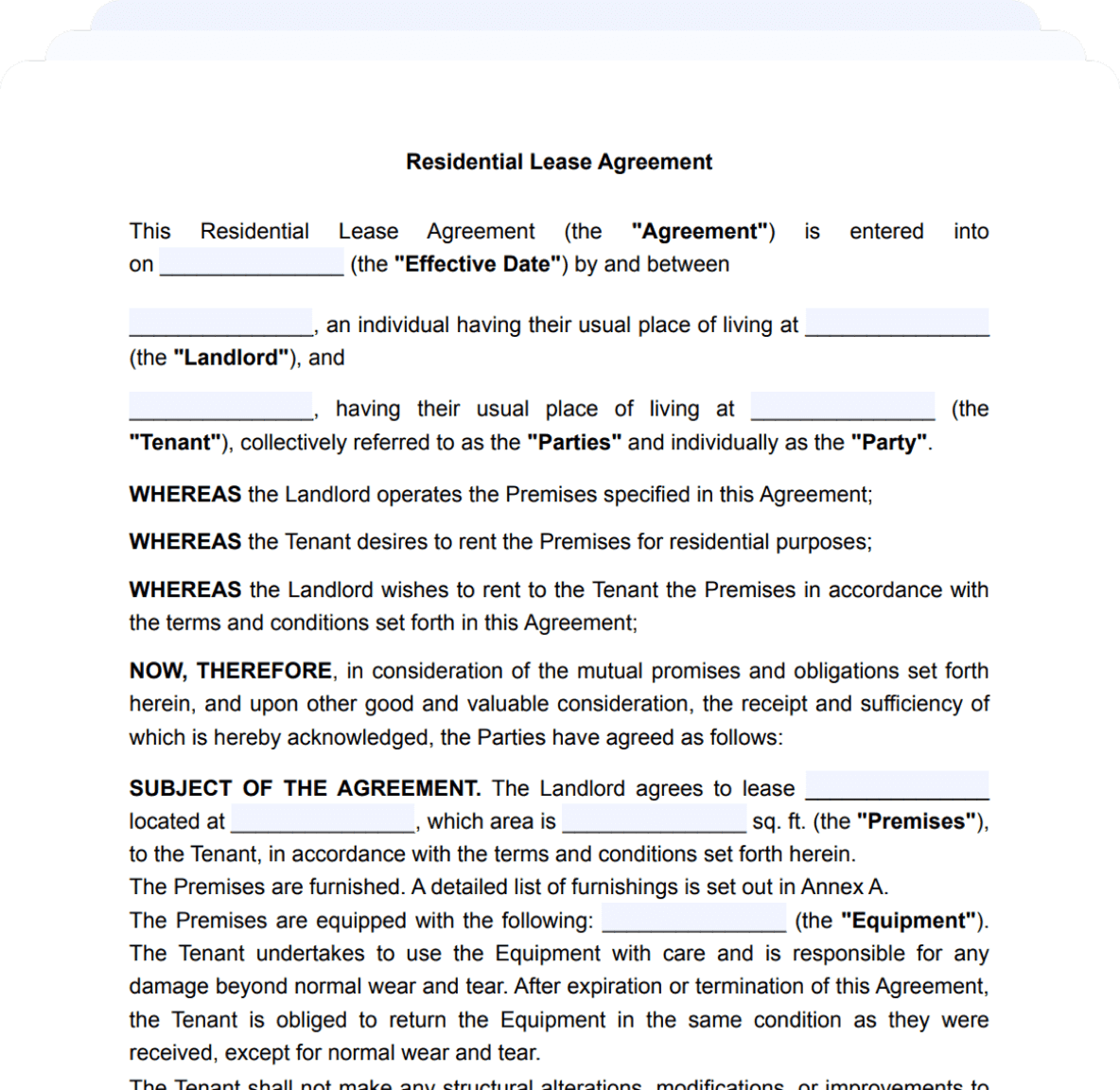
Skip the drafting.
Choose from 2,500+ templates
Browse templatesChoose a template
Fill in details
Sign and download