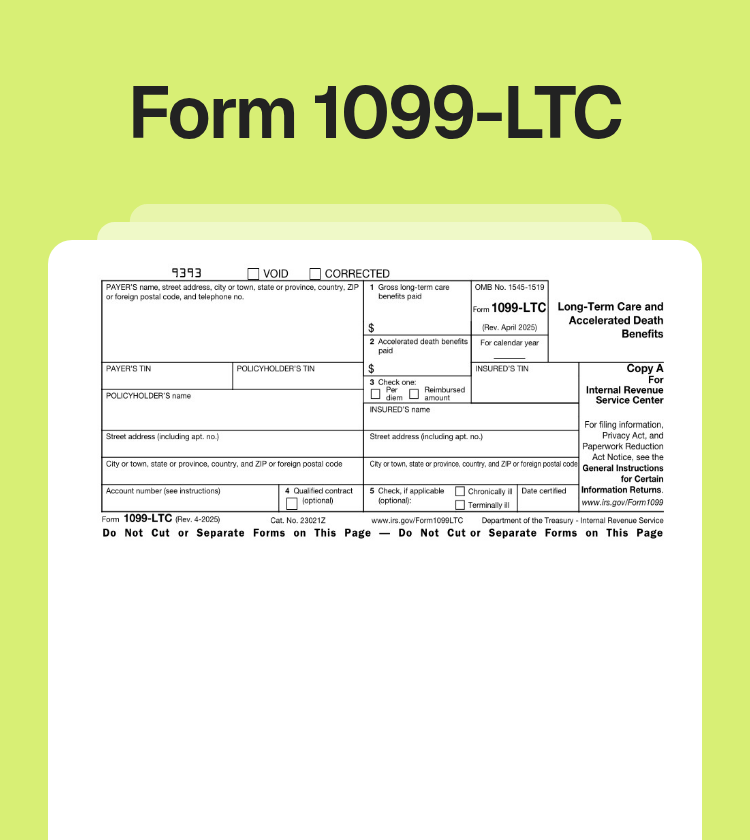
Form 1099-LTC is a document between a long-term care provider and a policyholder reporting benefits paid under a long-term care insurance policy. It is used to declare taxable or non-taxable insurance payouts related to medical care.
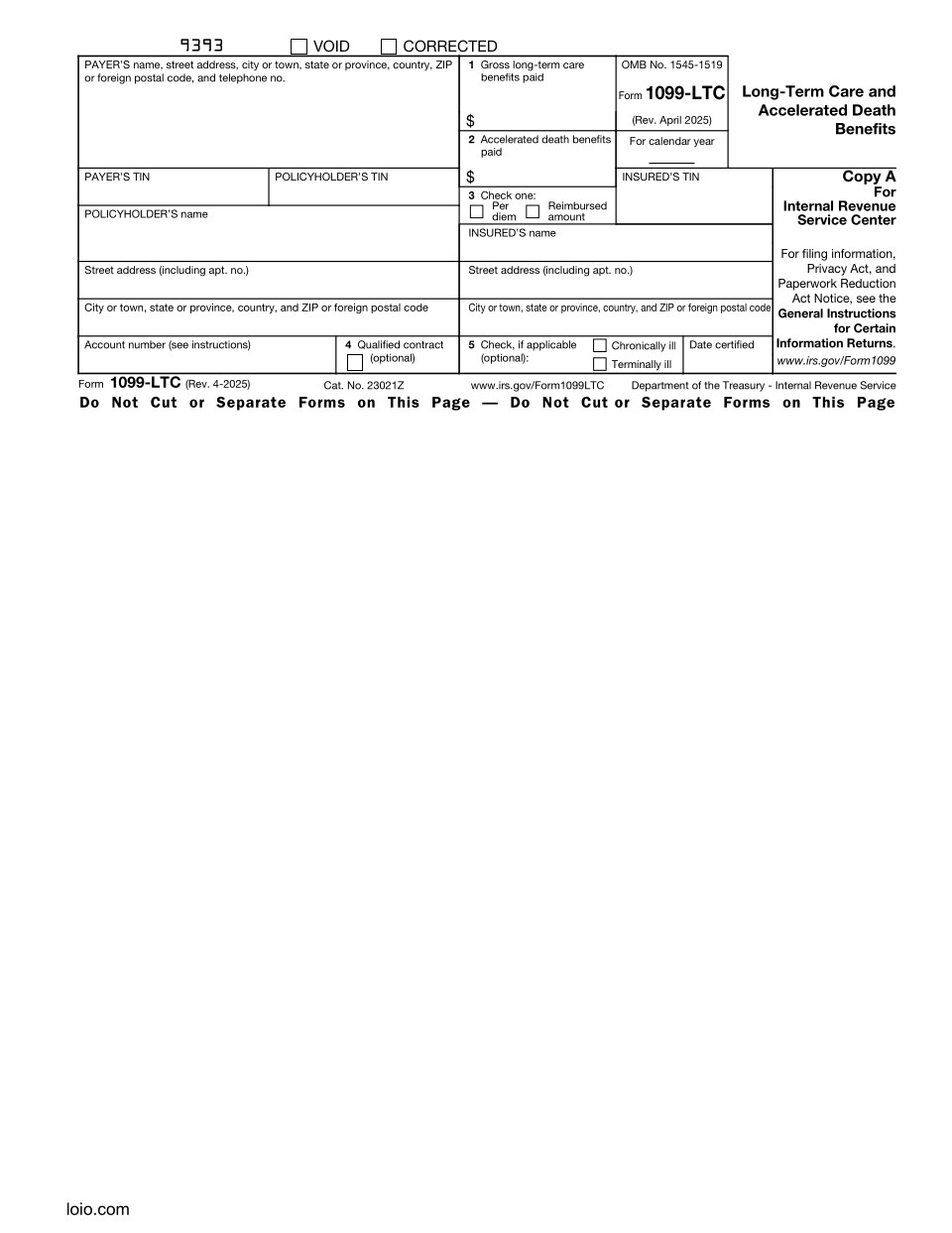
Form 1099-LTC is used by insurance companies, government programs, and settlement providers to report payments made for long-term care services or accelerated death benefits. Documenting these payments correctly ensures that you or your beneficiary follow tax rules properly.
If you get payments from a long-term care insurance contract or an accelerated death benefit, you'll receive a Form 1099-LTC. The issuer sends this form to show they've paid you the funds. These payments cover long-term care services or benefits because of a terminal illness. The 1099-LTC form is vital for keeping track of the money for taxes.
The 1099 LTC form must be submitted by January 31st. It must be dispatched to beneficiaries and the IRS for the past tax year by this deadline. Sending these forms on time is vital to avoid late penalties. Hence, looking for instructions on the 1099-LTC form around the beginning of the new year is essential, enabling timely preparation for your tax filings.
Upon receiving the form 1099-LTC, it's essential to:
Review Details. Check all provided information in the LTC 1099 to ensure its accuracy. This includes the taxpayer's name, social security number, and the benefits received.
Consult Tax Professionals. If you're unsure about reporting these payments, it’s worth consulting a tax professional. They can offer advice and 1099-LTC instructions.
Report on Tax Return. Use the information from the 1099 LTC form in your tax return.
This process can be simplified with Loio, a platform that offers users a PDF tool for filling out forms. As tax season approaches, knowing about forms like the 1099 LTC tax form and adhering to the relevant deadlines will contribute significantly to a smooth filing experience.