Updated July 25, 2026
7 min read
How to Sell a Business in the United States
How to Sell a Business in the United States
Content
Selling a business means transferring ownership of the company to another person or organization in exchange for payment or other agreed terms.
Small business owners sell their businesses for many reasons, such as retirement, workload reduction, starting a new company, or transitioning to a different career. Owners may also sell if the market conditions are favorable or if another company offers to acquire the business.
Regardless of the reason for selling, the process requires the same level of planning and documentation. This guide explains how to prepare a business for sale and complete the transaction in a way that protects both the seller and the buyer.
Determine Your Ideal Outcome
Your reason for selling the business will influence the structure of the deal, your ideal purchase price, and the transition terms you negotiate with the buyer. Clarifying your goal early helps you make consistent decisions throughout the process and negotiate more effectively.
Many business owners sell for personal or strategic reasons. These motivations translate into specific contract terms that should be negotiated during the sale. Below are several examples of personal goals and the contract outcomes they support.
Retirement: Prioritize a clean exit with a short transition period. The sale agreement should allow you to transfer ownership quickly and limit your obligations after closing.
Starting another business: Focus on maximizing the purchase price or negotiating a large upfront payment so you have capital for your next venture.
Reducing workload: Structure the deal so you remain part of the company as a consultant or partner for a defined period of time after the sale.
Lifestyle changes: Aim for a straightforward transaction without ongoing training or transitional obligations.
Maximizing profit: Consider staying involved during the transition or accepting staged payments if it increases the total purchase price.
Your ideal outcome will shape every stage of the sale, from business valuation to the terms you accept in the final agreement. Defining these priorities early will make it easier to evaluate offers and select a buyer whose expectations align with your goals.
Get the Business Professionally Valued
Before listing your business for sale, get a business valuation to estimate the fair market value of the company. A valuation does not guarantee the final sale price, but it provides a clear starting point for negotiations.
There are several ways to estimate the value of a company. The right option depends on the size of the business and the level of accuracy required. Options include:
A certified business appraiser provides a detailed valuation report based on financial records and industry data. This option is the most comprehensive and is often used for larger or more complex businesses.
Many accountants and financial advisors can estimate a business’s value using financial statements and tax returns. This option can be less expensive than a formal appraisal while still providing credible financial analysis.
Business brokers frequently value companies as part of the listing process. They often compare your business to recent sales of similar companies in the same industry.
Looking at recent sales of similar businesses can help you understand typical pricing in your market. Factors such as industry, location, and company size should be similar to ensure the comparison is accurate.
Some industries also rely on common industry valuation formulas based on data such as revenue or earnings. These formulas provide a quick estimate but are less precise than a professional valuation.
For example, assume you are selling a beauty or personal care company. Here are two common ways to quickly calculate business value:
With the times-revenue method, business value is Revenue x Industry Multiplier. The industry multiplier for a personal care company is about 0.51, although the exact multiple can vary depending on factors such as location, profitability, and market demand. If your company earned $250,000 in revenue last year, its estimated value would be $127,500.
With the earnings method, business value is Earnings x Earnings Multiplier. For small businesses, earnings are often measured as seller’s discretionary earnings (SDE) or adjusted profit. The average earnings multiplier for personal care businesses is around 2.02. If your company earned $125,000 in profit after expenses last year, its estimated value would be $252,500.
As you can see, these two estimates are very different. Revenue-based formulas don’t account for expenses or profit margins, so earnings-based valuations often provide a more useful benchmark for smaller businesses.
For instance, if a small hair salon generates $300,000 in annual revenue and $120,000 in SDE, a buyer may value the business closer to the earnings-based estimate. This is because the earnings method better reflects the owner’s income.
While these formulas can help you estimate business value, they should only be used as rough estimates. A professional valuation will consider additional factors such as assets, liabilities, growth potential, and market conditions.
What factors affect a business’s value?
Several factors influence how much a buyer may be willing to pay for a business, such as:
Revenue and profitability
Cash flow
Assets and equipment
Intellectual property
Brand reputation
Customer relationships
Long-term contracts
Market demand
Operational systems
Employees
How selling different types of businesses can vary
While the overall process of selling a business is similar across industries, the details of the transaction can vary depending on what the company sells and how it operates. For example:
A retail shop is valued based on inventory, location, foot traffic, and revenue. Buyers will focus on sales history, lease agreements, and supplier relationships.
The value of a software company comes from intellectual property, subscription revenue, and customer retention metrics such as monthly recurring revenue (MRR).
A manufacturing business is usually evaluated based on equipment, production capacity, supply chain relationships, and long-term client contracts.
Understanding what buyers typically look for in your industry can help you prepare more effectively before listing the business for sale.
Prepare All Business Documents
Potential buyers will rely on your business records to evaluate the company’s financial performance and long-term stability. Having complete and accurate documentation available early in the process can speed up negotiations and make the due diligence stage easier.
Prepare copies of the following categories of documents before listing your business for sale.
Financial records
Financial documents help buyers understand how the business generates revenue and manages expenses. Make sure to include:
Profit and loss statements for the past several years
Balance sheets
Cash flow statements
Sales reports and revenue breakdowns
Accounts receivable and accounts payable records
Inventory reports
Records of major assets such as equipment or property
Federal and state business tax returns
Payroll tax filings
Sales tax records
Sales and revenue forecasts
Many buyers expect at least 3–5 years of financial statements and tax returns during the due diligence process to verify the company’s performance.
Legal documents
Legal documents define the structure of the business and its contractual obligations. This can include but is not limited to:
Articles of incorporation or organization for the business entity
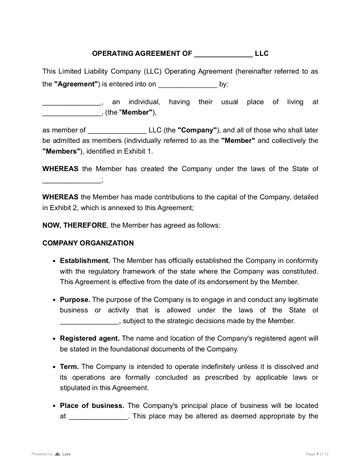
Operating agreements, partnership agreements, or corporate bylaws
Client contracts and service agreements
Supplier and vendor agreements
Commercial lease agreements for office or warehouse space
Loan agreements and financing documents
Any pending legal claims or dispute records
- LLC Operating Agreement
 4015 downloads
 - Service Contract
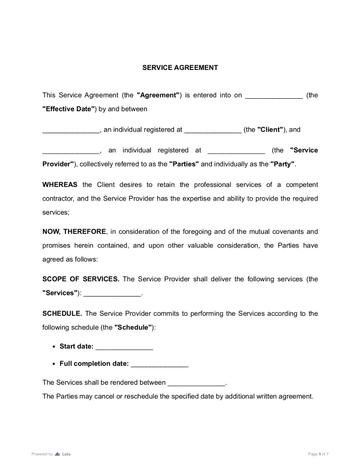 4302 downloads
Operational documents
Operational records help buyers understand how the business functions on a daily basis. These records could include:
Standard operating procedures
Internal policies and workflow documentation
Vendor management processes
Software systems and tools used to run the business
Customer & vendor information
A clear overview of your customer base and supplier relationships helps buyers evaluate revenue stability. Include information about your:
Customer lists and key accounts
Recurring service agreements or other contracts
Supplier and vendor contacts
Long-term purchasing or supply agreements
Intellectual property documents
If your business relies on proprietary content, branding, products, or technology, provide documentation that confirms ownership, such as:
Trademark registrations and copyright records
Patent documentation
Domain name registrations
Brand assets and marketing materials
Software ownership or licensing agreements
Employee information
Buyers often want to understand the workforce that supports the business, especially if any of your employees are critical to the company’s success. Provide details about your:
Employee roles and organizational structure
Employment contracts or independent contractor agreements
Compensation and benefits information
Employee non-compete agreements
- Employment Contract
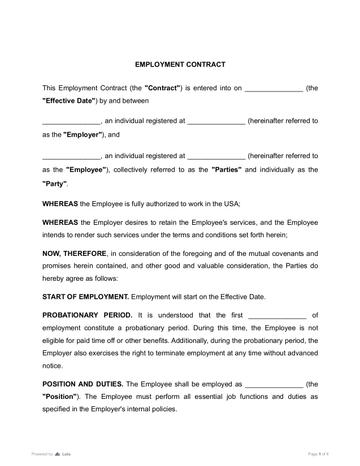 4412 downloads
 - Independent Contractor Agreement
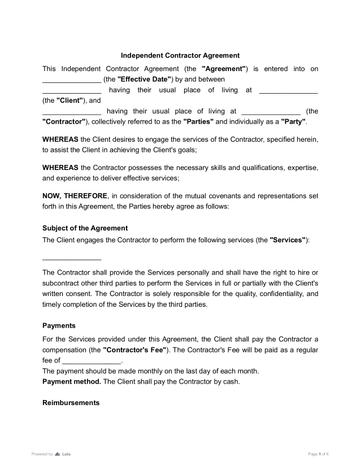 7257 downloads
Common mistakes when preparing a business for sale
It can be easy to underestimate how much preparation buyers expect before making an offer. Some common mistakes include:
Waiting until the sale process begins to organize financial records
Mixing personal and business expenses in company accounts
Failing to document key processes or vendor relationships
Not renewing important contracts before listing the business for sale
Overestimating the business value without supporting financial data
Addressing these issues early can make the due diligence process smoother and help maintain buyer confidence during negotiations.
Inform Employees & Customers
Deciding when to inform employees and customers about a planned sale requires careful timing. In most cases, business owners keep the sale confidential during the early stages to avoid unnecessary concern.
Once a sale becomes likely, you can begin informing key employees and important customers. Clear communication helps maintain trust and ensures a smooth transition to the new owner.
Before sharing sensitive information with employees, make sure to have a non-disclosure agreement (NDA) in place. This requires the employee to keep all business information—including the sale—confidential until you announce it.
At this stage, it may also help your employees if you explain how operations will continue and what role they will play after the sale. If they need to search for a new job, they should be aware in advance.
Find a Qualified Buyer
If you do not already have a specific buyer in mind, you will need to find one. A qualified buyer should have the financial resources to purchase the business and a plan for operating it after the sale. Many small businesses are sold to employees, clients, suppliers, or industry contacts.
The process of finding and selecting a buyer typically involves the following steps:
Identify potential buyers, starting with people who already know the business. This could include employees, competitors, suppliers, long-time customers, or entrepreneurs looking to acquire an existing company.
Market the business for sale if you cannot find a buyer within your network. Options include hiring a business broker, working with a commercial real estate agent, listing the business on online marketplaces like BizBuySell or BizQuest, or contacting potential strategic buyers directly.
Provide an information package for interested buyers that explains the business, its financial performance, and the assets included in the sale. Only share detailed financial and operational information after the buyer signs an NDA.
Screen interested parties and verify that they are capable of completing the purchase. This may include reviewing their business experience, confirming their financing, and assessing whether their plans align with your expectations for the business.
Meet with serious candidates individually after your initial screening. These discussions allow the buyer to learn more about the company and give you an opportunity to evaluate whether they are a good fit.
Request a letter of intent (LOI) from your chosen buyer. The LOI is a written proposal that outlines key terms such as the buyer’s planned purchase price and payment structure. While an LOI is not legally binding, it serves as a foundation for negotiating the final purchase agreement.
There are two common ways to structure the sale: an asset sale or an ownership transfer.
- In an asset sale, the buyer purchases specific business assets such as equipment, inventory, brand assets, and customer lists.
- In an ownership transfer, the buyer purchases ownership interest in the legal entity, such as corporation shares or membership interests in a limited liability company (LLC).
The structure of the sale determines which assets and liabilities transfer to the buyer and what legal documents are required to complete the transaction.
Conduct Due Diligence & Complete the Sale
Once you select a buyer and agree on basic terms, the transaction moves into due diligence. This is the buyer’s formal investigation of the business to confirm the information you provided is accurate before committing to the final purchase agreement.
The buyer may involve accountants and attorneys to analyze all of your documents. Their goal is to confirm the value of the business and identify any issues that could affect the purchase price or the terms of the deal. This process typically takes 60–90 days.
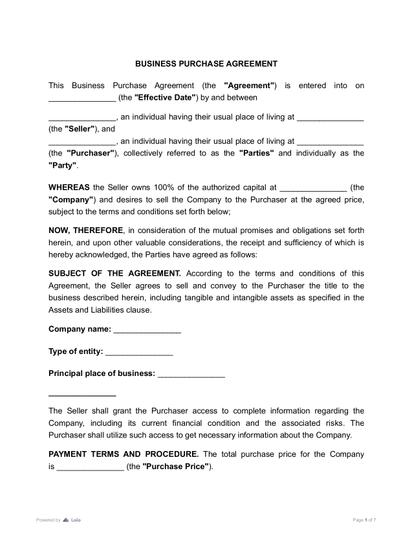
After due diligence is complete, the parties finalize the business purchase agreement, which is the legally binding contract that defines the transaction. This agreement specifies the purchase price, payment structure, assets included, and any post-closing obligations.
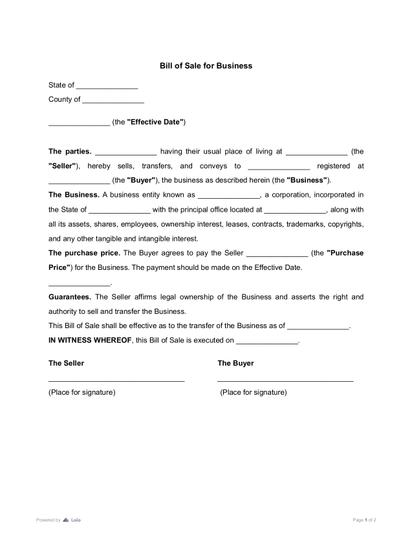
Once both parties sign the agreement and all conditions are satisfied, the sale closes and ownership of the business is officially transferred to the buyer. The buyer can receive a business bill of sale at this time.
Conclusion
Selling a business requires clear documentation and careful negotiation. Follow the steps above—and the checklist below—to move through the process confidently, complete the sale, and move on to your next opportunity.
Before listing your company for sale, make sure you have completed the following steps:
- Set goals for the sale, including your ideal purchase price and transition timeline
- Obtain a professional business valuation or reliable estimate of the company’s value
- Organize key financial records, including profit and loss statements, tax returns, and balance sheets
- Gather all legal and operational documents, such as contracts, leases, and ownership records
- Prepare documentation about employees, customers, vendors, and intellectual property
- Decide when and how you will inform key employees and customers about the potential sale
- Identify potential buyers or determine how you will market the business for sale
- Prepare a transition plan explaining how the new owner will assume operations
FAQ
More guides
September 1
7 min read
How to Provide Proof of Employment: Documents and Steps

July 20
4 min read
Addendum vs. Amendment: Change Your Purchase Agreement Properly
July 22
4 min read
Income Statement vs Profit and Loss Statement: Is There a Difference?

July 21
5 min read
Memorandum of Understanding vs Contract: Legal Effect and When to Use Each
September 12
13 min read
Construction Change Order Process: How to Avoid Scope Creep

July 21
8 min read
Statement of Work vs Scope of Work: Differences and How They Work Together
One home for your
agreements
Edit PDFs seamlessly
Tweak agreements before signing or sending for signatures. Update details, add or remove clauses, adjust formatting, and redline changes instantly.
eSign legally and securely
Sign documents and collect legally binding signatures. Invite up to ten people to sign in any order, track the progress, and send reminders.
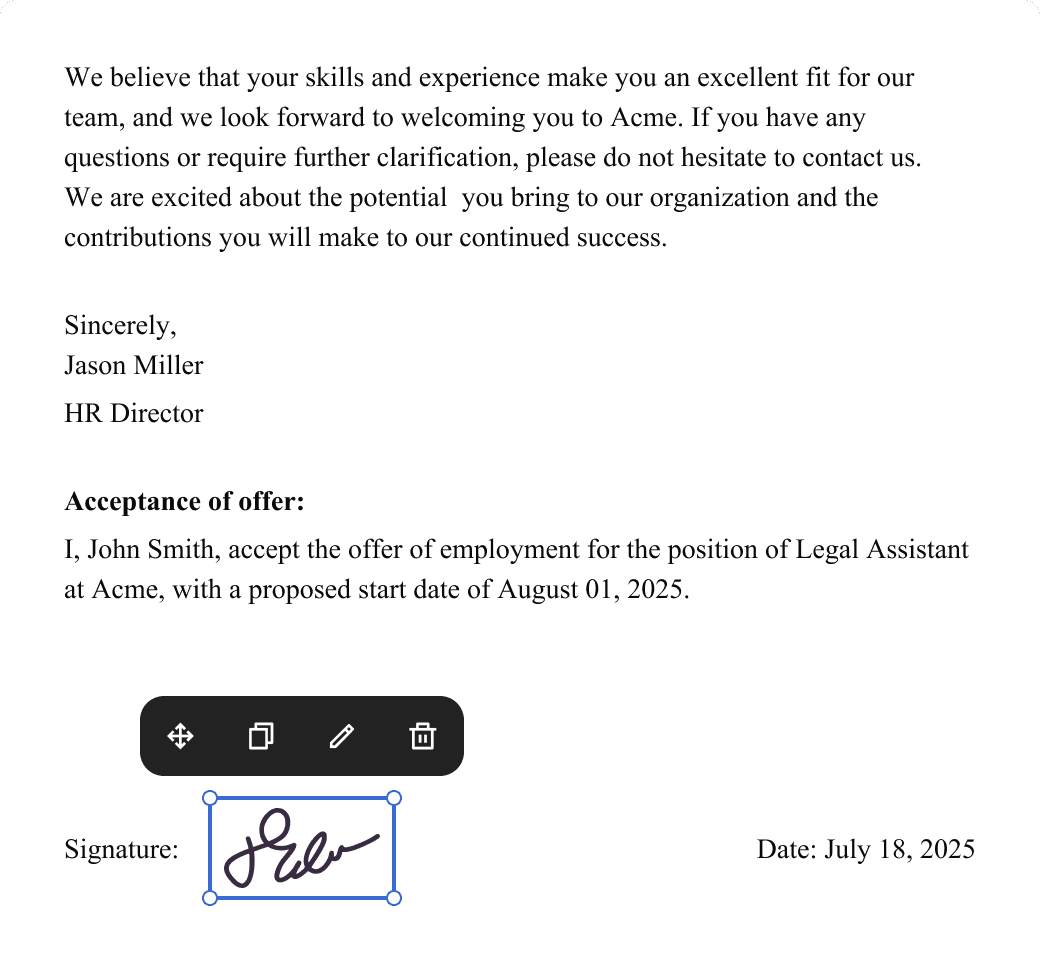
Request legally binding signatures
Invite up to ten people to sign your document in any order. Get a finalized, audit-ready copy without chasing signatures.
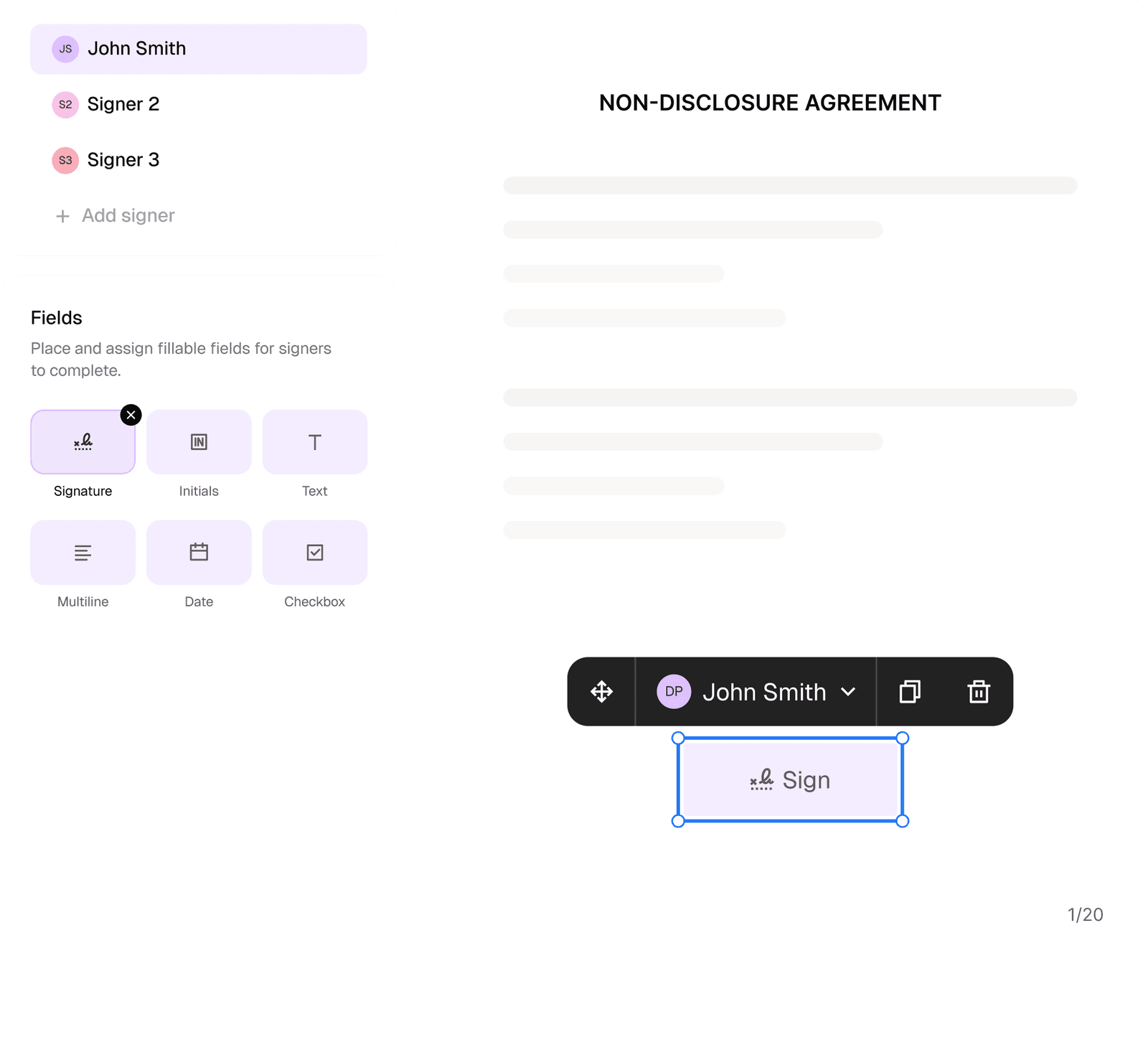
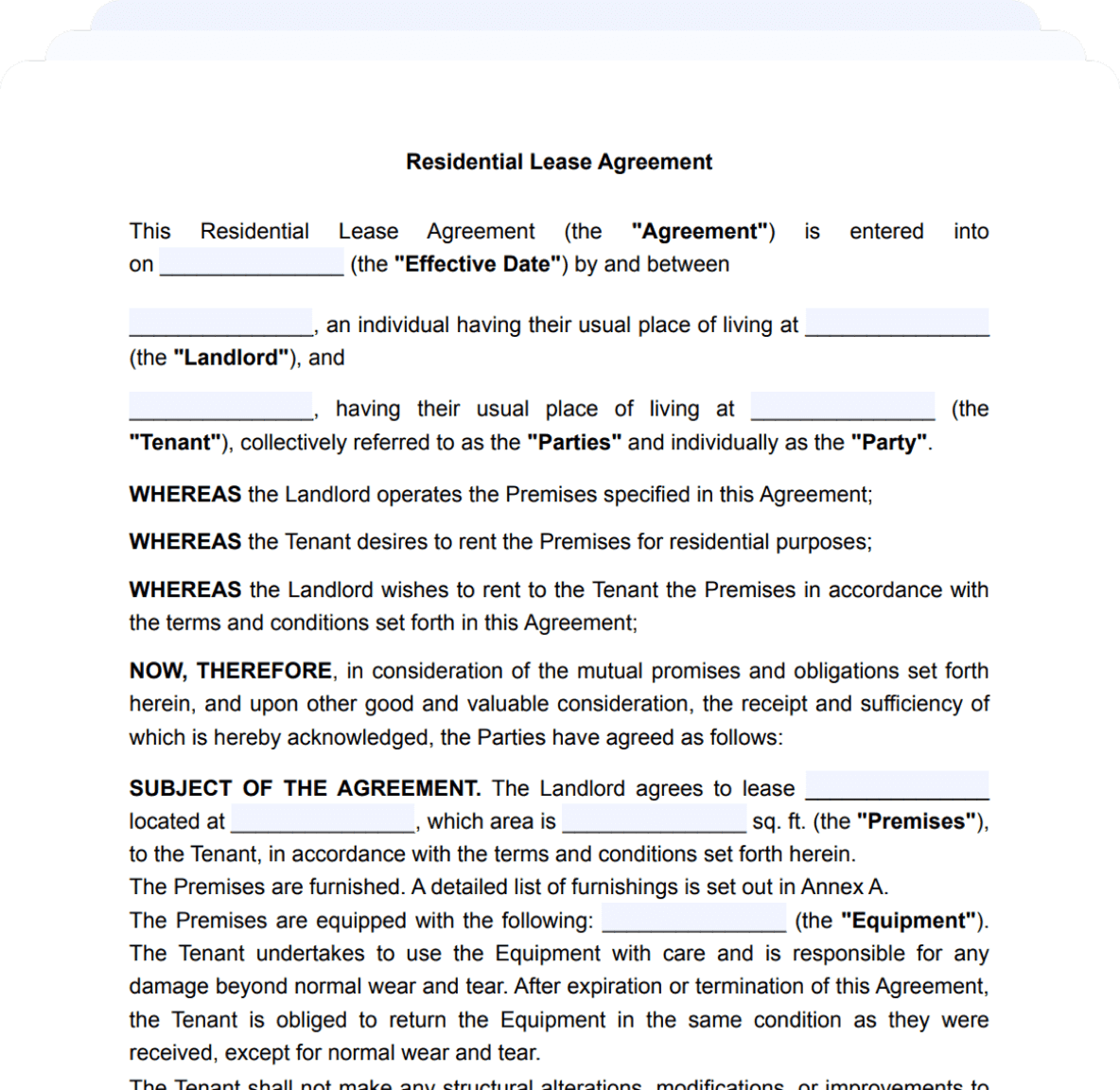
Skip the drafting.
Choose from 2,500+ templates
Browse templatesChoose a template
Fill in details
Sign and download