Free template
Free Business Bill of Sale Template

Template Description
Copy section link
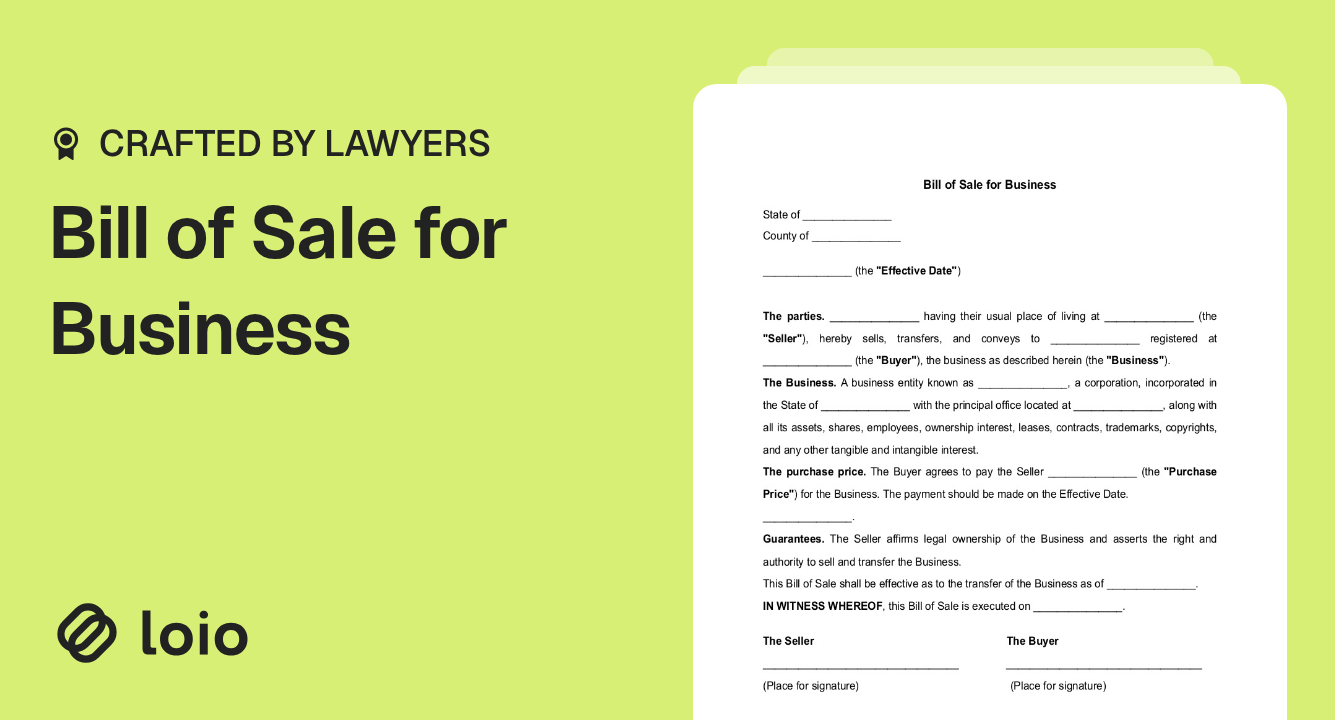
A bill of sale for business is a legal document used to formally transfer ownership of a business from a seller to a buyer. It serves the purpose of granting legal rights to the purchaser and protecting both parties if any disputes occur. The bill of sale for business is an essential contract that outlines the conditions and terms of sale and describes the assets involved in the transaction, including tangible and intellectual property.
When to Use a Bill of Sale for Business
Copy section linkA bill of sale business contract is typically used during the transaction of buying or selling a business. It's a formal record that business ownership has shifted hands. Whether you're selling a small business or buying a larger enterprise, utilizing a business bill of sale can protect you from future liabilities and clarify the terms of the agreement.
Parties of the Bill of Sale for Business
Copy section link- Seller –– This party represents the individual or the entity who currently owns the business and is selling it. The seller holds the responsibility of providing accurate, honest information regarding the business's financial status, assets, and liabilities. It is incumbent upon the seller to disclose all relevant details about the business's running and status to ensure a transparent and fair sale. Once the transaction is complete, the seller must relinquish all rights to the new owner as per the terms defined in the contract.
- Buyer –– This refers to the individual, company, or other financial entity purchasing the business. As the buyer, it is crucial to perform comprehensive due diligence to verify and assess the business's worth, viability, and potential risks before concluding the purchase. Once the sale of business contract form is finalized, the buyer officially assumes complete ownership and control of all business assets and responsibilities. The buyer can now operate the business as per the guidelines stipulated in the business sale agreement and in accordance with local, state, and federal regulations.
Key Terms
Copy section link- Purchase Price: This refers to the total amount the buyer agrees to pay for the business.
- Assets: These are the items included in the sale of business forms. They could be furniture, vehicles, inventory, accounts receivable, and others.
- Liabilities: These are the debts or obligations that the buyer may agree to undertake as part of the business sales forms.
- As Is: This term suggests that the seller makes no warranties about the condition of the business and that the buyer is purchasing it in its current state.
- Closing Date: The closing date is the day when the transaction becomes final and ownership officially transfers from seller to buyer.
How to Write a Bill of Sale for Business
Copy section linkA business sale contract is a significant legal document that confirms the transfer of a business from a seller to a buyer. It's possible to download a suitable, easy-to-understand business sale contract template from online resources or engage a legal expert to help draft one.
Here's how to craft a bill of sale for business, whether you're the buyer or the seller:
- Provide the specific information of all parties involved, including their legal names and contact details.
- Clearly mention the agreed price for the sale of the business.
- Describe the business in detail, including its legal name, location, and nature.
- Prepare all necessary business details, like the date of establishment and any critical business operations or contracts.
- Provide the name of the business being purchased and its current legal status.
- Declare the law that would regulate the terms and conditions of the sale.
- State that the seller has full authority to sell the business and that all business assets are free from liens.
- Detail any warranties made by the seller, if any.
- Craft any indemnification clauses based on the legal practices or procedures of your specific jurisdiction, which will protect you from future liabilities.
- Define how the business sale form will be executed and who will be responsible for its notarization.
Both parties should thoroughly review the bill of sale with a lawyer to ensure their interests are safeguarded. Obtaining prior agreement on the essential components of the document, such as the business description or indemnification clauses, is crucial for crafting an effective bill of sale for a business.
Using a comprehensive bill of sale for business assets ensures all terms and conditions of the purchase are transparent and understood by both parties. For small business transactions, using a small business sale agreement PDF can suffice. For larger enterprises, you may want to consult with legal professionals to make sure all your bases are covered. Still, no matter the size of your business sale, having a professionally drafted, easy-to-understand business sale agreement template free of complex legal jargon will ensure that the purchase process is smooth, legal, and transparent.
Related documents
Also read