Updated July 25, 2026
11 min read
What Makes a Contract Legally Binding?
What Makes a Contract Legally Binding?
- The 6 Elements Every Legally Binding Contract Must Include
- When a Written Contract Is Required
- What Makes a Signed Contract Invalid or Unenforceable
- The Business Terms That Courts Expect to See Clearly Defined
- Common Contract Mistakes Small Business Owners Make and How to Avoid Them
- How to Tell If Your Existing Business Contract Is Legally Strong
Content
Most business owners assume a signed document will protect them if something goes wrong, but that assumption itself may lead to problems. A contract can look complete and still fail when one side refuses to follow through. Learning what makes a contract legally binding will help you avoid situations where you cannot enforce payment, timelines, or responsibilities.
If you have ever wondered what a legally binding contract is, it is an agreement that a court can recognize and enforce because it shows a clear exchange, clear consent, and clear intent. This is, of course, a rather basic legally binding contract definition, but when you’re working with clients, vendors, or independent contractors, these rules usually apply. Here, we look deeper into those rules and explain how to recognize strong agreements and avoid the common gaps.
The 6 Elements Every Legally Binding Contract Must Include
Courts look for a few essential elements when deciding if a contract can be enforced. These elements form the foundation of every valid agreement. A proper business contract always includes offer and acceptance, along with several other elements that confirm both sides agreed to a defined exchange.

Offer
An offer is the starting point of any contract. One side must clearly describe what they are providing and what they expect in return. A valid offer should explain:
What is being delivered
What the other party must do
How much will be paid
When performance will happen
General discussions, informal messages, or early negotiations do not count as offers.
A detailed proposal for a service contract that includes scope, deadlines, and payment terms usually qualifies as an offer. If the offer is incomplete, both sides may interpret it differently. That creates uncertainty about what was agreed upon and makes enforcement harder later.
Acceptance
Acceptance is the moment when the other party agrees to the offer as it is written. This step must leave no room for doubt. Signing a document is the most reliable form of acceptance. Using an online eSign tool helps create a clear record of acceptance. It shows who agreed, what document they accepted, and when the agreement became effective.
Federal and state law generally recognize electronic signatures, but the rules have limits. Under the federal E-SIGN Act, a signature, contract, or record generally cannot be denied legal effect solely because it is electronic. State electronic-transaction laws are commonly based on the Uniform Electronic Transactions Act (UETA). However, electronic-signature laws do not apply uniformly to every document. E-SIGN expressly excludes certain matters, including wills and testamentary trusts, many family-law matters, court documents, and specified consumer notices. Parties also generally cannot be forced to conduct a transaction electronically.
In many cases, acceptance can also happen through written confirmation or actions that show agreement, such as starting work or making payment. But problems often appear when acceptance is not final. If one side responds with changes, the original offer is no longer accepted, as it becomes a new proposal. Until both sides agree to the same version, there is no completed contract.
Offer and acceptance lay the foundation of a legally binding business agreement. The offer defines the deal, and acceptance confirms that both sides agree to those exact terms. Without that, it becomes difficult to prove what the agreement actually included.
Consideration
A contract must involve an exchange of value. Each side needs to give or promise something meaningful.
This could be money, services, access, or even a commitment not to do something. Without consideration, an agreement is usually not enforceable.
For example, a promise to help someone without payment or obligation may not qualify as a binding contract. In contrast, an agreement where one party provides services and the other pays for them clearly meets this requirement.
Mutual intent to be legally bound
Both parties must understand that they are entering a real agreement, not just discussing possibilities. Many business conversations start informally with emails, messages, or calls that may include pricing, timelines, or ideas. These discussions can look like agreements, but they do not always show intent to create a contract.
This becomes a problem when one side assumes a deal is final while the other still sees it as negotiation. Mutual intent is especially important when it comes to business partnerships. The agreement should show that both sides:
Expect the terms to be followed
Understand there are obligations involved
Accept that there may be consequences if the terms are not met
This is a key part of what makes a legally binding contract. Courts look for signs that both parties treated the agreement seriously and understood it as a commitment.
Legal capacity of both parties
A contract is only enforceable if the people signing it have the legal ability to do so. This includes both personal capacity and authority within a business. You must be legally competent to enter into agreements.
In a business setting, the bigger issue is authority. Not everyone in a company has the right to sign contracts on its behalf. A contract may be signed, but later challenged because the person who signed it did not have permission to bind the company.
To reduce risk, always confirm:
Lawful purpose
A contract must have a lawful purpose to be enforceable. An agreement that requires illegal conduct or otherwise violates applicable law or public policy may be void or unenforceable. This means that even when the parties have agreed on clear terms, exchanged consideration, and signed the contract, the agreement still cannot require either side to do something unlawful.
The full legal name of the business
The role of the person signing
Whether they have documented authority to act
A legally binding contract requires consideration and legal capacity to ensure both sides are properly committed and authorized.
— Who has the authority and legal capacity to sign a business contract?
Usually, this includes business owners, directors, or authorized managers. The exact answer depends on how the company is structured.
Electronic signatures are commonly used for contracts, approvals, and amendments, subject to the E-SIGN and applicable state-law rules described above. For editing and updating agreements, our PDF editor can help you adjust documents without starting from scratch.
When a Written Contract Is Required
Not every agreement has to be written to be valid. Many business deals start through conversations, emails, or simple confirmations. Still, certain types of contracts are generally required to be in writing to be enforceable. These often include:
Agreements that cannot be completed within one year
Real estate transactions
Sales of goods for $500 or more under the Statute of Frauds in UCC § 2-201, subject to the exceptions in that section
Guarantees of another person’s debt
Transfers of copyright ownership, which generally must be documented in a writing signed by the copyright owner or the owner’s authorized agent under 17 U.S.C. § 204(a)
Business owners often ask how do you make a contract legally binding? in situations like these. One of the most important steps is making sure the agreement is properly documented and signed before work, payment, or ownership transfers begin.
When verbal agreements can still be enforceable
Some verbal agreements can still qualify as enforceable contracts in many business situations. This often works for short-term projects, simple service arrangements, or repeat transactions.
The problem, however, may start when the two sides remember the agreement differently. Without written proof, disputes turn into arguments over what was actually promised.
If the issue turns into a breach of contract, proving details such as pricing, deadlines, or scope becomes much more difficult. Emails, invoices, payment records, and messages may help support the claim, but they rarely provide the same level of clarity as a written agreement.
An enforceable agreement must still satisfy applicable contract-law requirements, even when its terms were agreed to orally rather than put into a formal written contract.
What Makes a Signed Contract Invalid or Unenforceable
Signatures alone don’t guarantee enforceability, because courts look at the actual structure of the agreement, how it was formed, and whether both sides understood the terms clearly.
Missing or vague essential terms
Your contract should clearly explain:
What is being provided
How much will be paid
When obligations must be completed
What happens if problems appear
Vague wording creates room for disagreement. For example, if you say “services will be provided as needed” without defining the scope or timeline leaves too many open questions.
Courts can’t enforce obligations that are too uncertain to interpret consistently. This is one of the most overlooked legally binding contract requirements in small business agreements.
One-sided or unfair contract terms
Courts may reject contracts that place unreasonable obligations on one side while heavily favoring the other. This often applies to:
Excessive penalties
Hidden fees or restrictions
Clauses that remove all responsibility from one party
Terms the other side had little chance to review properly
Businesses are allowed to protect themselves, but the agreement still needs to be reasonable. Extremely unfair terms can weaken enforceability.
Misrepresentation or fraud
A contract based on false information may not be enforceable. If one party provides misleading details that influence the agreement, the contract can be challenged. For example, these may include false claims about qualifications, pricing, or the condition of goods. Even partial misrepresentation can affect validity.
Duress or pressure during signing
Contracts must be signed voluntarily. If one side uses threats, pressure, or manipulation to force agreement, the contract may be challenged later. This can happen when:
Important details are hidden until the last moment
Someone is pressured to sign immediately
Access to documents is restricted
One side creates unreasonable urgency
Courts often look at whether the person had enough time and information to understand what a legally binding agreement is and what obligations they were accepting before signing.
The Business Terms That Courts Expect to See Clearly Defined
Even when a contract includes the basic legal elements, missing details will most likely weaken it. Courts expect certain terms to be clearly defined.
1. Scope of work or deliverables
The agreement should clearly explain what work, services, or products are being provided, namely:
The exact services or deliverables included
What is not included
How completed work will be approved
Whether revisions or additional work are covered
Vague descriptions often create different expectations on each side. One party may expect ongoing support while the other believes the project ended after delivery. If you are wondering what does a contract need to be legally binding, clearly defined obligations are probably the most important.
2. Payment terms and timing
Payment terms should leave little to no room for interpretation. The contract should explain:
The total amount owed
Payment deadlines
Accepted payment methods
Deposit requirements
Late fees or penalties
Unclear payment sections often become a problem after work has already started. Delayed invoices, disputed amounts, or missing deadlines are much harder to resolve when the agreement doesn’t explain how payment should work.
3. Deadlines and performance milestones
Most agreements involve timing in some form. The contract should include start dates, deadlines, and any milestones tied to progress. This is especially important for project-based work or long-term agreements. Defined timelines make it easier to measure performance.
4. Termination conditions
Every business relationship should include a clear process for ending the agreement if circumstances change. The contract should explain:
When either side can terminate the agreement
How much notice must be given
What happens to unfinished work or unpaid balances
Whether termination fees apply
A written contract termination letter can help create a clear record showing when notice was given and how the agreement officially ended. Strong termination clauses are part of the broader requirements for a contract because they help define what happens after the relationship breaks down, not just while it is working well.
Common Contract Mistakes Small Business Owners Make and How to Avoid Them
Many contract problems begin with small shortcuts. Those shortcuts can become much more expensive once money, deadlines, or responsibilities are disputed.
One common mistake is simply not reviewing the details carefully. A business contract template can help you, but you should always make sure to adapt it to your business relationship, payment structure, and scope of work involved.
Leaving important terms unresolved is another frequent issue. Phrases like “details to be finalized later” create uncertainty about what both sides actually agreed to.
Business owners also overlook attachments, exhibits, or linked documents surprisingly often. Those sections may contain pricing rules, deadlines, or limitations that directly affect the agreement.
Contracts should also be updated when the relationship changes. If services are expanded, timelines are adjusted, or new responsibilities are added, it should be reflected in writing instead of handled informally through messages or calls.
How to Tell If Your Existing Business Contract Is Legally Strong
Review your contracts regularly for internal consistency and missing details. Check that defined terms and cross-references match throughout the document, all referenced exhibits and attachments are included, governing-law and dispute-resolution provisions are complete, and the final version reflects all amendments the parties agreed to.
A strong contract should still make sense months later, even to someone who was not involved in the original discussions. If important details depend on memory or outside conversations, the agreement probably already has weak points.
Figuring out these details can be difficult when contracts contain dense legal wording. An AI contract review tool makes it easy to read through legal paperwork and understand the sections that may create confusion, risk, or missing protections.
Good contracts explain expectations clearly, define responsibilities directly, and leave very little open to interpretation under contract law. A contract that is clear, complete, and realistic is much easier to enforce when something does go wrong.
More guides
September 15
10 min read
Who Can Sign a Contract on Behalf of a Company?
September 15
What Is Contract Redlining?
September 1
7 min read
How to Provide Proof of Employment: Documents and Steps
October 15
How to Start a Staffing Agency: Licensing, Pricing, and Cash Flow
July 20
4 min read
Addendum vs. Amendment: Change Your Purchase Agreement Properly
July 20
What Is an Assignment of Contract? Rights, Duties, and Consent
One home for your
agreements
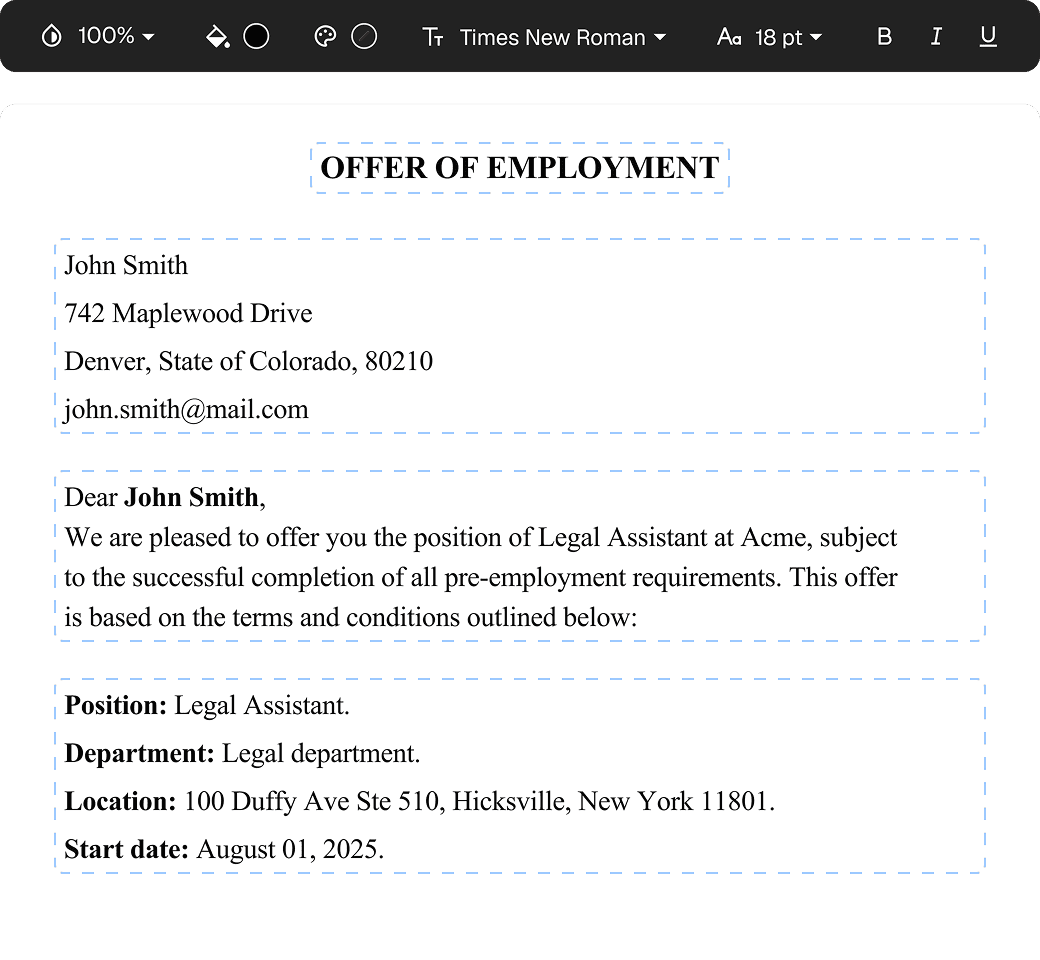
Edit PDFs seamlessly
Tweak agreements before signing or sending for signatures. Update details, add or remove clauses, adjust formatting, and redline changes instantly.
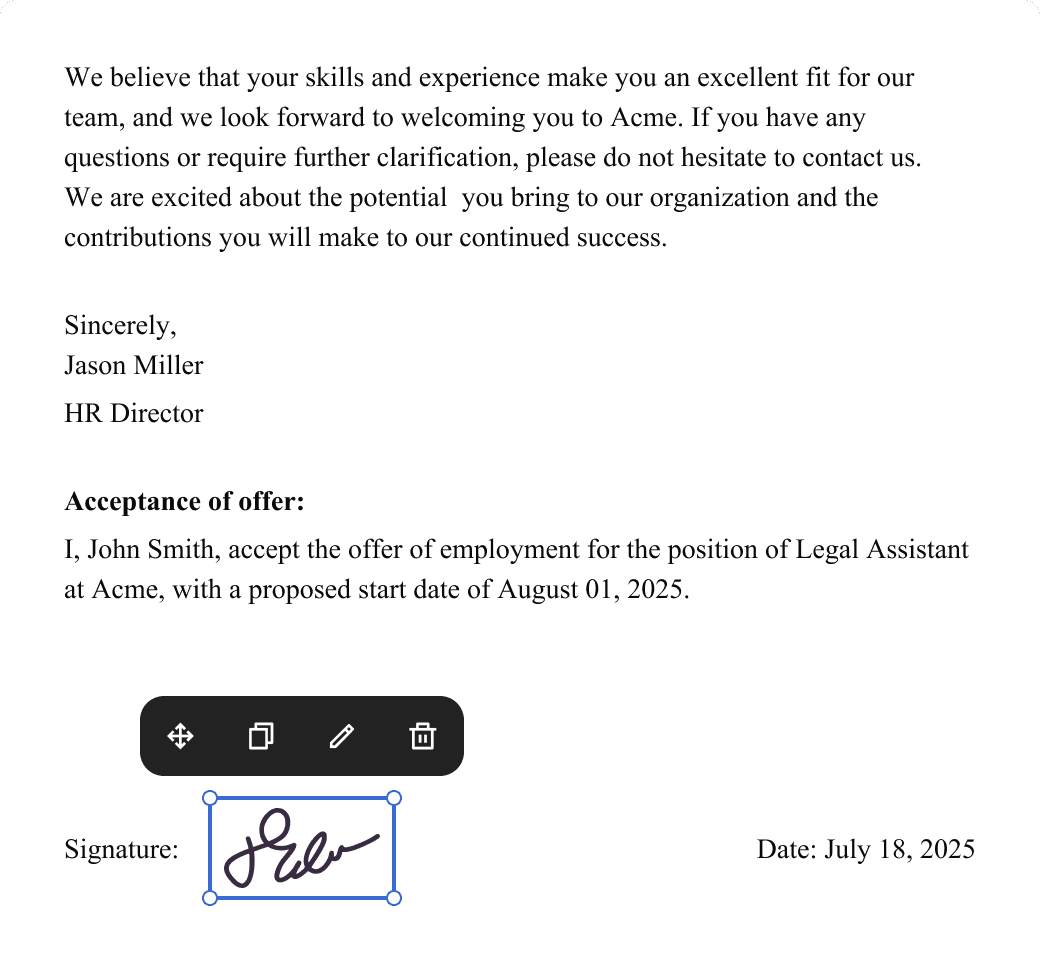
eSign legally and securely
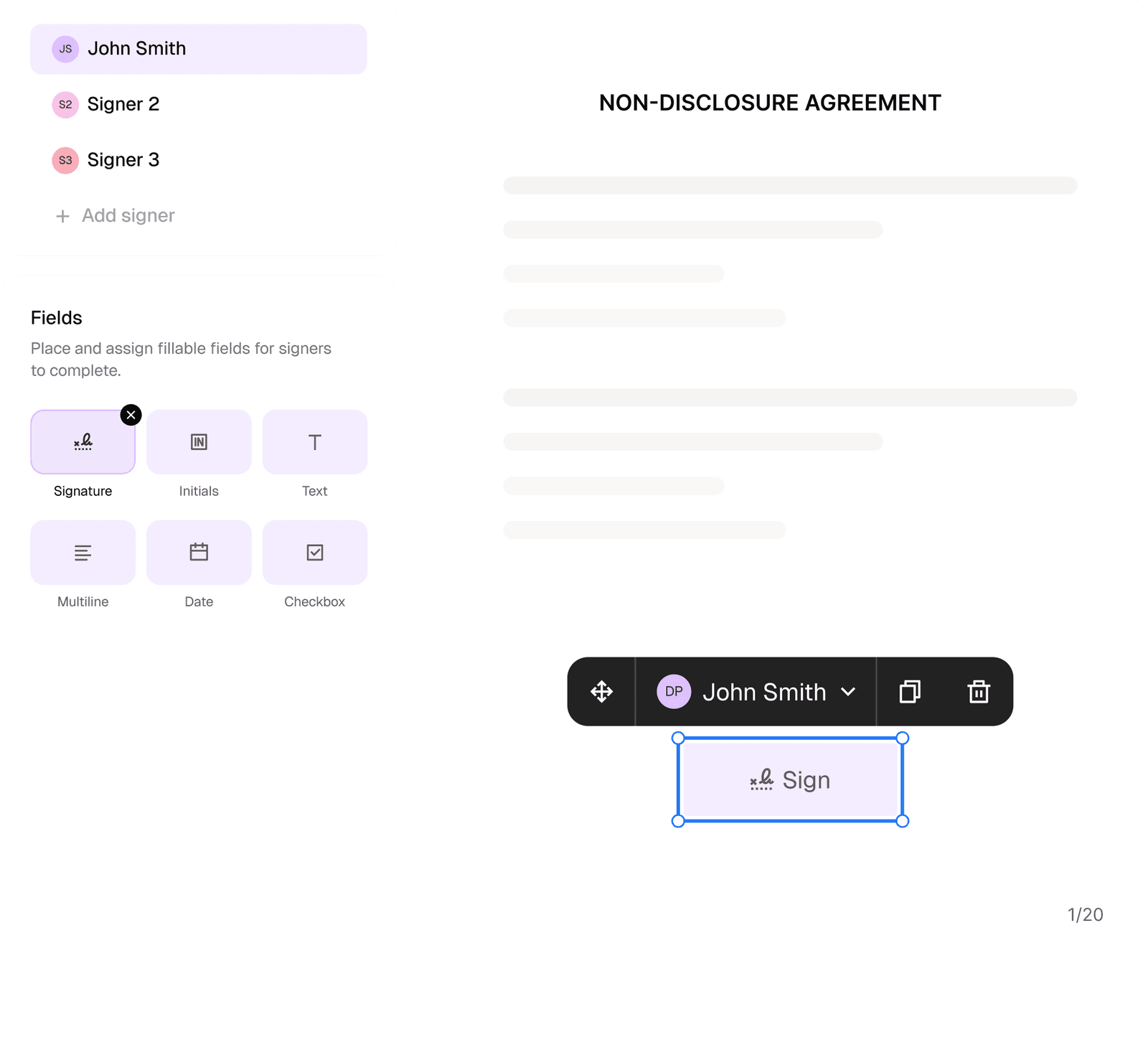
Sign documents and collect legally binding signatures. Invite up to ten people to sign in any order, track the progress, and send reminders.
Request legally binding signatures
Invite up to ten people to sign your document in any order. Get a finalized, audit-ready copy without chasing signatures.
Skip the drafting.
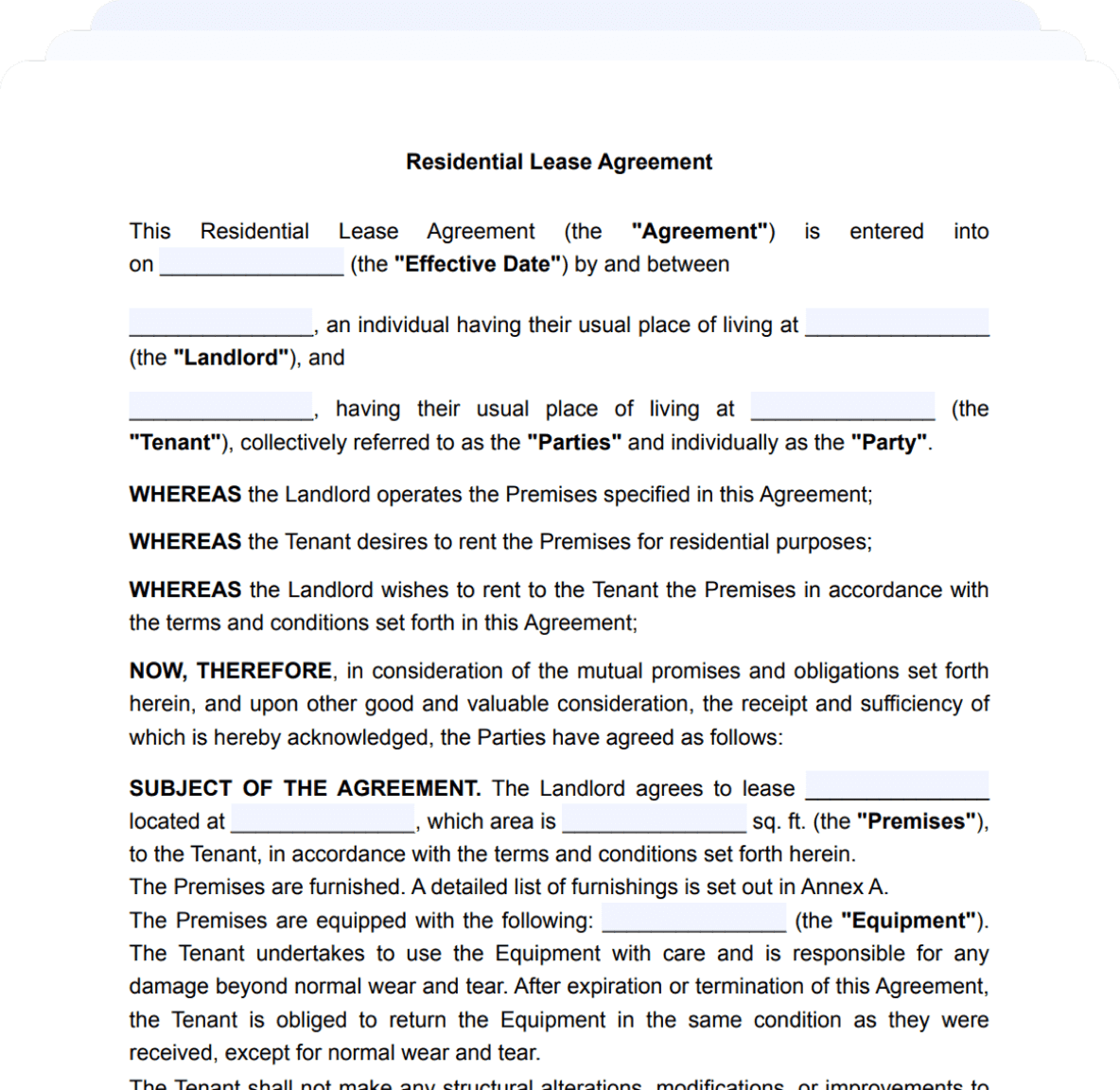
Choose from 2,500+ templates
Browse templatesChoose a template
Fill in details
Sign and download