Updated October 15, 2026
Independent Contractor Payment Terms: Rates, Schedules, and Late Fees

Independent Contractor Payment Terms: Rates, Schedules, and Late Fees
- How to Define Payment Terms Before Work Starts
- What are Typical Payment Terms for Contractors?
- Contract Clauses that Actually Control Money Flow
- Invoicing that Supports Enforceable Due Dates
- Structuring Late Fees without Damaging Relationships
- Progress Payments for Long-Term or Phased Work
- Payment Records and Year-End Reporting Alignment
- Building Payment Terms that Hold Up in Real Workflows
Content
To run a business, you need more than good people and good ideas. You need a predictable cash flow. And if you work with contractors, cash flow depends on one thing: whether payments happen on time, every time, without debate.
Most payment problems do not start with bad work. They start with missing mechanics. Someone says “Net 30,” someone assumes “pay when approved,” and nobody writes down what approval actually means. This guide explains payment terms for independent contractors the way operators experience them: scope, acceptance, invoicing, payment schedules, late fees, and recordkeeping that holds up during disputes and year-end reporting.
How to Define Payment Terms Before Work Starts
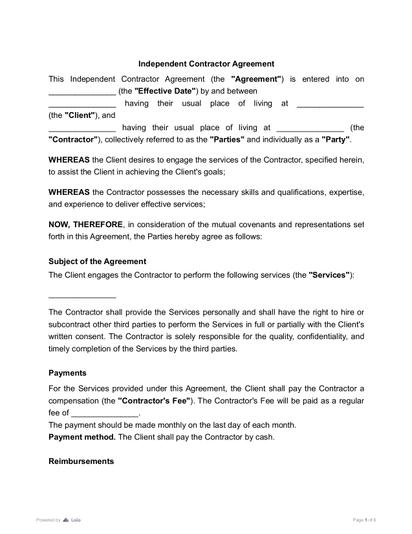
An independent contractor is a separate party hired to perform services under agreed terms, so the payment mechanics should be defined in writing before work begins, typically in an independent contractor agreement. Using eSign keeps the signed agreement and any later amendments time-stamped and easy to retrieve if payment is disputed.
Once the work is completed and formally accepted, the independent contractor moves from delivering services to issuing an invoice. That invoice activates the payment terms by defining when payment is due, how it must be made, and what happens if the deadline is missed.
Start with the pricing model:
Scope-based pricing works when you can describe deliverables clearly (a set of pages, a design package, a configured system, a finished repair).
Time-based pricing works when the work is variable, but it still requires boundaries: what counts as billable time, what proof is required, and how approvals are handled.
Then define the payment trigger:
The trigger should be accepted deliverables, not “effort” or “time spent” alone.
Acceptance criteria should be concrete enough that both sides can point to the same outcome.
Set the timing mechanics:
Deposits or retainers (if used) should be tied to a start condition.
Milestone payments should map to checkpoints that can be reviewed.
The final payment should align with final acceptance, not a vague “completion.”
Define the payment method and fees:
State how payment is sent (ACH, check, card, platform transfer).
State who pays the processing fees, if any, so the contractor does not receive less than expected.
Add a simple dispute path:
What happens if a client disputes a deliverable?
What is the review window?
What documentation resolves the issue?
Because classification affects how “control” is viewed in practice, many businesses also align contractor workflows with U.S. Department of Labor guidance under the Fair Labor Standards Act.
A common pattern in contractor disputes is the “final invoice delay” after the work is finished, even when a deposit was paid, because acceptance and timing were not enforced as part of the process.
What would have helped: a written acceptance step with a review window, plus a final payment trigger tied to acceptance rather than informal “completion.”

What are Typical Payment Terms for Contractors?
Typical payment terms for contractors cover five basics:
Rate (how the contractor is paid).
Invoice timing (when billing happens).
Due date or net terms (when payment is owed).
Acceptance (how work is approved).
Late fees and follow-up steps (what happens if payment is late).
These elements together describe what many teams refer to as common payment terms for contractors, even though those terms are often incomplete in practice.
Common industry norms include:
Net terms like Net 10, Net 30, or Net 60.
Upfront deposits are required when work or materials come before the first invoice.
Milestone payments for phased delivery.
Late fees are often written but inconsistently enforced.
In practice, the weak spot is the start point: 46% of small businesses report confusion about when payment terms begin, which is why teams should spell out whether the clock starts on the invoice date, acceptance date, or receipt date.
Expectations also vary by relationship:
Independent contractor payment terms often default to monthly, biweekly, or completion-based invoicing.
Subcontractor payment terms usually track stages, inspections, or specific deliverables that can be verified mid-project.
General contractor payment term.
Typical does not mean safe. If acceptance is unclear, due dates and late fees lose force. Payment terms are a system, not a sentence at the bottom of an agreement.

Contract Clauses that Actually Control Money Flow
A contract sets the rules, the payment schedule turns those rules into a calendar teams can follow, and progress payments release money in stages only after each milestone is completed and accepted, so the workflow stays executable without interpretation.
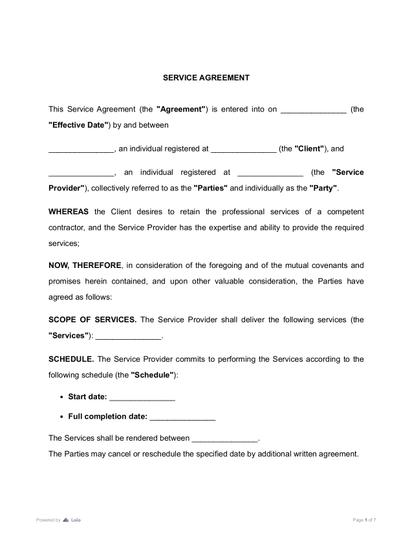
This is typically done in a service agreement, where the goal is not complexity but removing ambiguity that stalls cash flow.
The clauses that matter most operationally:
Rate section: fixed fee, hourly, or unit-based logic, plus what counts as billable work.
Payment schedule: upfront, recurring, milestone-based, or hybrid.
Milestones: what gets delivered at each stage and what proof is required.
Acceptance criteria: objective standards beat subjective ones because they reduce arguments over “done enough.”
Change orders and rework rules: what happens when scope expands, or revisions exceed what was planned.
Expenses: what is reimbursable, what needs approval, and what documentation is required.
Termination and final invoicing: how unfinished work is handled and what becomes payable at the end.
Dispute resolution mechanics: the path teams follow when payment is contested.
Two operational details that prevent a lot of pain:
Review windows: how long a client has to review and accept.
Approval silence rules: what happens if the client does not respond within the window (for example, the next step still happens unless issues are raised in writing).
Contractors frequently push back on clauses that let a client avoid payment through vague “quality” language, because they shift payment from a trigger to an opinion.
What would have helped: objective acceptance criteria, a revision limit/change order rule, and a clear milestone schedule.

Invoicing that Supports Enforceable Due Dates
An invoice should do more than request money. It should make the payment obligation easy to track and hard to misinterpret.
At a minimum, an invoice that supports enforcement includes:
Invoice number for tracking and referencing in email threads and payment confirmations.
Issue date so the timeline is clear.
Due date stated explicitly (do not rely on assumed net terms).
Line items that map to accepted deliverables or an accepted milestone.
Payment methods and instructions so that payment does not stall on logistics.
Late fee reference when applicable, so consequences are not a surprise.
Once the invoice due date passes and a late fee is triggered, that charge becomes a defined payment penalty, and enforcement depends on clear documentation, contract wording, and compliance with applicable state law.
Structuring Late Fees without Damaging Relationships
A late fee works best as a predictable consequence, not as an emotional escalation. To keep the process professional, many teams pair their late-fee policy with a clear escalation step, such as a demand letter when payment remains overdue.
Operational late fee design usually includes:
Trigger: tied to the invoice due date (or due date plus a defined grace period).
Grace period: optional, but only useful if it is consistent.
Format: flat fee, percentage, or interest framing (choose one approach and apply it consistently).
Caps where appropriate: so penalties do not spiral in a way that makes resolution harder.
Notice sequence: reminder before due date, notice after due date, escalation after grace period (if used).
Documentation: record the date the late fee was applied and the communication that supported it.
Late payments are widespread, not rare: 85% of freelancers surveyed report that their invoices are paid late at least some of the time, which is why clear triggers and consistent enforcement matter more than strong wording.
Teams often discover that long grace periods teach customers to pay late, because the late fee does not bite until far past the due date.
What would have helped: a clearer trigger point and a tighter notice sequence tied to the invoice due date.
Progress Payments for Long-Term or Phased Work
Progress payments are useful when the work is large enough that waiting until the end creates risk for both sides. They reduce the contractor's front-loaded risk and the client's end-of-project leverage problems.
Clear progress payment terms examples share common traits:
Each stage has a deliverable that can be reviewed.
Each stage has an acceptance checkpoint.
Each stage has invoicing rights and a clear due date.
Documentation at each stage is preserved (approval notes, deliverable links, acceptance confirmation).
If acceptance checkpoints are missing, milestone payments still fail, because the client can delay acceptance and therefore delay the payment trigger. The best approach is to keep checkpoints small enough that approval is easy and disputes do not pile up.
Payment Records and Year-End Reporting Alignment
Form 1099-NEC is governed by the Internal Revenue Service, so your year-end totals should match what was actually paid and what your records can support:

Operationally, clean reporting is built during the year, not at the end:
Track total paid per contractor and keep payee details accurate.
Match each payment to the relevant invoice or milestone.
Collect vendor details early (for example, requesting a signed Form W-9 before the first payment is issued) so you are not chasing corrections later or risking the IRS backup withholding requirement, which may require withholding 24% of payments if a valid taxpayer identification number is not provided.
Fix vendor name or taxpayer detail issues as soon as they surface
The fastest way to create year-end chaos is to let invoices, payments, and vendor details drift apart. A PDF editor can help keep related records usable by making it easier to update saved documents.
When you maintain continuous invoice-to-payment logs, you can reconcile totals quickly and support your records if questions arise.
Building Payment Terms that Hold Up in Real Workflows
Payment terms only work when the documents agree with each other. The contract defines scope and acceptance. The invoice reflects accepted work and a due date. The payment record confirms the amount paid and when it was paid. When those pieces align, disputes stay thin because the amount of payments as paid is easier to address, and year-end reporting becomes routine.
The most practical approach is simple: build a repeatable system and apply it consistently. Consistency matters more than strictness, because teams can follow consistent systems without renegotiating every project.
More guides
September 1
7 min read
How to Provide Proof of Employment: Documents and Steps

October 8
8 min read
How to Start a Videography Business: 8 Essential Steps

October 15
How to Start a Staffing Agency: Licensing, Pricing, and Cash Flow

July 22
Vendor vs Supplier: Key Differences and Which Agreement to Use

September 7
9 min read
MSA vs SOW: Key Differences and Why You May Need Both
July 21
8 min read
Statement of Work vs Scope of Work: Differences and How They Work Together

One home for your
agreements
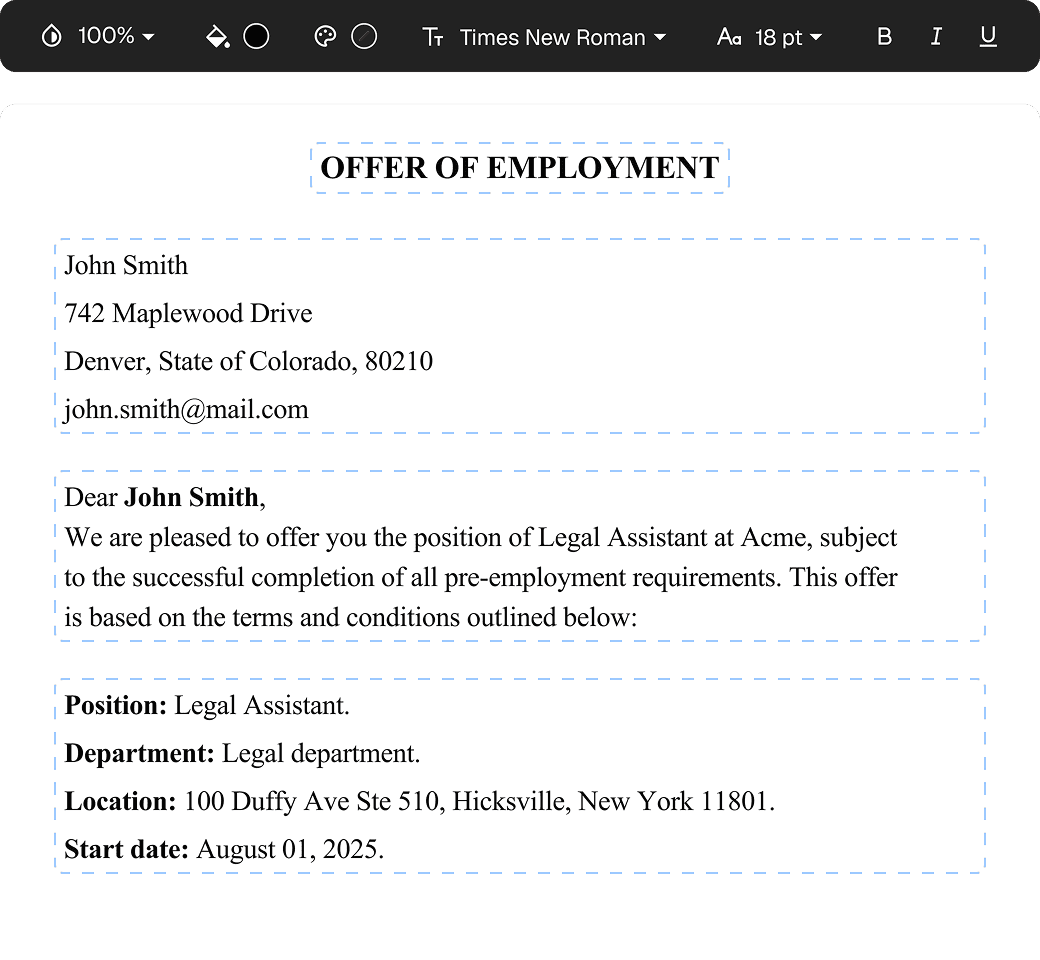
Edit PDFs seamlessly
Tweak agreements before signing or sending for signatures. Update details, add or remove clauses, adjust formatting, and redline changes instantly.
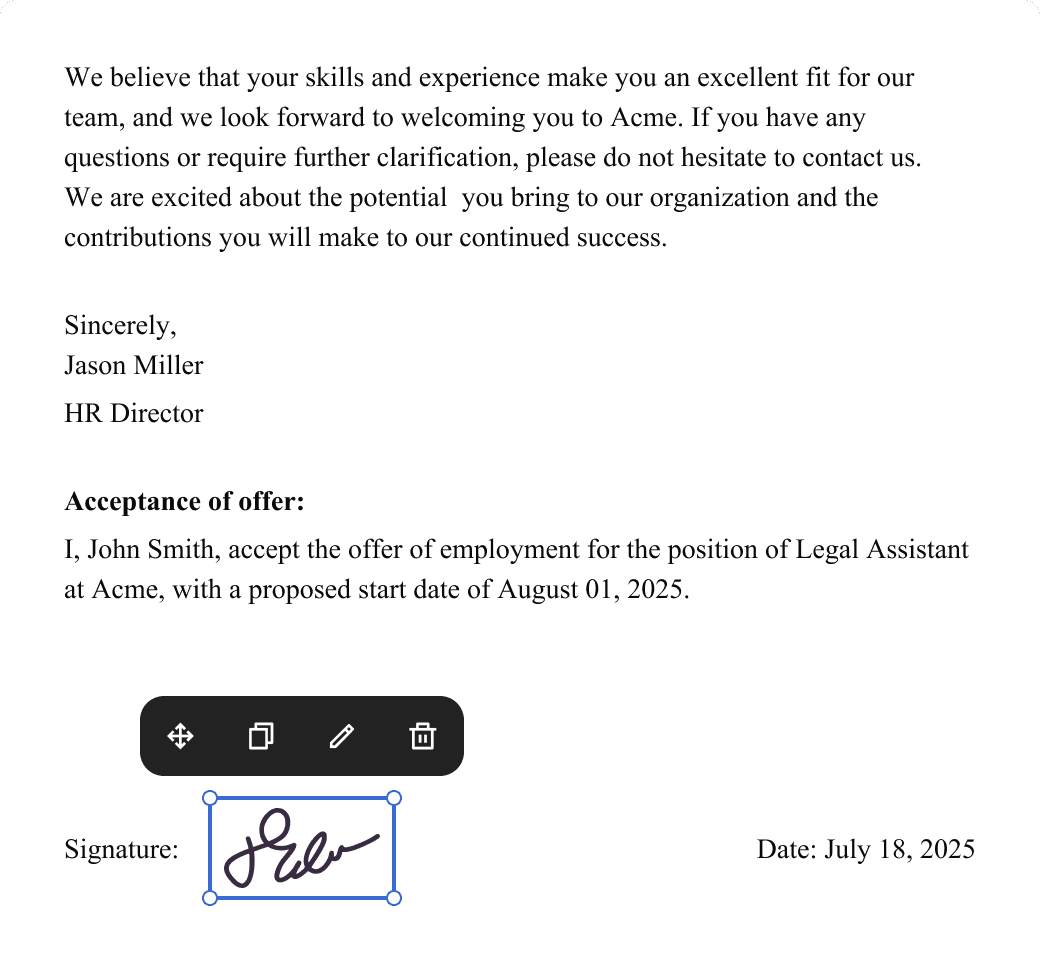
eSign legally and securely
Sign documents and collect legally binding signatures. Invite up to ten people to sign in any order, track the progress, and send reminders.
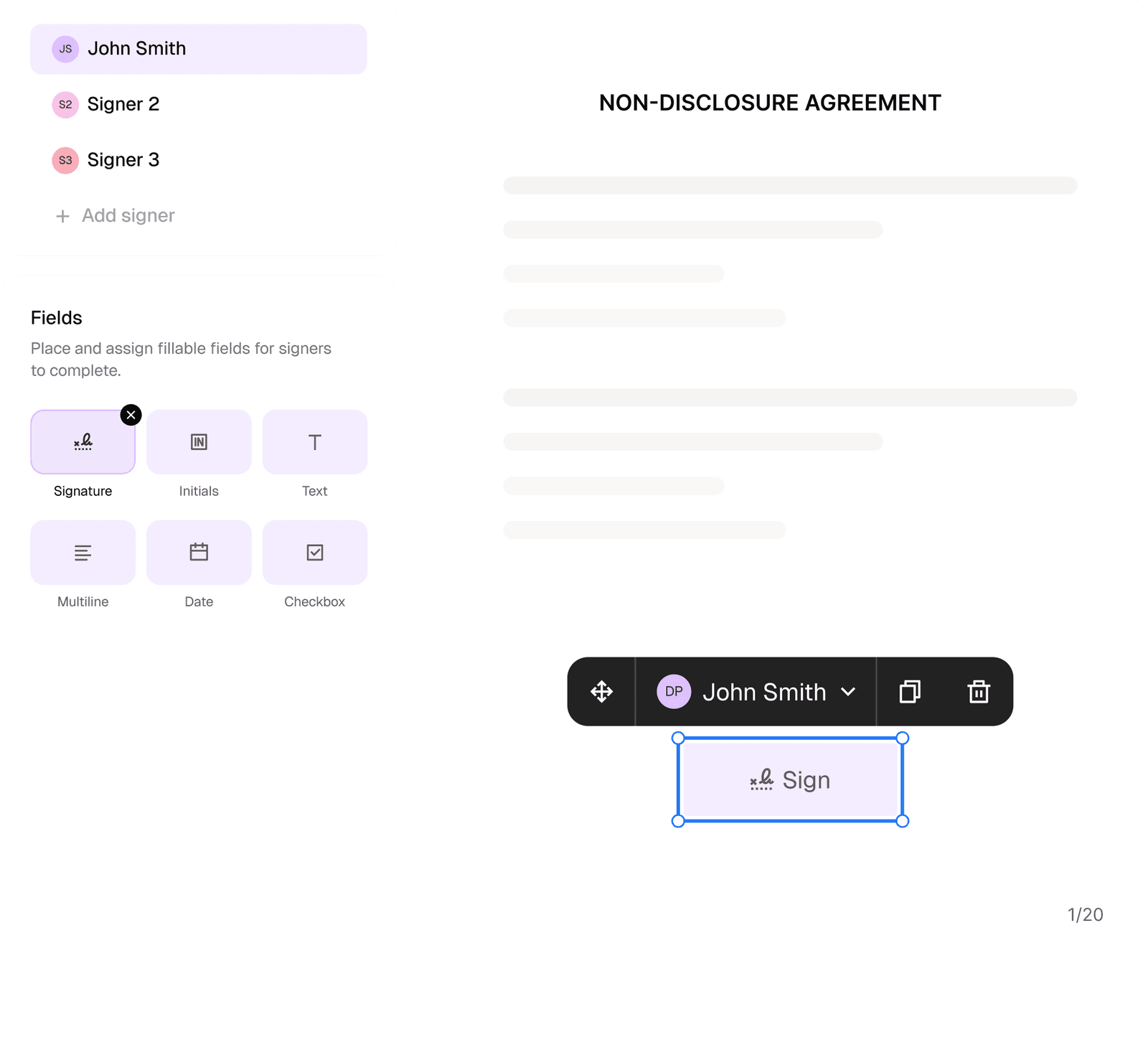
Request legally binding signatures
Invite up to ten people to sign your document in any order. Get a finalized, audit-ready copy without chasing signatures.
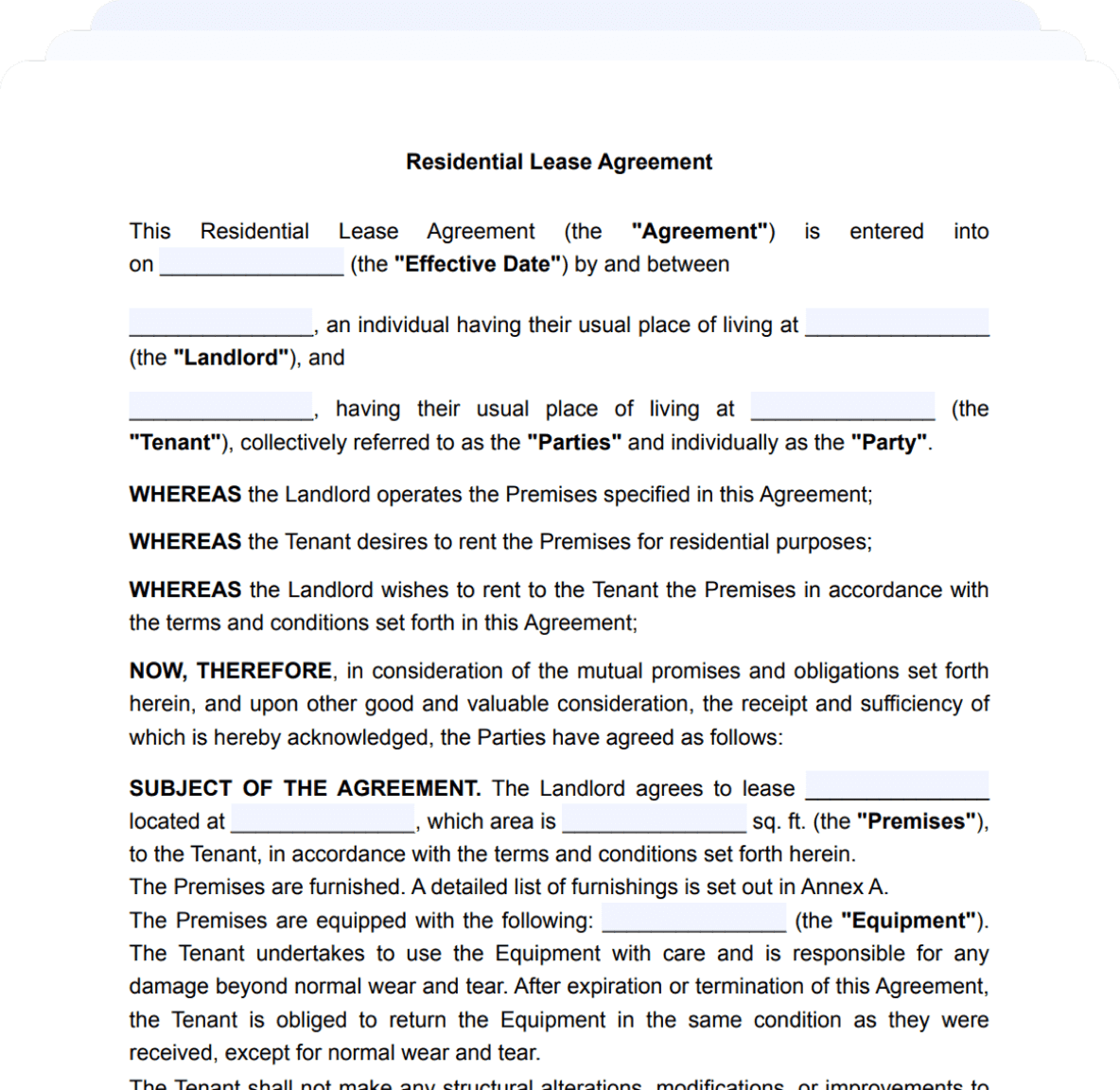
Skip the drafting.
Choose from 2,500+ templates
Browse templatesChoose a template
Fill in details
Sign and download