Updated July 23, 2026
How to File and Pay Taxes as an Independent Contractor in 2026
How to File and Pay Taxes as an Independent Contractor in 2026
- Why Tax Rules Matter Before You Start Contracting
- How Federal Taxes Apply to Independent Contractors
- Where 1099 Income Fits Into Your Tax Reporting
- Reporting Business Income and Expenses Correctly
- Self-Employment Tax and Why It Catches People Off Guard
- Estimated Taxes and Payment Timing
- Documentation That Makes Your Tax Reporting Defensible
- Common Independent Contractor Tax Mistakes and How to Fix Them
- How This Fits Into Registration and Next Steps
Content
Independent contracting offers flexibility and control, but it also rewires how taxes work from the very first payment. Once you are paid as a contractor, there is usually no employer withholding, no automatic tax set-aside, and no built-in reminder that federal taxes are expected throughout the year. Those mechanics are easy to overlook when you are focused on registering, finding clients, or signing your first agreement.
Why Tax Rules Matter Before You Start Contracting
Independent contracting changes how taxes work, not just how much you pay. It is also a major part of the U.S. labor market: 11.9 million people were independent contractors on their sole or main job, representing 7.4% of total U.S. employment.
As an employee, federal income tax and payroll taxes are withheld automatically from each paycheck. As a contractor, most payments arrive in full, with no withholding at all, so how to pay taxes as an independent contractor becomes your responsibility from the first payment, including planning, calculating, and paying taxes throughout the year.
Tax awareness is only one part of the foundation. Registration timing, contract structure, and ongoing documentation all interact. Understanding how to become an independent contractor and how to work with independent contractors can clarify the structure, while sound financial documentation habits prevent small reporting mistakes from becoming expensive problems later.
How Federal Taxes Apply to Independent Contractors
How the Internal Revenue Service classifies contractor income
For federal purposes, the Internal Revenue Service generally treats independent contractors as self-employed individuals. That classification creates two parallel federal tax obligations:
Income tax, calculated on taxable income after deductions.
Self-employment tax, which shields Social Security and Medicare.
Because employers usually do not withhold, the IRS expects contractors to file Form 1040-ES and make quarterly estimated tax payments if they expect to owe $1,000 or more in taxes for the 2026 tax year.
Internal Revenue Service requires quarterly payments as estimated tax to cover income tax and self-employment tax when no withholding exists.
This expectation is a major compliance issue. In the detailed visibility-based breakdown, low-visibility nonfarm proprietor income had a 55% misreporting rate, a category that includes many sole proprietor and self-employment earnings.

Where 1099 Income Fits Into Your Tax Reporting
Clients use Form 1099-NEC to report direct nonemployee compensation paid during the year, generally when payments for services total $600 or more. If the contractor is paid by credit card, debit card, or through certain third-party payment networks, those transactions are generally reported under Form 1099-K rules instead, not on Form 1099-NEC.
What a 1099-NEC does not do is determine your tax liability. If a form is missing, incorrect, or understated, your reporting obligation remains. Contractors are required to report all income received, not just the amounts shown on 1099s, and to reconcile third-party reporting with their own records.
Understanding how to file taxes as an independent contractor means knowing that income must be reported accurately, even when forms are incomplete or delayed.
Form 1099-NEC serves as a third-party confirmation for income reporting, but it never relieves the contractor of the responsibility to track and report payments independently.
- Form 1099-NEC
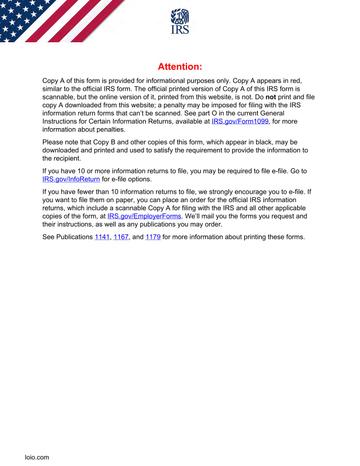 5830 downloads
 - Form 1099-K
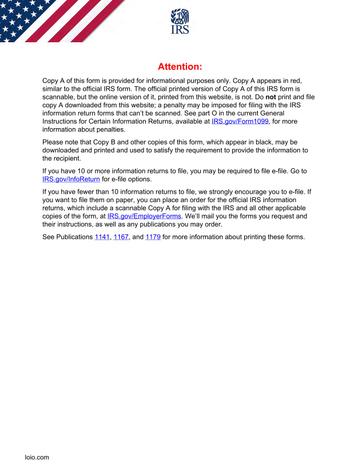 5100 downloads
Reporting Business Income and Expenses Correctly
Clients use Form 1099-NEC to report direct nonemployee compensation paid during the year, generally when payments for services total $600 or more. If the contractor is paid by credit card, debit card, or through certain third-party payment networks, those transactions are generally reported under Form 1099-K rules instead, not on Form 1099-NEC.
What a 1099-NEC does not do is determine your tax liability. If a form is missing, incorrect, or understated, your reporting obligation remains. Contractors are required to report all income received, not just the amounts shown on 1099s, and to reconcile third-party reporting with their own records.
Understanding how to file taxes as an independent contractor means knowing that income must be reported accurately, even when forms are incomplete or delayed.
Form 1099-NEC serves as a third-party confirmation for income reporting, but it never relieves the contractor of the responsibility to track and report payments independently.
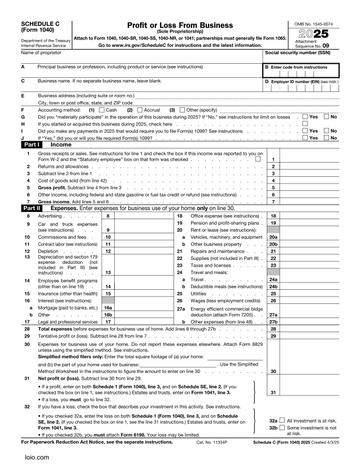
Independent contractors generally file Form 1040 and attach Schedule C (Profit or Loss From Business), where they report business gross income, list deductible business expenses, and calculate net profit or loss. That net profit or loss is then carried into the individual tax return and used in the overall tax calculation.
This is why separating business and personal funds matters in practice: mixed records make it harder to track gross receipts accurately, support deductible expenses, and defend the numbers reported on the return. If one person operates more than one sole proprietorship, the IRS requires a separate Schedule C for each business.
Schedule C functions as the profit-and-loss engine for most independent contractors. Net profit reported here flows directly into income tax calculations and into self-employment tax.
Schedule C returns are disproportionately affected by adjustments. In recent IRS enforcement statistics, sole proprietor returns accounted for a significant share of individual audit adjustments tied to income and expense misreporting.
Documented income matters because numbers must tie back to real activity.
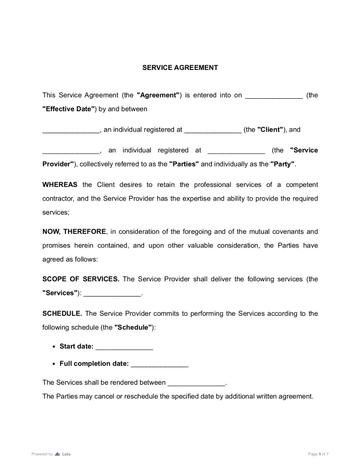
A written service agreement, ideally executed using a reliable electronic signature, helps establish what work generated income and why payments were made.
- Schedule C
 5238 downloads
 - Service Contract
 4322 downloads
Self-Employment Tax and Why It Catches People Off Guard
Employees pay Social Security and Medicare taxes via payroll withholding, with employers covering part of the cost. Contractors, by contrast, are responsible for the combined amount, which is why the total often surprises first-year filers.
An independent contractor calculates the 15.3% self-employment tax (comprising 12.4% Social Security and 2.9% Medicare) on Schedule SE based on net earnings from self-employment.
Schedule SE takes net profit from Schedule C and computes the self-employment tax owed.
Common mistake highlighted: planning only for income tax and discovering the self-employment tax bill at filing time.

Estimated Taxes and Payment Timing
When no taxes are withheld, the IRS expects taxes as independent contractor income to be paid as that income is earned, not deferred until filing. Estimated tax payments are the mechanism that makes this possible and help reduce underpayment penalties.
Estimated tax payments operate as periodic prepayments of expected income and self-employment taxes, so the year does not end with a large unpaid balance.
The IRS assessed about 15.3 million estimated tax penalties on individual, estate, and trust income tax returns, totaling about $4.8 billion.
Documentation That Makes Your Tax Reporting Defensible
The IRS looks for consistency between reported numbers and supporting records, especially when contractors ask, how do I pay taxes with a 1099 and rely solely on reported forms instead of full bookkeeping.
Income support: invoices, deposit records, payment logs.
Expense support: receipts, bank, and card statements.
Errors usually happen when:
Reported income does not match third-party reports or deposits.
Documentation cannot be produced during a review.
Strong documentation habits do more than support tax compliance. They also reinforce the same financial backbone most businesses rely on, even when you are operating as a sole proprietor.
A PDF editor can make that recordkeeping easier by helping contractors update, annotate, and reuse agreements and other supporting documents instead of leaving important records scattered across different tools.
Common Independent Contractor Tax Mistakes and How to Fix Them
Most independent contractor tax penalties stem from timing issues (such as missing quarterly estimated tax deadlines) and poor documentation, not from complex rules. The fixes below focus on simple habits you can put in place before the first payment so contractor taxes stay predictable and manageable.
Paying income tax but ignoring self-employment tax
What breaks: You underestimate the total tax because Social Security and Medicare are not withheld.
How to fix it: Plan for both taxes from day one, using net profit as the baseline.
Skipping estimated payments
What breaks: Underpayment penalties build even if you pay later at filing time.
How to fix it: Set aside part of each payment and treat estimated taxes like a recurring bill.
Treating recordkeeping as optional
What breaks: Income and expenses become hard to defend if questioned.
How to fix it: Track income as received, keep receipts tied to business purpose, and match invoices to deposits.
Assuming software replaces documentation
What breaks: Reports summarize numbers, but they do not prove transactions.
How to fix it: Keep source documents (invoices, receipts, statements) and make every number traceable.
How This Fits Into Registration and Next Steps
Understanding federal tax mechanics is the first step in learning how to do taxes as independent contractor, and it should come before registering a business name, signing contracts, or accepting the first client payment. When agreements are finalized, using an electronic signature for financial services helps create a clear, time-stamped execution record so contract dates align cleanly with income reporting.
When contractors understand how income tax, self-employment tax, estimated payments, and reporting fit together, ongoing compliance becomes routine rather than reactive.
Before the first payment, it helps to have:
A consistent income and expense tracking process.
A way to reconcile payments against contracts and invoices.
A basic understanding of how and why estimated taxes apply.
More guides
September 1
7 min read
How to Provide Proof of Employment: Documents and Steps
July 21
11 min read
What Taxes Do Businesses Have to Pay? Federal Tax Checklist
July 25
12 min read
How to Register a Company in the US: What No One Tells You in 2026
October 16
7 min read
What Is OCR (Optical Character Recognition)? How It Works & AI Uses
October 16
8 min read
How to Scan a Document to PDF & Convert to Editable Text
September 16
8 min read
Promissory Note vs. Loan Agreement: Which One Do You Need?
One home for your
agreements
Edit PDFs seamlessly
Tweak agreements before signing or sending for signatures. Update details, add or remove clauses, adjust formatting, and redline changes instantly.
eSign legally and securely
Sign documents and collect legally binding signatures. Invite up to ten people to sign in any order, track the progress, and send reminders.

Request legally binding signatures
Invite up to ten people to sign your document in any order. Get a finalized, audit-ready copy without chasing signatures.
Skip the drafting.
Choose from 2,500+ templates
Browse templatesChoose a template
Fill in details

Sign and download