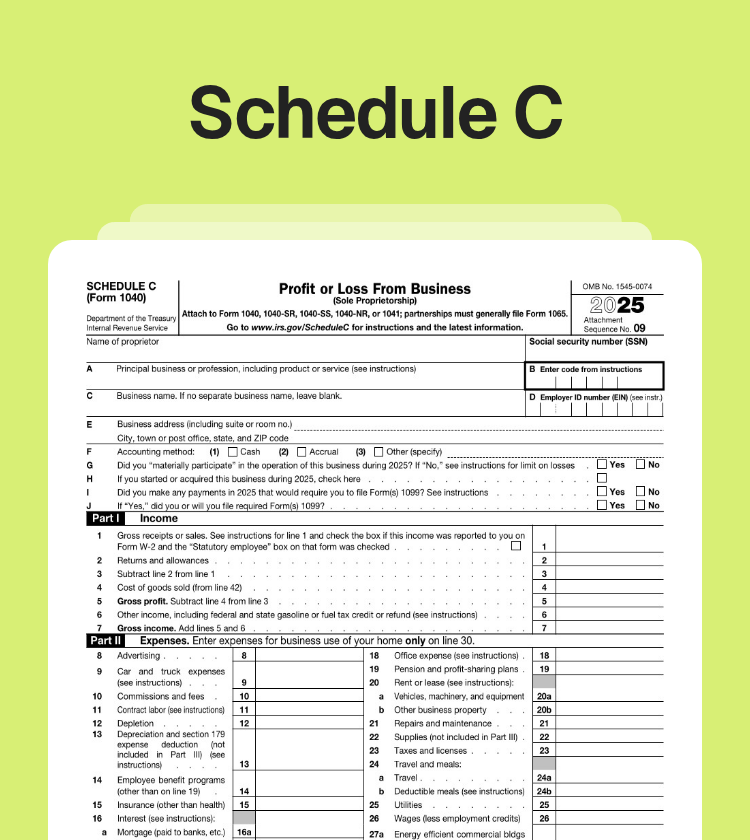
Schedule C is a business tax form between a self-employed individual and the IRS reporting income and expenses from a sole proprietorship. It is used by freelancers and small business owners to calculate business profit or loss for tax purposes.
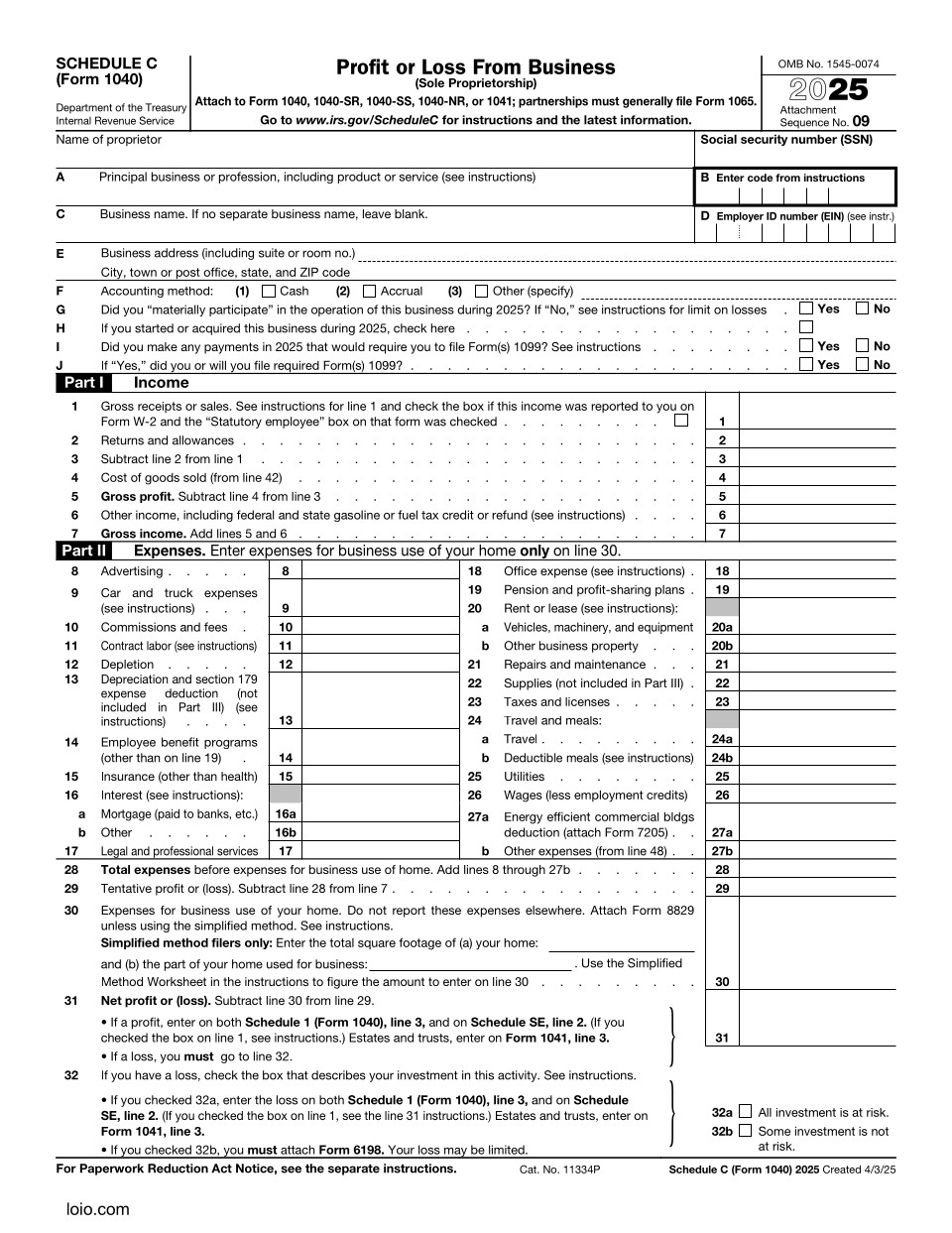
A person who operates a sole proprietorship or single-member LLC inside the United States, regardless of where they live, has certain responsibilities. One of these is informing the IRS about their annual business income and paying any due taxes. To do this, they need to correctly complete and submit a specific form — 1040 Schedule C.
Schedule C 1040 is specifically used by sole proprietors and independent contractors when they need to report income or loss from their business endeavors. If you run your own business, are an individual who has set up an LLC, or a partnership member filing a Form 1065, but you've earned income from other sources, you'd need to fill out form 1040 Schedule C.
Typically, the key parties involved in the case of Schedule C form 1040 are:
Business Owner. Also known as the “sole proprietor,” they carry out and control the everyday operations of the business.
Independent Contractor. A person or entity that is contracted to perform work for — who, in terms of the form, is often also the sole proprietor or the “business owner.”
Understanding the 1040 Schedule C instructions involves getting familiar with key terms such as:
Gross Income. This is the total income generated by the business before any deductions (business expenses) are subtracted.
Gross Receipts. The total amounts the business received from all sources during its annual accounting period before subtracting any costs or expenses.
Cost of Goods Sold (COGS). If the business sells products, this line item refers to the business expense directly related to creating those products.
Net Profit/Loss. This is the business's total income minus its expenses. If the result is positive, it's a net profit. If it's negative, it's a net loss.