Free template
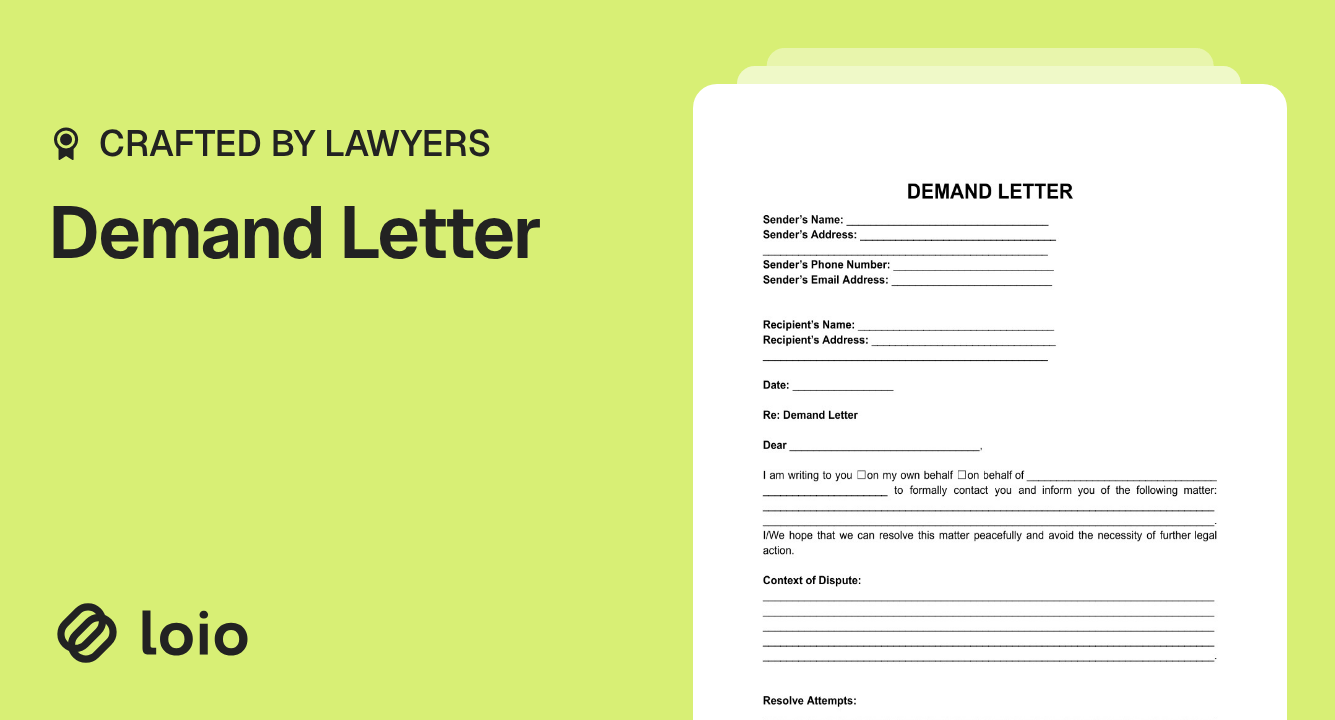
Free Demand Letter Template
Template Types
What Is a Demand Letter?
Copy section linkA demand letter template, also called a letter of demand template, is a formal document in which one person or business asks another to take a specific action — usually paying money owed, returning property, or fixing a breach of contract. It's typically the last step before pursuing legal action, not the first.
Demand letters are used for a range of disputes: unpaid debts, breach of contract, personal injury claims, property damage, and landlord-tenant issues like unpaid rent or a withheld security deposit. The letter states the facts, what's being demanded, and a deadline for response.
Courts and opposing parties take a written demand more seriously than a phone call or a text message, since it creates a paper trail. If a dispute later ends up in small claims court, a demand letter — and proof of delivery — often serves as evidence that you tried to resolve the matter before suing.
When to Use a Demand Letter?
Copy section linkA demand letter template is useful once informal requests and conversations have failed. Following a clear demand letter format helps ensure your request is taken seriously and holds up if the dispute escalates.
Common situations include:
Unsecured debt
If someone borrowed money without offering collateral (supported by a promissory note), a demand letter is the first step before debt collection or legal action.
Breach of contract
If one party doesn't fulfill a contract obligation (e.g., unpaid invoices, unfinished work), this letter formally requests correction or payment.Personal injury
Injury victims can use a demand letter to ask for compensation from the at-fault person or insurer before filing a lawsuit.Property damage or loss
If someone has damaged your belongings or refuses to return your property, an example of demand letter states what happened and asks for a remedy.Landlord-tenant disputes
Tenants may send a letter to request the return of a security deposit, while landlords may use it to collect unpaid rent or repair costs.
For example, you have loaned a friend $2,000. If they refuse to pay it back, you can send a letter of demand sample that outlines the loan details, the repayment deadline, and the actions you will take if they don't respond.
Who Are the Parties to a Demand Letter?
Copy section linkSender (claimant): The person or business making the demand. The sender states the facts, explains what's owed or needs to be done, and sets a deadline for response.
Recipient (debtor or responsible party): The person or business being asked to pay, return property, or otherwise resolve the issue described in the letter.
Attorney representative (conditional): If either party is represented by a lawyer, the demand letter may be sent on their behalf, or future communication may need to go through the attorney rather than directly to the party.
What Are the Key Terms in a Demand Letter Form?
Copy section linkDemand: A formal request for a specific action, usually payment or the return of property, made before pursuing a legal remedy.
Statute of limitations: The legal deadline for filing a lawsuit over a specific type of claim. Once it passes, the claim generally can't be pursued in court, even with a valid demand letter.
Breach of contract: A failure by one party to fulfill an obligation under a contract, such as failing to pay an invoice or deliver agreed-upon work.
Certified mail: A mail service that provides proof that the recipient received a letter, commonly used to send demand letters so the sender has evidence of delivery.
Judgment: A court's official decision in a legal dispute, which may order the losing party to pay a specific amount or take a specific action.
Mediation: A process where a neutral third party helps both sides negotiate a resolution, often used as a step between a demand letter and a lawsuit.
What Are the Key Components of a Demand Letter?
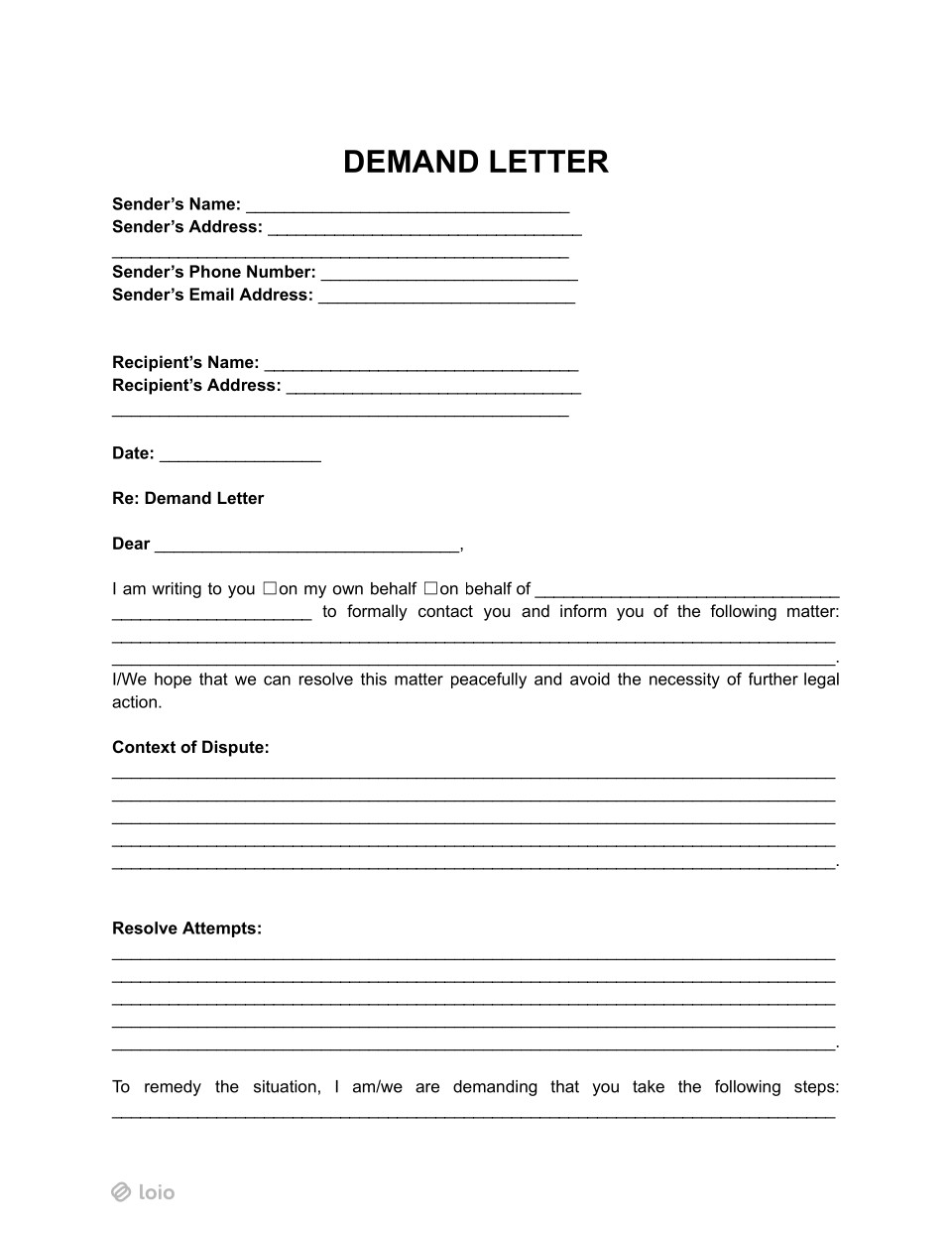
Copy section linkSender information: Full name, address, phone number, and email, so the recipient knows exactly who is making the demand and how to respond.
Recipient information: Full name and address of the person or business to whom the letter is addressed.
Factual statement: A clear, specific account of what happened — dates, amounts, and what the recipient did or failed to do. Vague or emotional language weakens a demand letter; specific facts strengthen it.
The demand: A precise statement of what the sender wants — payment of a specific amount, return of specific property, or another concrete action.
Deadline: A clear date by which the recipient must respond or comply, typically 10 to 30 days from the letter's date.
Consequences of non-response: A statement that legal action may follow if the recipient doesn't respond or resolve the issue by the deadline.
Supporting documentation (conditional): References to attached evidence: receipts, photos, contracts, or messages that support the claim.
Signature and date: The sender's signature and the date the letter was written, which anchors the timeline for the deadline and any later legal proceedings.
How to Fill Out a Demand Letter Template?
Copy section linkWhether you're starting from a blank page or working from a template letter of demand, follow these steps in order:
- Enter the sender's full name, address, phone number, and email.
- Enter the recipient's full name and address.
- State who you're writing on behalf of, if applicable (yourself, a business, or a represented client).
- Describe the issue in clear, factual terms — include relevant dates, locations, and what the recipient did or failed to do.
- Mention any prior attempts you made to resolve the matter informally.
- State exactly what you're demanding — a specific dollar amount, the return of a specific item, or another concrete action.
- Set a clear deadline for the recipient to respond or comply, typically 10 to 30 days.
- State the consequences if the recipient doesn't respond by the deadline, such as pursuing legal action.
- Reference any attachments — receipts, photos, contracts, or messages — that support your claim, and include copies.
- Sign and date the letter. You can sign electronically using eSign or by hand.
- Send the letter by certified mail with return receipt, email with a read receipt, or another method that gives you proof of delivery.
- Keep a copy of the signed letter and any proof of delivery for your records.
Can a non-lawyer write a demand letter?
Yes. You don't need a lawyer to write or send a legal demand letter. A clear, factual letter that states what happened, what you're asking for, and a deadline is usually sufficient. Legal help is worth considering for high-value claims or disputes involving complex contract terms.
Can a demand letter be handwritten?
Yes, but a typed letter is preferred. A typed or PDF document looks more professional, is easier to read, and can be sent by email or printed and mailed without needing to write multiple copies by hand.
What should you not say in a demand letter?
Avoid threats that go beyond legal action you're actually entitled to take, insults, or emotional language — these can undermine your credibility and, in some cases, create legal exposure for you. Avoid admitting fault or uncertainty about the facts in demand letter templates. Stick to a factual, professional tone that states what happened, what you want, and by when.
How do you write a simple letter of demand?
State who you are and who you're writing to, describe what happened in a few factual sentences, say specifically what you want (a dollar amount or a specific action), and set a clear deadline. A template for demand letter drafting can help you avoid missing any of these fields. Close by stating that you may pursue legal action if the deadline passes without a resolution, then sign and date the letter.
Is a demand letter legally binding?
No, a demand letter itself isn't a binding legal document — it's a formal request, not a contract or court order. However, it can become important evidence if the dispute later goes to court, since it shows you attempted to resolve the matter first.
How long after sending a demand letter can I expect a response?
It depends on the deadline you set in the letter, typically 10 to 30 days. Some recipients respond within days, especially in debt collection matters where the threat of legal action is clear. If the deadline passes with no response, you can move forward with your next step, such as filing in small claims court.
What happens if the statute of limitations has already passed?
A demand letter form can't revive a claim after the statute of limitations has expired. If you're unsure whether your deadline has passed, this is worth checking before you send a letter, since the recipient generally has no legal obligation to respond once the claim is time-barred.
This template is intended for general use across all 50 U.S. states+DC. Local procedures — such as notarization, witnessing, or filing requirements — may still apply, so check your state's specific rules before signing.
Sources
Related documents
Also read