Updated July 25, 2026
9 min read
Signing Under Duress: Can You Be Forced To Sign a Contract?
Signing Under Duress: Can You Be Forced To Sign a Contract?
Content
Contracts are fundamental to numerous daily transactions, from leasing apartments to sealing business deals. In the United States, the federal government alone signs over 11 million contracts annually, highlighting how integral contracts are to various sectors.
But what happens when you're forced — or feel pressured — to sign a contract? Is it still legally binding? Let's explore the concept of signing a contract under duress and what it means for you.
What Is Duress?
Signing under duress meaning describes a situation where a person is forced to agree to a contract without genuine consent due to external pressures or threats.
Imagine being told, “Sign this contract, or face the consequences.” Whether the threat involves physical harm, financial repercussions, or damage to your reputation, signing under such circumstances could fall under the category of duress.
But it’s not always so dramatic.
Sometimes, duress can be subtle. For example, a business partner might hint that your refusal to sign an agreement could jeopardize your career. These scenarios, while less overt, can still qualify as duress under the law.
What Happens if a Contract Is Signed Under Duress?
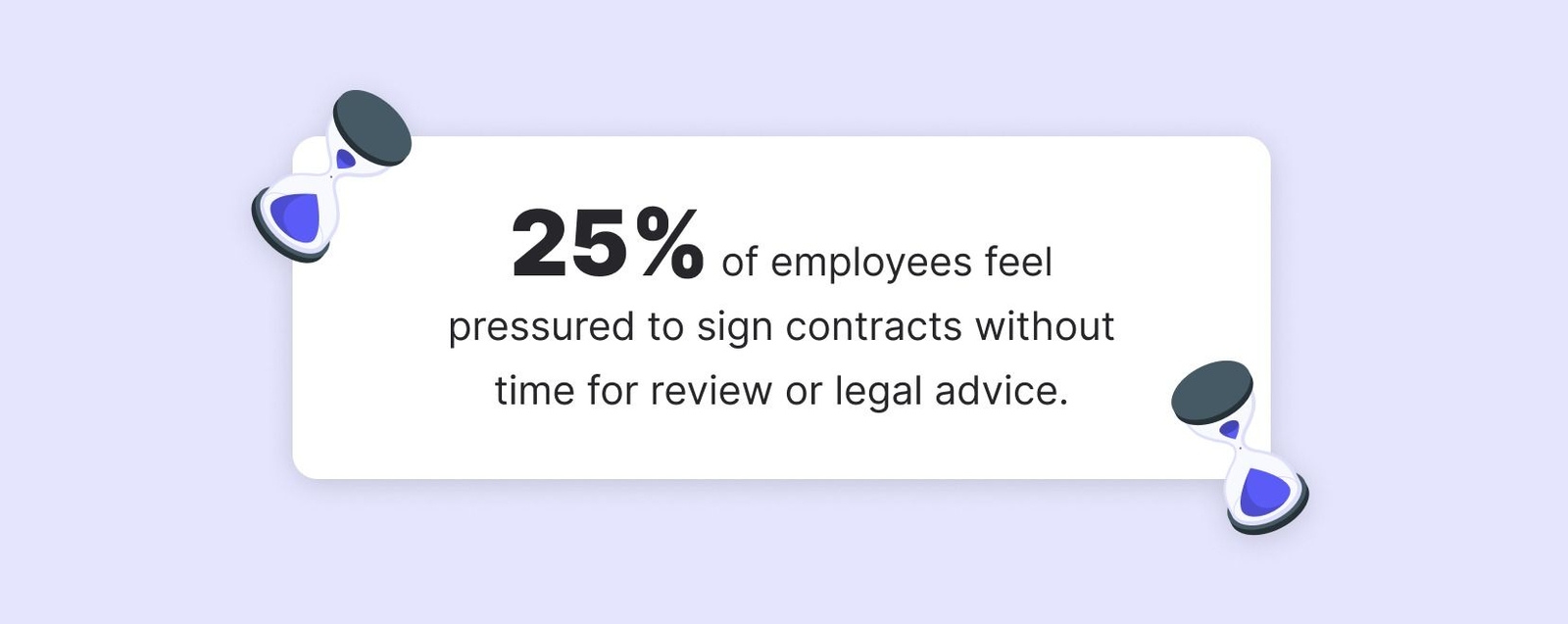
A contract signed under duress may be deemed invalid or unenforceable.
The duress contract law recognizes that agreements should be voluntary and mutual, so any contract entered into under pressure violates this principle.
What Are the Types of Duress?
Not all duress looks the same. Here are the most common types:
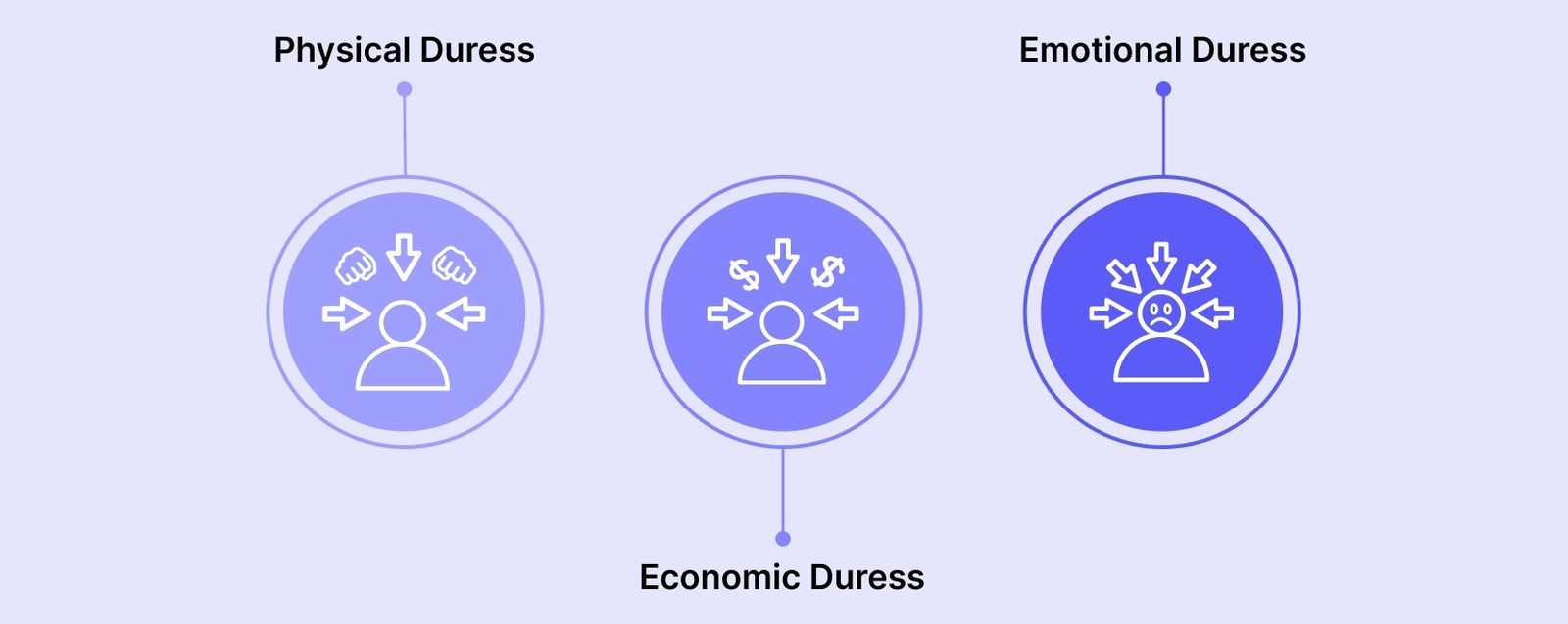
Physical Duress
This occurs when threats of physical harm or violence are used to force someone into signing contract under duress, removing their ability to make a free choice.
Economic Duress
This arises when financial threats or undue pressure are applied to coerce someone into agreeing to unfavorable terms, often exploiting their dependency or vulnerability.
Emotional or Psychological Duress
This happens when mental or emotional pressure is applied to manipulate someone into signing under distress by exploiting their sense of obligation, guilt, or fear.
Legal Consequences of Duress
If a court determines that a contract was signed under duress, several outcomes are possible:
- Voidable Contracts: The contract may be declared voidable, meaning the party under duress has the right to cancel the agreement.
- Compensatory Damages: The wronged party may be entitled to damages for any losses suffered as a result of the coerced agreement.
- Restoration of Status Quo: Courts may order the parties to return to their positions before the contract is signed, effectively nullifying the agreement.
Status Quo simply means returning things to the way they were before the contract was signed.
How To Prove Duress in Court
Proving duress can be challenging but not impossible. Here are the steps often required:
1. Evidence of Threats or Coercion
Documented evidence — such as emails, text messages, or witness testimonies — can help demonstrate the existence of threats or undue pressure.
2. Proof of Lack of Free Will
You’ll need to show that you had no reasonable choice but to sign the contract due to the circumstances. For example, was there an immediate threat, or were you given time to seek legal counsel?
3. Timing of the Complaint
The sooner you challenge the contract, the better. Waiting too long might weaken your case, as it could be argued that you accepted the terms willingly over time.
Steps To Take if You Signed an Agreement Under Duress
1. Find Legal Advice Immediately
Contact a lawyer who specializes in contract law. They can evaluate your case and advise you on your options.
2. Gather Evidence
Compile any proof of threats or coercion, including written communication, audio recordings, or witness statements. The more evidence you have, the stronger your case.
3. Notify the Other Party
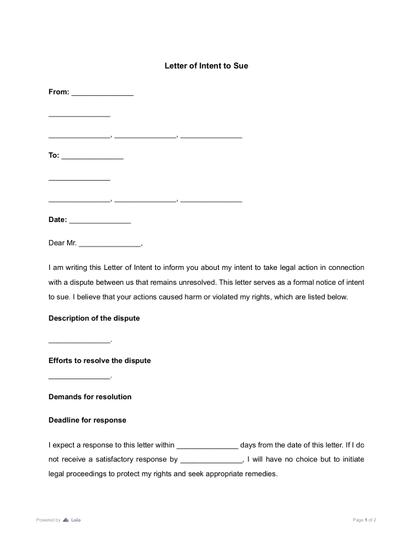
Formally communicate that you believe the contract was signed under duress. This can sometimes lead to renegotiation or cancellation without involving the courts. At this stage, you can use a notice of intent to sue, outlining your legal concerns and intentions to challenge the contract.
4. File a Legal Complaint
If the issue cannot be resolved amicably, the lawyer can help you file a claim in court to have the contract declared void or unenforceable.
Conclusion
No one should feel forced to sign a contract against their will. Whether the pressure is physical, financial, or emotional, the law provides protections to ensure fairness and justice. If you’ve signed an agreement under duress, don’t stay silent — take action.
More guides
October 16
7 min read
What Is OCR (Optical Character Recognition)? How It Works & AI Uses
October 16
8 min read
How to Scan a Document to PDF & Convert to Editable Text
September 15
7 min read
Contract Risk Management: How to Do It Properly
September 15
10 min read
Who Can Sign a Contract on Behalf of a Company?
September 15
What Is Contract Redlining?
September 1
7 min read
How to Provide Proof of Employment: Documents and Steps

One home for your
agreements
Edit PDFs seamlessly
Tweak agreements before signing or sending for signatures. Update details, add or remove clauses, adjust formatting, and redline changes instantly.
eSign legally and securely
Sign documents and collect legally binding signatures. Invite up to ten people to sign in any order, track the progress, and send reminders.
Request legally binding signatures
Invite up to ten people to sign your document in any order. Get a finalized, audit-ready copy without chasing signatures.
Skip the drafting.
Choose from 2,500+ templates
Browse templatesChoose a template
Fill in details
Sign and download