Updated September 15, 2026
10 min read
Who Can Sign a Contract on Behalf of a Company?

Who Can Sign a Contract on Behalf of a Company?
- What's Signatory Authority and How It Works
- Who Can Sign a Contract on Behalf of a Company?
- Can Employees Sign Contracts?
- How Does a Company Give Someone Signing Authority?
- How Can You Verify That Someone Has Authority to Sign?
- What Happens If the Wrong Person Signs?
- Best Practices to Avoid Signature Authority Problems
- Common Mistakes Businesses Make With Signing Authority
Content
Signing a contract on behalf of a business is more than just a matter of putting a signature on the page. The person signing must have the legal authority to act for the company. Otherwise, the agreement may be challenged, delayed, or even rejected if a dispute arises.
In the United States, there isn't one federal law listing who may sign every business contract. Instead, signing authority is generally determined by state business laws, agency law, the company's legal structure, and its internal governing documents.
Today, we take a closer look at what signatory authority is, what an authorized signature is, who can sign contracts for a business, when employees may have that authority, and how companies grant it.
What's Signatory Authority and How It Works
If you've searched for what signatory authority is, you're looking for the rules that determine who can legally commit a business to a contract. In simple terms, signatory authority is the legal power to sign agreements on behalf of a company. When the person signs for the business and has the authority to do so, the contract signature creates a binding obligation for the business rather than the individual employee. However, personal liability can still arise from a guarantee, an unclear signature block, or other circumstances.
Signatory authority may be actual, implied by the person's role or the company's conduct, or apparent to an outside party because of what the company represented: an internal policy limiting a signer's authority doesn't always prevent the company from being bound if the other party reasonably relied on the company's conduct.
Signatory authority isn't always tied to a person's job title. A company's president may be able to sign nearly any commercial agreement, while another executive is only allowed to approve contracts within a certain dollar limit. In many businesses, authority also depends on the type of contract being signed, for example:
A purchasing manager may be authorized to sign routine supplier agreements.
An HR manager may sign employment offers.
Selling company assets or taking out a large loan often requires approval from senior leadership or the board of directors before anyone signs.
That's why signature authority typically comes from a combination of company policies, governing documents, delegated authority, and state law, not simply from having "manager" or "director" in a job title.
Most disputes over signing authority are decided under state law. While the general legal principles are similar across the U.S., the exact rules can vary depending on where your business is formed.
Who Can Sign a Contract on Behalf of a Company?
A corporation, LLC, partnership, and sole proprietorship don't follow exactly the same rules, and the person with authority in one business structure may not have the same authority in another.
Even within the same company, signing authority often depends on the type of agreement. Someone who can approve routine vendor contracts may not be able to sign a commercial lease, take out a business loan, or sell company assets.
In corporations
Corporations usually give signing authority to their officers. A corporate officer often has authority to enter contracts as part of their role, although the scope of that authority varies from one business to another. In many corporations, the following officers commonly sign agreements:

Large transactions, such as purchasing real estate, borrowing significant amounts of money, or selling major company assets, may require approval from the board of directors under governing documents or applicable law before an officer signs the contract. The board doesn't necessarily sign the agreement itself; it can authorize someone else to do so.
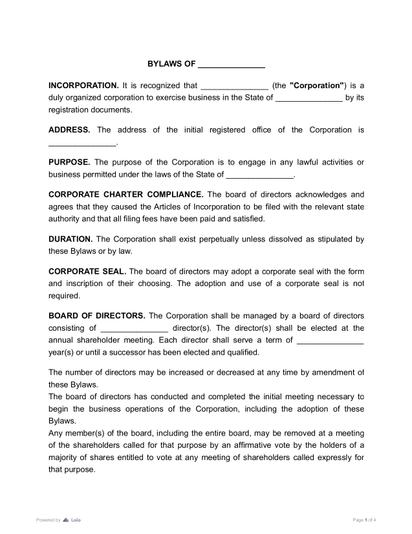
The company's corporate bylaws often explain which officers have authority, whether approval limits apply, and when additional authorization is required. For example, a company president may sign a one-year software subscription without additional approvals, but acquiring another business could require a board resolution before anyone signs the purchase agreement.
In LLCs
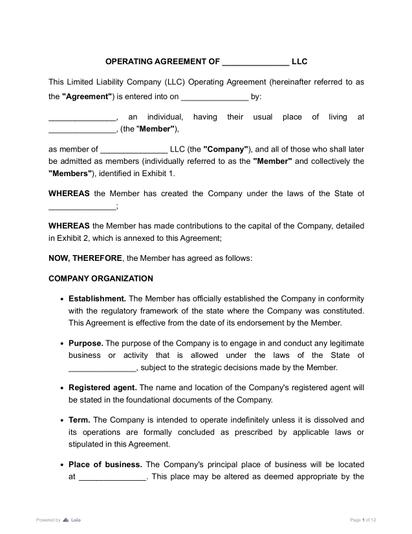
Limited liability companies have more flexibility than corporations, which means there's no single rule about who signs contracts. The first place to look is the LLC's operating agreement.
Some LLCs are member-managed, where the owners handle daily operations and generally have authority to act for the business. Others are manager-managed, where members appoint one or more managers to run the company. In that case, individual members may no longer have authority to sign contracts simply because they own part of the business.
That's why it's risky to assume every LLC owner can automatically bind the company. For larger transactions, lenders, investors, or other businesses may ask for documentation confirming that the person signing is authorized under the operating agreement or another written authorization.
In business partnerships
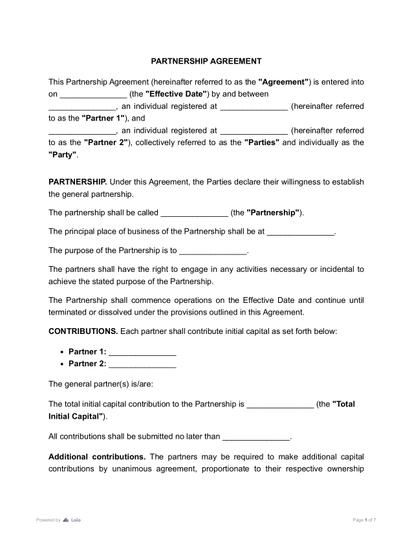
With partnerships, authority often depends on the type of partnership. In a general partnership, each general partner has authority to act on behalf of the business within the ordinary course of its operations. That means one partner can often sign supplier agreements, service contracts, or other routine business documents without obtaining the other partners' signatures first.
However, that authority also creates risk. According to RUPA 301(1), if one partner signs a contract that falls within the partnership's normal business activities, the partnership may still be legally bound even if the other partners disagree with the decision. The exception is that the partner has no authority to sign for the partnership in the particular matter and the person with whom the partner is dealing knows it. In this case, the signature is invalid.
Limited partnerships and limited liability partnerships follow different rules. Limited partners often have little or no authority to manage the business unless the governing documents provide otherwise. Meanwhile, in an LLP, each partner's authority should be analyzed under the applicable partnership agreement and law.
A well-written partnership agreement should clearly identify who can sign contracts, which decisions require unanimous approval, and when partners need consent before committing the business to major obligations.
In sole proprietorships
A sole proprietorship is the simplest business structure because the business and the owner are legally the same person. The owner generally signs contracts personally and accepts the legal obligations that come with them.
Another person can still sign on the owner's behalf, but only if the owner has given them authority to do so. We look at the different ways businesses grant that authority in the next section.
Can Employees Sign Contracts?
To put it simply — yes, if the company has authorized them to do so.
Many businesses allow managers or department heads to sign agreements that fall within their responsibilities. For example, a purchasing manager may approve supplier contracts, while an HR manager may sign employment documents. That authority, however, can be limited by the type of contract, its value, or company policy.
If an employee is signing a major agreement, like a commercial lease, business loan, or asset purchase, it's reasonable to confirm they have the authority to bind the company. In some cases, however, the company may be bound through apparent authority even when a formal internal authorization is missing.
Before sending a contract for signature, review the signature block to make sure it includes the correct company name, the right signer's title, and space for all required signatures. An online PDF editor makes it easy to update those details in minutes.
How Does a Company Give Someone Signing Authority?
Companies don't have to limit signing authority to owners or executives. As a business grows, responsibilities are often delegated so routine agreements can be signed without waiting for a single decision-maker.
How to give someone signing authority depends on the company's legal structure and internal governance. Some businesses grant broad authority to senior leaders, while others authorize employees to sign only certain types of contracts or agreements.
The following are the most common ways businesses grant signing authority.
Board resolutions
For corporations, board resolutions are one of the most formal ways to authorize someone to sign contracts on the company's behalf. The board of directors adopts a written resolution identifying who may sign and, if necessary, setting limits on that authority.
For example, a board might authorize the CEO to execute contracts in the ordinary course of business while requiring separate board approval for loans, mergers, or real estate leasing and purchase. A resolution can also authorize someone for a single transaction, such as closing on a property or signing financing documents.
Because board resolutions create an official corporate record, banks, lenders, and other third parties often request a copy before completing significant transactions.
Operating agreement or bylaws
Many businesses don't need to adopt a new resolution every time someone signs a contract because their governing documents already address signing authority.
For LLCs, the operating agreement often specifies whether members, managers, or both can bind the business. For corporations, the corporate bylaws typically identify which officers have authority to sign contracts and whether certain agreements require approval from the board or shareholders.
If those documents haven't been updated in years, they may no longer reflect how the business actually operates. Review them periodically, especially after leadership changes or business restructuring, to help prevent confusion.
Delegation of authority policies
As companies grow, executives can't realistically review every purchase order, vendor agreement, or customer contract. Instead, many businesses adopt delegation of authority policies that assign approval responsibilities throughout the organization. For example, a company may delegate signing authority to department managers for routine supplier agreements.
A well-designed policy should answer questions such as:
Which employees may sign contracts?
What types of agreements are covered?
Are there dollar limits?
When is legal or executive approval required?
Clear policies can reduce bottlenecks and help employees understand where their authority begins and where it ends.
Power of attorney
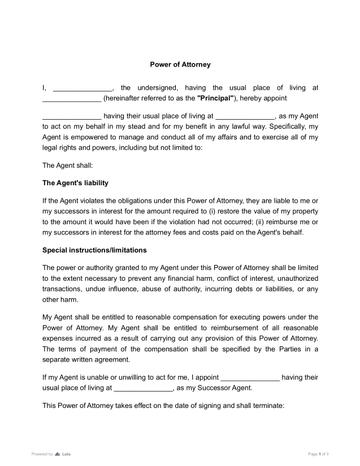
A power of attorney (POA) allows a business owner or executive to authorize another person to act on their behalf when they cannot personally complete a transaction, such as closing on real estate, handling matters in another state, or signing documents while traveling.
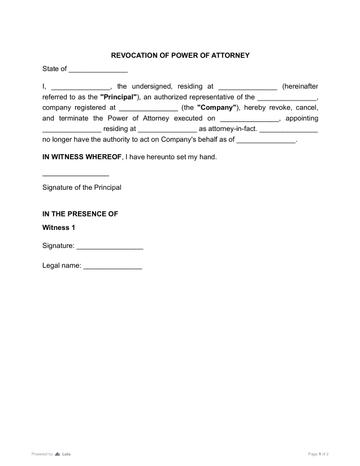
However, a POA should be drafted carefully because the person receiving it may be able to make legally binding decisions within the authority granted. If the authorization is no longer needed, a revocation of POA should be completed promptly, and any banks, vendors, or other parties relying on the document should be notified.
- Power of Attorney (POA)
 7876 downloads
 - Revocation of Power of Attorney
 5364 downloads
Written authorization
Not every situation requires a formal board resolution or power of attorney. For routine business matters, companies often rely on written authorization letters, internal approval memos, or similar documents to grant authority for a specific project or transaction.
Whatever form it takes, the authorization should clearly identify:
Who is authorized to sign;
Which contracts or transactions are covered;
Any dollar limits or approval requirements;
Whether the authority is temporary or ongoing.
Taking the time to document those details helps employees understand their responsibilities and gives customers, vendors, and lenders greater confidence that the agreement was signed by the right person.
How Can You Verify That Someone Has Authority to Sign?
In many everyday business transactions, you won't need to investigate who signed the contract. But if the agreement involves a substantial financial commitment, a long-term obligation, or an unfamiliar business partner, taking a few extra steps can prevent costly disputes later. Here are a few ways to verify a signer's authority:
- 1
Check the person's title and whether it aligns with the type of agreement.
- 2
Ask whether additional approvals, such as a board resolution, are required.
- 3
Request supporting documents if the transaction is significant.
- 4
Review public business records when appropriate, such as state corporation or LLC filings, to prove that the entity exists and identify officers/managers.
- 5
Request a transaction-specific resolution, incumbency certificate, or written confirmation if necessary.
- 6
Confirm that the individual is signing on behalf of the business rather than in a personal capacity.
If something doesn't seem right, ask questions before signing. It's much easier to clarify authority during negotiations than after a disagreement arises.
For higher-value agreements, an AI Contract Review may also help identify missing signature blocks, inconsistent party information, or clauses that suggest additional approvals may be required before execution.
What Happens If the Wrong Person Signs?
A contract doesn't automatically become invalid because the wrong person signed it. The outcome depends on several factors, including the signer's authority, the company's actions, and applicable state law.
In some situations, the business may refuse to honor the agreement because the signer lacked authority. In others, the company may ratify the contract later, making it enforceable despite the original defect.
Courts may also consider whether the other party reasonably believed the signer had authority based on the company's conduct. That's why businesses should clearly define who may sign contracts and communicate any limitations internally.
When questions arise, the sooner they're addressed, the easier they are to resolve. Waiting until after work has been performed or money has changed hands can make the dispute much more complicated.
Best Practices to Avoid Signature Authority Problems
Many problems over signing authority can be reduced. Clear internal procedures reduce confusion for employees while giving customers, vendors, and lenders confidence that agreements are properly executed. These simple practices can make a significant difference:
Clearly document who may sign each type of contract.
Review signing authority whenever leadership or job responsibilities change.
Set approval thresholds for high-value or high-risk agreements.
Train employees not to sign documents outside their assigned authority.
Keep governing documents and internal authorization records up to date.
Verify authority before completing major transactions.
Common Mistakes Businesses Make With Signing Authority
Many signing authority issues result from unclear processes or outdated documentation. Fortunately, most are easy to prevent with a few simple safeguards.
- 1
Assuming every executive can sign every contract.
Titles alone don't determine authority. Confirm who is authorized to approve the specific type of agreement before it's signed.
- 2
Not updating authority after personnel changes.
When an executive, manager, or owner leaves the company or changes roles, review internal policies and remove any authority they no longer have.
- 3
Giving employees broad authority without clear limits.
Define which contracts employees may sign and establish approval thresholds for higher-value or higher-risk agreements.
- 4
Relying on verbal approval.
A quick conversation may settle an internal decision, but written authorization provides a clear record if questions arise later.
- 5
Ignoring governing documents.
Operating agreements, bylaws, board resolutions, and other internal documents should be reviewed periodically to make sure they still reflect how the business operates today.
- 6
Overlooking signatures in digital workflows.
An eSign tool makes contracts easier to execute, but it doesn't verify legal authority. Before sending an agreement for signature, confirm that each signer has permission to bind the business.
A few minutes spent verifying authority before signing is easier than resolving a contract dispute after the agreement has already been executed.
More guides
September 15
What Is Contract Redlining?

September 1
7 min read
How to Provide Proof of Employment: Documents and Steps

October 7
How to Start a Staffing Agency: Licensing, Pricing, and Cash Flow

July 20
4 min read
Addendum vs. Amendment: Change Your Purchase Agreement Properly

July 20
What Is an Assignment of Contract? Rights, Duties, and Consent

July 21
8 min read
Statement of Work vs Scope of Work: Differences and How They Work Together

One home for your
agreements
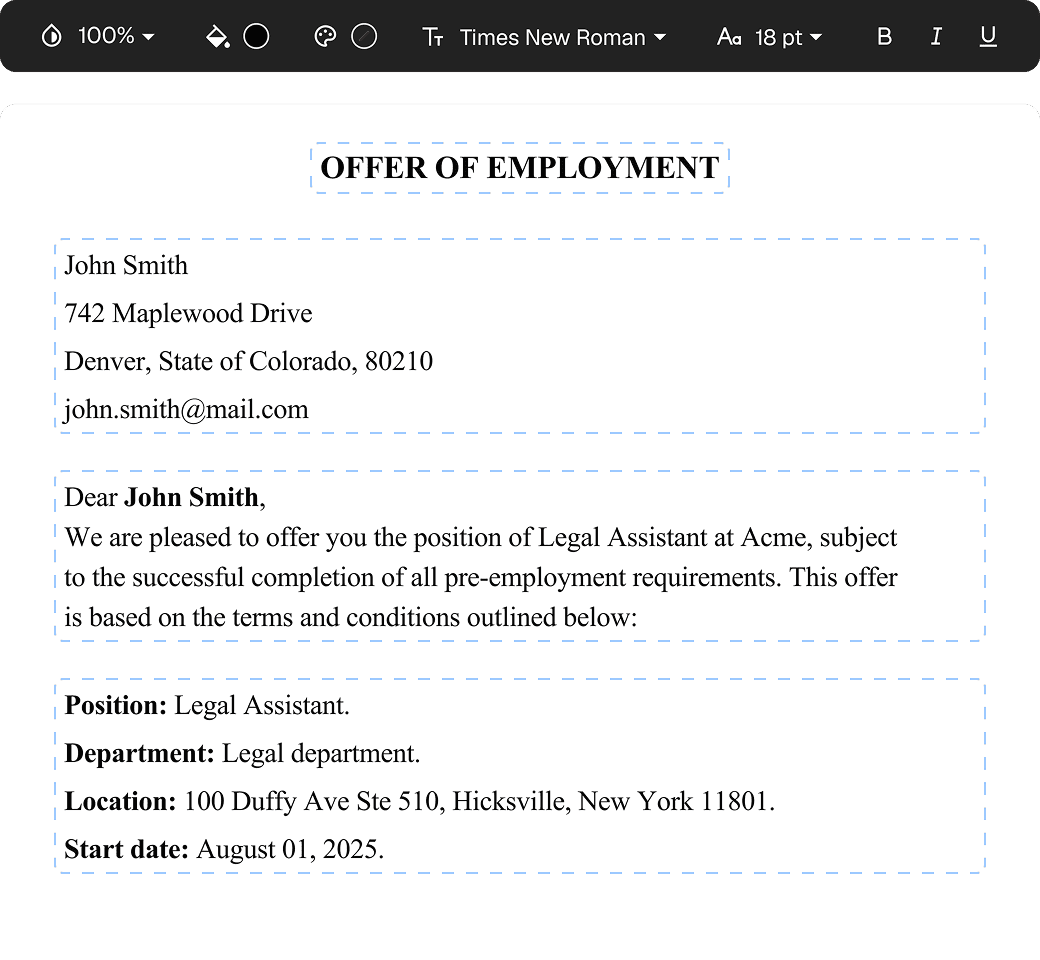
Edit PDFs seamlessly
Tweak agreements before signing or sending for signatures. Update details, add or remove clauses, adjust formatting, and redline changes instantly.
eSign legally and securely
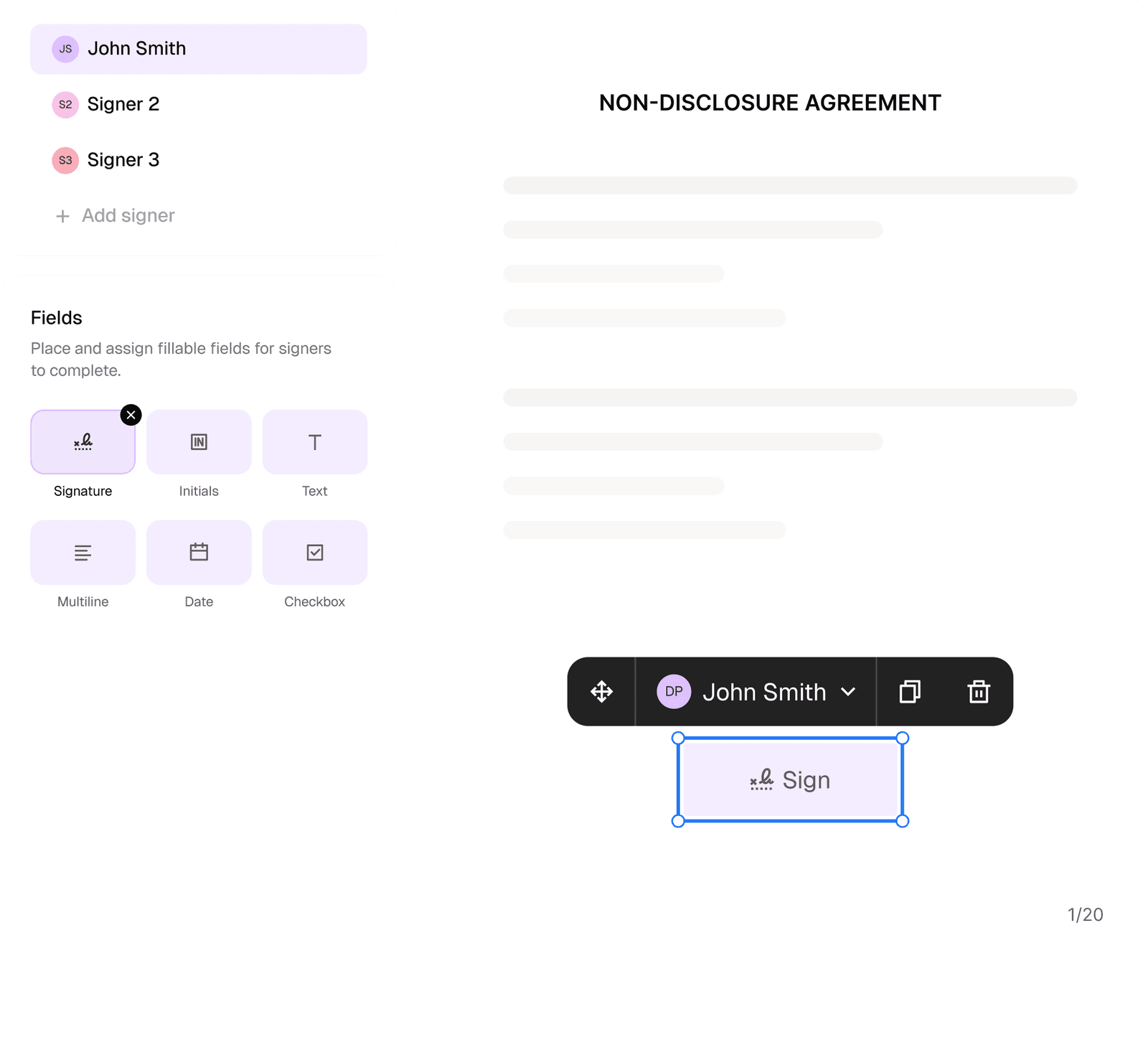
Sign documents and collect legally binding signatures. Invite up to ten people to sign in any order, track the progress, and send reminders.
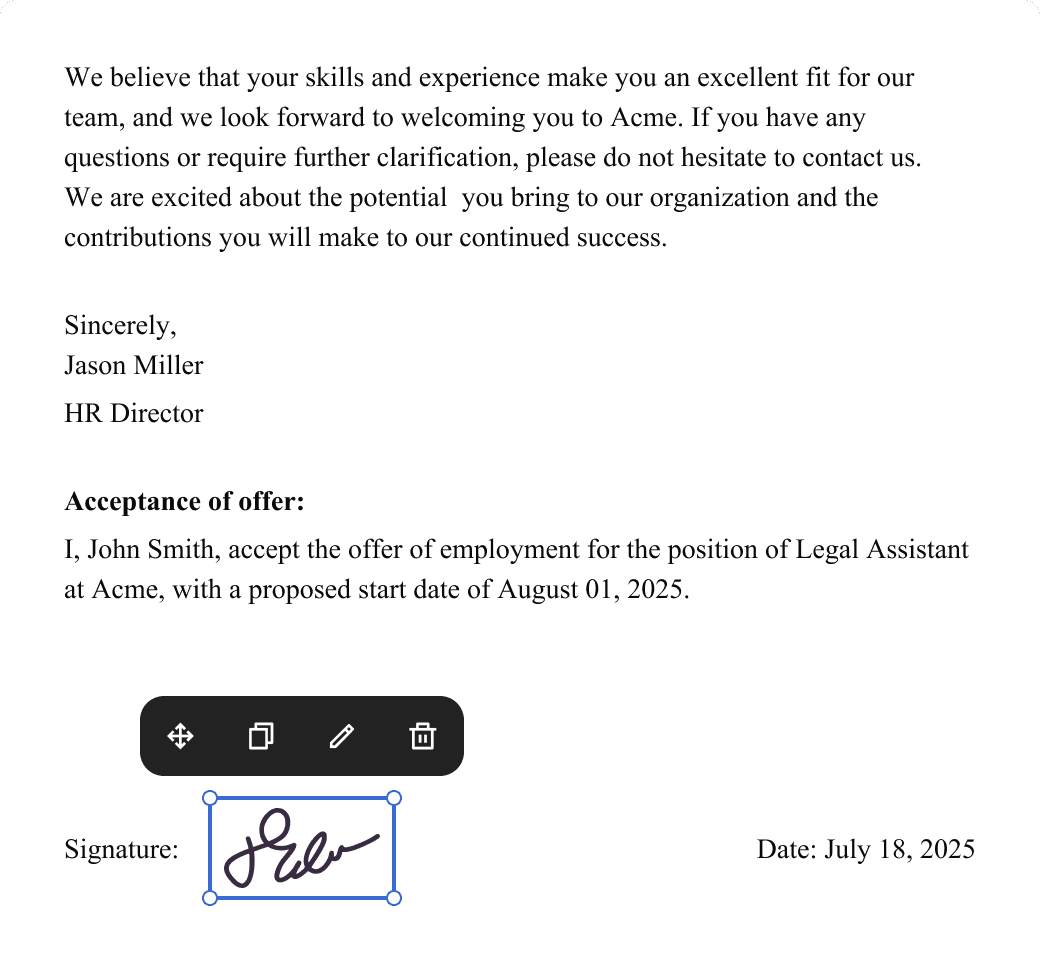
Request legally binding signatures
Invite up to ten people to sign your document in any order. Get a finalized, audit-ready copy without chasing signatures.
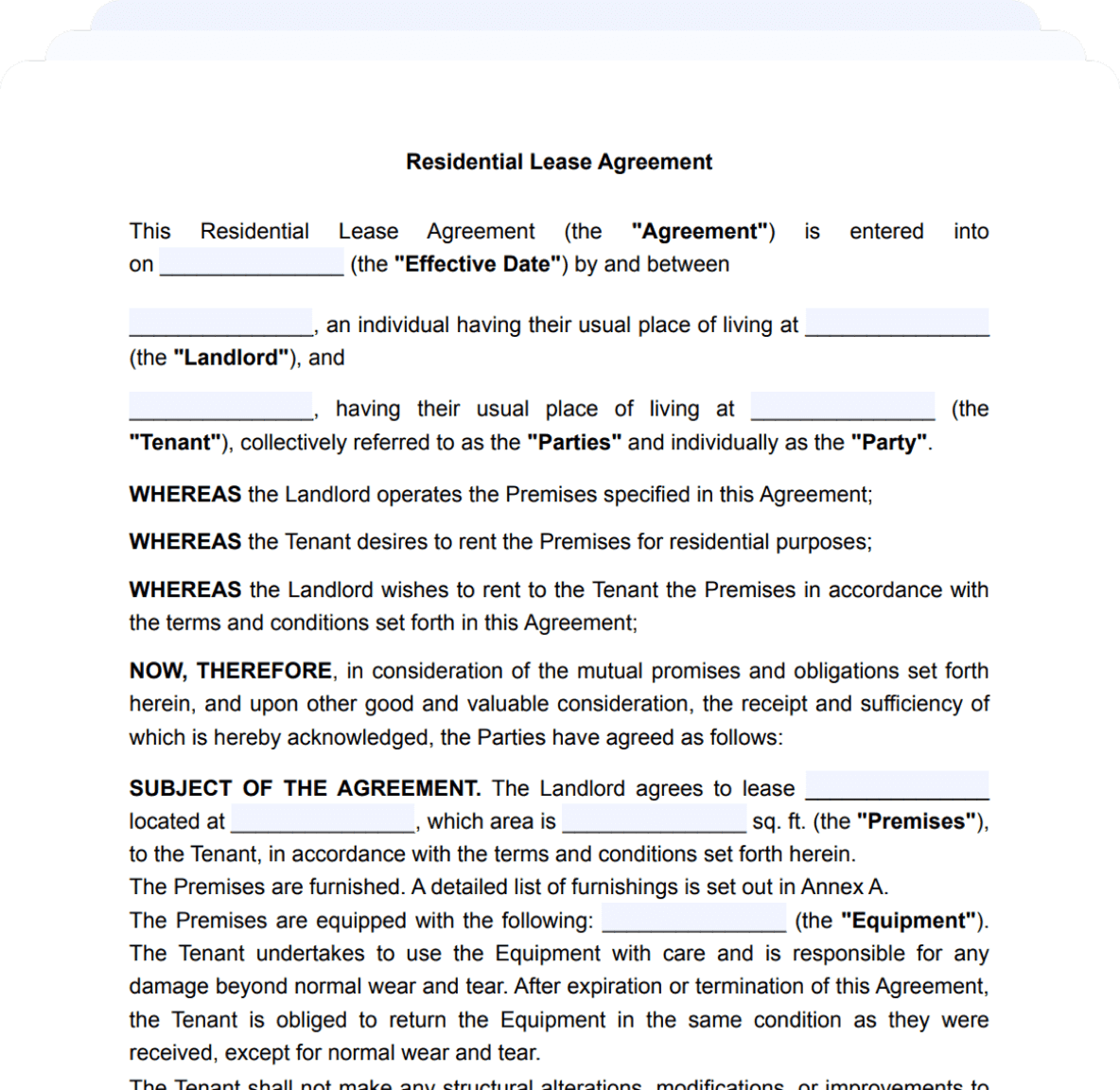
Skip the drafting.
Choose from 2,500+ templates
Browse templatesChoose a template
Fill in details
Sign and download