Updated August 20, 2026
13 min read
How To Ensure Contract Compliance
How To Ensure Contract Compliance
- Getting Started
- Develop a Process for Preparing New Contracts
- Have a Similar Process for Reviewing New Contracts
- Who Can Approve and Sign Contracts?
- Consider How Contracts Are Stored and Accessed
- Performance and Administration of the Contract
- Undertake a Contract Compliance Audit
- Communications and Training
- Conclusion
Content
Contracts, the binding agreements shaping business relationships, can bring immense value when managed properly. They're meticulously drafted, negotiated, and reviewed to ensure a beneficial mutual relationship. However, mishandling contracts can lead to risks, inefficiencies, and delays. Enforcing the contract compliance process is critical to leveraging the full potential of contracts.
Contract compliance refers to adhering to pre-determined standards and policies within contracts and contract procedures. These guidelines aim to avoid associated risks while maximizing the contract's value. This article will guide you through the lifecycle of a contract, highlighting the importance of embedding the сontracts compliance at each stage to add more value to your organization.
Getting Started
Some strategies that you can adopt will help encourage contract compliance before you even start to examine a specific contract. Once you have undertaken this exercise, it should be much easier to apply the most suitable compliance processes for each contract type.
Understand contract compliance ownership: Ascertain which business function should take responsibility for contractual compliance. This process includes identifying where and by whom contracting is currently performed, noting teams like procurement, sales, legal, and risk and compliance.
Take stock: Evaluate the types of contracts your organization regularly uses. Determine whether you utilize your own form of contract or that of the other party. Following this review process, you should be able to better implement suitable compliance processes for each type of contract.
Develop a Process for Preparing New Contracts
Compliance should start from the point at which a new contract is requested — the “contract initiation” stage.
The organization should have pre-defined compliant legal forms that are used repeatedly. Templates will generally reflect a balance between the risk profile the organization is willing to adopt and the position that others in the market are willing to agree to. Using a standardized service contract template is a great way to initiate consistent, legally sound agreements that follow preapproved terms and simplify compliance from the start.
When using templates, make sure you consider the following questions:
Who will use the template — will it be “self-serve,” or will the contract always be prepared by a particular department?
Are the template and process sufficiently clear and easy to use so that they can be completed without any scope for errors?
What is the process for varying the template terms? Which types of changes to the standard terms is the user permitted to make, and which need to be escalated for approval?
By having a template — and a robust process for how the template is to be used – your organization can dramatically reduce the variability between contracts. This will make it much easier to identify any non-compliant contracts.
Have a Similar Process for Reviewing New Contracts
A similar process should apply when you receive a contract from another organization you need to review. A useful tool here is a compliance review checklist. This sets out the company’s policy on:
There are specific minimum clauses or positions that the organization will always require to be included in its contracts. For example, a vendor might insist that it retains ownership of goods until they have been paid in full.
Clauses that the organization will never accept. For example, the company might refuse to agree to an uncapped indemnity clause.
Clauses that need to be escalated for approval. For example, a vendor’s payment clause might usually give its customers seven days to pay their invoice, but the vendor may agree to a more extended period if signed off by the chief financial officer.
You can then use this checklist to ensure that any potential new contract complies with your organization’s standard position and flags any unusual or onerous risks for further consideration.
Who Can Approve and Sign Contracts?
Many organizations have a contract approval policy in place. This usually gives authority to managers at different levels of the organization to sign off on different types or sizes of contracts and usually imposes a monetary limit (above which the contract needs to be escalated).
The approval process might follow a pre-defined workflow. By the time the final version of the contract is ready to sign, this process will clearly indicate that it has been given, for example, budget approval and a full review by the legal team.
The approval policy and workflow are intended to work with the organization’s policy on who is permitted to sign documents. This policy will be partly determined by any applicable legal requirements. There is also a trade-off to be made here. Limiting the number of people authorized to sign contracts makes it easier to control and supervise the process, helping ensure contract compliance. However, this may result in an increased workload for those individuals. Getting a balance is essential.
Consider How Contracts Are Stored and Accessed
Compliance becomes challenging to monitor when contracting occurs in different places and business units, maybe with each following its own process. To ensure contract compliance, you need visibility over what is happening across the organization.
A key goal for compliance is to have a system that centralizes the storage and administration of your contracts. At a minimum, you should try to have a contract register — a complete list of all the organizations entered into. Better still, you should have a centralized repository in which copies of all contracts are stored.
Your contract storage can take the form of a physical room or vault where hard copies are kept, but a digital contract compliance management system provides many more benefits, such as:
Allowing you to access contracts quickly and from any location, so you can see what was agreed with the other party.
Being able to control access to individual contracts so that system users are limited to being able to view only those contracts relevant to their role.
Using contract metadata to quickly prepare regular management reports or answer specific questions. For example, a question like “How many customer contracts over a particular value are due for renewal in the next month?” would be quick and easy to answer.
Performance and Administration of the Contract
It’s crucial to ensure contract compliance continues during the performance phase of a contract. Strategies to encourage compliance include:
Contract reviews. This may involve a scheduled review of the vendor’s performance (for example, checking that the vendor is complying with KPIs). If the review is conducted in collaboration with the vendor, it might be an opportunity to identify areas where both parties’ performance can be improved.
Using change control procedures. “Scope creep” can be a source of risk for the parties — where the scope of what the supplier is being asked to do changes during the term of the contract. To improve compliance, include a change control procedure in your contracts and make sure it is used so that any changes to the scope or pricing are adequately documented.
Managing key dates. Another primary source of risk is missing key dates — for example, not exercising an option on time or failing to renew the contract when it expires. Set up an alert system so that you are reminded of key contract dates at the right time.
Undertake a Contract Compliance Audit
Contract compliance auditing is a valuable tool to check how effectively contract compliance is implemented across the organization. Audits might be scheduled on a regular schedule (for example, annually) or as a one-off to target a specific problem. They may be carried out by an internal audit team in large organizations or sometimes by the engagement of an external auditor. In particular:
Audits can be used to check the level of compliance with contracting policies across the organization. This can help confirm that the system is working — or identify any problem areas that might need further improvement.
Contract compliance audits can also be carried out on individual contracts to check that the parties are complying with their respective obligations. Some contracts contain a specific audit clause that allows one party to inspect the records and files of the other party — for example, to verify that a vendor has accurately calculated the prices being charged.
Communications and Training
Many organizations invest significant time and effort in developing and implementing compliance processes, only to find later that their employees don’t know what to do or are bypassing the process to get their work done. Any contract compliance program must include an effective training strategy.
Training can focus on, for example:
Teach or remind staff about what policies and contract processes apply and why these are important.
Focus on where to find contract-related information, including details of contract approval and authorization limits.
And how to use the contract templates that are provided.
This training can be provided to new starters and as an annual refresher. Think about creative ways to make the training effective — so that employees don’t rush through to “get it done.” You might also want to consider implementing more in-depth training for targeted groups — maybe those that are in the field and using contracts on a more regular basis.
Similarly, an effective communications strategy is essential. For example, consider whether it might be worthwhile communicating with staff if a compliance investigation or audit has identified issues or if a failure in contract compliance has resulted in the loss of business or litigation.
Conclusion
Ensuring compliance contracts is vital to maximizing value and minimizing risk. Lawyers play a pivotal role in this process, providing essential legal expertise in drafting, reviewing, and ensuring contracts comply with relevant laws. By understanding these elements and the types of contracts usually used, organizations can implement suitable compliance processes for improved relationships and valuable contracts.
More guides
September 15
10 min read
Who Can Sign a Contract on Behalf of a Company?
September 15
What Is Contract Redlining?
September 1
7 min read
How to Provide Proof of Employment: Documents and Steps

October 15
How to Start a Staffing Agency: Licensing, Pricing, and Cash Flow
July 20
4 min read
Addendum vs. Amendment: Change Your Purchase Agreement Properly
July 20
What Is an Assignment of Contract? Rights, Duties, and Consent
One home for your
agreements
Edit PDFs seamlessly
Tweak agreements before signing or sending for signatures. Update details, add or remove clauses, adjust formatting, and redline changes instantly.
eSign legally and securely
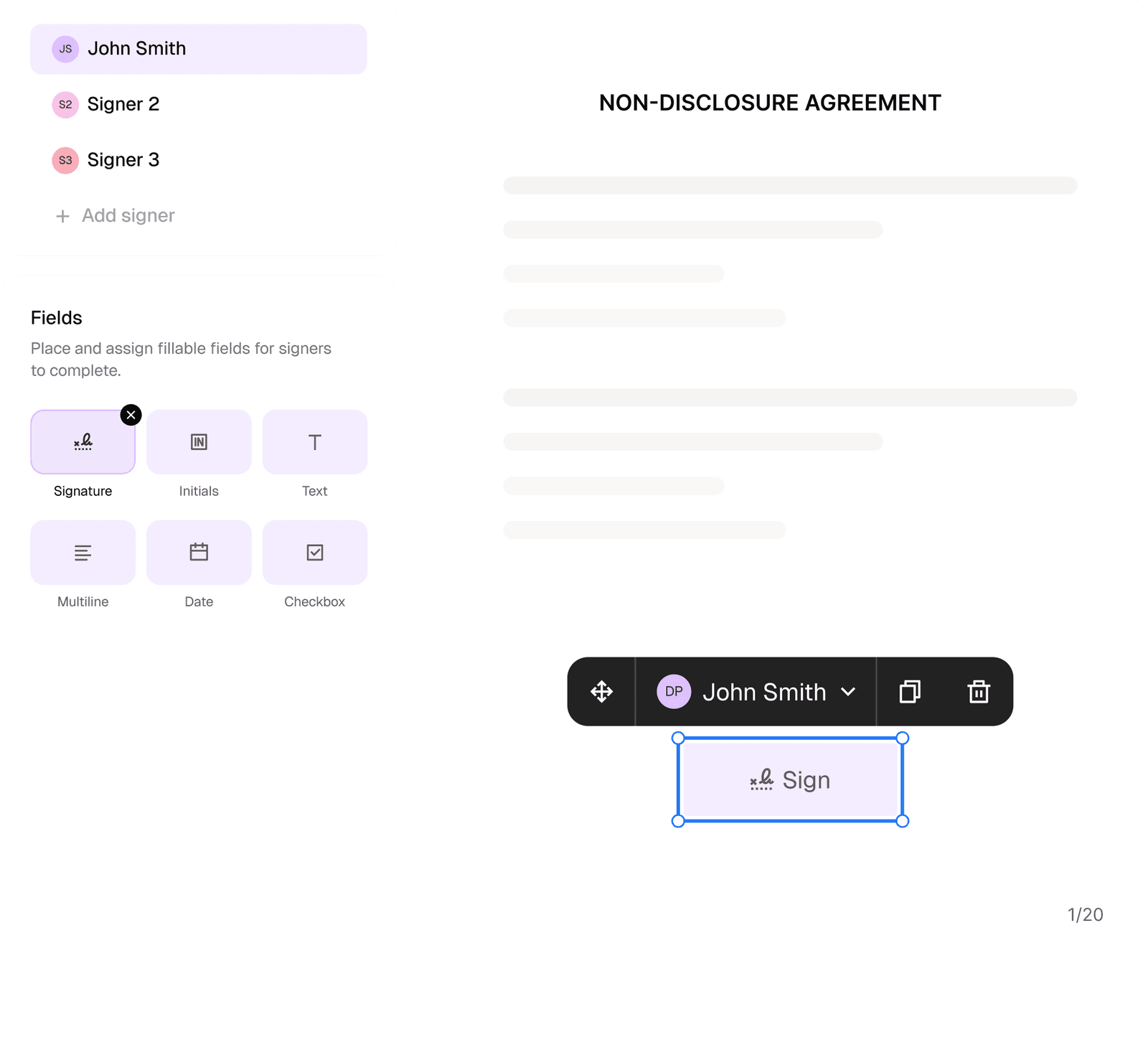
Sign documents and collect legally binding signatures. Invite up to ten people to sign in any order, track the progress, and send reminders.
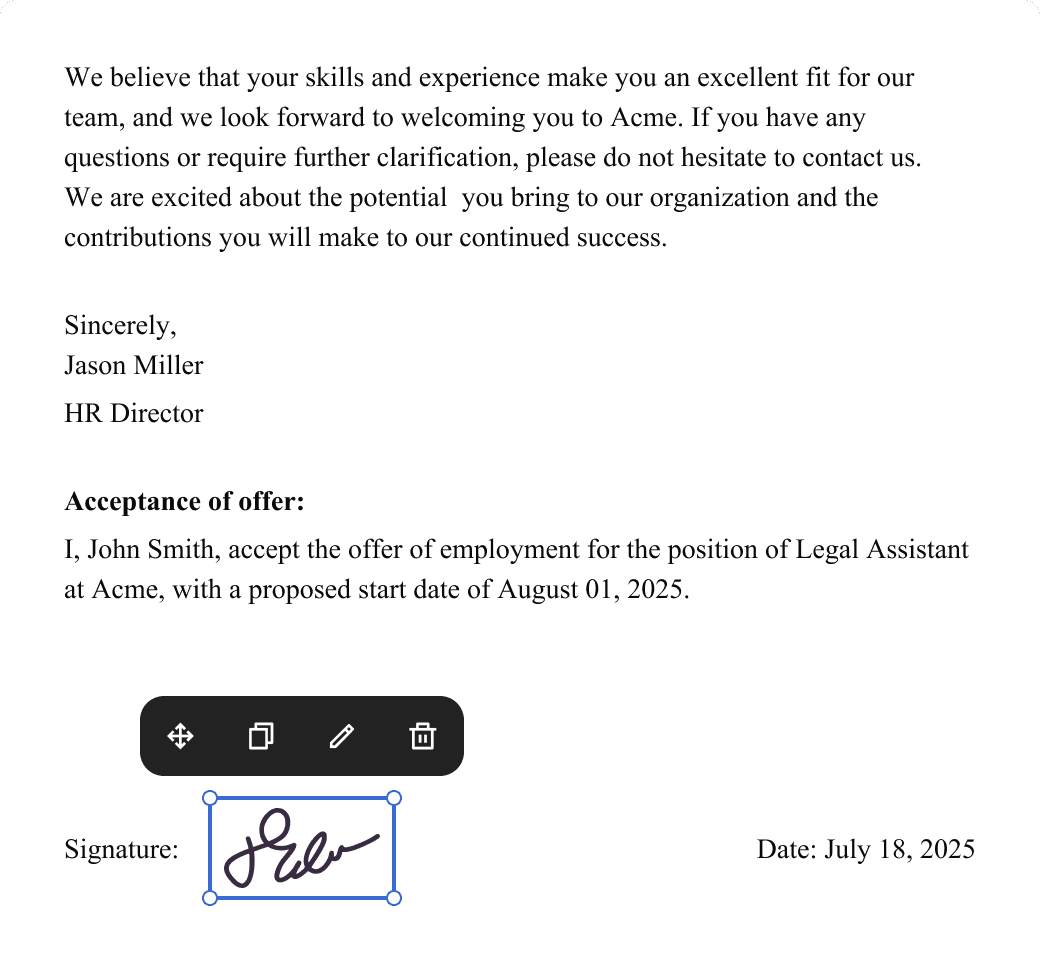
Request legally binding signatures
Invite up to ten people to sign your document in any order. Get a finalized, audit-ready copy without chasing signatures.
Skip the drafting.
Choose from 2,500+ templates
Browse templatesChoose a template
Fill in details
Sign and download