Updated July 24, 2026
9 min read
How To Deal With Rent Arrears: Legal Tips for Landlords
How To Deal With Rent Arrears: Legal Tips for Landlords
Content
One of the benefits of renting out real estate is that it can bring you a stable income, but only if the tenant pays on time. The reasons for late rent can be different — a tenant may lose their job, have unpredictable family problems, or just ignore their obligation, thinking that nothing will happen. Fortunately, there are practical tools that help landlords protect themselves and recover the money they're owed. This guide explains how to deal with rent arrears effectively and in accordance with the law.
Are Landlords Legally Protected From Rent Arrears?
With rent arrears, your landlord rights are violated and need protection. In the U.S., federal and state laws ensure that property owners receive timely payments, reclaim lost income if renters fail to pay on time, and, when no other arguments work, evict tenants.
Key laws that protect landlords include:
- State landlord-tenant laws: Each state has its own regulations governing rental agreements, notice periods, and eviction rights. For instance, the California Civil Code and Texas Property Code oblige landlords to give tenants at least 3 days' notice to cover all the missed payments before they start the eviction process.
- The Fair Housing Act: Although its primary purpose is to prevent housing discrimination, it also protects landlords by ensuring that eviction actions, as long as they are based on lawful reasons like non-payment, are supported by federal law. In such a way, the property owner can be sure that in a legal dispute, the law works in their favour.
- Local jurisdiction statutes: Big cities, like New York and Los Angeles, have clear instructions for the property owners on how they can recover unpaid rent through courts.
To protect your landlord rights in cases of non-payment, have the following documentation ready:
- A signed lease agreement that states rent terms, due dates, and consequences of non-payment.
- A record of all rent payments received.
- Written communication with the tenant regarding delays or agreements. Make copies of all your emails and messages in which you ask the tenant to pay for the rent. They will serve as evidence if the case goes to court.
According to the Consumer Financial Protection Bureau, in 2024, around 14% of U.S. renters were behind on rent payments, while in 2023, this figure was 23%. Though the tendency is positive, landlords still need to know how to act in case tenants delay the payment or refuse to pay.
How To Get Your Money Back: Tips for Landlords
If your renter delays payments, it does not mean you have lost your money forever. There are ways to get it back, but the most important thing is to do it within the state law. So, here are a few tips that can help with rent arrears:
Act quickly
The sooner you address missed rent, the better your chances of resolving the issue. If you keep silent for too long, the renter may perceive it as your unwillingness to enter a dispute and will keep ignoring payments. At the same time, it is important to learn the reasons for arrears.
Common causes may include:
- Job loss or reduction in income;
- Unexpected expenses (e.g., medical bills);
- Miscommunication or forgetfulness;
- Financial mismanagement.
Once a payment is missed, reach out to the tenant not paying rent within a few days. A polite but firm reminder via email or written notice works well. Always keep records in case the matter escalates.
Offer a payment plan
If the tenant is willing but unable to pay in full, a payment plan can be a good option. On the one hand, it guarantees you'll get the money, and on the other hand, it gives time to the renter to find it.
A good payment plan agreement should include:
- Total amount owed;
- Down payment (if possible);
- Weekly or monthly installments;
- Due dates;
- Consequences of breaking the plan.
For instance, "Tenant agrees to pay $1,200 in arrears via four monthly payments of $300, due on the 5th of each month, starting July 5, 2024."
The payment plan should be done in writing and signed by both the tenant and landlord.
Send an eviction notice
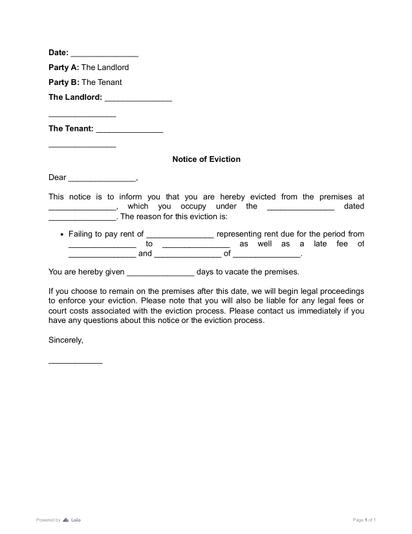
When a tenant continues to miss rent payments despite reminders and attempts to resolve the issue, it may be time to begin the official eviction process. First, you need to write and send an eviction notice that gives the tenant a specific number of days (usually 3 to 14) to either pay the overdue rent or vacate the property.
To be valid, the eviction notice form must clearly state:
- The tenant's name;
- Property address;
- The amount due;
- The deadline for compliance;
- Instructions on how to pay/ where to return keys if the tenant vacates.
Take legal action
If all your attempts to settle the issue fail, your next step is to initiate a court process.
- File an Unlawful Detainer Complaint: This can be done after the renter received an eviction notice and did not cover the missed payments within the given time. Based on this document, the court will allow you to evict the tenant.
- Attend the hearing: Bring lease agreements, payment records, and communication logs — everything that proves you tried to solve the problem, but the tenant did not respond.
- Get a judgment: If your evidence is persuasive, the court may award unpaid rent and grant eviction.
- Get the money: Use wage garnishment or a collection agency, depending on state enforcement laws.
Use Rent Guarantee Insurance
Rent Guarantee Insurance can protect you from rent arrears. It compensates landlords for the money when a tenant fails to pay rent, a fixed amount, for a set number of months.
Coverage terms vary, but most policies:
- Reimburse lost rent for 6 to 12 months;
- Include legal expense coverage;
- Require tenant screening before approval.
While it's not mandatory, this insurance is especially useful for landlords who rely on rental income to cover property expenses or mortgages.
How To Get Help With Rent Arrears
Dealing with non-payment can be stressful and legally complex, especially if you face this problem for the first time. However, landlords can seek professional help:
- Hire a real estate attorney: They can guide you through eviction laws and help draft legal notices.
- Use landlord associations: Groups like the National Apartment Association offer legal support.
- Contact local housing courts: They often have free mediation services to resolve disputes faster.
- Call police if necessary: In cases where tenants become aggressive or refuse to leave after eviction orders, the police will help enforce court decisions.
Final Thoughts
Rent arrears are an unfortunate part of property management, but they can be solved by means of the law. If you have all the lease documents, you can protect your income and your rights in court. Start the conversation with the tenant and offer solution options, but if they reject each of them, do not hesitate to demand their eviction. The main thing is to do it within the local law, following each step of the official procedure.
Article by Karyna Pukaniuk
Karyna Pukaniuk is an accomplished Tax and Corporate Lawyer with a strong legal background in international structuring, personal data protection, and intellectual property law. She has extensive experience in M&A transactions, corporate restructuring, and developing cross-border strategies across multiple jurisdictions. At Loio, Karina contributes to the creation and review of legal templates and guides, ensuring they are accurate and compliant with U.S. legal standards.
More guides
September 16
9 min read
Lease vs. Rent: What’s the Difference and What to Choose

September 11
10 min read
Rules for Renting a Room in Your House: How to Become a Landlord

September 4
How To Break a Lease in Florida Without Penalties
September 3
12 min read
The Biggest Red Flags on a Rental Application Explained

September 1
7 min read
How to Provide Proof of Employment: Documents and Steps

September 8
10 min read
What Is the Difference Between Joint Tenancy and Tenancy in Common?

One home for your
agreements
Edit PDFs seamlessly
Tweak agreements before signing or sending for signatures. Update details, add or remove clauses, adjust formatting, and redline changes instantly.
eSign legally and securely
Sign documents and collect legally binding signatures. Invite up to ten people to sign in any order, track the progress, and send reminders.
Request legally binding signatures
Invite up to ten people to sign your document in any order. Get a finalized, audit-ready copy without chasing signatures.
Skip the drafting.
Choose from 2,500+ templates
Browse templatesChoose a template
Fill in details
Sign and download