Updated July 22, 2026
5 min read
Articles of Incorporation vs. Articles of Organization: What's the Difference?

Articles of Incorporation vs. Articles of Organization: What's the Difference?
Content
Articles of incorporation and articles of organization are two types of documents that are commonly filed to start a legal business entity. This allows the company to own property and sign contracts, and it limits the owner’s personal liability.
The key difference between these articles is the type of business they create. Articles of incorporation are used to form a corporation, while articles of organization are used to form a limited liability company (LLC).
It can be easy to confuse these documents because they have similar names and are both used to register a new business with the state. In this guide, we will explain their contents and purposes in more detail so you can confidently file the correct articles for your business.
What Are Articles of Incorporation?
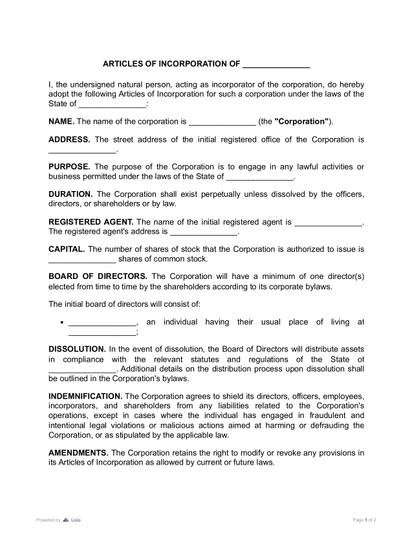
Articles of incorporation are legal documents used to create a corporation. Once articles have been filed with the state and approved, the business is registered as a separate corporate entity. This entity can enter contracts, own assets, and operate independently from its owners.
The articles of incorporation also provide basic information about the corporation to the state and the public. While requirements vary by state, this document usually includes details such as:
The corporation’s legal name
The business address
The registered agent’s name and address
The corporation’s purpose or business activity
The number of authorized and issuable shares
The names of the initial directors or incorporators
Additional documents, such as corporate bylaws, are typically created after formation to define how the corporation will be managed.
What Are Articles of Organization?
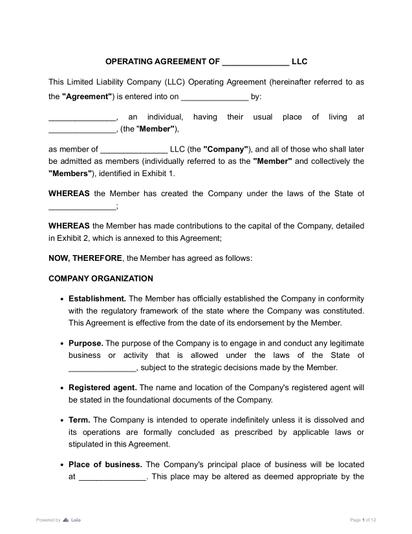
Articles of organization are the legal documents used to create a limited liability company (LLC). When you file this document and the state approves it, the business becomes a registered LLC. Like a corporation, an LLC can operate independently from its owners.
Articles of organization provide certain basic information about the LLC, which is publicly visible. The exact requirements vary depending on the state, but the document will include details such as:
The LLC’s legal name
The business address
The registered agent’s name and address
The LLC’s business purpose or activity
Whether the LLC is member-managed or manager-managed
The names of the members or managers, depending on state requirements
Many LLCs also create an operating agreement after formation to define ownership and business operations. This is an optional step but can be a good idea for future planning.
Comparing Articles of Organization & Incorporation
Articles of organization and articles of incorporation apply to different business structures, but they serve a very similar purpose. Both are formation documents filed with the state to legally create a business entity. Other similarities include:
Legal requirement: Each document is required to legally operate a corporation or LLC.
State filing: Each must be filed with the appropriate state agency, usually the Secretary of State.
Legal entity creation: Filing approval registers the business as a separate legal entity.
Limited liability protection: Each separates owners’ assets from business liabilities.
Public record: Most of the filing information becomes part of the public record.
Information: Each includes the business name, registered agent, and address.
Fees: Filing either document requires paying a state filing fee, and the amount varies by state and entity type. For example, base formation fees in these states range from $35 in Montana for either a domestic for-profit corporation or an LLC to $500 in Massachusetts for an LLC. Texas charges $300 to form either a for-profit corporation or an LLC. Some filings may cost more depending on the entity type or other filing details.
Despite these similarities, there are also key differences between the two types of articles:
- Entity Type: Corporation
- Ownership: Shareholders
- Management: Board of directors, corporate officers
- Ownership Units: Stock shares
- Entity Type: Limited liability company (LLC)
- Ownership: Members
- Management: Members or managers
- Ownership Units: Membership interests
How to Choose the Right Filing For Your Business
Choosing the right formation document depends on the type of business entity you want to create. Articles of incorporation are used to form a corporation, while articles of organization are used for an LLC.
Choosing the right formation document depends on the type of business entity you want to create. Articles of incorporation are used to form a corporation, while articles of organization are used for an LLC.
Your choice usually depends on how you want the business to be owned, managed, and taxed.
- The ability to issue shares of stock
- A structure designed for outside investors
- A formal management structure with directors and officers
- The option to operate as a C corporation or elect S corporation tax status
- A simple business structure
- Flexible management options
- Pass-through taxation by default
- Fewer ongoing corporate formalities
How to File Articles of Incorporation or Organization
The process for filing articles of incorporation or articles of organization is similar in most states. While the exact requirements vary, the following steps provide a general overview of how to complete the filing process.
- 1
Choose a business name. The name must align with your state’s naming rules and be distinguishable from names already protected in the state’s business registry, not just from businesses in the same industry. Many states also require identifiers such as “LLC” or “Inc.”
- 2
Appoint a registered agent. Depending on state law, the registered agent may be an individual or an eligible business entity that receives legal and government documents on behalf of the business. The registered office must meet the state’s address requirements. Rules on whether a business may serve as its own registered agent also vary by state, so check the requirements where the entity is formed. For example, Texas does not allow a filing entity to serve as its own registered agent.
- 3
Prepare the formation document. Complete the required formation form provided by your state. This will be either articles of organization (for an LLC) or articles of incorporation (for a corporation). You will need to provide information such as the business name, registered agent, business address, and management structure.
- 4
File the document. Send the completed form to the Secretary of State or other appropriate state agency. Most states allow businesses to file online, by mail, or in person. States also charge a filing fee to process formation documents. The amount varies and is typically paid at the time of filing.
- 5
Receive confirmation from the state. After the state reviews and approves the filing, you will receive confirmation that your business has been officially formed. However, state approval may not complete every state-specific formation requirement. Some states impose additional publication requirements after formation.
For example, most New York LLCs must publish a notice of formation in two newspapers designated by the county clerk for six consecutive weeks and file a Certificate of Publication with the Department of State. Failure to complete the publication requirement within 120 days after formation may result in suspension of the LLC’s authority to carry on, conduct, or transact business.
Arizona also imposes a post-filing notice requirement. Within 60 days after the articles of organization are filed, the required information must either be published in a newspaper for three consecutive publications or, if the statutory agent’s address is in a county with more than 800,000 residents, entered into the Arizona Corporation Commission’s database.
Nebraska requires an LLC to publish a notice of organization for three successive weeks in a qualifying legal newspaper and file proof of publication with the Secretary of State.
Check the requirements of the state where the business is formed to determine whether any additional steps are required after the formation document is approved.
- 6
Complete any additional setup requirements. After formation, businesses often take additional steps such as creating corporate bylaws or an LLC operating agreement, applying for an employer identification number (EIN), and registering for any required state or local licenses.
Filing requirements vary depending on the state. Reviewing your state’s requirements before filing can help prevent delays or rejected applications.
Conclusion
The main difference between articles of organization vs articles of incorporation is their purpose. Although both documents are used to create a legal business entity, articles of organization are for an LLC, while articles of incorporation are for a corporation.
Choosing the right structure depends on your plans for the business, including ownership and investment. With the correct structure in place, your company will be legally compliant and ready for growth.
FAQ
More guides
September 1
7 min read
How to Provide Proof of Employment: Documents and Steps

October 7
How to Start a Staffing Agency: Licensing, Pricing, and Cash Flow

July 20
4 min read
Addendum vs. Amendment: Change Your Purchase Agreement Properly

July 22
4 min read
Income Statement vs Profit and Loss Statement: Is There a Difference?

July 25
7 min read
How to Sell a Business in the United States

July 21
5 min read
Memorandum of Understanding vs Contract: Legal Effect and When to Use Each

One home for your
agreements
Edit PDFs seamlessly
Tweak agreements before signing or sending for signatures. Update details, add or remove clauses, adjust formatting, and redline changes instantly.
eSign legally and securely
Sign documents and collect legally binding signatures. Invite up to ten people to sign in any order, track the progress, and send reminders.
Request legally binding signatures
Invite up to ten people to sign your document in any order. Get a finalized, audit-ready copy without chasing signatures.
Skip the drafting.
Choose from 2,500+ templates
Browse templatesChoose a template
Fill in details

Sign and download