Updated July 21, 2026
5 min read
Memorandum of Understanding vs Contract: Legal Effect and When to Use Each
Memorandum of Understanding vs Contract: Legal Effect and When to Use Each
Content
Business relationships are built on shared vision. It can be a painstaking negotiation, where both sides agree and promise to fulfill their responsibilities — this, eventually, needs to be put in writing. And yet, the line between “We’re on the same page” and “We must do that legally” isn’t always clear for business owners. Contract management statistics show that almost ⅔ of all U.S. civil lawsuits involve contract disputes. When choosing the right paperwork, you might often look at a Memorandum of Understanding and a contract. We’ll explore the nuances between the two and clarify when each can help your company.
A Memorandum of Understanding vs. a Contract
Knowing what each of these documents means is the first step toward feeling more aware of where you need to start.
What is an MOU?
A Memorandum of Understanding (MOU) is a formal document that outlines the shared intent between parties and how they will act to achieve their goal. It’s usually used during the preliminary stages of discussion, when you want to make sure that you’re on the same page, not just on words. It’s a way to say, “We agree on that one, let’s proceed.” However, even an MOU needs to be signed (or eSigned), even if it’s not the same thing as a contract.
An MOU contract:
Gives you more certainty
Helps avoid potential future conflicts
Pinpoints an understanding of your expectations.
In general, because an MOU doesn’t require any particular obligations, it’s great to explore potential agreements (e.g., mergers or joint projects), consider mutual objectives with a non-profit organization or even between governments and governmental departments, or to have a framework ready if you want to move forward in the future.
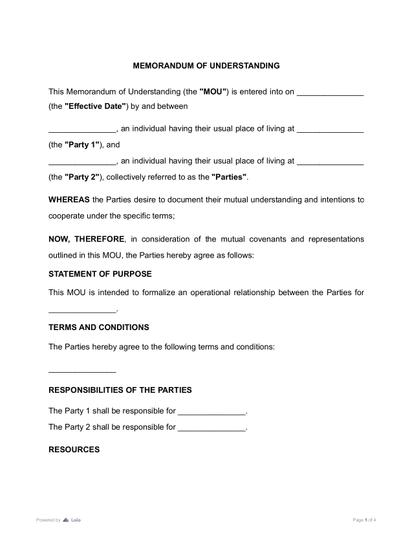
Typically, an MOU consists of:
A statement of purpose
Terms and conditions
Mutual responsibilities
Resources
Confidentiality clause
Notice agreement
Term and termination
Documents governing the document
Absence of liability and binding effect.
What is a contract?
Unlike an MOU, a contract sets out mutual expectations that are actually enforceable. It’s a formal agreement between the two parties that is legally binding — or, for a clearer framing, “legally enforceable promises.” A contract is best when parties need legally binding obligations, payment terms, remedies, and enforceable responsibilities.
A contract:
Provides you with legal protection
Shows mutual value
Reduces risks for you.
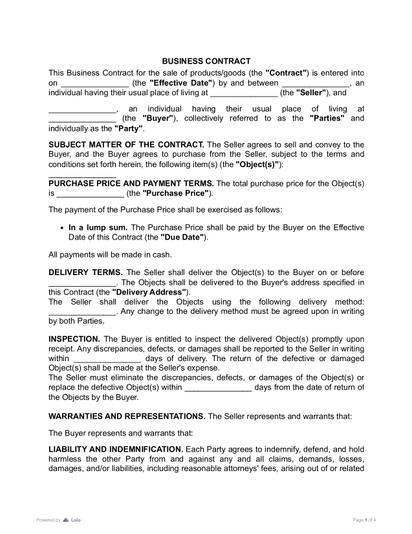
While each contract has its own structure, create a smart contract that has:
Payment terms and purchase price
Delivery conditions
Inspection terms
Warranties
Liability
Termination conditions
Confidentiality clause
Notice
Force majeure etc.
Force majeure is usually added to a contract. It frees both parties from liability or obligations if an unforeseeable event beyond their control happens. This can be a war, a disaster, a strike, a riot, etc. This is a common clause that allows businesses to pause or terminate their agreements if something beyond their control occurs.
A memorandum of agreement vs. a contract
You may also encounter the term “Memorandum of Agreement” (MOA). It’s easy to confuse an MOA with a contract, but they aren’t the same. The fundamental difference between a contract and an MOA lies in the parties’ intent and the documents’ legal weight.
The greatest difference is that a contract is a legally enforceable document, whereas an MOA is typically used when signers do not intend to enforce its terms through legal action. In community and business work, an MOA is often used to specify the terms of a cooperative or collaborative arrangement.
The Difference Between an MOU and a Contract
The key differences between an MOU and a contract lie in their legal specifications.
The hierarchy of enforceability
The difference between an MOU and an agreement depends on whether the parties intend to create enforceable legal obligations. Economies where courts can enforce contracts usually have better credit markets and are more secure.
An MOU operates primarily on goodwill. Because party intent determines whether an MOU functions like a contract, it is quite flexible. Usually, however, if one party decides to walk away or fails to meet an expectation outlined in an MOU, the other party can’t take them to court to enforce compliance or collect damages.
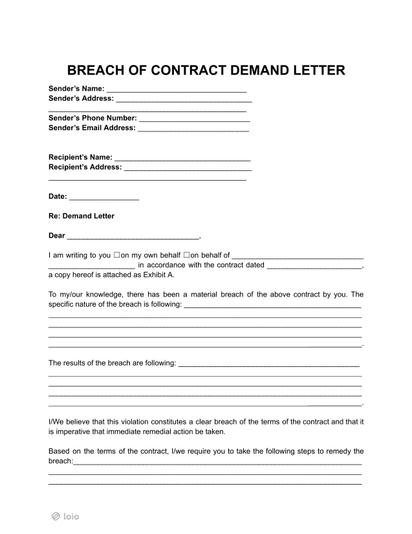
A contract creates legally enforceable obligations. If one party fails to meet contract terms, the document triggers automatic legal rights, meaning the injured party may have legal remedies for breach of contract. For instance, if one party doesn’t meet its obligations, the other party may send a breach-of-contract demand letter.
The role of consideration
A valid contract usually requires consideration, meaning each party exchanges something of value.
An MOU usually does not involve consideration. Because no one is explicitly buying anything from the other party, the law treats this as a voluntary relationship rather than a binding transaction.
A valid contract strictly requires consideration, so that each party exchanges something of value. In this case, the U.S. law will protect the wronged party. However, many courts often do not want to assess the consideration of the contract; they expect that both parties have evaluated the document before signing. This, however, still means that gross inadequacy (where the unfairness is blatant) can be considered as fraud.

Memorandum of Agreement vs. a Contract: Practical Considerations
Both an MOU and a contract can be used effectively in business relationships.
MOU vs contract: When to use which
Whether you’re using an MOU or a contract, it comes to potential risk and your readiness.
Use it when you start the relationship or when you plan for cooperation rather than a commercial transaction.
Transition to a contract the moment the relationship involves an exchange of money, concrete deliverables, or strict liabilities.
Marcus has a logistics company; Sarah owns a tech startup. Both sides want to see whether Sarah’s software can integrate with Marcus’s delivery-tracking system. This will help them determine whether a future partnership makes sense. No money is involved yet.
Marcus doesn’t want a rigid contract that forces him to buy the software. At the same time, Sarah wants to ensure that Marcus takes the trial seriously and protects her software’s data.
After editing their PDF draft, they finalize it as an MOU. It describes their goals: to test the software for 90 days and to protect data confidentiality. It also allows either party to walk away freely if the tech integration fails.

Which is better, a signed agreement or a signed MOU?
Neither document is inherently better than the other; they serve different goals and can be used at different stages or for different purposes.
From the standpoint of a signed MOU, the meaning of the agreement lies in flexibility. Forcing a rigid contract too early can smother a potential partnership before it even starts, when you’re still in the discussion phase or have just expressed interest in your collaboration.
The moment you want to protect your company and need certainty, turn to a contract. An MOU can’t help you enforce compliance. Before signing a final contract, use AI contract review to check for potential gaps.
Helen, a retail e-commerce brand founder, wants to hire David, a digital marketer, to run her Black Friday ad campaigns. Helen is investing $10,000 in ad spend. David wants an MOU so he isn’t legally penalized if the ads don’t convert as Helen wants them to. Helen wants absolute certainty that David will do what he’s offering to do, so she insists on a contract. Because thousands of dollars are at stake and David must adhere to a deadline, an MOU is too risky.
Do you need an MOU if you have a contract?
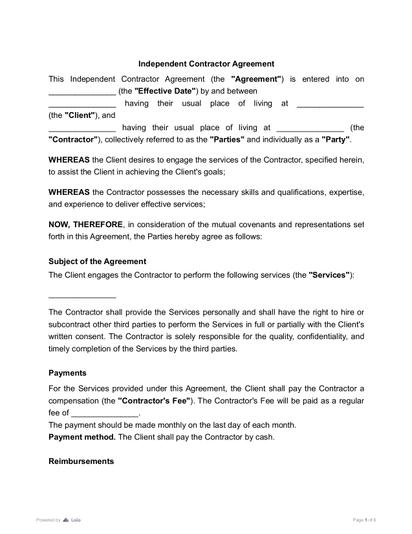
You already know the difference between mou and agreement, but do you necessarily need both? If you build your relationship steadily and aren’t in a hurry to secure a contract, it’s totally okay to go with an MOU first. But once a formal contract is drafted, reviewed, and signed, it supersedes any prior MOU. For instance, if you have signed an independent contractor agreement with a worker, you don’t need a separate MOU to discuss your potential collaboration — you already have a document that secures that.
Red Flags in Signing a Contract
Recent data shows that businesses lose around 9% of their value due to poor contract management. Even a contract can fail if you don’t look out for red flags, and they might be a bit complicated to pinpoint. Use this checklist to make sure you keep your business tight and actual.
The red flags checklist
Vague language. If the document is titled a “Contract” but uses flexible language such as “will try to” or “will attempt to,” it may be difficult to legally enforce.
Consideration gap. If the contract asks you to perform work but doesn’t clearly define the purchase price or payment schedule, it may be found void for lack of consideration.
Missing breach protocols. If there are no clauses for termination, late fees, or dispute resolution, the other party may not be prepared to take their obligations seriously.
Pressure involved. If the other party seems to build emotional or financial pressure, they try to force you to sign a contract under duress.
Refusal of a formal template. If a party insists on keeping the agreement informal or only in an email thread despite significant money being involved, they may be trying to avoid the enforceable obligations that come with a formal contract. This can be a sign of fraud based on the statute of frauds.
Protect Your Business Interests
In the end, it’s not even the “what” but “when.” Both an MOU and a contract can help you build trustworthy business relationships and protect your company. Think of them as instruments, each of which is useful at a specific stage. Keep your paperwork organized and focus on your business interests, and you’ll remember where the end goal lies.
More guides
September 1
7 min read
How to Provide Proof of Employment: Documents and Steps

July 20
4 min read
Addendum vs. Amendment: Change Your Purchase Agreement Properly
July 22
4 min read
Income Statement vs Profit and Loss Statement: Is There a Difference?

July 25
7 min read
How to Sell a Business in the United States
September 12
13 min read
Construction Change Order Process: How to Avoid Scope Creep

July 21
8 min read
Statement of Work vs Scope of Work: Differences and How They Work Together
One home for your
agreements
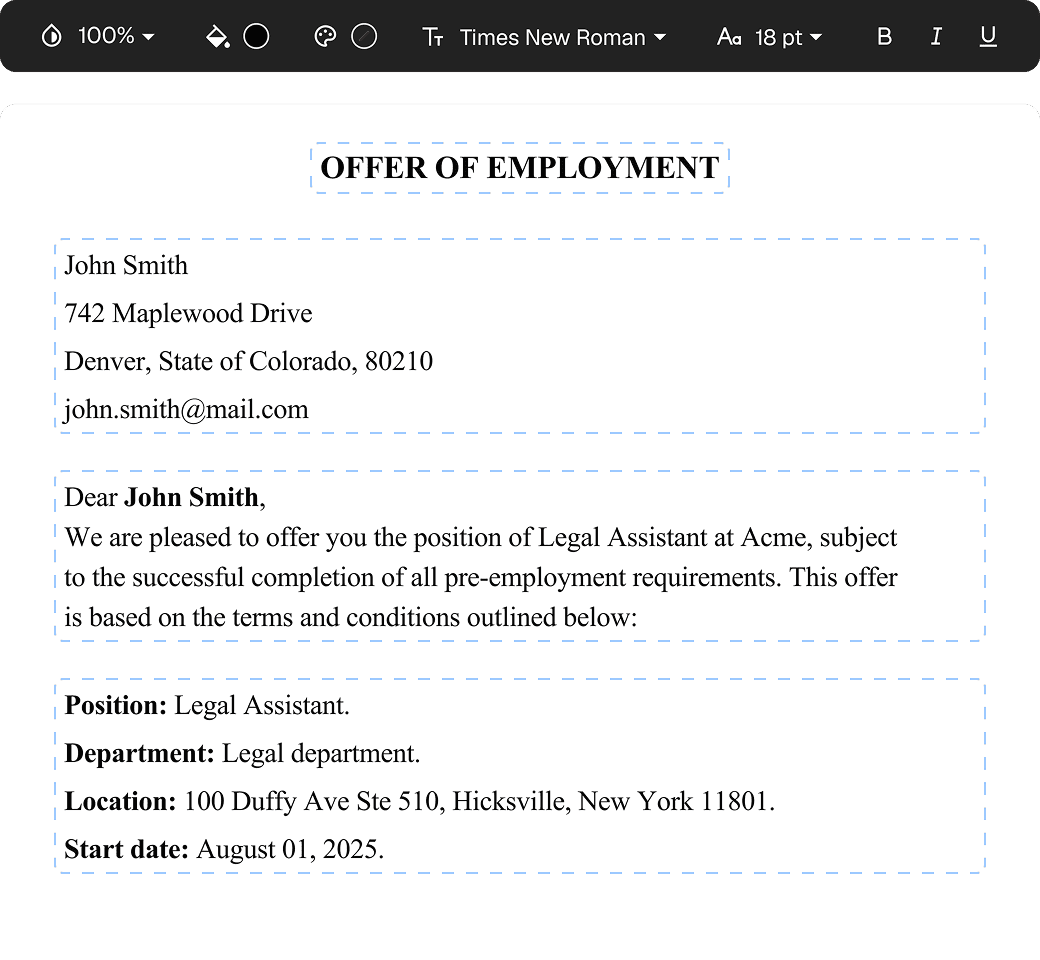
Edit PDFs seamlessly
Tweak agreements before signing or sending for signatures. Update details, add or remove clauses, adjust formatting, and redline changes instantly.
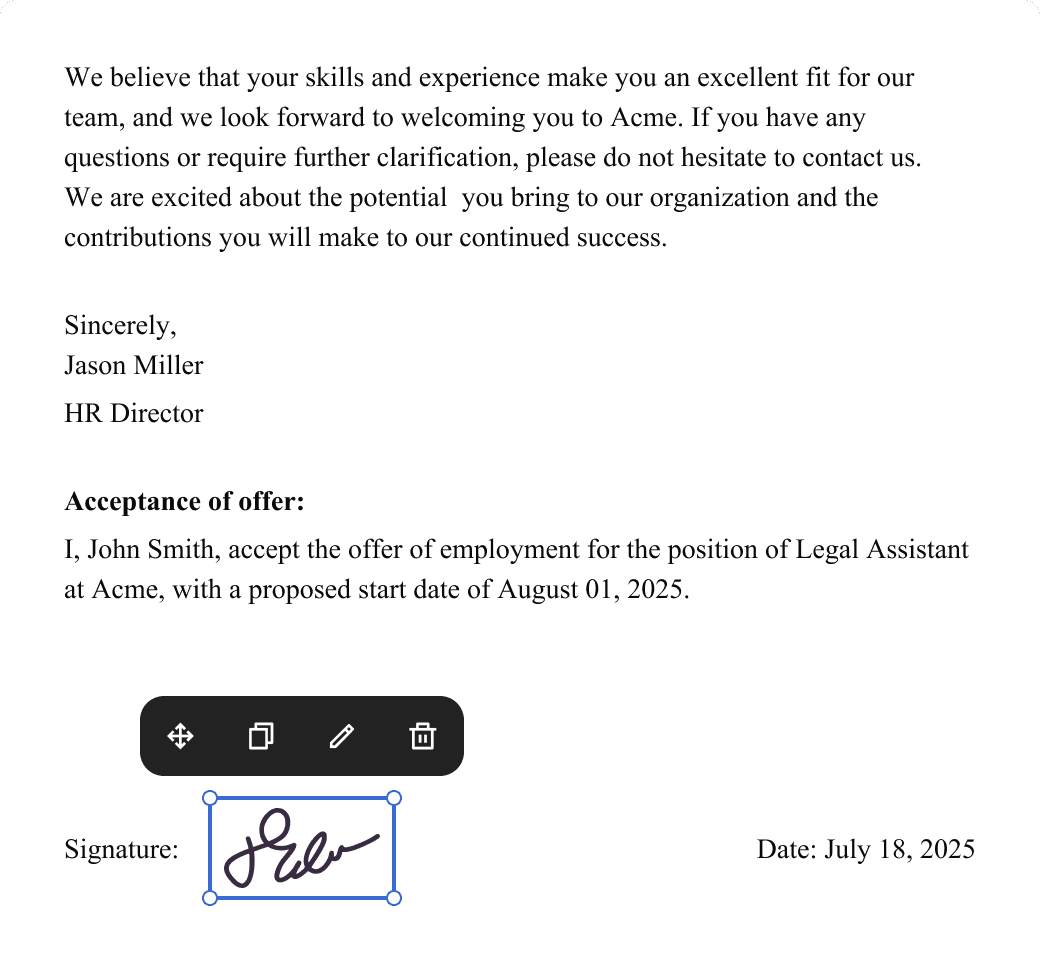
eSign legally and securely
Sign documents and collect legally binding signatures. Invite up to ten people to sign in any order, track the progress, and send reminders.
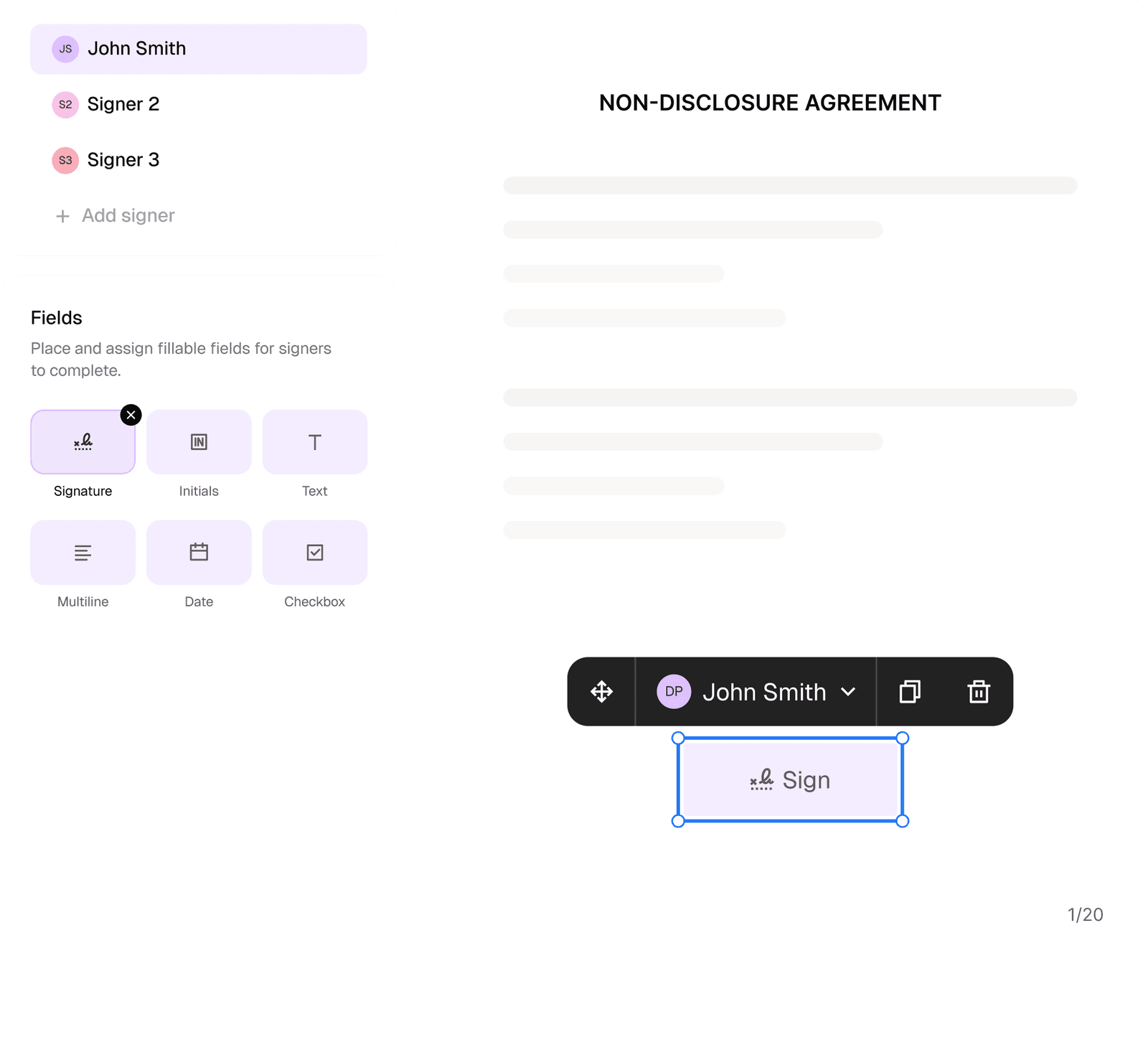
Request legally binding signatures
Invite up to ten people to sign your document in any order. Get a finalized, audit-ready copy without chasing signatures.
Skip the drafting.
Choose from 2,500+ templates
Browse templatesChoose a template
Fill in details
Sign and download