Updated July 25, 2026
12 min read
How to Register a Company in the US: What No One Tells You in 2026

How to Register a Company in the US: What No One Tells You in 2026
- Registering a Company in the USA for Residents and Non-Residents
- How to Choose the Right Business Structure
- Matching: Business Type → Right Structure
- Create the Name for Your Business
- Register a Company With the State
- IRS Business Registration: Get an Employer Identification Number (EIN)
- Register for State & Local Taxes
- Obtain Required Licenses and Permits
- How to Open a Business Bank Account
- Business Insurance in the Company Registration Process
Content
Starting a business in the United States is often described as “simple”: pick a name, file a form, pay a fee — done, right? Not exactly. While online tools make registration look quick and easy, the way you structure and register your business affects your taxes, personal liability, and how hard it will be to fix mistakes later — long after the paperwork feels “finished.” Let’s walk through the company registration process step by step without pretending that one-size-fits-all solutions actually exist.
Registering a Company in the USA for Residents and Non-Residents
When registering a business in the U.S. for the first time, where you live matters — especially for state registration and taxes. In the United States, company registration is handled at the U.S. state level, which means each state sets its own rules, fees, and filing requirements.
If you are a U.S. resident, you usually register a company in the state where you live and operate. This keeps things simple: one state to deal with, one set of rules, and fewer extra fees.
If you are a non-resident, you can register a business in the USA in any state, even if you don’t live there. That’s why many founders choose states like Delaware or Wyoming. Keep in mind that taxes are determined by where your business has sufficient activity, not just where it is registered. If your business activity is in another state, you may still owe taxes there.
For non-U.S. residents looking to register a company in the USA, we’ve put together a detailed step-by-step guide that walks through everything you need to know from start to finish.
How to Choose the Right Business Structure
Business structures in the U.S. vary widely, and founders choose them based on simplicity, risk, and growth plans.
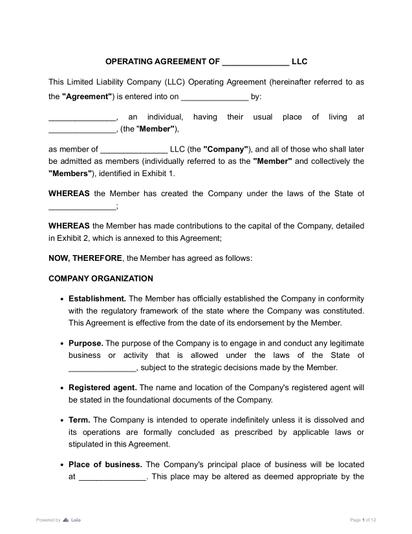
A Limited Liability Company (LLC) is a business type that keeps your personal finances separate from your business, helping protect your assets if the business has debts. It combines features of corporations and sole proprietorships or partnerships, giving you flexibility in how you manage the business and pay taxes. Most LLCs are guided by an operating agreement, which outlines ownership, management, and how profits and decisions are handled.
A sole proprietorship is a business owned and controlled by one person. It’s easy to start and requires minimal paperwork, making it a common choice for freelancers and independent workers.
Another common business structure is a corporation, which is legally separate from its owners. This setup can make it easier to bring in investors, issue shares, and support long-term growth, but it usually involves more rules, paperwork, and formal management requirements.
And the last structure in our list is a partnership, which is designed for two or more people who want to run a business together. In this setup, partners usually share profits, responsibilities, and decision-making, making it a practical choice for businesses with multiple owners.
These business structures reflect broader types of business statistics across the U.S., where founders make choices based on flexibility, protection, and growth potential. Below, you’ll find a closer look at how each option works.

Limited liability company (LLC)
A Limited Liability Company (LLC) is one of the most popular business structures in the U.S., especially among small businesses, which account for 99% of all U.S. businesses. It’s often seen as the “best of both worlds,” combining the liability protection of a corporation with the flexibility of a partnership. An LLC can have one owner or multiple members, and it offers limited liability, meaning owners are generally not personally responsible for business debts or lawsuits. If the company runs into financial trouble or faces legal claims, creditors usually can only pursue business assets, not your personal property.
LLCs are also flexible when it comes to taxes. Usually, the business income is reported through the owners’ personal tax returns rather than being taxed separately as a business. But in some situations, an LLC may choose a different tax setup, such as when the owners want potential tax savings or plan to keep profits in the business. Learning how to register for an LLC early on helps you take advantage of these options from the start.
Compared with corporations, LLCs are usually easier to manage from a formal legal standpoint. They generally do not require a board of directors or shareholder meetings, but should still have an operating agreement that outlines how the business will be run. The management structure can be flexible: you can run it yourself (member-managed) or appoint managers.
As for recent LLC statistics, LLCs made up 72.7% of all partnerships, underscoring how popular this business structure has become.

Sole proprietorship
A sole proprietorship is the simplest and most common way for one person to own a business. In fact, if you start doing business by yourself and don’t register as any other type of entity, you’re automatically a sole proprietor.
Key features:
Easy Formation: No formal registration required in most states. If you use your own name, you may not even need a separate business name filing. (You might need a local business license or “Doing Business As (DBA)” name if operating under a different name, but there’s no special entity to form.)
Complete Control: As the sole owner, you make all decisions for the business. There are no partners or shareholders to consult.
No Separate Legal Entity: You and the business are the same. The business’s assets and liabilities are not separate from your personal assets. This means no liability protection — if the business can’t pay a debt or gets sued, your personal money and property are at risk.
Taxation: Income “passes through” to you. The business itself doesn’t file a separate tax return (aside from possibly a schedule on your personal return). You report business profit or loss on your personal tax return (Form 1040, Schedule C). There’s no corporate tax. However, you do have to pay self-employment taxes (Medicare and Social Security) on the profits, since you’re treated as self-employed.
It’s a great way to test a business idea with minimal setup. Many freelancers, consultants, and part-time entrepreneurs start this way — especially those working independently. If that’s your path, it’s also important to use an independent contractor agreement when working with clients to clearly define scope, payment terms, and responsibilities, and to operate legally as a solo professional.
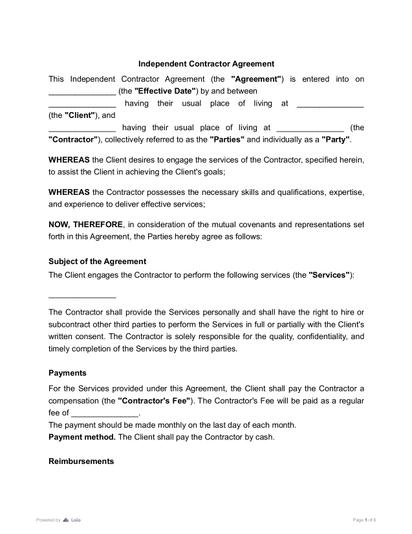
In practice, many sole proprietors rely on contract management platforms that offer libraries of ready-to-use templates designed specifically for small businesses. These platforms allow you to create, store, and send contracts to clients or partners directly from your computer or mobile phone.
Corporation
One of the oldest and most established business structures is a corporation. When people talk about “Inc.” or “Corp.”, they mean a corporation. Corporations come in a couple of flavors (primarily C corporations and S corporations for small businesses).
C Corp
A corporation, often called a C corp, is a business that exists as a separate legal entity from its owners. That means the business can own property, sign contracts, and be sued on its own. One of the biggest advantages of a C corporation is strong personal liability protection. In most cases, owners (shareholders) are not personally responsible for business debts or lawsuits. This may sound similar to an LLC, and in some ways it is, since LLCs also usually protect owners from personal liability. However, corporations are generally more formal in structure, with stricter management requirements, and they are taxed separately from their owners.
A C corporation pays its own income taxes on corporate profits. It files a corporate tax return (IRS Form 1120) and pays tax at the corporate rate on its net earnings. This can result in double taxation, meaning the corporation pays tax on its profits first, and shareholders may pay tax again if those profits are later distributed as dividends.
Net earnings = total income − all costs (rent, supplies, salaries, taxes, fees, etc.).
It’s the business’s real profit, not just what it earned before expenses.
C corporations are often chosen by businesses that plan to raise capital, issue stock, attract investors, or eventually go public or be acquired. They are common for higher-risk businesses and tech startups seeking venture capital.
S corp
An S corporation is a special type of corporation that's designed to avoid the double taxation drawback of regular C corporations. Profits pass directly to the owners’ personal tax returns and are taxed only once, instead of being taxed at both the business and personal levels. It files an informational return (Form 1120-S) but allocates all profits/losses to its shareholders via K-1 forms, and shareholders report that on their personal returns. This means profits are taxed only once (at the shareholder’s rate).
S corps still offer liability protection and have an independent life, just like C corps. If an owner leaves or sells shares, the business continues. However, S corporations come with strict rules. They can have no more than 100 owners, owners must be U.S. citizens or residents, and the company can issue only one class of stock.
Some states don’t recognize S corporations or impose a fee. For example, New York and California recognize S status but still charge an S corporation an income or franchise tax at the entity level in some cases.
Emma runs a growing software company that’s set up as an S corporation. It worked well at first — simple taxes and pass-through income. But now Emma wants to raise venture capital, and investors insist on a C corporation.
To make the switch, Emma revokes the S-corp election with the IRS by filing the required form (Form 2553 revocation), usually effective at the start of a new tax year. Once the S status is revoked, the company is automatically treated as a C corporation for tax purposes — the legal entity stays the same, but taxation changes.
From that point on, the business pays corporate income tax, can issue multiple classes of stock, and is structured in a way investors expect. The key takeaway for Emma: changing from an S corp to a C corp is mostly a tax and compliance decision, often driven by growth plans and funding goals.
Partnership (general partnership & limited partnership)
If you start a business with one or more co-founders and don’t create an LLC or corporation, by default, you have a general partnership in the eyes of the law. Let’s look at several types of partnerships.
In a general partnership, all partners share full personal responsibility for the business. Each partner can sign contracts or make decisions that legally bind everyone. If the business runs into debt or gets sued, creditors can go after the personal assets of any partner, not just the one who caused the problem.
A limited partnership works differently. It has one general partner, who manages the business and has unlimited personal liability, and one or more limited partners, who only invest money. Limited partners share profits, but they don’t take part in daily management, and they can only lose the amount they invested. This structure is often used in real estate or family investment projects.
A limited liability partnership (LLP) is a special type of partnership with state-specific rules, usually for licensed professionals like lawyers or accountants. In an LLP, partners are generally protected from business debts and from mistakes made by other partners, though they may still be responsible for their own wrongdoing.
Like sole proprietorships, general partnerships can form automatically — if you and a friend start a business and share profits, the law treats you as partners. Without a written partnership agreement, state default rules apply, which often don’t match your intentions. A partnership agreement is a contract that defines ownership shares, profit distribution, decision-making authority, and what happens if a partner leaves or a dispute arises. For partnerships, agreements become far more convenient when combined with e-signing, since contracts can be sent online and fully signed even when partners are in different locations.
Imagine Maria and Carlo, two chefs who decide to open a catering business together. If they don’t set up a formal structure, the law treats them as a general partnership. That means if something goes wrong — for example, guests get food poisoning — both Maria and Carlo are personally liable, even if only one of them made the mistake.
A safer option would be forming an LLC, which protects both partners’ personal assets. They could also choose a limited partnership, but then the general partner would still carry full personal risk. In higher-risk businesses like food service, operating as a simple partnership is usually not the best idea.
Matching: Business Type → Right Structure
Some business structures clearly work better for common types of businesses. But before that, include these aspects:

An online store or e-commerce business is most often set up as an LLC. It protects your personal assets and is easy to manage, whether you work alone or with a partner.
For consulting or freelancing, many people start as sole proprietors to test the idea, then switch to an LLC as income and client risk grow. If you’re choosing between these two paths, our recent guide helps to understand how they differ in practice. Profitable solo businesses sometimes choose S-corp taxation later to reduce taxes.
A food service business (restaurant, café, food truck) almost always needs an LLC or corporation from the start. These businesses carry a higher risk, and operating without liability protection can be dangerous.
A tech startup or app business can start as an LLC if it’s small and self-funded. If you plan to raise investment or issue stock, a C corporation is usually the right choice.
If you’re working alone, an LLC is often the safest long-term option. If you’re starting with partners, an LLC or corporation is usually better than a partnership because it protects everyone and clearly defines ownership.
- Test ideas work best as a sole proprietorship.
- Most small businesses choose an LLC.
- Growing or profitable businesses often use an LLC or an S corporation.
- Investor-backed startups typically form a C corporation.
Create the Name for Your Business
Before you get attached to a business name, make sure it meets your state’s rules. It usually must be different from other registered names, include the right legal ending based on your business structure, and avoid restricted words (like bank, insurance, trust, or university) unless you have special approval.
It is also smart to check the USPTO trademark database, since state registration does not give you national trademark rights. And if you plan to do business under a different public name, you may need to file a DBA, which lets you use that name but does not give you ownership or trademark protection.
Register a Company With the State
Your business name becomes official when you file your formation documents with the Secretary of State or other state filing agency. This step legally creates your business entity and allows you to operate under that name in the state.
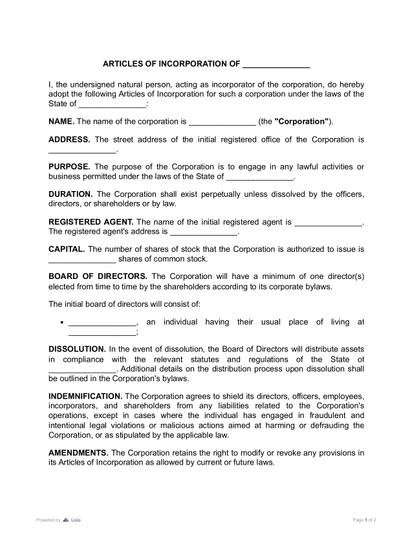
For an LLC, this usually means filing articles of organization, which legally create the company and typically include the business’s name, registered agent, business address, and basic management structure. For a corporation, this usually means filing articles of incorporation, which legally form the corporation and typically include the company’s name, business purpose, registered agent, share structure, and information about the incorporators.
You will also usually need to pay a state filing fee, and some states may ask for extra information or additional initial filings. In most states, businesses such as LLCs, partnerships, and corporations must name a registered agent — a person or company authorized to receive legal and government documents on behalf of the business. This requirement generally does not apply in the same way to sole proprietorships. Once the state approves your filing, your entity is officially formed, and the name is legally yours in that state.
IRS Business Registration: Get an Employer Identification Number (EIN)
An Employer Identification Number (EIN) is your business’s federal tax ID. Think of it as a Social Security number for your company. It’s issued by the Internal Revenue Service and is used to identify your business in tax and financial matters. If you form a Limited Liability Company or a Corporation, the business also requires registration with the IRS to obtain an EIN and handle federal tax obligations.
You need an EIN for several key reasons.
- 1
To file business taxes.
- 2
To hire employees.
- 3
To open a business bank account.

Many payment processors, vendors, and online platforms also ask for an EIN before they’ll work with you. Even if you don’t plan to hire employees right away, having an EIN makes your business easier to manage and keeps your personal Social Security number off contracts and forms.
Applying for an EIN is simple. You can apply online through the IRS website, and the process is completely free. In most cases, the EIN is issued immediately after you submit the application, so there’s no long waiting period. Once you receive your EIN, keep it in a safe place — you’ll use it often as your business grows.
Register for State & Local Taxes
About 20% of small businesses say taxes are their biggest challenge. Tax problems can start as early as the registration stage. Missing the right steps at the beginning can lead to penalties, back taxes, and stressful last-minute fixes later on. Before you register for state and local taxes, it helps to understand which tax rules apply to your situation.
Identify which taxes apply to your business
Not every business pays the same taxes. What you need to register for depends on what you do and where you operate. Most businesses need to consider at least one of the following:
Sales tax: if you sell taxable goods or services, you may need to collect it from customers and remit it to the state.
Employer taxes: if you have employees (state income tax withholding, unemployment insurance).
Industry-specific taxes (for example, alcohol, fuel, or lodging taxes).
If you’re a freelancer or independent contractor, you may not owe sales tax, but you’re still responsible for state income tax on your business earnings.
Register with your state’s tax agency
Once you know which taxes apply, go to your state’s Department of Revenue or Taxation website. This is where you officially get IRS business registration. Most states allow you to register online using:
Your legal business name;
Your EIN (or Social Security number for sole proprietors);
Your business address and start date.
After registration, the state will assign you the necessary tax accounts, such as a sales tax permit or employer tax account.
Set up payment and filing schedules
After registration, you’ll be told how often you must file and pay taxes — monthly, quarterly, or annually. Many states allow you to set up online accounts to file returns and make payments electronically.
Keep your information updated
If you change your business address, hire employees, stop selling taxable products, or close the business, you must update your tax accounts. States expect your registration information to stay current.
Obtain Required Licenses and Permits
If your business is in a regulated industry, getting the right permits is mandatory. Some licenses are issued at the federal level, usually for industries with strict oversight, such as:
Transportation;
Alcohol sales;
Firearms;
Broadcasting.
Most businesses deal with state and local licenses, which depend on what you do and where you operate. Common examples include:
Construction and contracting;
Childcare and daycare services;
Food services (restaurants, cafés, food trucks, catering).
To find out exactly what you need – start with your state’s official business portal, then check your city or county government website, since local permits are often required in addition to state licenses.
How to Open a Business Bank Account
If you already have an EIN, you’re ready to open a business bank account. This account is used only for business transactions and should be kept separate from your personal finances.
Start by choosing a bank. Compare fees, minimum balance requirements, online and mobile banking options, and customer support. If you plan to accept online payments, make sure the bank works smoothly with payment platforms like Stripe or PayPal (and Mercury or Relay for the non-residents), which require a business bank account to transfer funds.
Next, apply to open the account online or in person. Banks usually ask for:
- 1
Your EIN;
- 2
Approved business registration documents;
- 3
A valid photo ID for the owner;
- 4
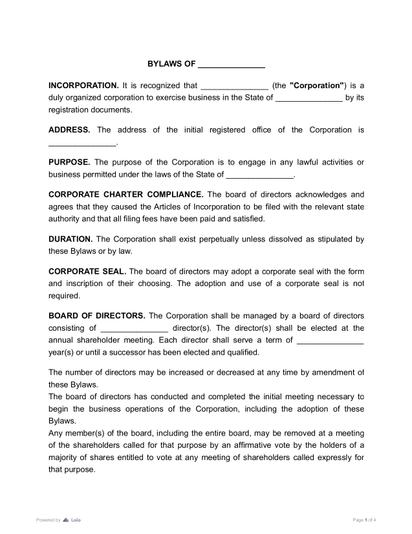
An operating agreement or bylaws (internal rules of a corporation that define how it is governed, including the roles of directors and officers, meeting procedures, voting rights, and corporate decision-making processes).
Once the account is open, use it only for business income and expenses.
Business Insurance in the Company Registration Process
Some business insurance is mandatory. If you have employees, most states require workers’ compensation insurance, which helps cover medical costs and lost wages if an employee is injured on the job. This is different from regular health insurance: workers’ compensation is tied to workplace injuries, while medical insurance helps employees pay for general healthcare needs.
Employer obligations for medical insurance depend largely on business size. Under the Affordable Care Act, applicable large employers generally must offer affordable health coverage that provides minimum value to full-time employees and their dependents, or they may face an employer shared responsibility payment. Employer size for this rule is based on the number of full-time employees, including full-time equivalents.
Smaller businesses are not usually required by federal law to offer health insurance, but many choose to do so to attract and keep employees. Small businesses may be able to buy coverage through SHOP, the Small Business Health Options Program. If an employer does offer a health plan, federal rules can also require notices and plan disclosures, such as the Summary of Benefits and Coverage.
Other types of insurance are not always legally required, but they are common and often expected by clients, landlords, or business partners.
General liability insurance helps cover accidents, property damage, or injuries involving your business.
Professional liability insurance (sometimes called errors and omissions insurance) protects you if a client claims your service caused them financial harm.
Commercial property insurance covers your business space, equipment, or inventory if it’s damaged or stolen.
The key when registering a company is not just having insurance, but having the right type and amount of coverage for your business model. A policy that looks sufficient on paper may still leave major gaps if it does not reflect how your business actually operates.
If you are figuring out how to register a company in the USA, this comparison chart can help you see the practical differences between the main business structures before you file. It compares sole proprietorships, partnerships, LLCs, and corporations based on liability, startup cost, taxes, setup speed, and typical use cases, making it easier to choose the structure that fits your goals.
More guides
September 1
7 min read
How to Provide Proof of Employment: Documents and Steps

October 15
How to Start a Staffing Agency: Licensing, Pricing, and Cash Flow

July 21
How to Start a Roofing Company: Complete Guide

July 26
12 min read
How to Read a Profit and Loss Statement

September 10
14 min read
How to Protect Your Small Business from Lawsuits
July 21
11 min read
What Taxes Do Businesses Have to Pay? Federal Tax Checklist
One home for your
agreements
Edit PDFs seamlessly
Tweak agreements before signing or sending for signatures. Update details, add or remove clauses, adjust formatting, and redline changes instantly.
eSign legally and securely
Sign documents and collect legally binding signatures. Invite up to ten people to sign in any order, track the progress, and send reminders.
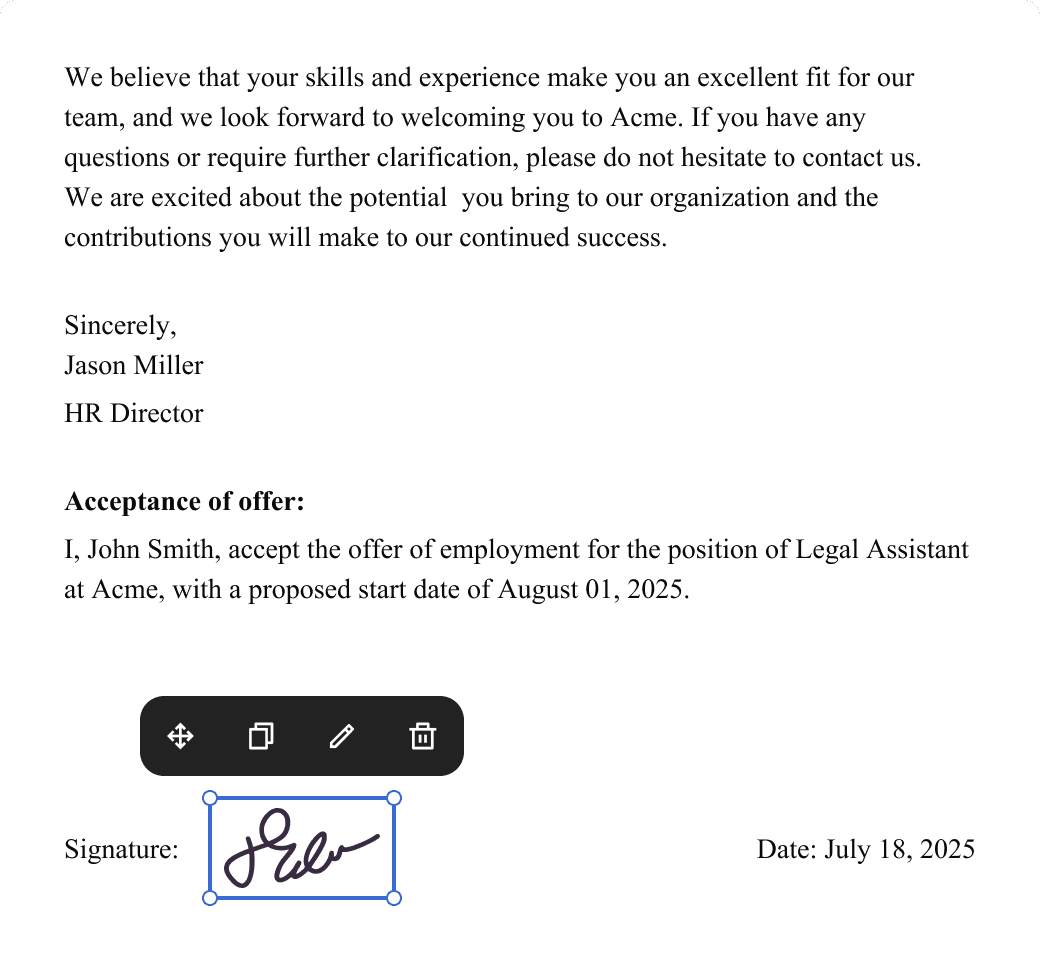
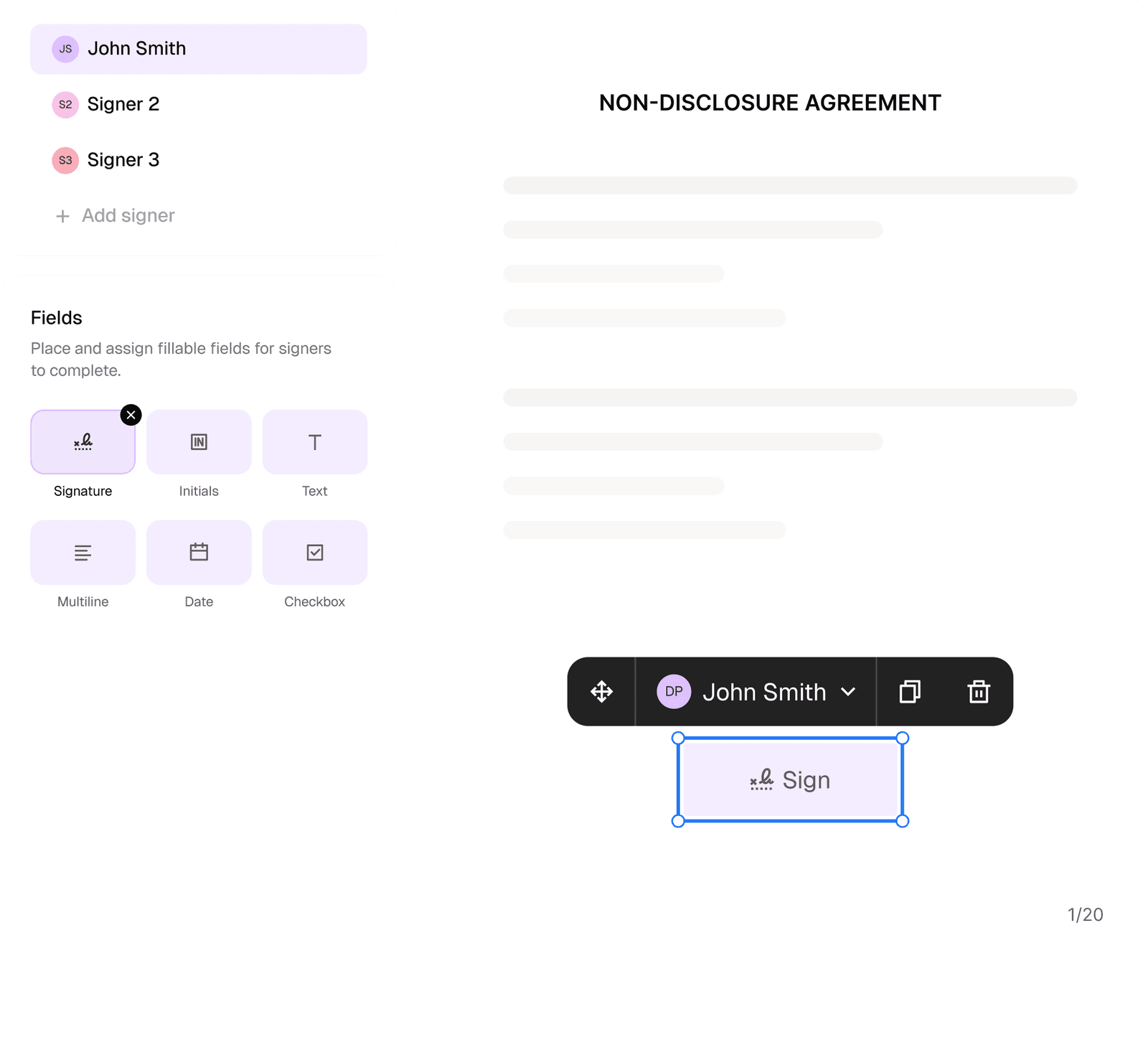
Request legally binding signatures
Invite up to ten people to sign your document in any order. Get a finalized, audit-ready copy without chasing signatures.
Skip the drafting.
Choose from 2,500+ templates
Browse templatesChoose a template
Fill in details
Sign and download