Updated August 20, 2026
8 min read
How to Start an HVAC Business in 10 Steps
How to Start an HVAC Business in 10 Steps
- Choose Your HVAC Business Model
- Research Local Demand Before Starting an HVAC Business
- Write an HVAC Business Plan
- Get Licenses, Certifications, and Permits
- Decide Whether To Form an LLC
- Startup Costs when Starting a HVAC Business
- Find Financing for an HVAC Business Start Up
- Buy the Right Tools, Equipment, and Software
- Set HVAC Pricing That Covers Real Costs
- Use Written Contracts Before Paid Work
- Get Insurance Before the First Job
- Set Up Daily Operations for HVAC Business Start Up
- Get Your First HVAC Customers
- Avoid Common Mistakes When Starting an HVAC Business
Content
If you already work in HVAC, you probably know what it feels like to fix someone's AC in 95-degree heat and watch them hand the check to your employer. The idea of starting your own heating and air conditioning business makes sense. You have the skills, you know the work, and you may already have people asking if you take jobs on the side.
But there is a gap between being good at HVAC and running an HVAC business. The technical part you know. Licensing, pricing, contracts, insurance, and cash flow are where most new owners get caught off guard. It’s not that these tasks are difficult to master. It’s that many owners begin accepting paid work before they’ve taken the time to fully understand it.
This guide covers how to start a heating and air conditioning company in the order that actually matters, whether you are new to running a business or ready to stop working for someone else.
Choose Your HVAC Business Model
The most common mistake when starting an HVAC company is trying to do everything at once. Installation, repair, maintenance, ductwork, commercial, residential, and emergency calls. It sounds like a full-service company, but for a new business with one truck and no track record, it is just a list of things you are not yet set up to deliver well.
Pick one starting point based on what you already do best.
Residential repair is the most common entry point. Jobs are smaller, the sales cycle is short, and startup capital requirements are low, though competition is high and customers often shop on price.
Residential replacement pays more per job but requires upfront capital since you are often ordering equipment before the customer pays.
Maintenance contracts are underrated as a starting model, especially if you already know landlords or property managers.
Recurring revenue is more stable than chasing one-off calls, and clients on a plan call you first when something breaks.
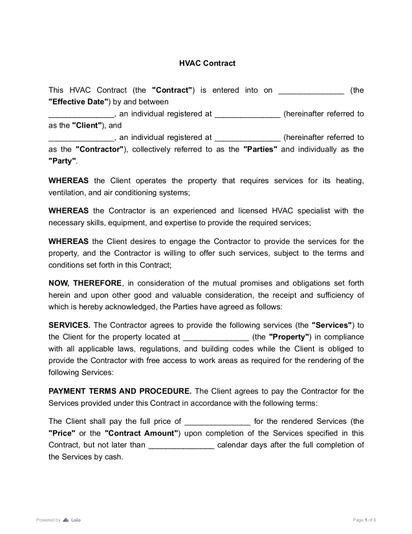
Your choice of model also determines what your contracts need to look like from day one. A repair job and a full system replacement require very different written terms, and having an HVAC contract ready before the first call means you are not figuring that out under pressure.
Research Local Demand Before Starting an HVAC Business
Before you buy tools, wrap a van, or build a website, spend a few hours understanding who already serves your area and where they are failing.
Search the way your future customers would: "AC repair [your city]," "furnace installation [your city]," "emergency HVAC [your city]." Look at who shows up and read the three-star reviews, not the one-star rants. Those are the areas where customers describe what they actually want: faster response, clearer pricing, better communication.
Also, look at the housing stock. Older neighborhoods have consistent demand for repair and system replacement. Rental-heavy areas mean steady work with property managers, but they expect fast turnaround and clean paperwork. Commercial strips mean repeat service, as well as insurance requirements and after-hours needs.
The goal is to find the specific gap where demand exists, and competitors are already dropping the ball.
Write an HVAC Business Plan
Most people write a business plan because someone told them they needed one. The useful version is shorter and more honest. It answers the questions that will cost you money if you skip them.
- What services will you offer, and which will you refuse?
- What is your service area, and how far will you drive for one job?
- What are your startup costs, monthly fixed costs, and how much cash do you need before the business supports you?
HVAC has a slow season, materials cost money before customers pay, and callbacks happen. A simple cash flow projection tells you how long your savings need to last before revenue becomes reliable.
The SBA has resources for calculating startup costs and projecting break-even, which is useful even if you are not seeking a loan.
Get Licenses, Certifications, and Permits
One of the first things to confirm when figuring out how to open an HVAC company is licensing, because the rules vary by state, county, and type of work. What you need in Texas is different from what you need in California or Florida.
Most HVAC businesses need a state contractor license, a local business license, and permits for installation and replacement jobs. If you work with refrigerants, which most HVAC technicians do, EPA Section 608 certification is a federal requirement. The certification type depends on the equipment you service, and individual technician certification and business-level EPA registration are separate requirements.
Do not advertise paid services until you have confirmed what you need. When something goes wrong on a job, a damaged ceiling, a failed inspection, a disputed bill, the first question from a lawyer or insurer will be about your license. Delaying your launch by two weeks is easier than that conversation.
Decide Whether To Form an LLC
One of the first structural decisions when starting an HVAC company is whether to form a limited liability company. An LLC separates personal assets from business liabilities, which matters when you are working in people's homes, driving a business vehicle, and signing contracts with commercial clients. If you are starting with a partner, an LLC operating agreement documents ownership percentages, profit splits, and exit terms before a disagreement arises.
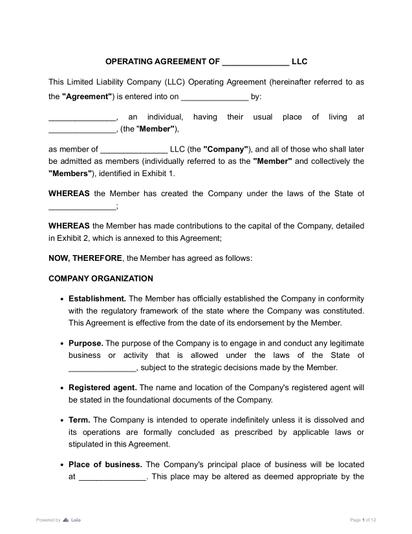
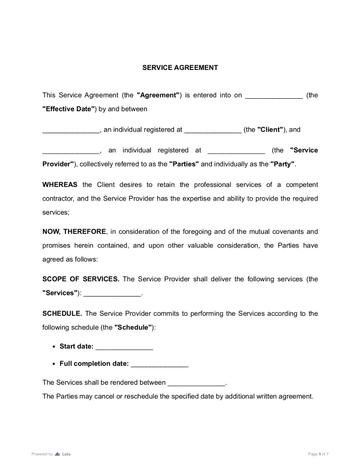
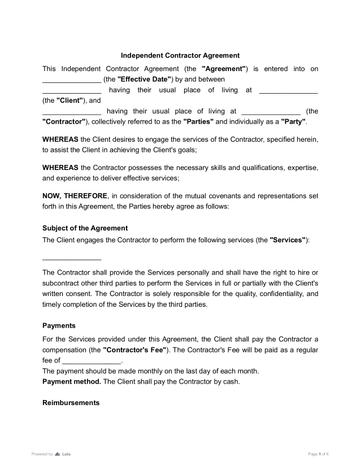
That said, an LLC does not protect you if you personally guarantee a loan or supplier account, does not make unlicensed work legal, and only works when business and personal finances stay completely separate from day one. It also does not replace contracts. A service agreement covers scope and payment with customers, and an independent contractor agreement covers subcontractors.
- Service Contract
 4354 downloads
 - Independent Contractor Agreement
 7304 downloads
Startup Costs when Starting a HVAC Business
The HVAC business startup phase is where most owners make one of two financial mistakes: overestimating costs and never starting, or underestimating them and running out of money in month three.
One-time costs include business registration, contractor license fees, tools and equipment, vehicle setup, branding, and a website. Depending on what you already own, this can range from a few thousand dollars and more. Monthly costs include insurance, fuel, software, phone, marketing, and accounting, plus loan or supplier payments if you financed anything.
The costs that actually kill new businesses are the ones nobody budgets for: warranty callbacks, slow-season weeks, material deposits when customers pay late, and unpaid estimates. A wrapped van looks professional, but it will not cover a slow month.
Find Financing for an HVAC Business Start Up
Equipment financing spreads the cost of tools and vehicles over time, which preserves cash for operations. Supplier credit helps with materials for replacement jobs, but quickly turns into debt if customers pay late or deposit terms are loose. SBA 7(a) loans cover long-term assets and working capital. SBA microloans, generally under $50,000, work for tools, supplies, and working capital but cannot pay existing debt or buy real estate.
Many new HVAC owners borrow money when work slows down, which makes sense on the surface. The problem is that if your pricing was already too low, the loan does not fix anything. It just gives you a few more months before the same shortfall comes back, so nail your costs and pricing before you take on any debt.
Buy the Right Tools, Equipment, and Software
Buy the tools your first service model requires and nothing else. If you are starting with residential repair, you need diagnostic and service tools for that work, not the full installation kit for commercial systems you are not yet bidding. Equipment bought ahead of your actual work ties up cash and depreciates whether it leaves the van or not.
For software, you need something that handles scheduling, estimates, invoices, job photos, and customer notes, and that you will actually use consistently on every job. One unreliable tool at the wrong moment costs more than the tool itself. A failed manifold gauge or dead refrigerant scale can turn a routine job into a callback and a bad review.

Set HVAC Pricing That Covers Real Costs
Most HVAC pricing mistakes happen when new owners focus on what they want to earn and forget to include everything the business needs to survive.
Every job needs to cover direct costs: labor, drive time, diagnostic time, materials, and permit fees. It also needs to cover indirect costs like insurance, fuel, vehicle maintenance, software, accounting, and marketing. And it needs to cover warranty risk, meaning the labor and materials you will spend fixing problems on completed jobs at no charge. Miss any of those, and a job that looks profitable on the invoice ends up costing you money.
To get a sense of where the market sits: HVAC repairs cost $150 to $450 on average, with most homeowners paying around $319 for AC service and $268 for furnace service. Hourly rates run $75 to $150, with minimum service call fees of $75 to $200.
Flat-rate pricing is easier for customers to understand but only works if your cost calculations are accurate. Installation quotes need to cover equipment, labor, permits, disposal, change orders, and warranty scope. Deposits on equipment-heavy jobs should be set in writing before the customer approves the job, not after you have placed the order.
Underpricing attracts customers who will leave the moment someone cheaper shows up, leaving no margin for callbacks or slow weeks. Know your break-even number before you set your rates.
How Much Can an HVAC Business Make?
The Bureau of Labor Statistics reported a median annual wage of $59,810 for HVAC technicians in May 2024, with employment projected to grow 8 percent through 2034. That is a wage figure for employed technicians, not for the business owner's profit. Those are very different numbers.
Billing $300,000 in a year means nothing if $280,000 goes back out in costs. Know your break-even point before discounting.
Use Written Contracts Before Paid Work
Every job needs written terms for scope, price, deposit, payment schedule, equipment model, warranty limits, permits, property access, and change orders. If anything changes mid-job, scope, price, or timeline, that update needs to be in writing and approved before work continues.
The core documents most HVAC businesses need include: an HVAC contract for installation and service work, a service agreement for repairs and maintenance, an independent contractor agreement for subs, and an invoice template. For change orders in particular, getting a signature on the spot rather than a verbal go-ahead is the difference between a protected job and a disputed one. eSign lets you send and collect that approval from your phone before continuing the work.

Get Insurance Before the First Job
HVAC work creates liability exposure from day one. You are working in attics, crawl spaces, and finished basements with electrical systems, refrigerants, gas lines, and expensive equipment. A damaged ceiling, a flooded basement, or a stolen tool set can create costs a new business cannot absorb.
At a minimum, you need general liability and commercial auto coverage. If you hire employees, workers' compensation is required in most states. Tools and equipment coverage matters if you carry expensive gear in your vehicle. Some property managers and commercial clients will ask for a certificate of insurance before they schedule the job. Not having one ready can cost you the work before it starts.
Set Up Daily Operations for HVAC Business Start Up
Learning how to run an HVAC business is not only about the technical work. It is also about making sure calls, estimates, approvals, invoices, job notes, and follow-ups do not fall through the cracks.
The jobs that cause the most problems are rarely the technically hard ones. They are the ones where an approval was verbal, a change order was skipped, or a callback was not documented. Build a simple system from the first week: written estimates, approvals before scope changes, job photos, same-day invoices, and warranty notes. Property managers and municipalities often send their own forms as PDFs, and a PDF editor lets you fill and return them without printing anything or slowing down the job.
Track which services generate callbacks and which jobs run over time. That data will change how you price and schedule within a few months.
Seasonality is predictable, as you know, heating calls spike in November, and AC calls in June. Run pre-season maintenance promotions in March and September to fill your schedule before the emergency calls start.
Get Your First HVAC Customers
Most HVAC leads start with urgency. Someone's AC is out in July or the furnace died overnight. That customer is not shopping carefully. They are calling whoever shows up in search and looks trustworthy enough to let into their home.
A complete Google Business Profile with real photos, accurate service area, and recent reviews is the highest-leverage first step. Your website needs to answer four questions fast:
- Can you fix my problem?
- Do you cover my area?
- Can I reach you quickly?
- Are you licensed and insured?
Separate pages for AC repair, furnace repair, heat pump installation, and emergency HVAC help with local search.
After a good job, ask for a review before you leave the driveway. Partnerships with property managers, builders, and realtors can become your most consistent source of work over time. They grow when you answer fast, document the work, and make billing easy.
Before your first slow season, make sure customers can find you through at least two channels. Ads get expensive, referrals take time, and local SEO is slow. Relying on one is a cash flow risk.
Avoid Common Mistakes When Starting an HVAC Business
When starting a HVAC business, some mistakes may look reasonable at the moment. Charging less until you get busier seems logical. Taking a job slightly outside your scope seems fine. Sorting out contracts later seems practical. Each one creates a downstream problem that costs more to fix than it would have cost to prevent.
Underpricing fills your schedule with customers who will leave the moment someone cheaper appears, with no margin for callbacks or slow weeks. Taking work outside your license turns a business problem into a legal one. Skipping written contracts is not trust, it is risk. Mixing personal and business finances makes taxes complicated and undermines the protection an LLC is supposed to provide.
Do the setup correctly before the first job, and most of these problems never happen.

Starting an HVAC business or opening a heating and air conditioning company from one truck is entirely possible. The ones that make it past the first two years set up the business correctly before the work started, priced jobs to survive the slow periods, and put every agreement in writing.
The early goal is not to look like the biggest company in your market. It is to do the first jobs cleanly, price them so the business survives, and let each good job make the next one easier to win.
More guides
September 11
6 min read
How to Start a Moving Company
July 25
12 min read
How to Start a Flooring Business and Get Your First Clients in 2026
July 25
12 min read
How to Register a Company in the US: What No One Tells You in 2026

September 1
7 min read
How to Provide Proof of Employment: Documents and Steps
October 15
How to Start a Staffing Agency: Licensing, Pricing, and Cash Flow
September 1
5 min read
How to Start a Tutoring Business and Succeed
One home for your
agreements
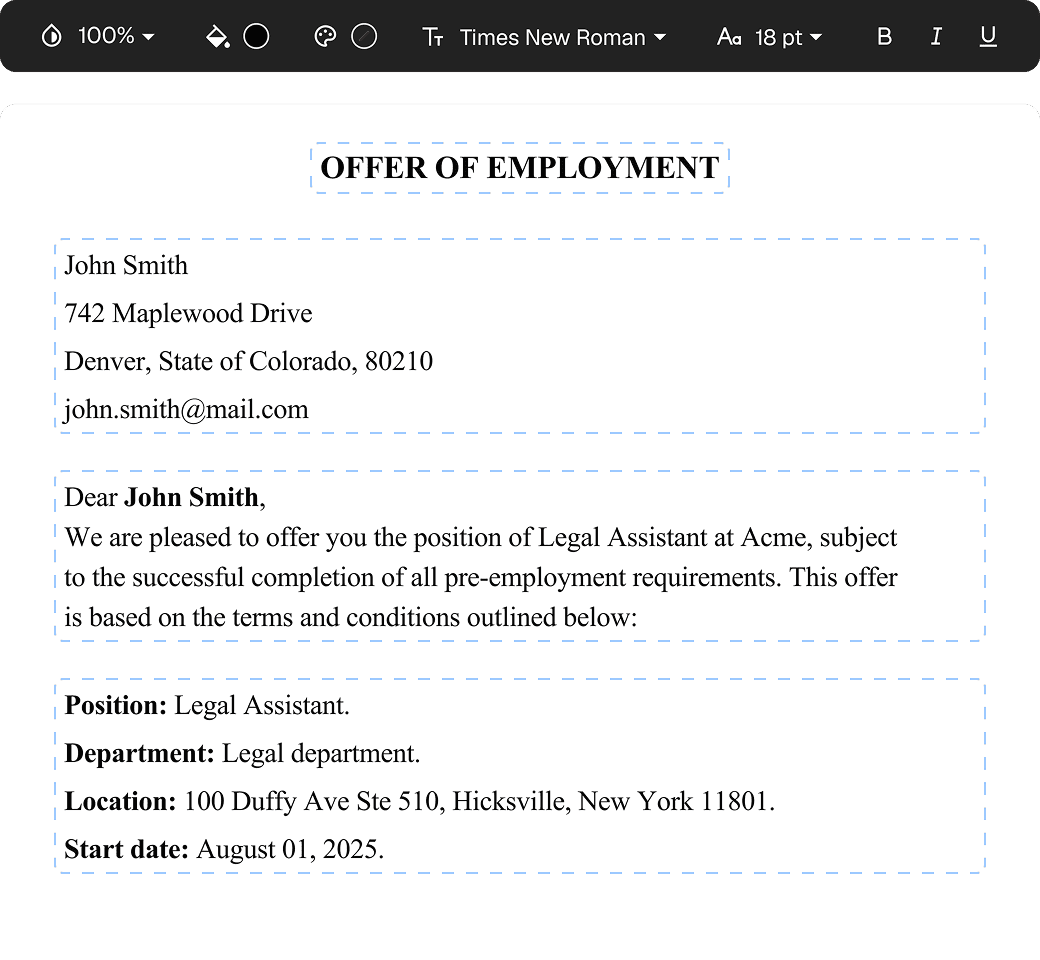
Edit PDFs seamlessly
Tweak agreements before signing or sending for signatures. Update details, add or remove clauses, adjust formatting, and redline changes instantly.
eSign legally and securely
Sign documents and collect legally binding signatures. Invite up to ten people to sign in any order, track the progress, and send reminders.
Request legally binding signatures
Invite up to ten people to sign your document in any order. Get a finalized, audit-ready copy without chasing signatures.
Skip the drafting.
Choose from 2,500+ templates
Browse templatesChoose a template
Fill in details

Sign and download