Updated July 21, 2026
Commission vs Bonus in Sales: Pay Rules, Taxes, and When to Use Each
Commission vs Bonus in Sales: Pay Rules, Taxes, and When to Use Each
- What Is a Sales Commission?
- What Is a Bonus Payment?
- What Is the Difference Between a Bonus and a Commission?
- How Sales Quota Affects Commission and Bonus
- What Documents Do You Need?
- Commission vs Bonus: Which One Is Right for Your Business?
- How Commissions and Bonuses Are Treated as Wages
- Common Mistakes When Setting Up Commission and Bonus Plans
Content
Commission and bonus are among the most misused terms in sales compensation. Employers use them interchangeably in offer letters, reps assume they mean the same thing, and no one thinks to clarify until a payment is late, reduced, or missing entirely.
Both are performance-based pay, both show up on a paycheck, and both motivate people to work harder. But they are calculated differently, paid under different conditions, and carry different legal obligations. It shows up in contracts, offer letters, and wage disputes. It affects how much is owed, when it’s due, and whether an employee has proof to challenge a missing payment.
This guide explains what sales commissions and bonuses are, how each is calculated, when each structure makes sense for your business, how both are treated under U.S. tax and wage law, and which documents you need before the first deal closes.
What Is a Sales Commission?
A sales commission is a payment calculated as a percentage of the revenue a salesperson generates. It is earned deal by deal, directly tied to what the individual closes, and paid either when the deal is signed, when payment is received, or on a regular schedule.
Commission is the most direct form of performance pay. In many plans, the more a rep sells, the more they earn. The number on the paycheck usually follows the number on the sales report, although caps, quotas, payment timing, and clawback terms can change the final amount.
What a commission is calculated from:
- A percentage of the total deal value.
- A percentage of the gross margin on a deal.
- A flat rate per unit sold.
When is commission typically paid:
- Upon signing a contract or closing a deal.
- Upon receipt of customer payment.
- On a monthly or quarterly schedule based on closed revenue.
Who typically earns commission:
- Sales representatives and account executives.
- Real estate agents and brokers.
- Insurance agents.
- Recruiters and business development professionals.
Common commission structures:
Flat-rate commission applies the same percentage to every deal, regardless of size or volume. It is simple to explain and easy to calculate, which makes it a common starting point for small sales teams.
Tiered commission increases the percentage after a rep hits a defined threshold. A rep might earn 5 percent on the first 50,000 dollars in revenue and 8 percent on everything above that. Tiered structures reward high performers and create an incentive to push past quota.
Residual commission pays the rep an ongoing percentage on recurring revenue, such as a subscription or retainer that renews each month. It is common in SaaS, insurance, and any business with long-term customer relationships.
What documents govern a commission relationship:
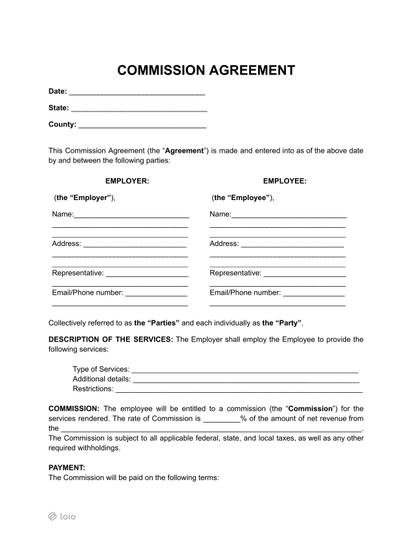
A commission agreement sets the core pay rules before the rep starts selling. It should explain how commission is earned, calculated, paid, adjusted, and handled if a deal is canceled or the rep leaves.
What Is a Bonus Payment?
A bonus is a payment awarded for hitting a defined goal, reaching a milestone, or contributing to a broader result. Unlike commission, a bonus is not calculated from a single sale. It is tied to performance over time, a threshold, or a company-wide outcome.
Bonuses can be predictable or discretionary. A non-discretionary bonus is promised in advance with defined criteria: hit this number by this date and receive this amount. A discretionary bonus is decided by the employer after the fact, with no prior commitment.
The Department of Labor explains that a bonus is discretionary only if the employer retains discretion over whether to pay it and how much until at or near the end of the bonus period, and if the payment is not made under a prior contract, agreement, or promise.
What is a bonus calculated from:
- A flat dollar amount tied to a specific milestone.
- A percentage of the employee's base salary.
- A share of the company's profit or revenue over a period.
When a bonus is typically paid:
- At the end of a quarter or fiscal year.
- Upon hitting a defined performance milestone.
- At signing, as a one-time incentive to join.
Who typically earns a bonus:
- Individual sales reps meeting or exceeding quota.
- Sales managers and team leads.
- Entire teams hitting a shared target.
- Employees participating in a profit-sharing plan.
Common bonus types:
A performance bonus is tied to individual or team goals. It is the most common type in sales environments and is usually defined in advance with clear eligibility criteria.
A signing bonus is a one-time payment made at the time of hire, often used to attract candidates who are giving up unvested equity or deferred compensation at a previous employer.
A retention bonus is paid to keep a key employee through a specific period, such as a merger, a product launch, or a transition.
A profit-sharing bonus distributes a portion of the company profits to employees. Eligibility and amounts are usually tied to tenure, salary level, or a formula defined in a company policy.
What documents govern a bonus relationship:
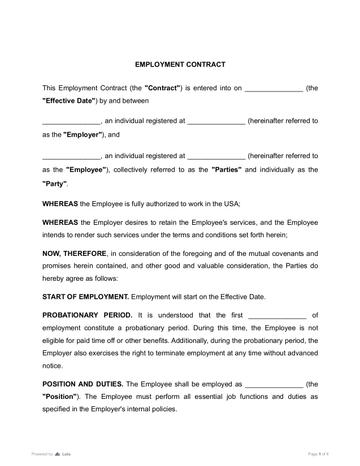
Bonus terms should appear in the employment contract or offer letter, and in a separate bonus plan or policy document if the structure is more complex. Whether a bonus is discretionary or non-discretionary must be stated clearly. If it is not, a court or labor authority may treat it as a wage obligation regardless of the employer's intent.
- Employment Contract
 4443 downloads
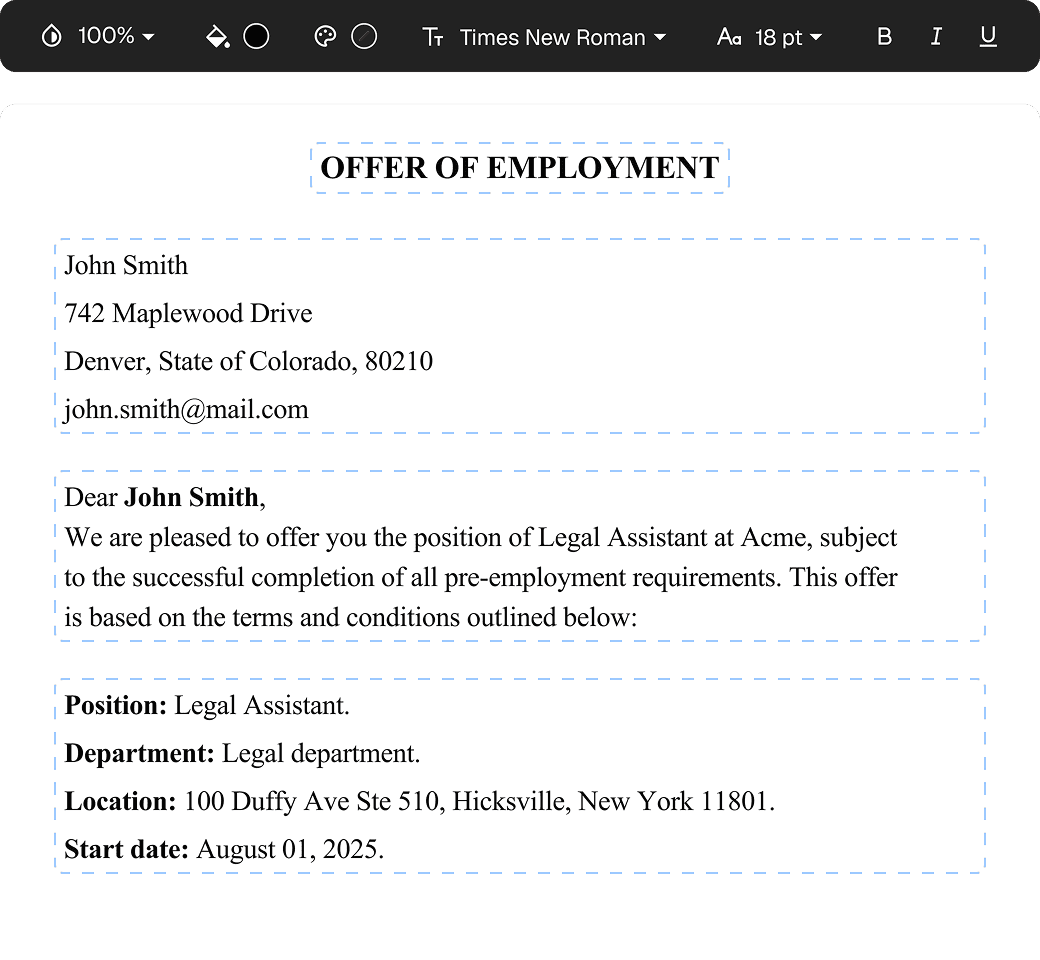
 - Offer of Employment
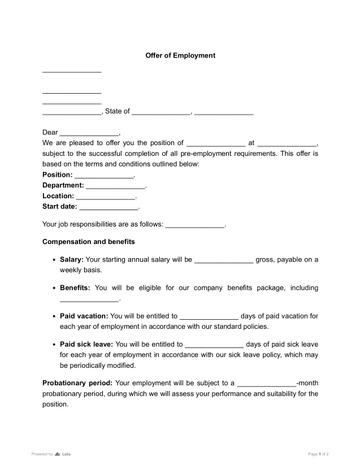 4354 downloads
What Is the Difference Between a Bonus and a Commission?
The distinction between a bonus versus commission is critical for defining sales compensation terms. They are both performance pay, but they operate on different logic. Commission is transactional, but bonus is periodic. Understanding that distinction makes the rest of the comparison straightforward.
How each is earned:
- Commission is earned by closing revenue. Each deal generates a payment calculated as a percentage of the value.
- A bonus is earned by hitting a defined goal, which may be a revenue target, a team result, a retention period, or a company-wide metric.
When each is paid:
- Commission is paid per deal or on a regular schedule tied to closed revenue.
- A bonus is paid periodically, usually quarterly or annually, or upon hitting a milestone.
How predictable each is:
- Commission varies with sales volume. A strong month means a strong paycheck. A slow quarter means a smaller one.
- A bonus can be more predictable if the criteria and amount are defined in advance. Discretionary bonuses are less predictable because the employer controls the decision.
Who sets the terms:
- Commission terms are set by the employer in a sales commission agreement.
- Bonus terms are set by the employer in an employment contract, offer letter, or bonus policy document.
What each is best suited for:
- Commission works best when individual revenue attribution is clear and you want pay to scale directly with output.
- Bonus works best when you want to reward team performance, motivate behavior that does not show up directly in revenue, or tie pay to company-wide results.
How each is taxed:
Both commission and bonus are taxable compensation. The main difference is not tax advantage, but how the payment is earned, documented, and withheld.
How Sales Quota Affects Commission and Bonus
Quota is the number that connects commission and bonus. It is the revenue or activity target set for a sales rep over a defined period. Most sales compensation plans use quota as the threshold that triggers higher commission rates, unlocks bonus eligibility, or both.
Many commission structures pay a standard rate up to quota and a higher accelerator rate on everything above it, creating a direct financial incentive to keep selling after the base target is met.
Bonus eligibility often requires hitting a minimum quota threshold. A rep who finishes the quarter at 80 percent of quota may receive a reduced bonus or no bonus at all, depending on how the plan is written. Some plans use quota attainment as a multiplier, paying a larger bonus the further above quota a rep finishes.
What happens below quota:
- The commission may be reduced.
- Bonus eligibility may be reduced or eliminated.
- Some plans include clawback provisions that recover previously paid commission if a deal cancels or a rep fails to meet a minimum performance threshold.
What happens above quota:
- Accelerator rates increase the commission percentage above the standard rate.
- Bonus multipliers pay a larger bonus for finishing significantly above target.
- Some plans include additional one-time payments for hitting stretch goals.
Quota terms must be in writing. Disputes over how the quota is calculated, when it resets, and how it is adjusted for changes in territory or product are among the most common sources of sales compensation conflict. A commission agreement that clearly defines the quota, including who can change it and with how much notice, protects both the employer and the rep.
What Documents Do You Need?
The short answer:
Paying commission? You need a sales commission agreement.
Paying a bonus? You need an employment contract or offer letter that defines the bonus terms.
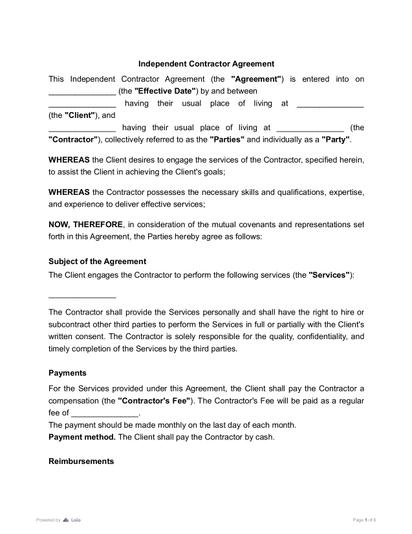
Working with an independent contractor on commission? You need an independent contractor agreement.
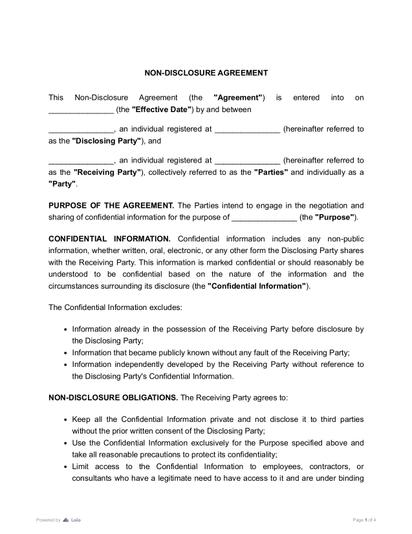
Sharing confidential sales data or business information? You may also need an NDA.
The right document depends on the type of pay, the type of relationship, and the level of detail the compensation structure requires. The sections below explain what each document should cover.

For commission-based pay
A sales commission agreement is the core document. It should define the commission rate and how it is calculated, the payment schedule and what triggers payment, quota terms and how quota can be adjusted, clawback provisions and when they apply, and what happens to unpaid commission if the rep leaves or is terminated.
An employment contract or independent contractor agreement sets the employment status of the person earning commission. This matters because the legal protections for earned commission differ depending on whether the person is classified as an employee or a contractor. Getting the classification wrong creates tax exposure and wage claim risk.
An offer letter is typically where commission terms are communicated first. It should reflect the same terms that will appear in the commission agreement. Inconsistencies between the offer letter and the final agreement create ambiguity about which terms apply. A PDF editor can help you review comments, mark changes, and finalize the document before it is sent for signature.
For bonus pay
An employment contract should specify whether the bonus is discretionary or non-discretionary, the eligibility criteria, when the bonus is paid, and what happens if the employee leaves before the payment date.
An offer letter should state the bonus clearly, including the target amount and the conditions that must be met. A vague promise of a "performance bonus" with no defined criteria is difficult to enforce and easy to dispute.
A bonus policy or plan document is useful when the bonus structure applies to multiple employees or involves a formula that requires explanation. It defines eligibility rules, calculation methods, payment timing, and what happens in edge cases such as a mid-year hire or a leave of absence.

Once the terms are final, eSign can help both sides sign the agreement without printing, scanning, or sending multiple file versions by email.
Tax Forms for Employees and Contractors
For employees, the right withholding starts with a completed Form W-4, which tells the employer how much federal income tax to withhold from pay. If the person earning commission is an independent contractor rather than an employee, the business generally collects a Form W-9 so it has the contractor’s taxpayer information for reporting purposes.
- Form W-4
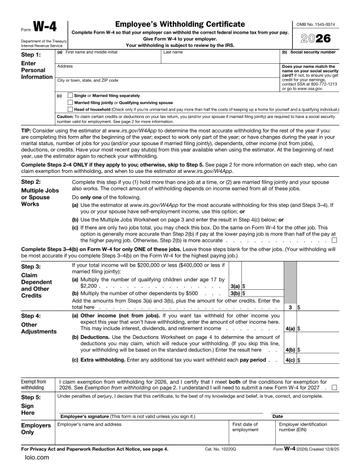 9754 downloads
 - IRS W9 Form
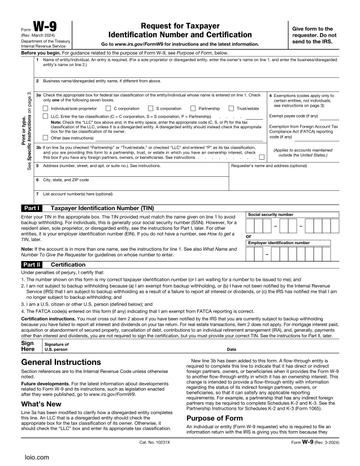 16987 downloads
Commission vs Bonus: Which One Is Right for Your Business?
The right structure depends on what you are trying to reward, who is doing the work, and how directly you can connect individual effort to a revenue outcome.
Use commission when:
- You want to pay to scale directly with revenue generated.
- Your sales reps have clear ownership of individual deals.
- You want compensation costs to rise and fall with revenue rather than being a fixed expense.
- You are hiring experienced salespeople who expect variable pay and are comfortable with income that depends on performance.
Use a bonus when:
- You want to reward team performance rather than individual deal volume.
- The role involves work that contributes to revenue but cannot easily be attributed to a single sale, such as sales engineering, account management, or customer success.
- You want to motivate behavior beyond closing, such as customer retention, product adoption, or referral generation.
- You want to create a shared incentive across the whole team or company.
Use both when:
Many sales compensation plans combine a base salary, commission on closed revenue, and a bonus layer for hitting broader targets. A common structure looks like this: a base salary that covers living costs and reduces income anxiety, a commission on every deal closed that scales with performance, and a quarterly or annual bonus for hitting team quota or company revenue goals.
This combination works because it addresses multiple motivations simultaneously. A base salary reduces the risk of income instability, making the role more attractive to a wider range of candidates. Commission rewards individual output. The bonus layer aligns with what the rep does with what the company needs.
Impact on hiring:
Commission-heavy plans tend to attract high performers who are confident in their ability to sell and want uncapped earning potential. They may deter candidates who need income stability or who are earlier in their careers. Bonus-only plans with no variable commission can feel less motivating to experienced sales professionals who expect their pay to reflect their individual results. Understanding your candidate pool before designing the plan helps avoid building a structure that looks good on paper but fails to attract or retain the right people.
How Commissions and Bonuses Are Treated as Wages
Both commissions and bonuses carry legal obligations beyond the paycheck. How each is classified under wage law affects when payment is owed, what happens if it is withheld, and what the employer is liable for if the terms are not honored.
Are commissions wages?
In many states, earned commissions are treated as wages once the employee has met the conditions for earning them. The exact timing, written-agreement rules, and post-termination payment requirements depend on state law. An employer who withholds earned commission without a valid reason may face a wage claim under state labor law. Some states go further, requiring written commission agreements and setting specific deadlines for when commission must be paid after it is earned.
Are bonuses wages?
It depends on the type. Non-discretionary bonuses, those promised in advance with defined criteria, are generally treated as wages once the eligibility conditions are met. Discretionary bonuses, those decided by the employer after the fact, have more flexibility. How the bonus is described in an offer letter or employment contract can determine which category it falls into, so the language used matters more than the employer's intent.
Why this matters for employers:
Withholding earned commission or mischaracterizing a non-discretionary bonus as discretionary is not just an HR problem. It creates legal exposure. The safest approach is to define when each payment is earned, when it is due, and what happens if the relationship ends, before work begins.
Common Mistakes When Setting Up Commission and Bonus Plans
Many disputes start with small gaps in the paperwork. The offer letter mentions a bonus, but not the conditions. The commission plan lists a rate but not when the payment is earned. The quota changes, but no one updates the agreement. By the time payment is missing or reduced, each side is working from a different version of the deal.
Not putting commission terms in writing
A rep is hired with a verbal agreement on a 7 percent commission rate. Six months in, the employer changes the rate without notice. The rep has no written basis to challenge it, and no documented claim to commission on deals already closed.
Using vague language in bonus commitments
An offer letter promises a "competitive annual bonus based on performance’’, with no amount, criteria, or payment date defined. When bonus season arrives, the employer pays less than the employee expected, and there is no written standard to measure the decision against.
Not addressing what happens to the commission on termination
A rep closes a large deal in their final week and then resigns. The employer argues commission is not owed because the rep is no longer employed. Without a termination clause that defines when commission is earned and when it is forfeited, this dispute has no clear answer.
Treating non-discretionary bonuses as discretionary
An employer promises a $ 10,000 bonus to any rep who meets a revenue target. The reps hit it. The employer decides not to pay due to a difficult quarter. Because the bonus was defined in advance with specific criteria, it is almost certainly owed as a wage obligation regardless of what the employer calls it.
Not updating agreements when quota or territory changes
A rep signs a commission agreement in January. In March, their quota is raised, and two accounts are reassigned. The original agreement says nothing about adjustment rights. By year end, what is owed depends entirely on which version of the agreement each side believes is still in effect.
Misclassifying commission-based reps as contractors
A company treats commission-only reps as independent contractors to avoid payroll obligations. The reps work exclusively for the company, follow a set schedule, and use company tools. Under IRS common law rules, they may qualify as employees regardless of what the contract says, creating back tax liability and wage claims that exceed whatever costs the arrangement was meant to avoid.
Most of these mistakes share the same root cause. The compensation structure was designed without a document that matched it. A well-drafted commission agreement or bonus policy written before the relationship begins is always easier to enforce than one negotiated after a dispute has already started.

More guides
September 1
7 min read
How to Provide Proof of Employment: Documents and Steps
September 15
10 min read
Who Can Sign a Contract on Behalf of a Company?
September 15
What Is Contract Redlining?
October 15
How to Start a Staffing Agency: Licensing, Pricing, and Cash Flow
July 20
4 min read
Addendum vs. Amendment: Change Your Purchase Agreement Properly
July 25
7 min read
How to Sell a Business in the United States
One home for your
agreements
Edit PDFs seamlessly
Tweak agreements before signing or sending for signatures. Update details, add or remove clauses, adjust formatting, and redline changes instantly.
eSign legally and securely
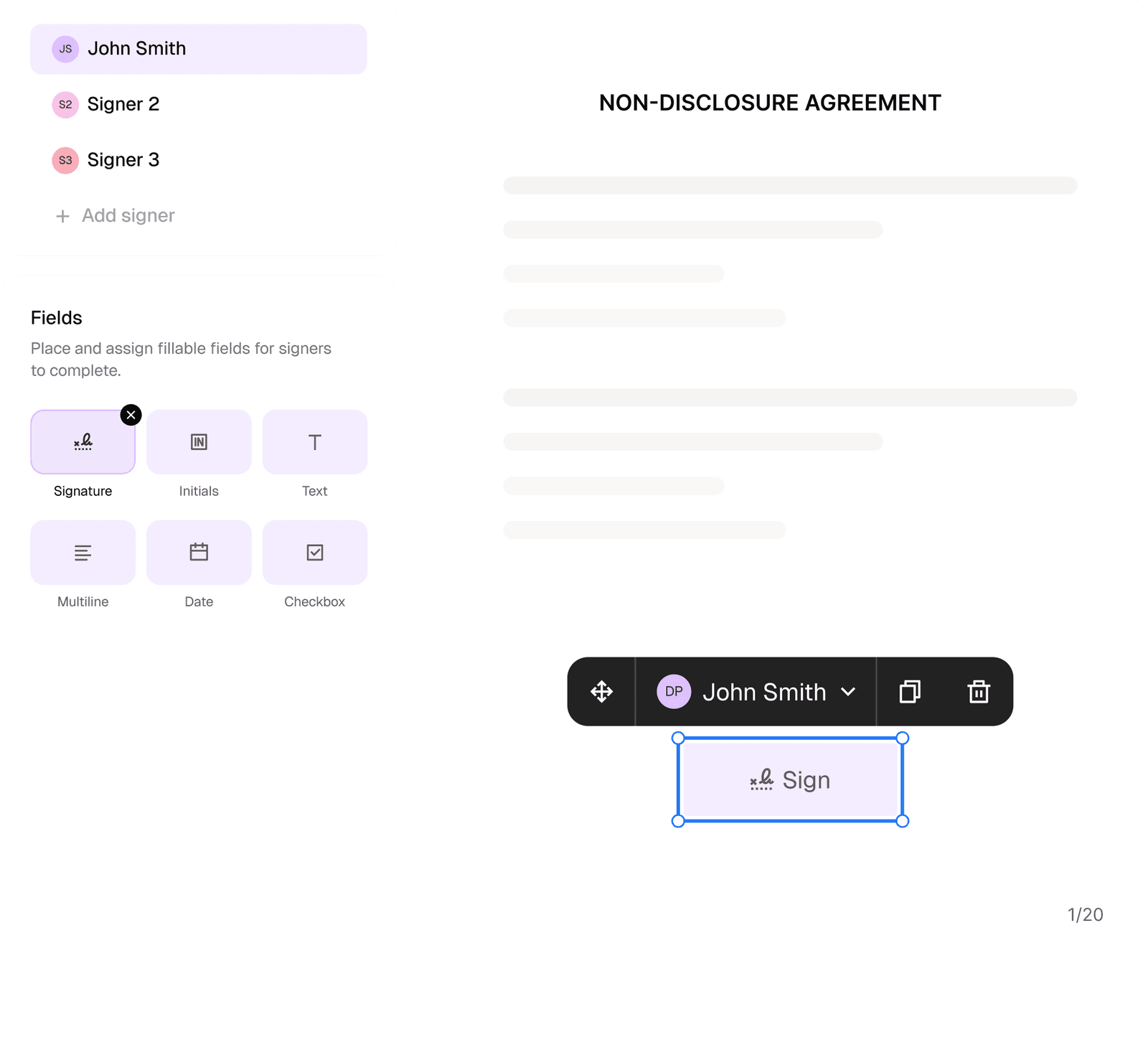
Sign documents and collect legally binding signatures. Invite up to ten people to sign in any order, track the progress, and send reminders.
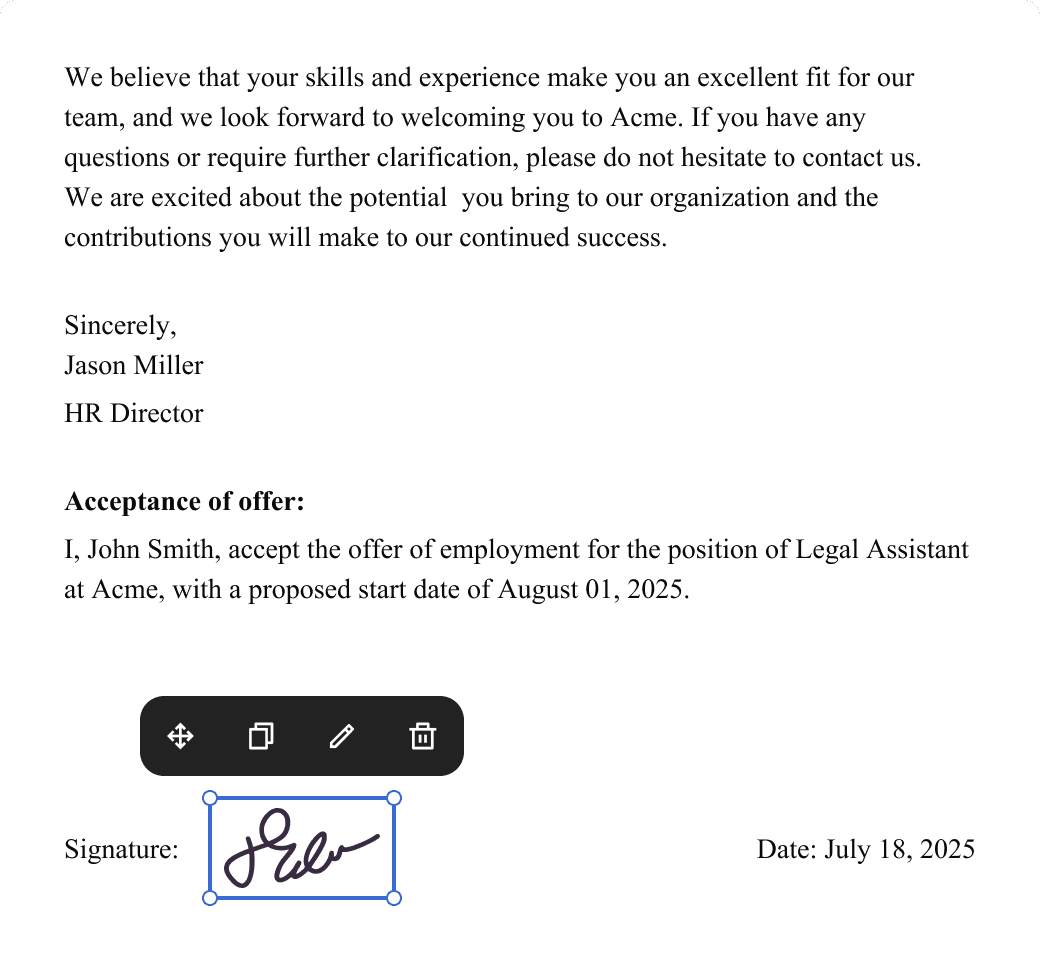
Request legally binding signatures
Invite up to ten people to sign your document in any order. Get a finalized, audit-ready copy without chasing signatures.
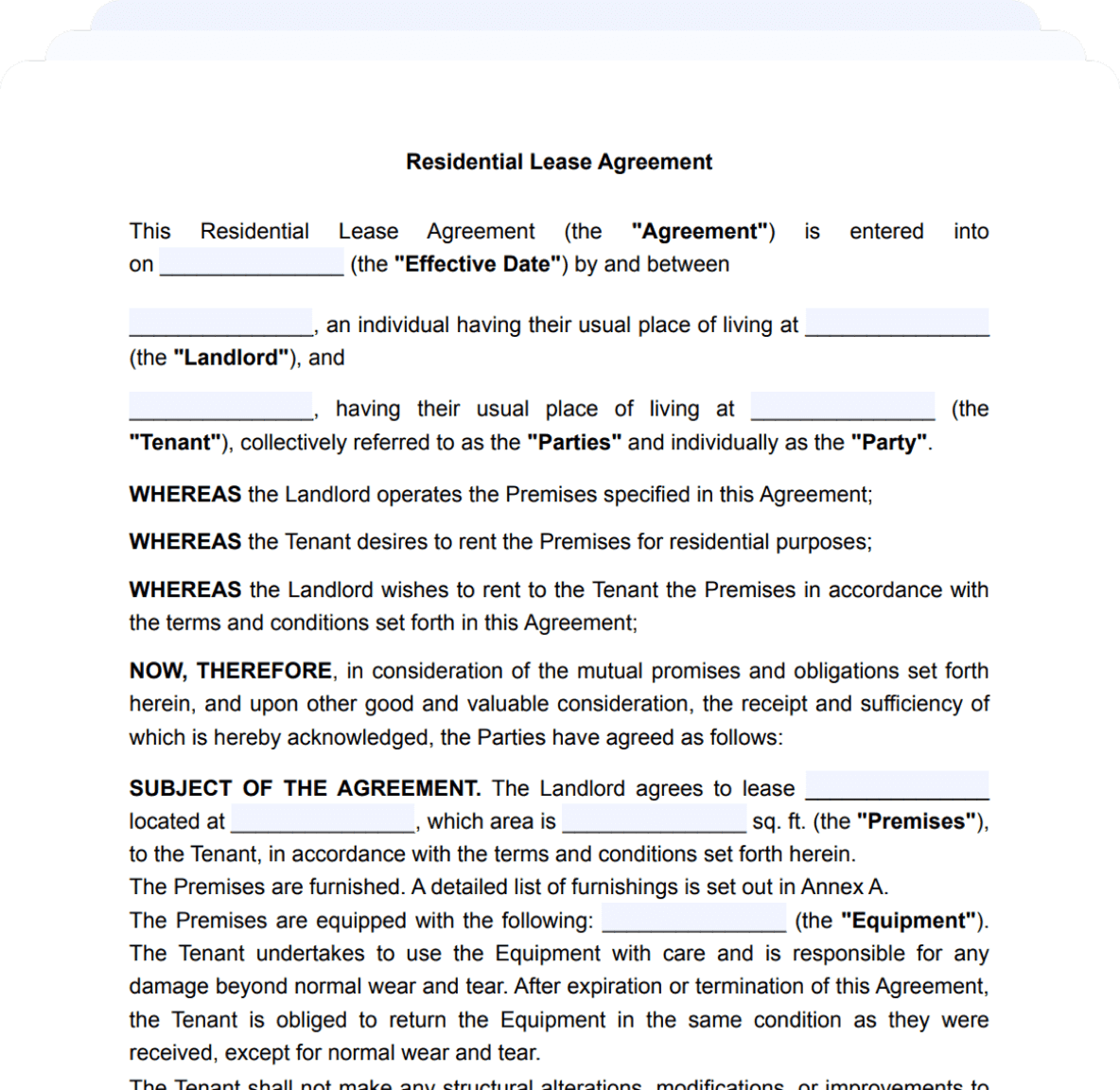
Skip the drafting.
Choose from 2,500+ templates
Browse templatesChoose a template
Fill in details
Sign and download