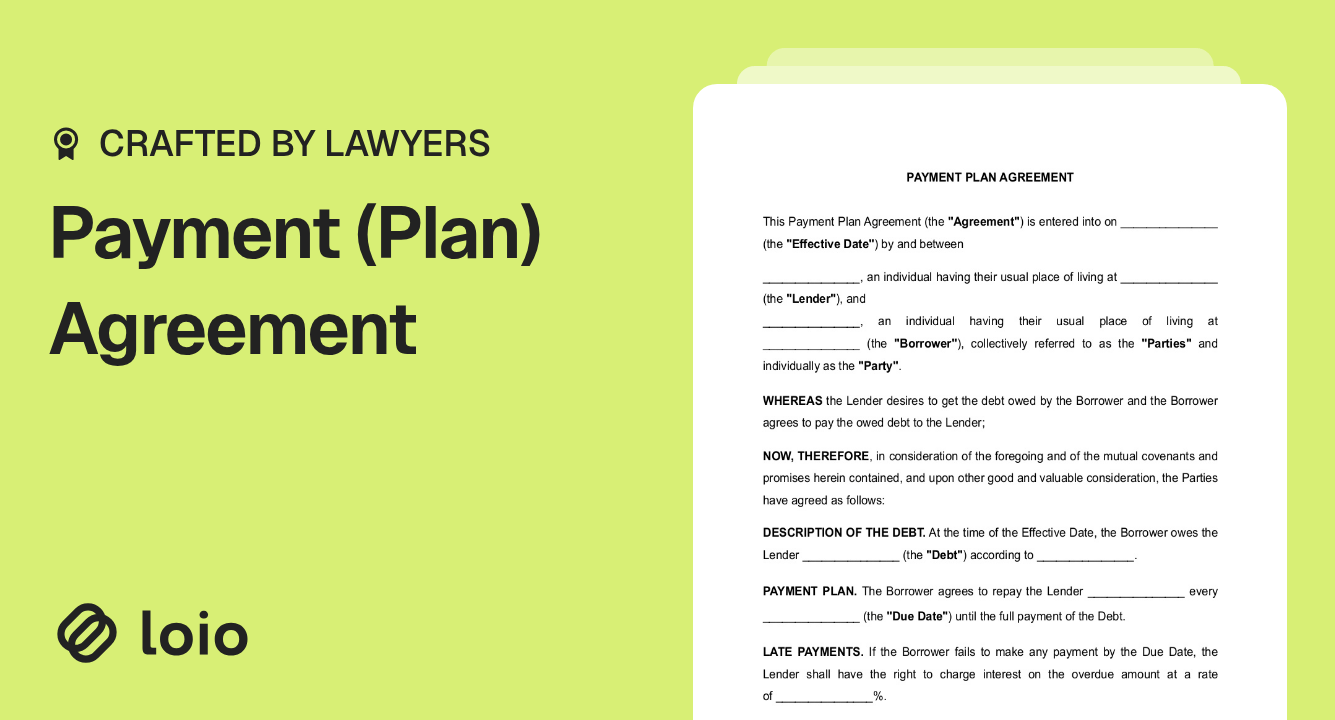
Free template
Free Payment Agreement Template

What Is a Payment Agreement?
Copy section linkA payment agreement is a contract that sets out how one party will repay money owed to another. It can be used for personal loans, business debts, unpaid invoices, installment purchases, settlement payments, and other transactions that require a clear repayment plan.
The agreement records the key terms in writing, including the total amount owed, payment schedule, interest rate, late fees, accepted payment methods, and what happens if the debtor fails to pay. Having these details in one document can reduce misunderstandings and provide evidence of the agreed terms if a dispute arises.
A payment agreement may be secured or unsecured. A secured agreement is backed by collateral, such as a vehicle, equipment, or other property. An unsecured agreement is based mainly on the debtor’s promise to repay. Since rules on interest, late fees, and debt collection differ by state, the parties should review applicable state requirements before signing.
When to Use a Payment Agreement Contract
Copy section linkUse a payment agreement when:
A borrower needs to repay a personal or business loan in installments;
A customer owes an unpaid invoice and wants to pay over time;
A buyer is purchasing goods or services through a payment plan;
A landlord and tenant agree on repayment of past-due rent;
A creditor agrees to accept smaller payments instead of immediate full payment;
A debtor wants written proof of the agreed repayment schedule;
A business wants to document payment terms for a private transaction;
The parties want to add interest, late fees, collateral, or default rules.
When not to use a payment agreement:
If you are creating a new loan with detailed lending terms, use a loan agreement instead;
If you only need a simple written promise to repay money, use a promissory note;
If you need to demand payment before negotiating terms, use a demand letter;
If the payment is connected to the sale of property, equipment, or a vehicle, consider using a bill of sale together with the payment agreement;
If the debt is already in litigation, bankruptcy, or collection, consider getting legal advice before signing.
Parties to the Payment Agreement
Copy section linkBorrower: The person or business that receives money or owes a debt and agrees to repay it under the payment plan.
Lender: The person, business, or financial institution that is owed money and receives the scheduled payments.
Guarantor or surety: A third party who agrees to repay the debt if the borrower fails to do so.
Co-borrower: Another person or business that shares responsibility for repaying the debt.
What to Include to the Payment Contract
Copy section linkBorrower information: Lists the borrower’s legal name, address, and contact details so the person or business responsible for repayment is clearly identified.
Lender information: Lists the lender’s legal name, address, and contact details so payments are directed to the correct person or organization.
Original debt amount: States the total amount the borrower owes before any payments, discounts, interest, or fees are applied.
Reason for the debt: Explains whether the balance comes from a loan, unpaid invoice, purchase, settlement, rent, services, or another financial obligation.
Down payment: Records any initial amount the borrower pays before the regular installment schedule begins.
Payment schedule: Sets the payment amount, due dates, frequency, and final repayment date.
Payment method: Explains how the borrower will make payments, such as by check, wire transfer, ACH, money order, PayPal, credit card, or another agreed-upon method.
Interest rate: States whether interest applies and explains how it will be calculated.
Late fees: Explain whether the borrower must pay additional charges for missed or overdue payments.
Prepayment terms: State whether the borrower may repay the debt early and whether any prepayment fee applies.
Default clause: Defines what counts as a default, such as missed payments, returned payments, or failure to follow the agreement.
Remedies after default: Explains what the lender may do if the borrower defaults, such as demanding immediate payment of the remaining balance, charging fees, or taking legal action.
Key Terms of the Payment (Plan) Agreement
Copy section linkPrincipal debt: The original amount of money owed before interest and fees.
Payment schedule: The timeline outlining when payments should be made.
Late payment penalties: The agreed-upon consequences for missing or delaying payments.
Severability: A clause stating that if one part of the agreement is found invalid or unenforceable, the remaining provisions will continue to apply.
Usury: Charging interest above the maximum rate allowed by applicable law.
How to Fill Out a Payment Agreement
Copy section linkA payment agreement template gives the parties a structured starting point for creating a repayment plan. Instead of writing a payment agreement letter from scratch, the debtor and creditor can use a template to organize the essential terms in one document.
Enter the effective date and party information. Add the date the agreement begins, along with the full legal names, addresses, phone numbers, and email addresses of the borrower and lender.
Describe the debt. Explain why the money is owed, such as a loan, unpaid invoice, purchase, settlement, rent balance, or service agreement.
State the total amount owed and any down payment. Enter the principal debt amount and record any upfront payment made before regular installments begin.
Create the payment schedule. Add the payment amount, frequency, due dates, first payment date, final payment date, and accepted payment method.
Add interest, late fees, and prepayment terms. State whether interest applies, how it is calculated, when late fees are charged, and whether the borrower may repay the debt early without a penalty.
Explain the default and remedies. Define what counts as default and describe what the lender may do, such as demanding the remaining balance, charging fees, or taking legal action.
Add collateral and guarantor details, if applicable. Identify any property securing the debt and include the guarantor’s or surety’s name, contact information, and signature when another person backs repayment.
Choose the governing law and add optional clauses. State which state’s law applies and include confidentiality, jurisdiction, severability, or other terms the parties need.
Complete notarization and keep copies. Sign before a notary public if required or preferred, and make sure each party receives a signed copy for financial, tax, and legal records. If a party only has a scanned or photographed copy of the signed agreement, make the scanned PDF searchable before filing it.
If the agreement involves a large debt, a business transaction, collateral, a guarantor, or a disputed balance, consider asking a lawyer to review it.
Payment Agreement vs. Promissory Note
Copy section linkA payment agreement and a promissory note both deal with repayment, but they are not identical.
A payment agreement is often used when the parties need a detailed repayment plan for an existing debt, invoice, settlement, or purchase balance. It usually includes payment dates, methods, late fees, default rules, and sometimes collateral or confidentiality terms.
A promissory note is usually a simpler promise to repay a loan. It focuses on the borrower’s obligation to pay back money under stated terms. A promissory note may be enough for a straightforward loan.
Sources
Related documents
Also read