Updated July 22, 2026
9 min read
Rent a Space for Business: Commercial Leasing Guide

Rent a Space for Business: Commercial Leasing Guide
Content
Renting a space for business is a major step. It usually means committing to monthly payments, signing a commercial lease, and connecting your operations to one physical location. Because of this, the decision matters more than it may first appear. In 2025, the U.S. commercial leasing industry included approximately 379,000 businesses, showing steady participation across different sectors.
The right choice of the commercial space can support growth, improve customer experience, and help your business operate more professionally. This guide walks you through the leasing process step by step, in plain language, so you know what to expect before signing anything.
Why Do Businesses Rent Space?
Not every business needs an office, store, or warehouse on day one. Many entrepreneurs start from home or work fully online. It’s cheaper, more flexible, and easier to manage in the beginning.
But as your business grows, you may realize that working remotely is no longer enough. At some point, renting a physical space becomes a practical step forward — and that usually means signing a commercial lease, a contract between a landlord and a business that allows the business to use a property for commercial purposes in exchange for rent.
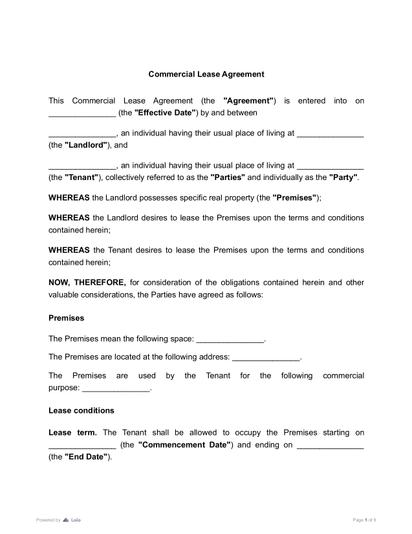
And here are the most common reasons why you need to rent a space for business:
- 1
Meeting clients or customers in person. A professional space builds trust and makes meetings more comfortable.
- 2
Selling products directly to the public. If you run a retail business, you need a location where customers can walk in and buy.
- 3
Storing inventory or equipment. As your stock or tools grow, your home may simply run out of space.
- 4
Hiring employees who need a shared workspace. Teams often work better when they can collaborate in the same place. As you build your team in the new space, ensure you have the essential HR documents for every business ready to stay compliant with 2026 labor laws.
- 5
Meeting zoning, licensing, or insurance requirements. Some businesses are legally required to operate from approved commercial premises.
Renting space for business can add credibility and structure. But it also creates fixed costs and legal obligations. In the U.S., the commercial real estate market generates over $1 trillion in annual revenue, making long-term commitments especially important. Renting too early or without a clear purpose often leads to unnecessary expenses.
Types of Spaces Small Businesses Rent
Often, business owners approach leasing emotionally, focusing on how the space looks instead of how it performs financially and operationally. In reality, office space should serve clear business goals: client trust, workflow efficiency, and long-term flexibility. All commercial spaces are created differently. The type you choose should match how your business actually operates.
Office space
If you run a service-based business in the U.S., such as an agency, accounting firm, consulting practice, or legal services company, office space is about more than square footage. It shapes how clients perceive your brand and how efficiently your team operates.
The biggest mistake business owners make when choosing office space is focusing on base rent rather than total occupancy cost. In most U.S. markets, the rent you see advertised is only part of what you’ll actually pay each month — additional building expenses and operating costs are often added on top of it; your real monthly numbers will include:
Base rent;
Operating expenses (CAM charges);
Utilities;
Parking fees;
After-hours HVAC;
Annual rent escalations.
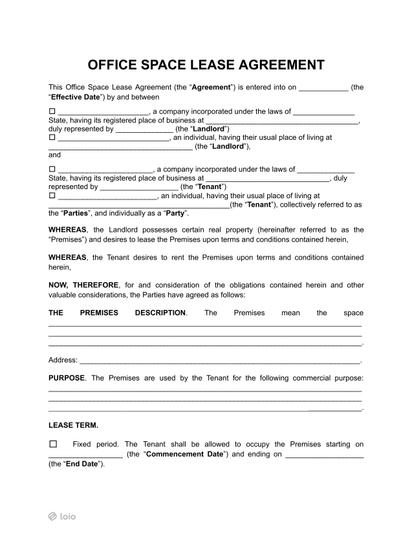
When you find a strong office option, don’t rush to sign. Discuss the office space lease carefully before making any commitment. The document is a legally binding agreement that defines your financial obligations, responsibilities, and rights for years ahead. Negotiate the important points with your realtor or landlord, especially anything unclear about costs, maintenance responsibilities, renewal terms, escalation clauses, or exit options.
Don’t just ask whether the building has internet — ask whether there’s a backup option. If your business depends on video calls, cloud systems, or client communication, one provider isn’t always enough. Also, confirm practical details like when the building is accessible, whether you’ll be charged extra for evening or weekend HVAC, and how meeting rooms are booked and billed.
It’s equally important to look carefully at renewal terms and whether rent increases are capped. The smartest tenants build flexibility into the agreement from day one. This is the stage where small changes in wording can protect you long-term. Review the office lease carefully. You can use an AI summary tool to quickly understand key terms, hidden costs, and risk areas.
Retail space
Retail space directly impacts your revenue and is best suited for customer-facing businesses such as boutiques, salons, cafés, fitness studios, and specialty stores that rely on walk-in traffic. A weak location can quietly damage even a strong business model. In retail, visibility, accessibility, and customer flow matter more than square footage or interior design. Before signing a lease, evaluate how the space performs in real conditions — not just how it looks during a showing.
Before committing, check:
Foot traffic at different times of day;
Parking access and curbside pickup rules;
Utility capacity (power, plumbing, ventilation);
Signage permissions (landlord and city rules);
History of operating expense increases.
Sometimes paying more for a visible corner location produces better long-term results than choosing a cheaper, hidden space. Retail performance depends on conversion, and conversion starts with visibility. Always confirm that your business activity aligns with zoning and permitted use by checking the local city or county planning department website and reviewing your lease’s permitted use clause.
Warehouse or industrial space
Warehouse or industrial space is best suited for inventory-heavy businesses such as e-commerce companies, distributors, logistics operators, and light manufacturers. Industrial leases in the U.S. often look simple at first glance — until small operational details start affecting daily performance. If your business depends on logistics, your space must support speed and scalability, so you need to evaluate:
Truck turning radius and loading dock configuration;
Number and size of dock doors;
Ceiling height for racking systems;
Floor load capacity;
Verified electrical capacity (amps and phase);
Sprinkler system classification;
24/7 access and yard security;
Lease structure (many are triple net with pass-through operating costs).
Carefully review the warehouse lease agreement as well. This contract between the landlord and the tenant outlines the terms of renting industrial space, including rent structure, permitted use, maintenance responsibilities, operating expenses, and the lease duration. Make sure the agreement clearly defines who is responsible for each part. Small clauses in an industrial lease can have a major financial impact over time.
If something in the lease is not ideal for you, remember that it can often be negotiated and revised before signing. You can use a PDF edit tool to finalise the document, suggest changes, insert additional clauses, or modify specific language in the existing agreement.
Flexible or mixed-use space
Mixed-use spaces are common in U.S. urban and suburban markets because they allow small businesses to combine multiple functions under one roof. They are especially useful for companies that need to rent a small space for business, together with storage, light operations, or a small showroom. This format can reduce costs and simplify logistics by avoiding separate leases.
These spaces typically work well if you need:
A showroom in the front and inventory storage in the back;
Office space combined with fulfillment;
Customer pickup alongside administrative work.
However, advertised flexibility does not always mean legal flexibility. Always confirm which business activities are permitted under zoning, whether customer visits are allowed, whether there are delivery restrictions, and whether noise or traffic limits apply. Review insurance requirements as well, since mixed-use operations may trigger higher coverage standards.
Shared or co-working spaces
Coworking is often the most practical starting point for solo founders and early-stage teams. It allows you to establish a professional presence without committing to a long-term lease or high fixed expenses.
In most U.S. markets, coworking memberships typically include:
Furnished workstations;
Utilities;
Internet access;
Flexible, short-term agreements.
If you found the appropriate co-working space, clarify what is included in the base price and what costs extra, such as meeting room bookings or mail-handling services. Understand the cancellation terms, confirm whether the address can be used for business registration or licensing, and assess whether the space offers enough privacy for client calls or sensitive work.
Also consider how easily you can scale if you need additional desks. Coworking works best as a testing phase or transitional solution — it supports flexibility, but it may not be ideal as a long-term headquarters for a growing team.

Commercial lease or sublease?
What if you need to test a location before making a long-term commitment? In that case, subleasing can be a practical solution. Subleasing means you rent the space from another tenant, not directly from the landlord. The original tenant already has a lease and is renting out part (or all) of their space because they no longer need it or want to reduce expenses. Subleases are often shorter-term and sometimes more affordable. The space may already be furnished and ready to use, which makes the move faster and easier.
In many major U.S. cities, sublease space (companies renting out unused offices) reached record highs as businesses downsized or switched to hybrid work. Sublease space grew by nearly 130 % since mid-2020, reaching roughly 210 million square feet — far above the previous peak during the Great Recession.
By contrast, when you lease commercial space directly from a landlord, you negotiate the agreement yourself. This usually gives you more control, stronger legal protection, and the ability to customize the space. But leases are typically longer (3–10+ years) and require a greater financial commitment.
When you have already decided that a sublease is a better option for you, use a sublease agreement. This is the contract between the original tenant and the new subtenant. It confirms that the subtenant must follow the conditions of the main lease. In most cases, the landlord must approve the sublease before it becomes valid.

How to Rent a Business Space With Little or No Money
Renting commercial space with limited cash is possible in the U.S., but it requires strategy and realistic expectations. “No money” rarely means zero cost — it usually means reducing upfront expenses while still proving you’re financially reliable. The goal is to lower initial pressure without creating long-term risk.
If your budget is tight, focus on flexible and negotiable options such as:
- Subleasing from an existing tenant;
- Renting shared or coworking space;
- Choosing a shorter initial lease term;
- Negotiating one or two months of free rent;
- Requesting a lower or phased security deposit;
- Delaying full build-outs or negotiating gradual move-ins.
At the same time, be prepared to show that you can meet your obligations. Landlords may ask for bank statements, a personal guarantee, a co-signer, or a simple business plan outlining expected revenue. Renting “with no money” doesn’t eliminate responsibility — it restructures how and when you pay. The strongest approach is balancing reduced upfront costs with clear financial credibility.
How to Rent a Space for Business: Step by Step
With the U.S. accounting for over 51% of all global commercial real estate transaction volume ($457.9 billion of $888.6 billion), choosing the wrong space can be costly and hard to reverse. So how do you make the right choice — without legal confusion or costly mistakes?

Step 1. Confirm that a physical location is necessary
Ask yourself: what problem does this space solve? For example, does it allow you to legally operate (like a salon that needs a licensed commercial address), improve revenue (like a retail shop that depends on walk-in traffic), or solve a logistics issue (like an e-commerce business that has outgrown home storage)? If the answer isn’t clear, it may be better to wait.
A marketing consultant who works entirely online may not need a full-time office — an occasional coworking space could be enough for client meetings.
On the other hand, a bakery cannot operate without a properly zoned commercial kitchen, and an e-commerce brand storing a large inventory may outgrow a home garage quickly.
Think about whether the space will generate income or simply add fixed costs. If your work can be done remotely, through shared offices, or by using third-party storage, committing to a long-term lease too early may create unnecessary financial pressure and obligations.
Step 2. Define non-negotiables and flexible features
Before you start touring spaces, clearly separate what your business must have from what would simply be nice to have. This prevents emotional decisions later — especially when you fall in love with a space that doesn’t truly fit your operations.
Start by identifying your non-negotiables. These are the features without which your business cannot legally or practically operate:
Zoning and permitted use that fully match your activity;
Minimum square footage required for equipment, staff, or inventory;
Utility capacity (power, plumbing, ventilation, internet reliability);
Required access hours (24/7, weekends, evenings);
Budget ceiling for total monthly occupancy cost;
Parking or truck access if operations depend on it.
Then define what is flexible — features that improve comfort or image but are not critical:
Premium finishes or modern design;
Corner visibility vs. standard frontage;
Extra storage space beyond current needs;
Larger meeting rooms than necessary;
Prime floor location within the building.
Being honest about this distinction protects your budget and keeps negotiations grounded in business logic. Non-negotiables protect operations. Flexible features can be adjusted — or sacrificed — if the financial terms make sense.
Step 3. Narrow down the right location
Location is not just about the address — it directly affects revenue, hiring, logistics, and daily efficiency. A lower rent in the wrong area can quietly cost you more in lost customers, longer delivery times, or employee turnover.
Evaluate the location from four practical angles:
- 1
Customers: How easy is it for them to reach you? Is the area visible, safe, and convenient? Are you close to complementary businesses or hidden in low-traffic zones?
- 2
Employees: Is the commute reasonable? Is public transportation nearby? Is there parking? High turnover often happens when the location is inconvenient.
- 3
Suppliers and deliveries: Can trucks access the building easily? Are there time restrictions for deliveries? Will traffic slow down operations?
- 4
Operating costs: Are property taxes or local fees higher in this area? Does the neighborhood support your pricing model?
Visit the location at different times of day. Observe traffic flow, parking availability, and general activity. Talk to neighboring businesses if possible.
When Starbucks expanded rapidly, it focused on high-traffic, easy-to-reach locations rather than the lowest rent. Being visible and convenient helped drive daily foot traffic and repeat customers — showing that the “right” location often pays for itself through better access and higher sales.
Step 5. Estimate required square footage
Commercial rent in the U.S. is usually quoted per square foot per year, even though you pay monthly. In some markets, such as parts of California, landlords may quote prices on a monthly basis instead. Always confirm which format is being used.
Plan square footage for:
Work areas;
Customer or waiting areas;
Storage;
Equipment and safety clearances.
The standard formula is simple: Price per square foot × total square footage = annual rent
Example:
5,000 sq ft office at $40 per sq ft
$40 × 5,000 = $200,000 per year
$200,000 ÷ 12 ≈ $16,700 per month
This amount reflects base rent, not your total occupancy cost. Also, there are useful commercial square-foot rent calculators you can use to model these costs before signing a lease — for example, the Omni Calculator price per square foot tool or the OmniKit commercial rent calculator, which help you plug in square footage, rent rate, and additional costs to estimate monthly and annual expenses.
Step 6. Plan for future growth without overcommitting
Growth matters, but planning too far ahead can strain your cash flow. It’s safer to lease office space when you truly need it right now. If possible, choose a location that allows you to expand later in the same building. Also, check whether the lease offers flexible or reasonable renewal terms. This way, you can grow without locking yourself into unnecessary costs too early.
Step 7. Review the building and property details
The physical condition of the property will affect your daily operations, repair costs, and even your reputation with customers. Start with the basics. Look at the age and overall condition of the property. Check the roof, common areas, restrooms, elevators, HVAC systems, and parking areas. Signs of deferred maintenance — such as leaks, cracks, poor lighting, or broken fixtures — may indicate more serious future problems.
Next, consider accessibility and compliance. Is the entrance easy for customers, employees, and deliveries? Does the space meet basic ADA accessibility requirements? Are emergency exits clearly marked and functional? If you operate a retail or service business, poor accessibility can limit customer flow and create legal risk.
If possible, talk to other tenants in the building. Ask about maintenance response times and unexpected charges. The goal is to understand not just the space, but how it functions over time.
Step 8. Set a hard budget limit
From a legal perspective, your business acts as the lessee under the lease, meaning you are financially responsible for all agreed-upon payments for the full lease term. Beyond base rent, a lessee must budget for additional costs such as utilities, common-area charges (CAM), insurance, build-out expenses, property taxes (in some lease types), maintenance contributions, and administrative fees. Planning for these upfront prevents cash-flow problems after move-in.
To set a safe budget ceiling, follow a practical formula:
- Start with projected monthly revenue.
Look at past sales (if you’re already operating), industry benchmarks, signed contracts, or conservative sales forecasts. If you’re launching a new business, estimate revenue using expected pricing × realistic customer volume, not best-case scenarios. - Determine a safe occupancy percentage.
In many industries, rent and occupancy costs should generally stay within 5–15% of gross monthly revenue, depending on your margins and business type (retail may tolerate higher, service businesses often lower). - Calculate your maximum allowable occupancy cost.
Example:
If your projected monthly revenue is $50,000 and you aim for 10% occupancy cost:
$50,000 × 10% = $5,000 maximum total monthly space cost. - Subtract non-rent fixed costs.
Account for payroll, inventory, loan payments, and marketing before committing to rent. - Add a safety buffer (10–20%).
Unexpected expenses happen — operating cost increases, repairs, seasonal dips.
Step 9. Research the landlord or property owner
A lease is an ongoing relationship. Responsiveness and management style matter more than you might expect. Look for online reviews from current or past tenants to see how issues are handled in practice. You can review landlords or property management companies on platforms such as Google Reviews, Yelp, and the Better Business Bureau (BBB) website. In some cases, you may also find feedback in local Facebook groups, Nextdoor communities, or commercial real estate listings on sites like LoopNet.
Ask direct questions about response times, repairs, and who manages the property day to day. If possible, talk to other tenants in the building about their experience. A landlord who communicates clearly and fixes problems quickly can save you time, money, and frustration over the life of the lease.
Step 10. Negotiate and document lease terms
Anything promised verbally must be reflected in writing. In commercial leasing, verbal assurances are not enforceable unless they are included in the final signed agreement. This applies to:
Free rent periods;
Repair commitments;
Tenant improvement (build-out) allowances;
Parking rights;
Signage approvals;
Renewal options or rent caps.
Always check the insurance requirements listed in the lease. Many agreements require the tenant to carry specific coverage, such as general liability or property insurance, before move-in. Make sure your policy meets the lease terms and is active before you take possession of the space.
It is also smart to document the condition of the space before move-in. Take dated photos and videos of the commercial property — including walls, floors, ceilings, restrooms, HVAC units, dock doors, and any existing damage. You can attach these photos as an exhibit to the lease or keep them on file with a written acknowledgment from the landlord. This protects you from being held responsible for pre-existing issues when the lease ends.
Make sure all negotiated terms are clearly written into the lease or attached as an addendum. A lease addendum is simply an extra document added to the main lease that explains changes, adds new terms, or clarifies specific agreements.
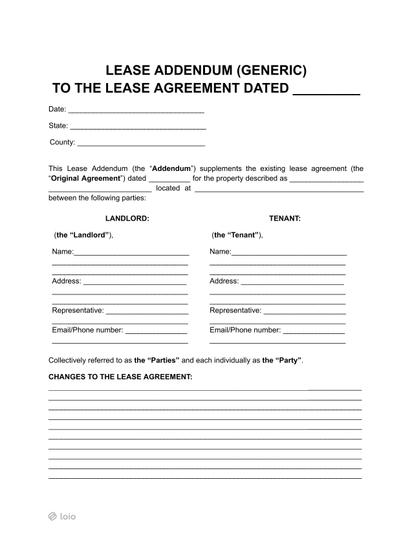
Once both parties sign it, it becomes part of the lease and is legally binding. Many small businesses now use contract management tools to review, edit, and sign leases more efficiently. These platforms can help organize documents and reduce errors — but they don’t replace understanding what you’re agreeing to.

Renting space for business isn’t just about finding four walls — it’s about making a long-term legal and financial commitment that fits your business reality today and tomorrow.
Take your time. Ask questions about the requirements for leasing a commercial space. Read every document carefully. And when something feels unclear, it’s worth slowing down or getting professional advice. When you’re ready to sign, review the agreement one more time — whether e-signing or in person — and make sure you fully understand the terms before committing. A well-chosen space supports growth. A rushed decision creates stress.
More guides
September 1
7 min read
How to Provide Proof of Employment: Documents and Steps

September 9
8 min read
Triple Net Lease vs Gross Lease: Costs, Risks, and Who Pays What

July 26
10 min read
Commercial Real Estate Leasing Process: 2026 Guide
July 20
12 min read
How to Sublease Your Office Space: 5 Steps to Protect Your Business

July 24
4 min read
What Is a Fixed-Term Lease, and How Is It Different From an Automatic Renewal Lease?
July 20
4 min read
Addendum vs. Amendment: Change Your Purchase Agreement Properly
One home for your
agreements
Edit PDFs seamlessly
Tweak agreements before signing or sending for signatures. Update details, add or remove clauses, adjust formatting, and redline changes instantly.
eSign legally and securely
Sign documents and collect legally binding signatures. Invite up to ten people to sign in any order, track the progress, and send reminders.
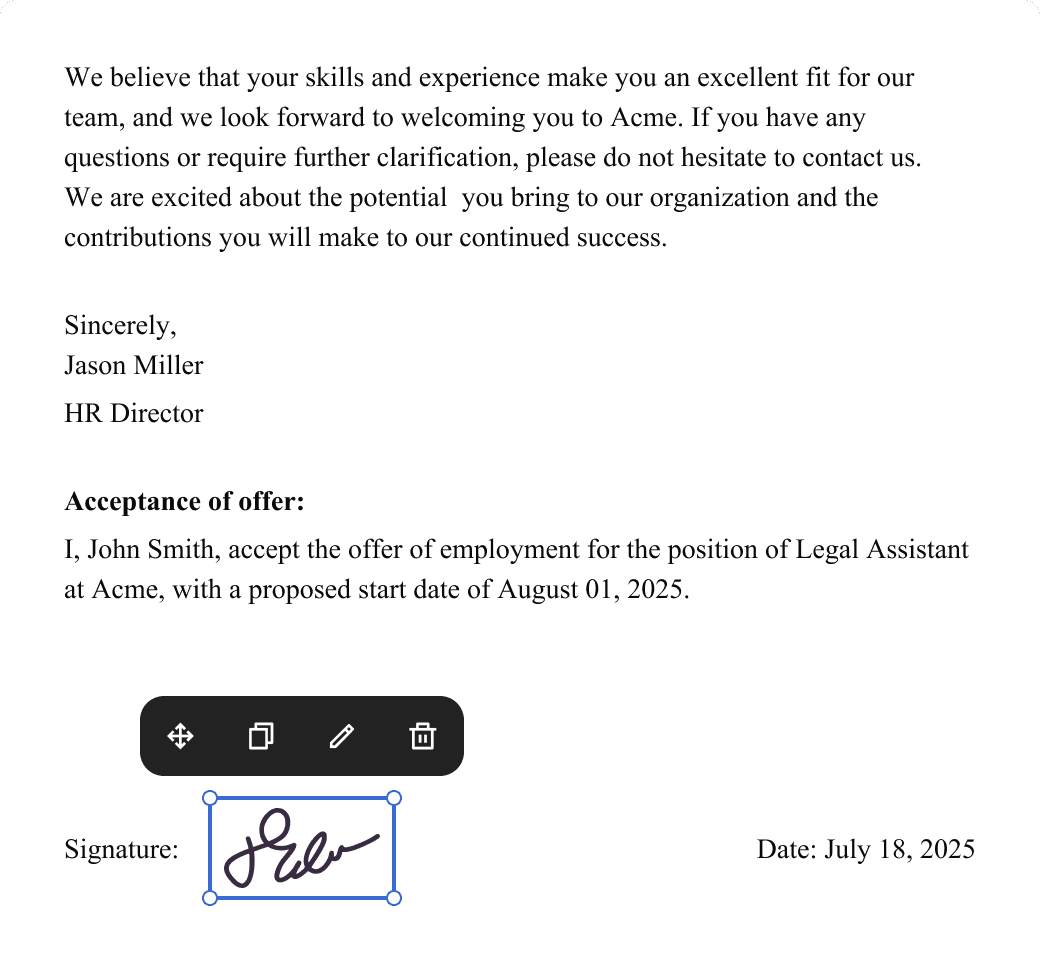
Request legally binding signatures
Invite up to ten people to sign your document in any order. Get a finalized, audit-ready copy without chasing signatures.
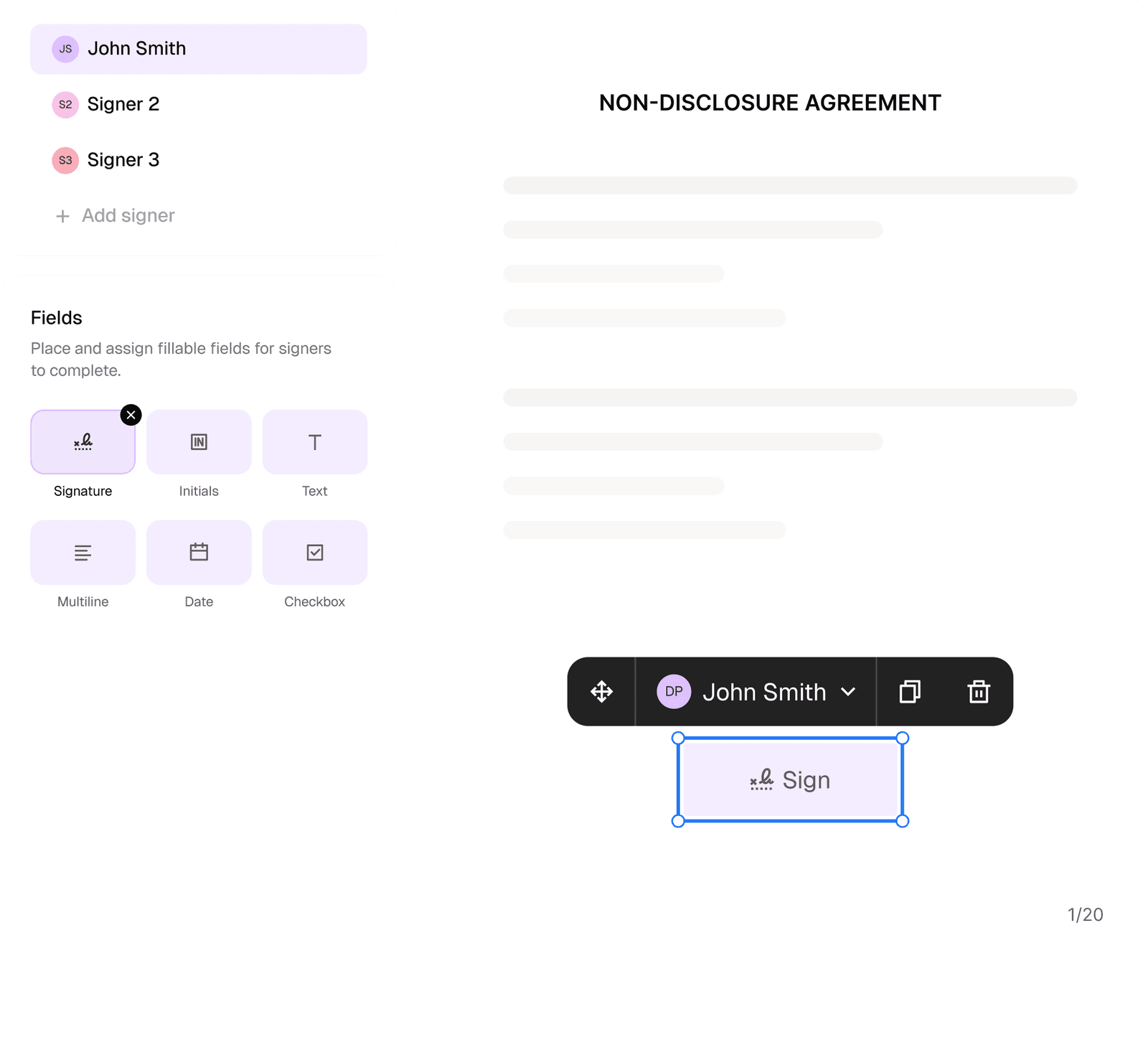
Skip the drafting.
Choose from 2,500+ templates
Browse templatesChoose a template
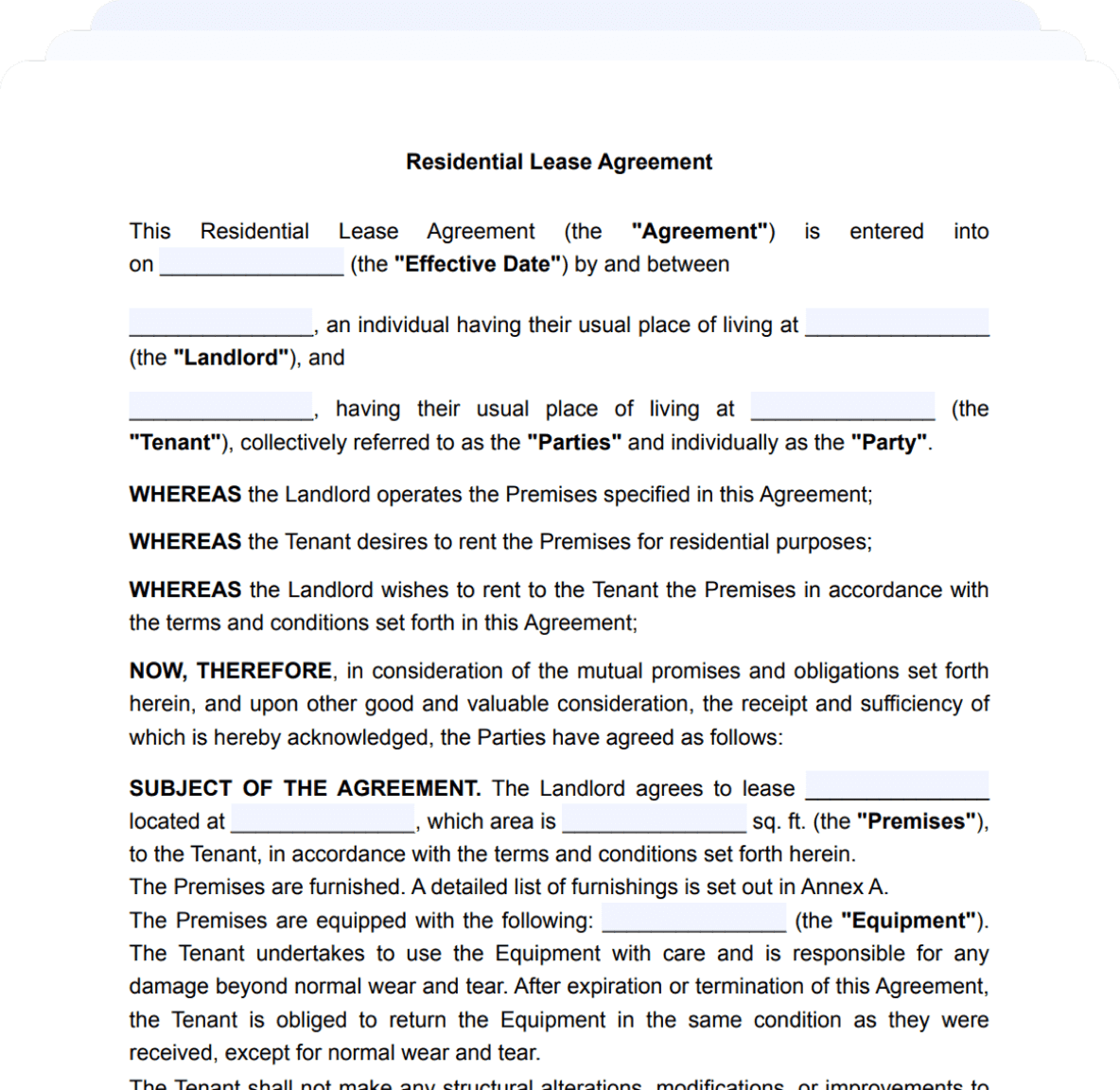
Fill in details
Sign and download