Updated October 15, 2026
10 min read
HR Documents for US Small Businesses: The 2026 Compliance Guide

HR Documents for US Small Businesses: The 2026 Compliance Guide
- Why HR Forms and Documents Matter
- HR Paperwork For Hiring
- Human Resources Documents for Employees
- Payroll, Tax, and Compliance Documents
- Benefits enrollment docs
- People Management Documentation
- Termination and Offboarding Documents
- How To Organize and Store Essential HR Documents
- Essential HR Documents Checklist
Content
If you run a small business, HR paperwork can quickly turn into a weak spot. Hiring decisions are made quickly, policies evolve, roles change, and payroll must stay accurate, often without a full HR team to keep everything organized. When human resources documents are missing or poorly managed, the result can be disputes over pay or job duties, classification mistakes, compliance gaps, and wasted time trying to find the right record when something goes wrong.
This guide is written for U.S. small business owners and managers who need a practical way to organize employee paperwork. It walks through the essential HR forms and documents businesses need, explains why each one matters, and shows how they help reduce risk across hiring, employment, payroll, and offboarding.
Why HR Forms and Documents Matter
HR documents matter because they create a consistent system for employment decisions rather than a series of one-off judgments. They help define what was promised, what rules applied, and what steps the business actually took. That becomes especially important when you need to justify a hiring decision, explain a pay change, respond to a complaint, or show that required procedures were followed.
When documentation is weak, businesses often run into three practical problems:
Managers make decisions based on memory rather than written standards, leading to inconsistent treatment.
The company has no clear record of what the employee agreed to, received, or acknowledged, which makes disputes harder to resolve.
Missing or incomplete forms create compliance gaps that can become expensive during audits, investigations, or termination disputes.
48% of employees struggle to find documents quickly, which makes poor document organization a direct productivity problem rather than just an admin issue.
Business registration requires HR documents, and after registering a business in the United States, employers are expected to maintain core human resources documents that establish lawful hiring and employment practices. These include recruitment documents, employment agreements, payroll and tax forms, compliance records, and workplace policies.
Together, these HR documents for small businesses demonstrate that the business is operating in compliance with U.S. labor laws from the start. They also serve as employment document examples that show how hiring, pay, and policies were handled in writing.
In practice, this matters because fewer than 1 in 3 small businesses have even 1 employee dedicated exclusively to HR, so documentation gaps happen easily without a system.
A U.S. business must maintain employee documents that support payroll, tax reporting, work authorization, performance management, and termination decisions, as the employer must comply with U.S. labor laws.

HR Paperwork For Hiring
Hiring is where most HR problems either begin or get prevented. What you put in writing here shapes expectations, sets boundaries, and gives you a clean record if something gets disputed later.
Job description
Next, make the role real on paper. A job description clarifies responsibilities, reporting lines, and expectations, and serves as a reference point when scope expands or performance is reviewed.
Job application form
A good hiring process starts by collecting the same core information from every candidate. Using a standardized job application form helps you streamline screening, save time on back-and-forth conversations, and quickly identify who meets your basic hiring criteria before you invest more time in interviews. It also gives you a consistent written record of what each candidate submitted, which makes the process easier to manage as applications start to pile up.
Offer letter
Before day one, confirm the deal in writing. In most cases, that means sending an offer letter that clearly documents the essentials, such as the role, pay, start date, and any key conditions like contingencies or required paperwork, so both sides are aligned before work begins.
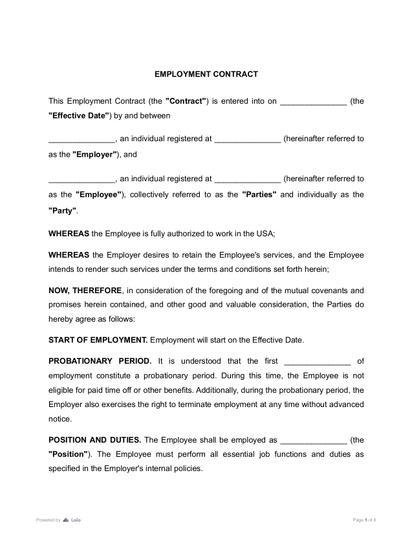
Employment contract
Once the person joins, the relationship needs a stronger framework. You may need an employment contract to set the ongoing rules around duties, compensation mechanics, confidentiality, and termination, which is exactly what gets tested when issues arise.
Independent contract agreement
If the role is not employment, the documentation should clearly reflect that arrangement, and setting the scope of work, payment terms, and responsibilities in an independent contractor agreement helps demonstrate that the worker is engaged as a contractor rather than treated like an employee, reducing classification risk from the start.
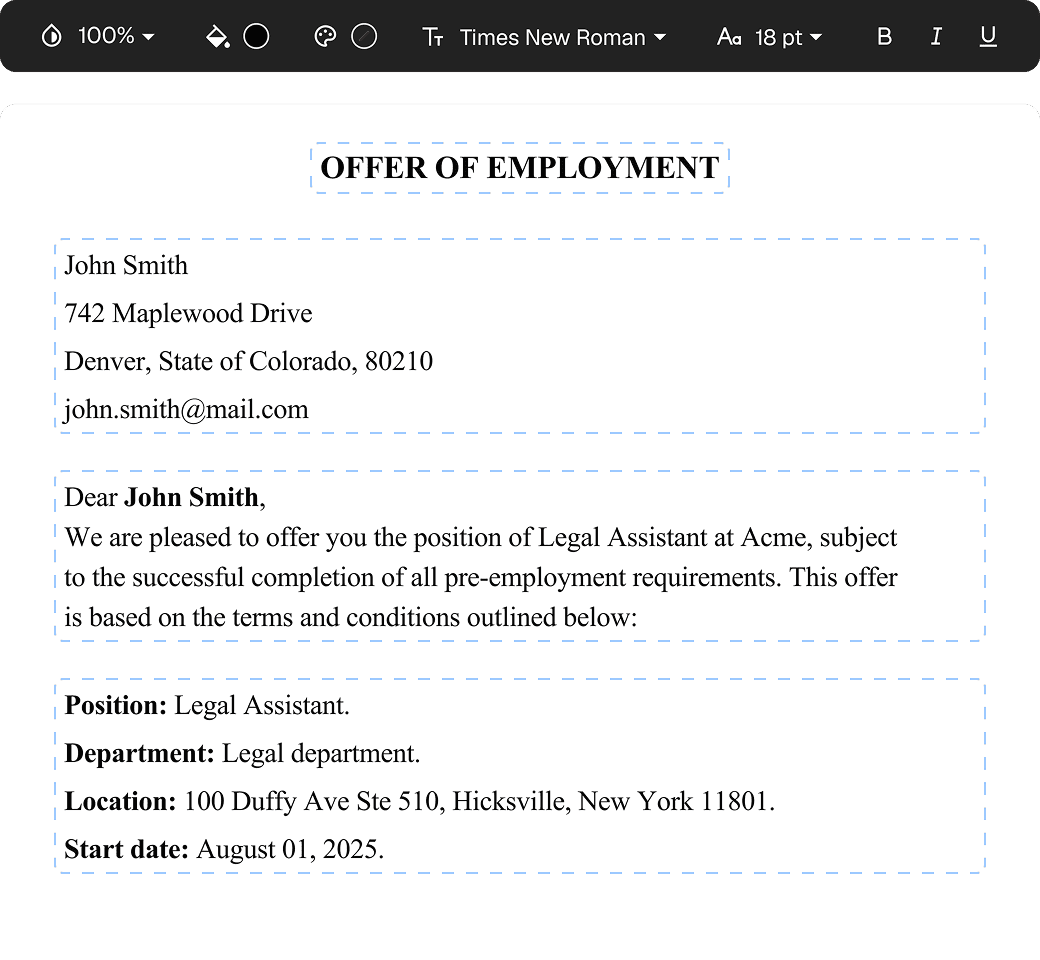
In practice, hiring documents often need last-minute edits before they are finalized. A PDF editor makes it easier to update pay terms, start dates, duties, or other details without recreating the document from scratch or losing version control.
- Lower the risk of lawsuits and disputes over pay, duties, or employment terms.
- Help avoid worker classification mistakes that can trigger tax noncompliance, penalties, and back-pay exposure.
- Reduce wasted time and payroll costs by making responsibilities and expectations clear from day one.
- Protect the business from costly hiring errors, inconsistent onboarding, and preventable workforce inefficiency.
- Key hiring terms are discussed verbally but never documented clearly in a signed agreement.
- The business uses generic templates that fail to create enforceable terms around pay, duties, confidentiality, or termination.
- Hiring documents are scattered across inboxes and folders, making it difficult to prove what was agreed to later.
- Contractor paperwork says one thing, but the working relationship functions like employment in practice, increasing the risk of misclassification.
Many issues arise simply because contracts were signed without careful review. Before executing any employment agreement or contractor document, it helps to understand what to look for — see our guide on how to review a contract like a pro for practical tips.
Human Resources Documents for Employees
Once a person joins the business, policies and internal rules shape how work actually happens. Written standards make expectations clear, protect sensitive information, and help you enforce rules consistently. Without them, decisions feel ad hoc and are harder to defend.
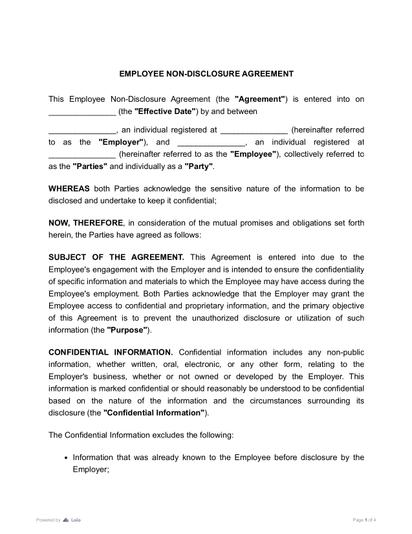
NDA
Protecting sensitive information should never rely on verbal expectations alone. Putting confidentiality obligations into writing through a non-disclosure agreement (NDA) clarifies what must remain confidential and helps safeguard trade secrets, client data, pricing details, and internal processes.
Employee handbook
Start by putting the day-to-day basics in one place. An employee handbook gives employees a single source for workplace policies, procedures, and practical expectations, and it gives managers a consistent reference when questions or issues come up.
Code of conduct
Then define how people are expected to behave at work. A code of conduct sets the baseline for professional interactions and helps you apply workplace rules fairly, especially when you need to address conflict, harassment concerns, or repeated boundary issues.
Data security and acceptable use policy
Finally, clarify how systems and data should be handled. Data security and acceptable use policies explain how employees can use company devices, accounts, and tools, and what “safe handling” looks like for sensitive information, reducing avoidable security and compliance risk.
If employees also use AI for work, an AI policy can complement these rules by defining approved AI tools, data restrictions, human-review requirements, and responsibility for AI use.
- Support consistent enforcement.
- Protect business information and data.
- Establish workplace rules and standards.
- Policy changes are made in practice but never reflected in updated written documentation.
- Employees do not have reliable access to current policy documents or are not clearly notified when policies change.
- The business cannot prove which version of a policy an employee received or acknowledged.

Payroll, Tax, and Compliance Documents
Payroll and compliance paperwork is where small mistakes get expensive. These records connect directly to wage payments and government reporting, and they are often the first documents requested in an audit. When something is missing, the risk is not only penalties, but also back-pay disputes and messy corrections.
Form I-9
Form I-9 is the federal form employers must complete each time they hire someone to perform labor or services in the United States for wages or other pay. It verifies both the employee’s identity and work authorization: the employee completes Section 1 no later than the first day of work, and the employer must review the supporting documents and complete Section 2 within three business days of the start date.
Employers must then keep the form for three years after the hire date or one year after termination, whichever is later, and it should be stored separately from standard personnel files to limit access and reduce risk.
Payroll authorization
Payroll authorization is a formal internal record that approves an employee’s pay terms for payroll processing. It is used to confirm details such as compensation, pay status, effective date, and, in some cases, approved changes, such as bonuses or deductions, so payroll is processed based on documented instructions rather than informal requests.
Tax forms
Then lock in the tax setup from day one. For employees, Form W-4 supports federal income tax withholding, and employers are generally responsible for withholding and paying employment taxes tied to wages. Independent contractors follow a different process: businesses usually do not withhold payroll taxes from those payments, but may need a Form W-9 and year-end Form 1099-NEC reporting instead.
Benefits enrollment docs
Benefits need their own paper trail, too. Benefits enrollment documents record elections, eligibility, and effective dates, helping prevent coverage gaps and providing a clear reference if an employee questions deductions or plan access later.
- Required for lawful payment and tax reporting.
- Frequently requested during audits.
- Errors can lead to fines and back-pay issues.
- Payroll or tax forms are incomplete or not kept up to date.
- Benefit selections are missing or hard to verify later.
- Form I-9 is completed late, stored incorrectly, or retained longer than required.
People Management Documentation
Written records should always support performance reviews, disciplinary actions, and role changes. These documents help show that decisions were based on facts and applied consistently over time.
Performance review
It documents an employee’s progress, goals, and feedback over time. They help track development, support compensation decisions, and provide context if performance issues arise later.
Written warnings
Written warnings record specific concerns, expectations for improvement, and any corrective steps taken. They show that issues were addressed consistently and that employees were allowed to respond or improve.
Promotion and compensation change letters
These documents confirm changes to title, responsibilities, or pay. These records help prevent confusion about new terms and confirm that changes are applied across the organization.
Reporting line change documents
Role or reporting line change documents capture adjustments to job scope or management structure. They provide clarity during transitions and help maintain an accurate employment record as the business evolves.
- Provide evidence of fair and consistent decision-making.
- Support termination decisions if challenged.
- Reduce reliance on memory or informal feedback.
- Performance feedback is given verbally but not documented in writing.
- Written warnings lack dates, specifics, or clear expectations for improvement.
- Promotions or pay changes are implemented without updated written confirmation.
- Role changes are communicated informally, leaving records outdated or unclear.
Termination and Offboarding Documents
How employment ends is just as important as how it begins. Clean offboarding records reduce disputes, protect company systems, and make sure final obligations are handled properly. When exits are poorly documented, issues can linger for months
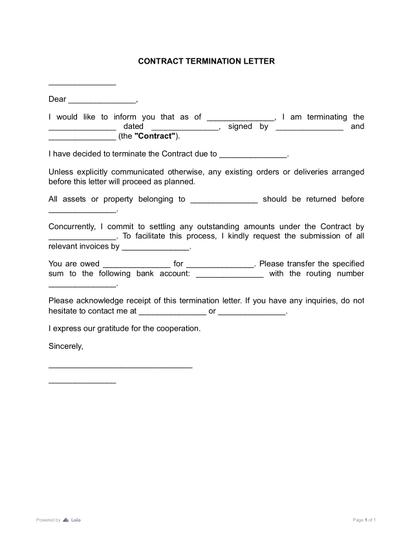
Termination letter
Start by putting the end of the relationship in writing. This is typically done through a termination letter that confirms the effective date, summarizes any remaining obligations, and helps reduce confusion about timing and expectations.
Resignation letter
If the employee leaves voluntarily, keep their decision on file. A resignation letter documents that the departure was initiated by the employee and confirms the agreed last working day, which helps prevent later disputes about notice or whether the exit was voluntary.
Final pay confirmation letter
Final wages need a clear calculation trail. A final pay confirmation records how final wages, accrued leave, and any outstanding amounts were handled, so questions about timing or deductions can be answered with documentation.
Equipment return acknowledgment
Company property should close out the same way. An equipment return acknowledgment confirms what was returned and when, helping avoid arguments over missing devices or damaged items after the fact.
Access revocation confirmation
Finally, treat access as a documented step, not a verbal assumption. An access revocation confirmation records when accounts and permissions were removed, supporting data security and showing that offboarding was completed promptly.
- Ensure clean exits.
- Reduce disputes over final pay or system access.
- Demonstrate professionalism and compliance.
- Termination or resignation details are not documented clearly or are missing dates.
- Final pay calculations are not recorded or are difficult to verify later.
- Equipment return and access removal are handled informally without written confirmation.
How To Organize and Store Essential HR Documents
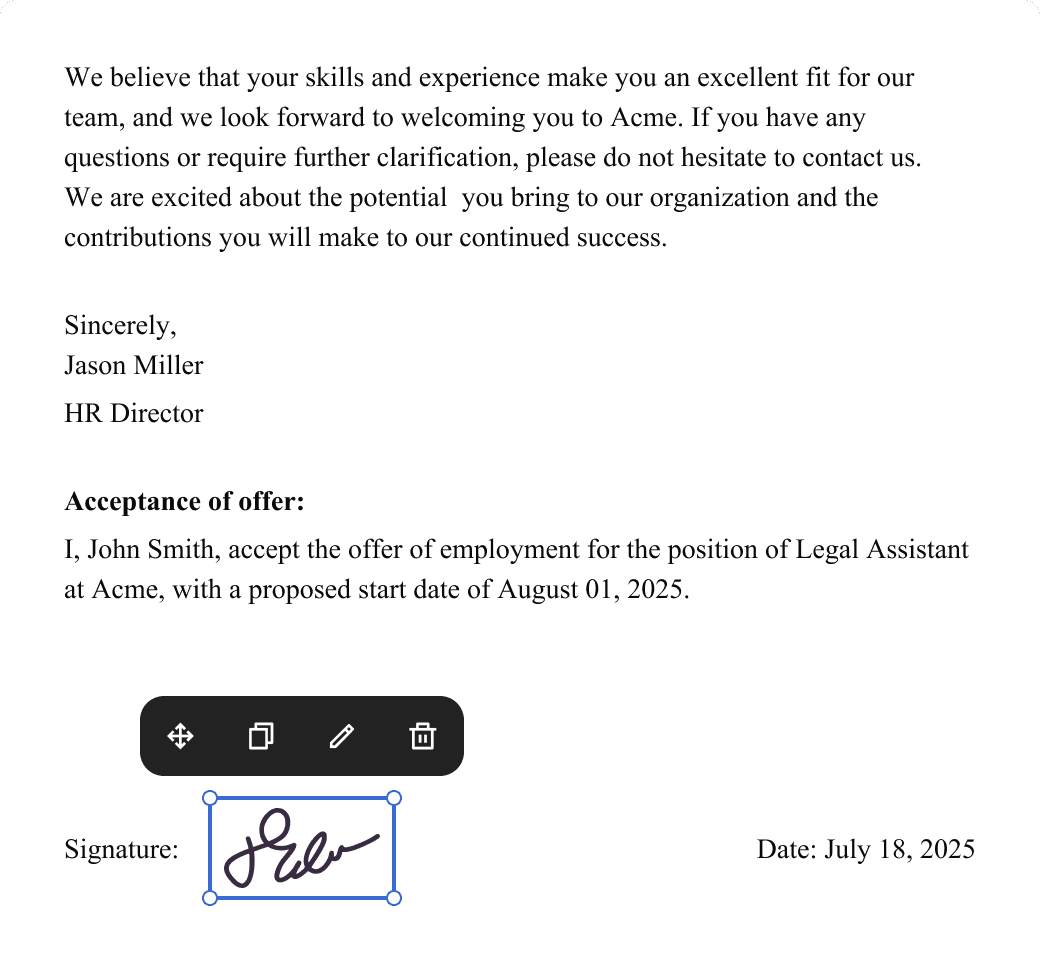
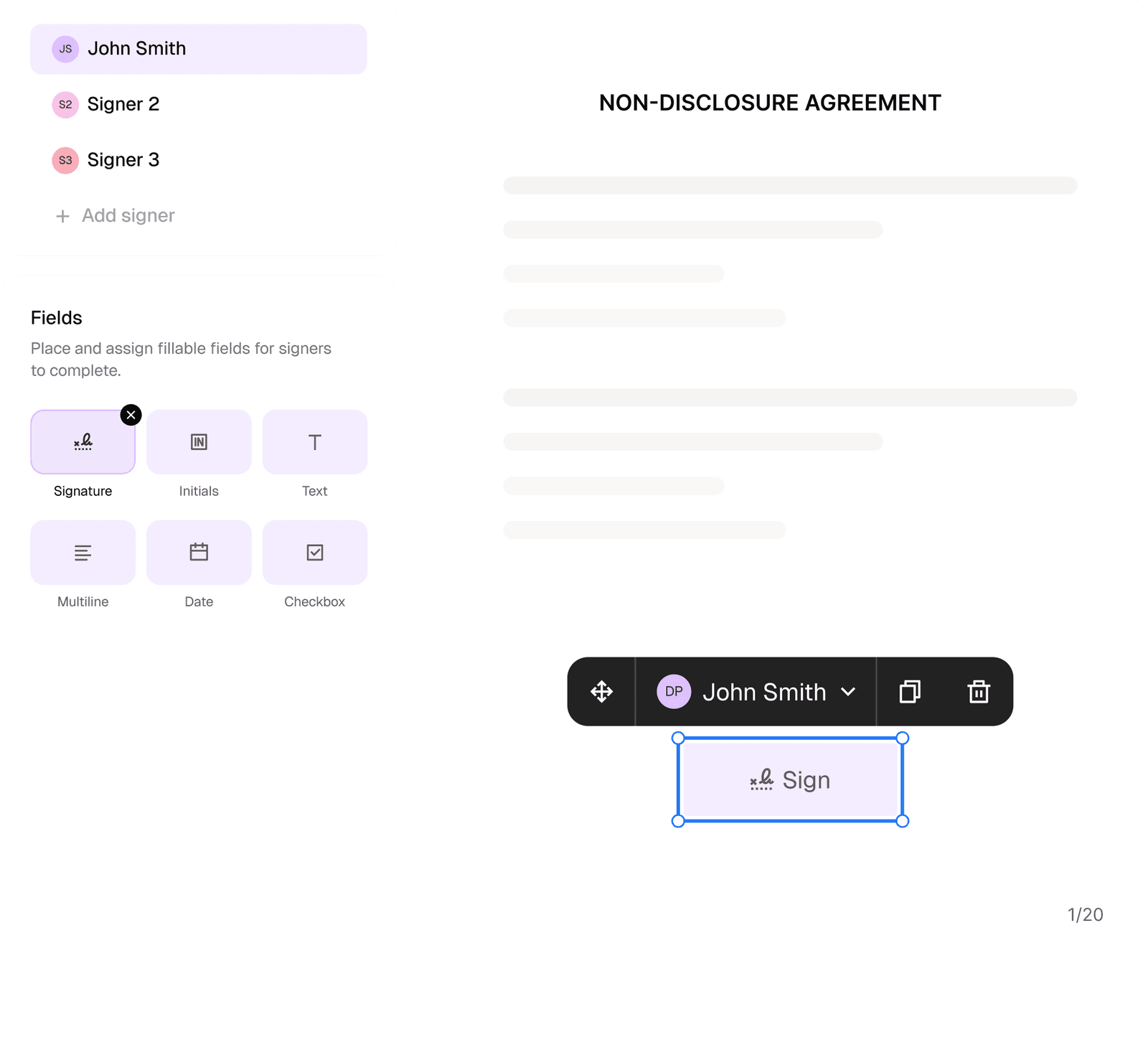
Effective HR document management depends on having one reliable source of truth, clear access controls, and well-defined retention rules. Using a centralized platform like Loio helps keep all paperwork organized rather than scattered across email inboxes or shared drives, while role-based access controls limit who can view or edit sensitive records. Built-in e-signature also helps businesses get agreements and policy acknowledgements signed faster and keep a clear record of who signed what and when.
Confidential documents, such as medical records or work authorization files, should be stored separately from general personnel files to limit access and reduce privacy risk.
Many businesses rely on dedicated HR management tools such as BambooHR, Gusto, or Rippling to support secure storage, document tracking, and access controls. Clear storage practices and documented retention rules help ensure HR documents are easy to retrieve, consistently managed, and defensible in audits or disputes.
Many teams underestimate how often contract workflows fail in day-to-day operations. Our contract management statistics guide notes that only 11% of companies rate their contract management as “very effective,” which helps explain why consistent review and storage workflows matter in practice.
Essential HR Documents Checklist
If you want a quick way to make sure nothing is missed, an HR documents checklist helps bring everything together in one place. It summarizes the essential paperwork in this guide and works well as a reference when setting up, reviewing, or updating your human resources paperwork.
Essential HR Documents Checklist
As a business grows, it becomes harder to remember hiring decisions that were made through emails, casual conversations, or memory. Clear HR paperwork keeps a reliable record of what was offered, talked about, approved, and enforced at every stage of the employment relationship. That's important when you need to make sure payroll is correct, respond to a complaint, explain a termination, check for compliance, or just find the right record without wasting time.
Good paperwork is useful not only during audits and disputes. It helps the business run more smoothly, make better choices, and stay away from problems that could have been avoided before they get too costly.
More guides
September 1
7 min read
How to Provide Proof of Employment: Documents and Steps

September 10
14 min read
How to Protect Your Small Business from Lawsuits

July 25
12 min read
How to Register a Company in the US: What No One Tells You in 2026

September 15
What Is Contract Redlining?
August 14
11 min read
Right to Work vs. At Will Employment Explained: What's the Difference?

October 15
How to Start a Staffing Agency: Licensing, Pricing, and Cash Flow

One home for your
agreements
Edit PDFs seamlessly
Tweak agreements before signing or sending for signatures. Update details, add or remove clauses, adjust formatting, and redline changes instantly.
eSign legally and securely
Sign documents and collect legally binding signatures. Invite up to ten people to sign in any order, track the progress, and send reminders.
Request legally binding signatures
Invite up to ten people to sign your document in any order. Get a finalized, audit-ready copy without chasing signatures.
Skip the drafting.
Choose from 2,500+ templates
Browse templatesChoose a template
Fill in details
Sign and download