Updated July 23, 2026
10 min read
Why Form an LLC? Benefits and When It Becomes Essential
Why Form an LLC? Benefits and When It Becomes Essential
Content
The decision to start a business comes with many questions, and one of them is how to register it. In some cases, you may keep it as a sole proprietorship for some time, but in most cases, you’ll still have to consider registering your business — as a limited liability company, for example. In this guide, we break down why making an LLC becomes a necessary move for your business and what benefits it can bring you.
Benefits of Making Your Name an LLC
An LLC is a legal business structure that combines the protection of a corporation with the flexibility of a sole proprietorship or partnership. The company can own property, enter contracts, and take on debts in its own name, but your personal assets are kept separate.
Along with limited liability, an LLC offers businesses other substantial advantages, like:
Tax flexibility: The Internal Revenue Service (IRS) allows LLCs to choose how they are taxed — as a sole proprietorship, partnership, or corporation — based on their business goals.
Better image: “LLC” in your business name presents your company as more established and trustworthy to customers, partners, and banks.
Fewer formalities: In contrast to corporations, LLC management involves less paperwork and fewer rules. No obligatory annual meetings, share division, and other complex tasks.
Unique name: If you register an LLC, other businesses in your state cannot use the same name, which adds extra protection to your brand.
Reasons to Start an LLC
So, why would an entrepreneur want to start an LLC? It depends on many factors, such as:
How much risk a business holds;
Whether they work alone or with others;
What their plans for the future are.
Here are the most common situations where forming an LLC becomes the right solution for your business project:
1. You need to protect your assets
Why should I create an LLC if I can operate as a sole proprietorship, you may ask. The main reason is that if you run your business as a sole proprietor, everything you own — your home, car, bank accounts, and even your retirement fund — could be at risk if something goes wrong.
Meanwhile, an LLC is a separate legal entity, which means it has its own property that is not tied to you personally. It means that, if your LLC gets sued or falls into debt, your personal assets are less likely to be at risk.
This is how it works in real life:
If a customer gets hurt on your business property, the lawsuit targets the LLC, not you personally.
If your company can’t pay its bills, creditors usually can’t touch your savings or personal belongings to collect the money.
If a contract dispute arises, legal claims stay within the business.
If you think that it’s not about you, just consider the statistics. According to the U. S. Chamber of Commerce, ⅓ of small businesses in the U.S. face a lawsuit filed against them within ten years of existence.
2. You start a high-risk business
Some industries carry more legal and financial risk than others due to the nature of their operations. A high-risk business is one that has a bigger chance of lawsuits, injuries, property damage, or regulatory violations. It often involves physical work, direct service to the public, health and safety responsibilities, or large financial commitments.

Even a single incident, like a workplace injury, customer accident, or dispute over a contract, can lead to expensive legal claims. For example, if you own a gym where a client gets injured during a fitness session, get ready for a lengthy and expensive lawsuit.
So, why get an LLC? If, for any reason, someone sues you, and the court makes your company pay a huge sum, you will cover it out of the company’s finances, not your own pocket. In high-risk industries, the fines can be very big, but at least your home, savings, and other belongings will not be at risk.
3. You want to avoid fines from the IRS
Every business in the U.S. must report income and pay taxes to the Internal Revenue Service (IRS). If you choose the wrong structure or file the wrong tax forms, you will face penalties. In many cases, fines start at several hundred dollars and can exceed $10,000, especially if the IRS believes you misclassified your business or underpaid.
Meanwhile, an LLC gives you clear options for what taxes your business should file:
- 1
A single-member LLC is taxed as a sole proprietorship. You report business income and expenses on your personal tax return.
- 2
A multi-member LLC is taxed as a partnership. Each member reports their share of the profits on their own return.
- 3
You may also choose for your LLC to be taxed as an S Corporation or C Corporation, depending on what fits your situation best.
In such a way, you reduce the chance of mistakes and avoid heavy fines. Besides, in the eyes of the IRS, your business is transparent from the start, which adds to its credibility.
4. You want to work with partners
Even if you start as a sole proprietor, one day you may want to invite more people to your business. In this case, registering an LLC is a must because it allows you to document your relationships with business partners and share ownership, responsibilities, and profits.
In the U.S., general partnerships, where two or more people run a business without a formal agreement, can turn into a real headache as each partner can be held fully liable for the actions of the other, even without consent.
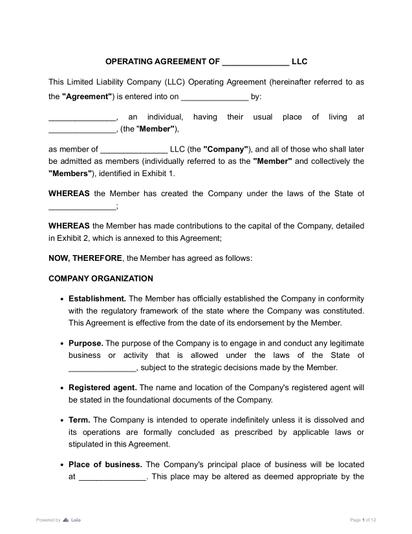
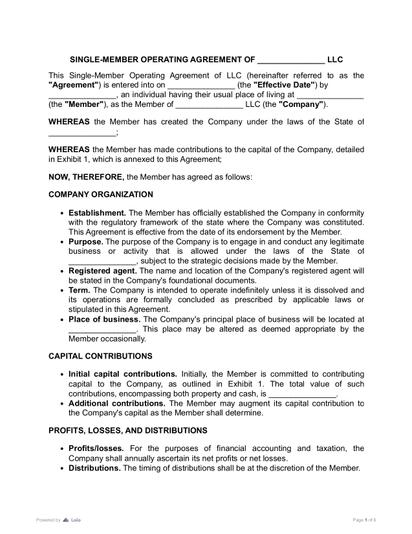
An LLC lets you set clear rules on what each partner contributes to the business and what responsibility they hold through a special document — an operating agreement. It outlines:
- 1
Each member’s share of ownership;
- 2
Voting rights and decision-making authority;
- 3
Division of profits and losses;
- 4
Procedures for a member leaving the business;
- 5
Rules for admitting new members;
- 6
Dispute resolution terms.
Each partner should e-sign the agreement to make it legally binding and keep a copy of the document. Every time a new partner enters the business, you need to make edits in the existing contract to keep it relevant.
In such a way, this agreement prevents internal conflicts and ensures that every partner understands their rights and duties.No quarrels over who owns what; pure order and structure.
5. You plan to hire workers
The business structure you choose affects not only how you hire workers but also how much personal risk you accept in the process.
According to the research conducted by the U.S. Chamber of Commerce Institute, small businesses are responsible for employing 44% of private sector employees.
An LLC gives your business a formal legal identity, which becomes the employer or contracting party, not you personally. With it, your company can:
- 1
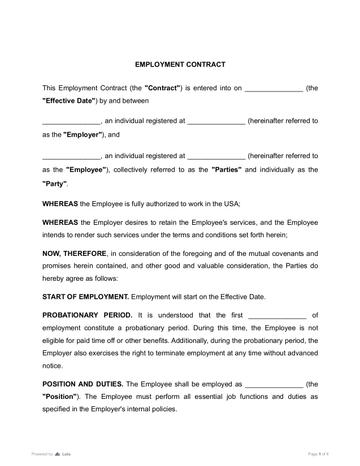
Hire employees for regular positions by signing an employment contract and meeting all employer requirements, including payroll taxes and labor laws.
- 2
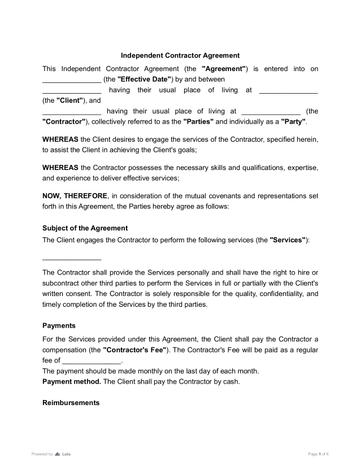
Work with independent contractors for short-term or project-based assignments through a contractor agreement.
- Employment Contract
 4433 downloads
 - Independent Contractor Agreement
 7280 downloads
If the IRS or the U.S. Department of Labor determines that a worker has been misclassified, penalties can exceed $25,000 per worker, depending on the violation.
6. You want to build a brand
For your business to be taken seriously and create a professional and trustworthy image, it needs to be registered. Customers, investors, and partners tend to view a limited liability company as more credible than an unregistered or informal business.
So, if you own a brand and create an LLC, you get:
- 1
Trust: “LLC” added to your company’s name signals that your business is legal and complies with the law.
- 2
Name protection: When you register an LLC, other companies cannot use the same name or one that is too similar.
- 3
Trademark access: Owning a limited liability company allows you to apply for a federal trademark more easily, which offers broader protection for your name or logo.
- 4
Business growth: Many large companies began as LLCs before expanding into larger corporate structures.
Whether you build a local brand or plan to scale nationally, an LLC gives you a legal identity that you can protect and promote.
7. You plan to grow your business
If your goal is to expand into new markets, open additional locations, or seek outside funding, an LLC is what you need to grow responsibly and legally.
Banks, private investors, and partners prefer to work with companies that have a clear legal structure. An LLC signals that your business is organized, registered, and offers liability protection. Investors are unlikely to fund informal or unregistered companies because they do not want to put their money at risk.
Besides, certain types of business expansion strategies may even require a formal entity:
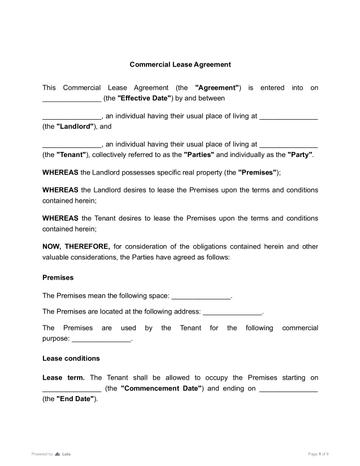
Signing commercial leases for additional locations often requires proof of business registration.
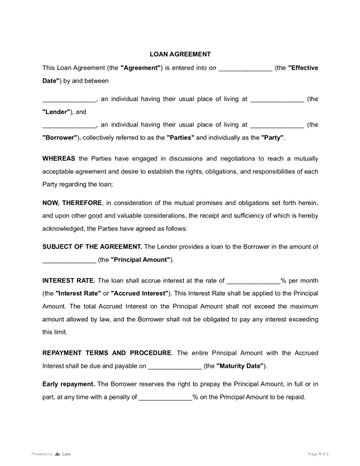
Applying for business loans or lines of credit usually requires an Employer Identification Number (EIN) and formal LLC status.
Attracting investors typically involves issuing ownership shares or equity interests, which can only be done through a legal business entity like an LLC or corporation.
- Commercial Lease Agreement
 5471 downloads
 - Loan Agreement
 4462 downloads
 - Share Option Agreement
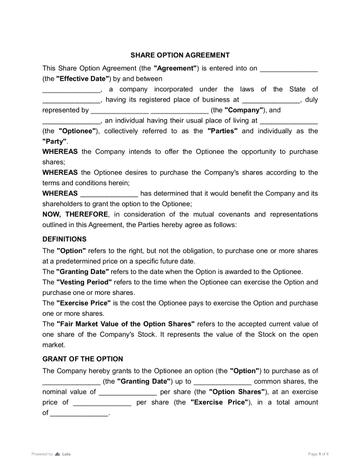 5502 downloads
An LLC also gives you the flexibility to:
Add new members or investors;
Adjust your ownership structure;
Choose to be taxed as an S corporation or a C corporation;
Convert to a corporation if your growth strategy changes.
Registering your business as an LLC gives you protection, credibility, and strategy. Whether you operate solo or with partners, offer services or sell goods, plan to grow or just want to keep your life and business separate, an LLC gives you all the tools for that without exposing your personal assets to risks. The sooner your business becomes a separate legal entity, the sooner you gain the benefits of making yourself an LLC and enjoy the results.
More guides
July 25
12 min read
How to Register a Company in the US: What No One Tells You in 2026
September 1
7 min read
How to Provide Proof of Employment: Documents and Steps

October 15
How to Start a Staffing Agency: Licensing, Pricing, and Cash Flow
July 25
12 min read
How to Start a Flooring Business and Get Your First Clients in 2026

October 8
8 min read
A Comprehensive Guide to Starting a Child Care Business

July 22
10 min read
How to Start a Storage Unit Business: What You Need to Know
One home for your
agreements
Edit PDFs seamlessly
Tweak agreements before signing or sending for signatures. Update details, add or remove clauses, adjust formatting, and redline changes instantly.
eSign legally and securely
Sign documents and collect legally binding signatures. Invite up to ten people to sign in any order, track the progress, and send reminders.
Request legally binding signatures
Invite up to ten people to sign your document in any order. Get a finalized, audit-ready copy without chasing signatures.
Skip the drafting.
Choose from 2,500+ templates
Browse templatesChoose a template
Fill in details
Sign and download