Updated September 9, 2026
How to Hire Independent Contractors

How to Hire Independent Contractors
- Define the worker relationship before you start sourcing
- How to Hire Independent Contractors Without Misclassification Risk
- Build the contractor onboarding workflow so compliance is automatic
- Tax documentation and reporting at a high level
- The compliance failures that show up in audits and disputes
- Fixing contractor classification mistakes
- Why misclassification happens in real companies
Content
Hiring an independent contractor comes down to getting a few things in the right order. Define the role around deliverables rather than hours, and sign the contractor agreement — scope, independence, payment terms — before any work starts. Collect Form W-9 before the first payment, tie payments to milestones instead of timecards, and keep the agreement, W-9, invoices, and payment records together in one file for year-end 1099-NEC reporting. That sequence is what separates a real contractor engagement from a misclassified employee, because the Department of Labor looks at economic dependence and how the work actually functions day to day, not at what the contract calls it.
Define the worker relationship before you start sourcing
Before posting a job or contacting a freelancer, businesses should decide what kind of relationship they are actually creating.
An independent contractor is generally a separate business that provides services under a defined scope, with meaningful independence over how the work is performed. The emphasis is on results, not hours. Contractors typically control their tools, methods, and scheduling, and may work for multiple clients at the same time.
This framing aligns with Internal Revenue Service guidance, which emphasizes the right to direct and control and explicitly requires businesses to document all relevant factors.
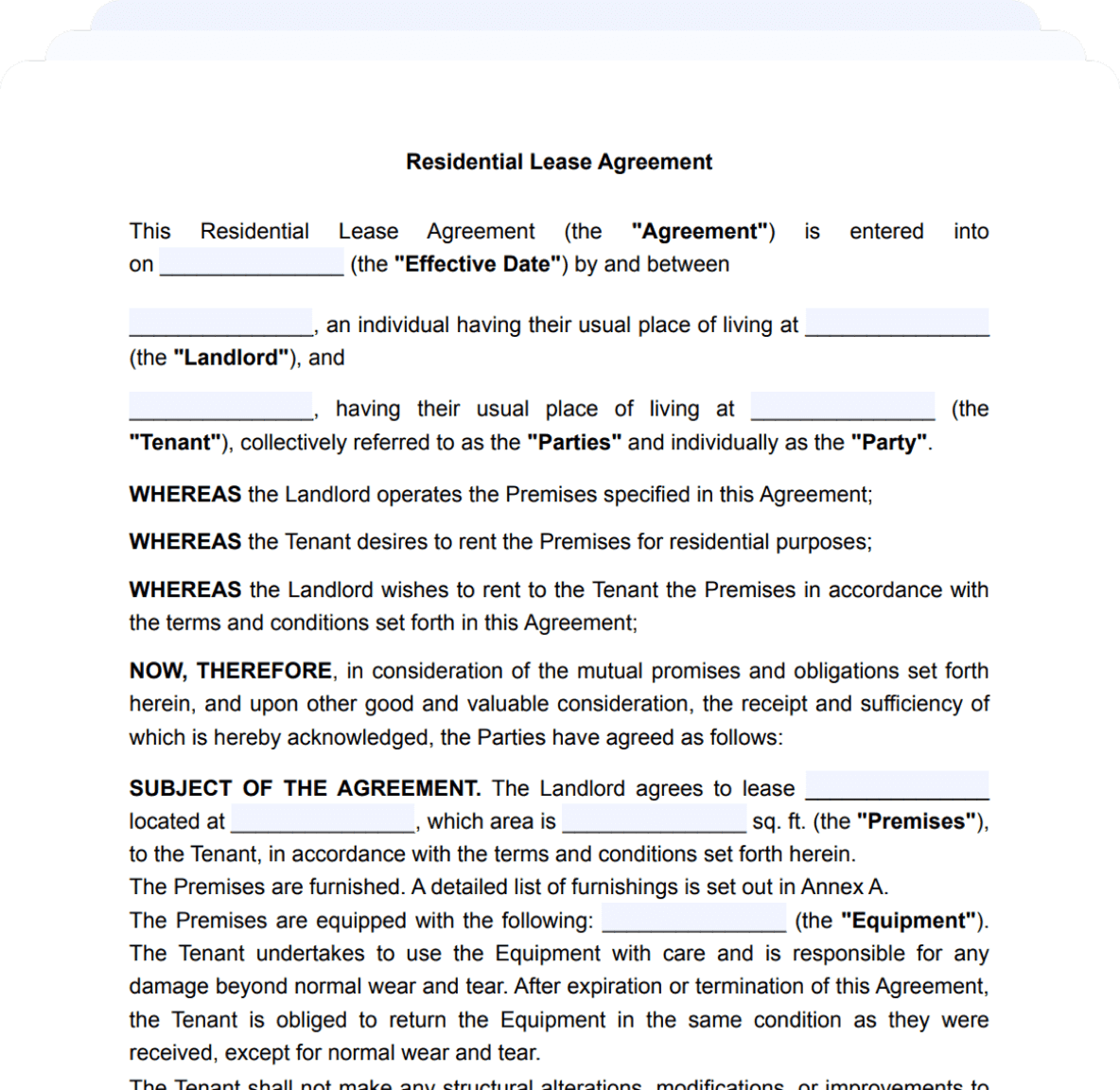
Once the role is defined, it should be documented clearly. Using structured legal templates helps provide that independence, payment logic, and scope boundaries are consistently described rather than improvised from scratch.
How to Hire Independent Contractors Without Misclassification Risk
Use this step-by-step workflow to keep role design, documentation, and tax reporting aligned:
Define the role around deliverables and independence, focusing on results rather than hours or supervision.
Issue the appropriate agreement that documents scope, payment terms, and contractor independence before work begins.
Collect Form W-9 before payment so vendor setup and year-end reporting are based on correct payee details.
Tie payment to milestones or defined outputs, not timecards or employee-style approvals.
Keep documentation aligned for reporting, retaining the agreement, W-9, invoices, and payment records in one clean contractor file.
Using a structured independent contractor agreement helps ensure scope, independence, and payment logic are clearly documented from the start. When terms change, use eSign so the acceptance record is time-stamped and version-controlled. Consistent documentation at each stage reduces misclassification risk and keeps reporting aligned with how the relationship actually operates.
Build the contractor onboarding workflow so compliance is automatic
Most compliance failures can be prevented by standardizing onboarding. Before any payment is made, businesses should maintain a basic contractor file that includes a signed agreement, defined scope, tax documentation, and payment terms. This file links classification decisions to reporting obligations, reducing year-end scrambling.
Because agreements and tax forms can be lengthy and repetitive, some teams use an AI summary to quickly surface key clauses on scope, control, payment structure, and independence, helping confirm that the written terms align with how the work will actually function in practice.
In practice, that file is often built around a clear project document. For project-based work, a service agreement helps lock in deliverables and acceptance criteria, and a payment agreement can document milestone-based payments in a way that reinforces contractor independence and reduces “employee-like” supervision.
Accurate reporting depends on collecting correct payee information up front, not after payments are made.
Tax documentation and reporting at a high level
This section is where many businesses get confused. Tax forms report relationships. They do not define them. Many businesses assume that hiring 1099 contractors automatically satisfies compliance, but issuing a 1099-NEC does not determine legal status.
Form W-9 comes before the first payment
Form W-9 is used to request a payee’s legal name, business name, tax classification, and taxpayer identification number so information returns can be filed correctly. Independent contractor provides tax info via Form W-9.
Collecting the W-9 before payment is also a control mechanism. Missing or incorrect information can trigger backup withholding at a 24 percent rate under IRS rules. To reduce that risk, businesses should collect a completed Form W-9 before the first payment and, when eligible, use the IRS TIN Matching system to verify name and TIN information.
Form 1099-NEC reports payments, not status
Form 1099-NEC is commonly used to report certain nonemployee compensation, often when payments reach $600 or more in a calendar year. Filing deadlines frequently fall on January 31.
Issuing a 1099-NEC does not turn a worker into a contractor. It only reports payments after the business has already classified the relationship. This distinction is repeatedly misunderstood in practice.

The compliance failures that show up in audits and disputes
Three patterns appear repeatedly.
The first is designing roles that behave like employment despite contractor paperwork. The second is paying contractors before collecting tax documentation. The third is assuming a filed 1099 means classification is compliant.
Employee misclassification triggers enforcement by the Internal Revenue Service when reporting, withholding, or classification discrepancies surface.
These failures are preventable when role design, onboarding, payment, and reporting are treated as a single system rather than separate tasks.
Fixing contractor classification mistakes
Contractor classification mistakes rarely explode on day one. They usually surface later, during a dispute, a tax filing, or a complaint, when changing the setup is harder, and the paper trail matters more.
Common consequences when the decision is wrong:
Back taxes, withholding exposure, or misclassification-related enforcement consequences.
Retroactive wage or overtime claims, depending on how the work was managed.
Disputes over benefits, reimbursements, or who pays for tools and expenses.
Payment delays while teams scramble to collect missing documentation (often a late W-9).
Time-consuming record reconstruction for year-end reporting or questions from agencies.
Damage to relationships with contractors and internal teams due to sudden process changes.
How companies typically fix it:
Redesign the role around defined deliverables and independence, then document the scope clearly.
Update the agreement to align with reality (scope, milestones, and acceptance criteria).
Add onboarding gates: no W-9, no vendor setup, no first payment.
Shift approvals away from employee-style supervision toward deliverable-based sign-off.
Clean up access and tooling so contractors have only what they need to deliver.
Standardize offboarding and record retention, so year-end reporting isn't a scramble.
Misclassification risk grows when the relationship drifts over time. The fastest way to reduce exposure is to catch that drift early, before renewal, before a big payment, or before the engagement becomes ongoing.
Why misclassification happens in real companies
First, the role itself is poorly designed. Businesses want flexible help, but structure the work like an employment relationship. The role has fixed hours, close supervision, internal tools, and ongoing responsibilities rather than defined deliverables. Under the Fair Labor Standards Act, the U.S. Department of Labor focuses on economic dependence and how the work functions in practice, rather than on what the parties call the relationship.
Second, the workflow breaks down. Payment happens before documentation. A contractor is onboarded informally, invoices are paid quickly, and compliance is pushed to “later.” By the time tax season arrives or a dispute occurs, leverage is gone, and records are incomplete. This is not a tax failure first. It is a vendor contract management failure: when onboarding gates, documentation checkpoints, and approval flows are inconsistent, classification risk increases.
Previous estimates cited in a 2025 EPI update suggest that 10% to 30% of employers misclassify at least some workers as independent contractors, underscoring how common these mistakes can be for U.S. businesses.

More guides
September 15
10 min read
Who Can Sign a Contract on Behalf of a Company?

September 15
What Is Contract Redlining?

September 1
7 min read
How to Provide Proof of Employment: Documents and Steps

October 15
How to Start a Staffing Agency: Licensing, Pricing, and Cash Flow

July 20
4 min read
Addendum vs. Amendment: Change Your Purchase Agreement Properly

July 22
Vendor vs Supplier: Key Differences and Which Agreement to Use

One home for your
agreements
Edit PDFs seamlessly
Tweak agreements before signing or sending for signatures. Update details, add or remove clauses, adjust formatting, and redline changes instantly.
eSign legally and securely
Sign documents and collect legally binding signatures. Invite up to ten people to sign in any order, track the progress, and send reminders.
Request legally binding signatures
Invite up to ten people to sign your document in any order. Get a finalized, audit-ready copy without chasing signatures.
Skip the drafting.
Choose from 2,500+ templates
Browse templatesChoose a template
Fill in details
Sign and download