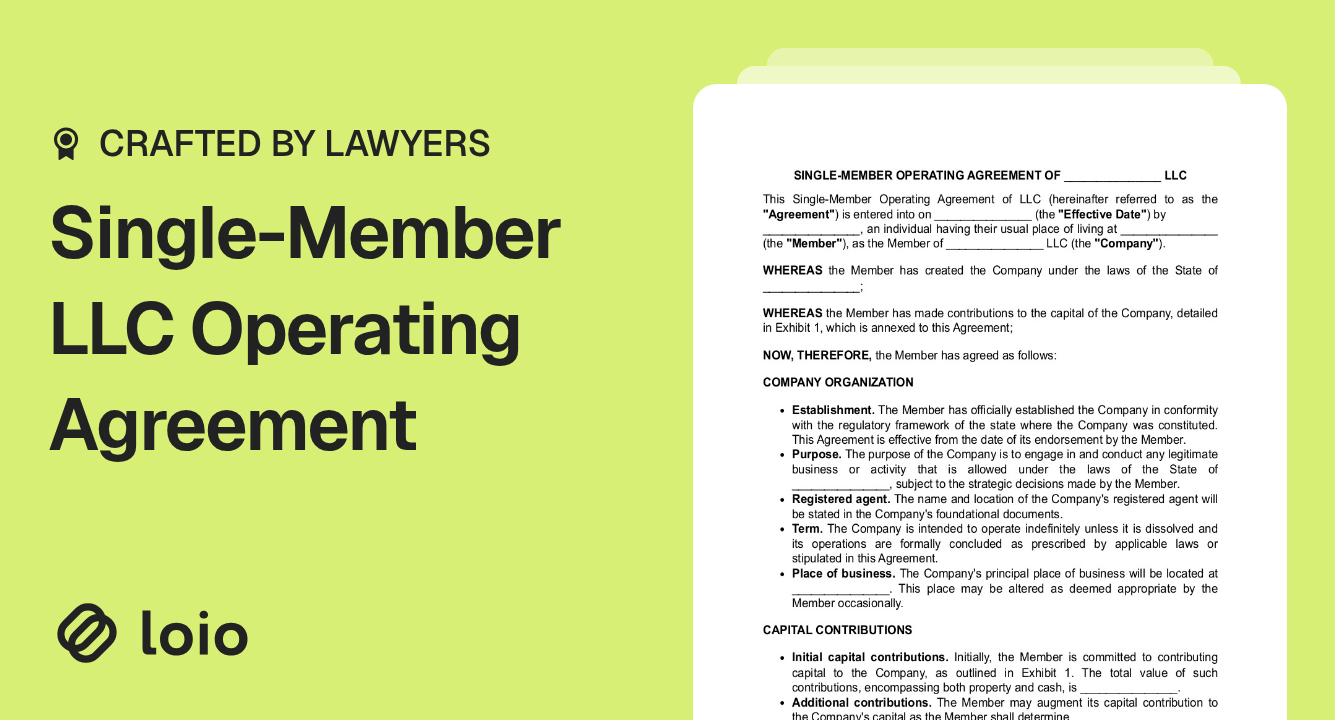
Free template
Free Single-Member LLC Operating Agreement Template

What Is a Single-Member LLC Operating Agreement?
Copy section linkA single-member LLC operating agreement is an internal document that outlines the structure and rules of an LLC that has only one owner. It is a cornerstone that determines the core principles of how you want your business to work. An agreement also serves as a management guidance tool you, as an owner, can rely on.
Many independent business owners start as sole proprietors. However, choosing an operating agreement for a single-member LLC provides far greater financial protection by separating your personal finances from your company’s. If your business gets sued, it won’t affect your personal finances.
When to Use a Single-Member LLC Operating Agreement
Copy section linkYou should use an operating agreement template for a single-member LLC in the following situations:
Setting up a new business. It is essential whether launching a small business or pursuing solo entrepreneurship to establish operating procedures early.
Opening business bank accounts. Financial institutions typically require an official operating agreement to verify your authority and business structure.
Signing major vendor contracts. Third parties or vendors may request proof of your corporate structure before finalizing significant agreements.
Establishing legal legitimacy and liability protection. It creates a formal contract that defines internal management and protects your personal assets against company liabilities.
Improving business setup. Using a template saves time and provides a solid, ready-made foundation to organize your business structure.
Who Are The Parties To A Single-Member LLC Operating Agreement?
Copy section linkIn a single-member LLC operating agreement, also known as a sole member LLC operating agreement, the primary party involved is the single member who owns and operates the LLC. The single member assumes multiple roles within the agreement, including:
- Owner: The single member is the legal owner of the LLC and holds all the membership interests. They can make decisions, control the company's operations, and manage its affairs. This is outlined in the operating agreement of single-member LLC, setting the entity's control.
- Manager: As the sole member, the manager generally acts as the supervisor of the LLC and makes day-to-day administration decisions. The manager can hire employees, enter contracts, and handle the LLC's finances.
- Investor: The single member provides the initial capital to establish the LLC. They contribute funds or assets to the business and may also be responsible for additional capital contributions if required.
- Beneficiary: The single member is entitled to the LLC's profits and benefits. They can receive distributions from the LLC's earnings under the terms outlined in the operating agreement.
- Responsible Party: The single member is responsible for ensuring compliance with legal and regulatory obligations, such as filing tax returns, maintaining accurate records, and adhering to applicable laws governing the operation of the LLC.
It is essential for the single member to fully understand and fulfill these roles within the operating agreement for the single-member LLC to manage and protect their interests in the LLC effectively.
What Are the Key Components of a Single-Member LLC Operating Agreement?
Copy section linkA single-member LLC operating agreement must include:
- LLC name. The official, registered name of your company as filed with the state.
- Formation state. The state where the LLC is legally registered and under whose laws the agreement operates.
- Member information. The legal name, official address, and ownership details of the sole member.
- Business purpose. A specific statement that defines the nature of the business activities the LLC is authorized to perform.
- Capital contributions. A documented description of the initial money, assets, or services the member invests into the LLC to launch operations.
- Distributions. The rules that outline how and when company profits and losses are transferred to the single member.
- Management structure. A statement that the company is member-managed, which gives its owner the authority to make all business decisions.
- Dissolution. Explicit rules for how the LLC will wind down operations, settle debts, and distribute the assets if the business closes.
What Are the Key Terms of a Single-Member LLC Operating Agreement?
Copy section link- Business Purpose: Clearly define the LLC's purpose and goals, specifying the nature of the business activities.
- Capital Contributions: Draft the initial contributions completed by the single member to specify the LLC and any future capital contributions if required.
- Management and Decision-Making: Describe how the LLC will be managed and how decisions will be made. In a single-member LLC, the member typically has complete control and authority over the management and decision-making processes.
- Allocation of Profits and Losses: Specify how profits and losses of the LLC will be allocated to the single member. This can be based on the member's ownership interest or any other agreed-upon arrangement.
- Dissolution and Termination: Address the directions for dissolving and terminating the LLC, including how assets and liabilities will be handled and any other applicable requirements.
Including these key terms in your single-member LLC operating agreement template helps establish clear guidelines, avoid misunderstandings, and provide a solid foundation for its operation.
How to Write a Single-Member LLC Operating Agreement
Copy section linkWhen drafting a sole proprietorship operating agreement, pay attention to the following components:
Include provisions for holding conferences and establishing procedures for decision-making and voting on important matters.
Define the LLC's record-keeping obligations, including financial transactions, accounting records, and document retention.
Specify if the single member will receive compensation for their involvement in the LLC's operations and outline the method and frequency of such payments.
Address circumstances where the single member may dissociate from the LLC and establish procedures for admitting new members or succession planning.
Establish a process for making changes to the operating agreement and clarify if unanimous consent or a specific voting threshold is required.
Remember, consulting with legal professionals is essential to ensure adherence to legal requirements and to tailor the sample single-member LLC operating agreement to meet specific needs.
Does my state require a single-member LLC operating agreement?
In most states, a sole member LLC operating agreement isn’t required. There are exceptions, though: for example, California and Missouri require a company to have an operating agreement — but business owners don’t even need to have it in writing. They just need a specific agreement that guides their business operations.
Why do banks ask for an operating agreement if I am the only owner?
Banks want to know that you have legal authority on behalf of the business. Documents like the Articles of Organization prove that your business exists, but an operating agreement single member LLC would show that you have the legal authority to act on behalf of the LLC.
What does a “disregarded entity” tax status mean for my LLC?
When the IRS uses “disregarded entity,” it means a business whose separate existence it ignores. All of the profits and losses are passed through to your personal tax return. Aside from income tax, your LLC remains a separate legal entity for paying employment and excise taxes.
Can I change my tax status later if I already have this agreement?
Yes! Even if your operating agreement notes your default status as a disregarded entity, you can still choose to be taxed as an S-Corporation or a C-Corporation by filing proper paperwork.
How can I convert my single-member operating agreement LLC to a multi-member version?
When you bring in a new owner, you automatically make your LLC a multi-member LLC. But you cannot just use the old agreement — you need to draft a new one. Since you’re no longer the only person deciding how the agreement works, you’ll also need all sides to agree to a new edit.
Do I need to file an operating agreement with the state?
No. It is an internal document, so you don’t file it with the state.
Requirements for this document vary by state. Review your state's laws and procedures — or consult a licensed attorney — before using this template to ensure it's valid and enforceable where you live.
Sources
Copy section linkRelated documents
Also read