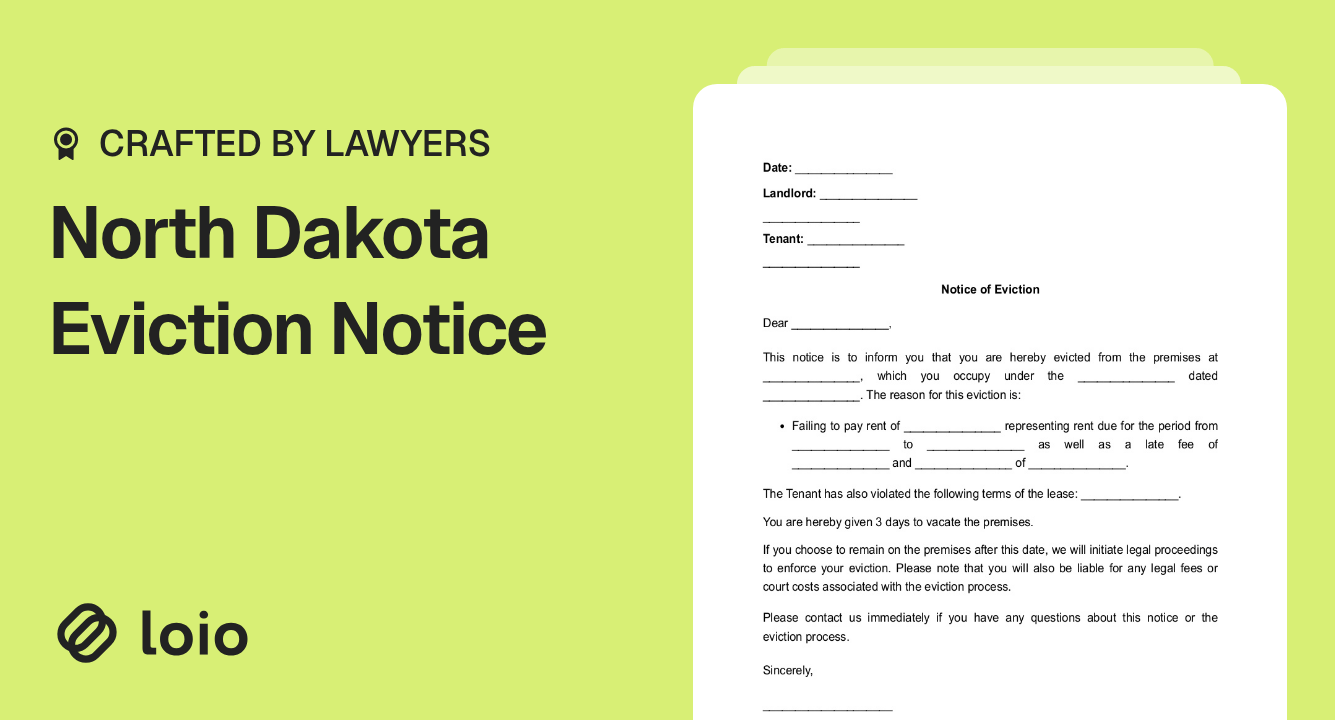
North Dakota Eviction Notice Form

4.7 (18 reviews)
North Dakota only
Updated Nov 19, 2024
~ 1 page
PDF
1.4K downloads
A North Dakota Eviction Notice is a written notice between a landlord and a tenant ordering the tenant to vacate for violating rental terms. It is used to start eviction and ensure legal notice requirements are met.

Date:  

Landlord:  


Tenant:  


Notice of Eviction

Dear  ,

This notice is to inform you that you are hereby evicted from the premises at  , which you occupy under the   dated  . The reason for this eviction is:

  • Failing to pay rent of   representing rent due for the period from   to   as well as a late fee of   and   of  .

The Tenant has also violated the following terms of the lease:  .

You are hereby given 3 days to vacate the premises.

If you choose to remain on the premises after this date, we will initiate legal proceedings to enforce your eviction. Please note that you will also be liable for any legal fees or court costs associated with the eviction process.

Please contact us immediately if you have any questions about this notice or the eviction process.

Sincerely,

____________________


Written by Megan Thompson - Reviewed by Kate Adkham

Template Description

Copy section link
North Dakota Eviction Notice Form

An eviction notice North Dakota is an official document sent by a landlord to inform a tenant to vacate the premises. This stage is critical in the eviction procedure and initiates a sequence of legal actions. The eviction notice template North Dakota assists landlords in repossessing their property while providing tenants with an opportunity to resolve the issue. 

Reasons for a North Dakota Eviction Notice

Copy section link

Some factors may lead a landlord to send a North Dakota eviction notice form: 

  • Nonpayment of Rent. Tenants usually have three days to pay overdue rent or move out.
  • Lease Violations. Issues like unauthorized subletting or illegal activities can lead to eviction. Tenants have three days to correct these problems.
  • End of Lease/No Lease. The renters must leave the property within a month due to the notice to vacate form North Dakota.
  • Property Damage or Illegal Activity. Serious damage or illegal acts mean tenants must leave within three days.
  • Breach of Rental Contract. Any lease break requires a eviction letter North Dakota with a three-day period. The landlord can then seek legal action in the district court within 15 days.

Knowing these reasons helps landlords use the right North Dakota notice to vacate, keeping actions legal and justified.

Completing a North Dakota Eviction Notice

Copy section link
  • Use a Template. Use an eviction notice in North Dakota template from Loio, which offers detailed guidance to ensure your document meets legal standards.

  • Include Key Details. Include in the eviction template North Dakota the tenant's name, address, eviction reason, and deadline. Mention any steps they can take to avoid eviction as per N.D. Cent. Code § 47-32.

  • Serve the Notice. Deliver the notice to vacate letter North Dakota in person or through certified mail to ensure receipt. For example, a landlord in Minot wanting to evict a difficult tenant can use a notice to vacate North Dakota template to make a lawful notice.

Steps After Issuing a North Dakota Eviction Notice

Copy section link

After sending a North Dakota notice to vacate form, landlords have a few paths to follow:

  1. Wait for the Tenant’s Response. Tenants might correct the issue, like paying overdue rent or stopping bad behavior.
  2. Start Court Proceedings. Landlords can initiate an eviction lawsuit if the tenant fails to take action after receiving a North Dakota eviction letter. These cases are managed by the district courts in North Dakota.
  3. Court Hearing and Judgment. Whether the landlord wins, they will receive a writ of possession to carry out the eviction.
  4. Enforcement of Eviction. If tenants don’t leave willingly, law enforcement can step in to enforce the court's decision.

By using a proper sample eviction notice North Dakota and reaching out to local support, everyone involved can keep rights and responsibilities clear, reducing conflicts and ensuring fair solutions.