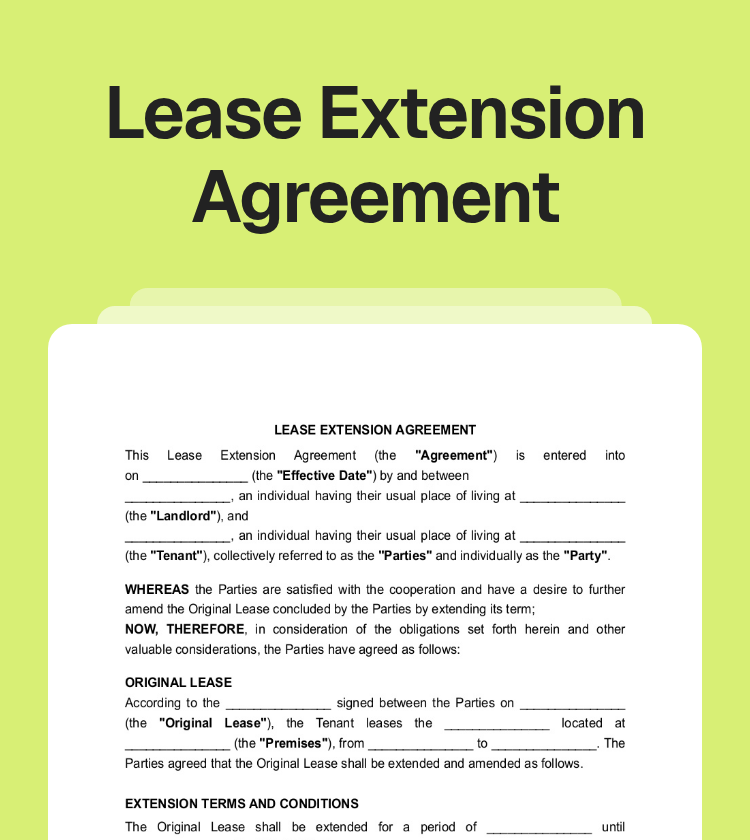
A Lease Extension Agreement is a contract between a landlord and a tenant extending the duration of an existing lease. It is used to continue tenancy under updated terms without creating a new lease.
A lease extension agreement is a legal document that allows a tenant and landlord to extend the duration of an existing lease without creating a new contract from scratch. It maintains most of the original lease terms while updating key details, such as the end date and rent.
This document guarantees that both parties continue to operate under a legally enforceable agreement, helping to avoid potential disputes or confusion. Lease extension agreements are especially useful in residential or commercial rental situations where continuity, convenience, and cost-effectiveness are top priorities.
A lease extension agreement is used when both a landlord and a tenant wish to continue the existing lease beyond its original end date without signing a brand-new contract. It’s typically called a lease extension or lease agreement extension, which is formalized using a lease extension agreement.
This document is handy in situations where the tenant is in good standing and both parties want to maintain continuity in the leasing arrangement. Whether it's a residential lease extension or a commercial one, this agreement allows for the continued use of the property under pre-existing or slightly modified terms.
Lease extensions are commonly used when:
A tenant needs more time before relocating.
A landlord wants to avoid the hassle and cost of finding a new renter.
The parties want to avoid negotiating a new lease but still update specific terms, such as rent or lease duration.
What Are the Key Terms of a Lease Extension Agreement?
This legally binding contract outlines how the original lease will be extended. Common terms in a lease extension form include:
Lease Term: The new duration for which the lease is extended (e.g., 6 months, 1 year).
Rent Amount: Updated rental payment terms, including any increases or discounts.
Security Deposit: Whether the original deposit carries forward or needs adjustment.
Utilities: Responsibilities for utility payments, if they differ from the original agreement.
Termination Clause: Provisions for early termination or default.
A lease extension agreement may also serve as an addendum to the original lease, rather than a standalone contract, depending on how the parties choose to document the changes.
Writing a legally compliant lease extension starts with clearly identifying the landlord, tenant, and property. You’ll also need to specify:
The original lease date and its expiration.
The new lease end date.
Any changes in rent, utilities, or other terms.
A signature section for all parties, with datelines.
You can draft a formal lease extension letter or use a lease extension agreement template that both parties can sign. The letter should clearly state the extension period, any updated terms, and both parties’ agreement.
Loio’s lease extension agreement template makes this process simple with guided fields and pre-written clauses.
A lease renewal typically creates an entirely new lease contract, while a lease extension continues the original lease with a new end date. The difference matters:
Lease Renewal: Often involves re-negotiation, new clauses, or changes in tenant obligations.
Lease Extension: Keeps the structure of the existing agreement intact with minor updates.
Many tenants and landlords prefer an extension to avoid re-negotiating or legal complications, especially when their current relationship is stable.
Review the Original Lease: Ensure there are no clauses that limit extensions or require special notice periods.
Negotiate New Terms: Discuss potential changes to rent, term, or conditions based on market conditions, property upgrades, or inflation.
Draft the Lease Extension Agreement: Use a lease extension agreement template to ensure all essential clauses are covered. Ensure clarity around the new lease term, rent, and responsibilities.
Sign and Distribute Copies: Both parties should sign and retain a copy of the agreement. Digital templates help with faster, error-free signing and record-keeping.