Free template
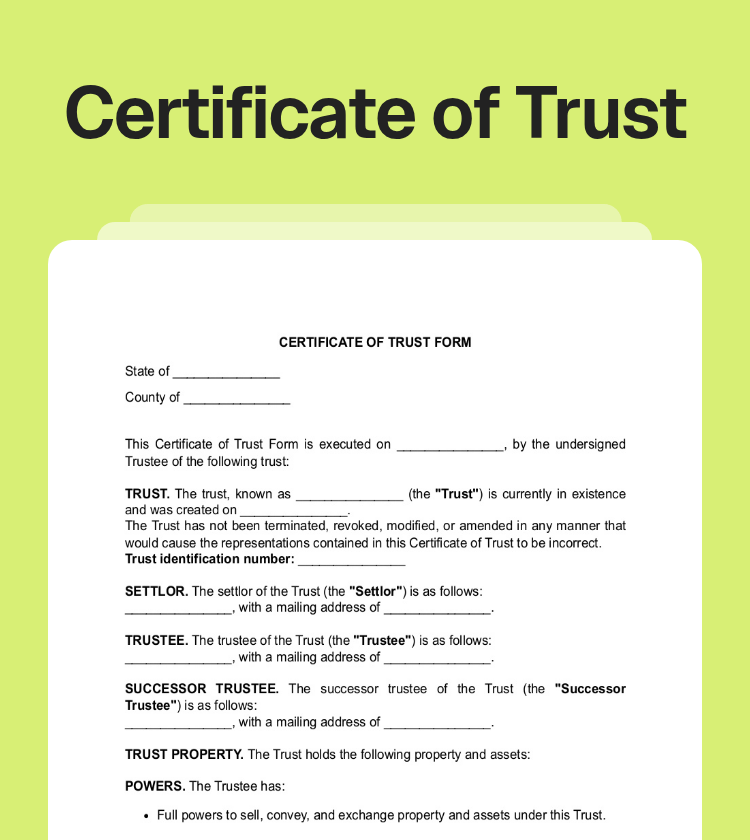
Free Certificate of Trust Form

Template Description
Copy section link
A certificate of trust form is a legal document that confirms a trust's existence. Detailing the trust's critical elements, this document serves as a proof of authority for the acting trustee. It is significant as it helps maintain the confidentiality of the trust details and deliver necessary information to involved third parties. Understanding how to properly execute a certificate of trust form is crucial in safeguarding personal assets for all involved parties.
When to Use a Certificate of Trust Form
Copy section linkA certification of trust form is typically utilized when a trust interacts with third parties, like financial institutions or potential creditors. It's employed when those individuals or entities need a certification of trust to substantiate the trust's existence, the trustee's authority, or outline details about the trust. One might consider using a free certificate of trust form template that can be found online to ensure the correct structuring and inclusion of critical details within the document.
Parties of a Certificate of Trust Form
Copy section link- Settlor –– This is the person or entity who creates the trust. The settlor transfers their assets into the trust and outlines the terms for managing these assets. Upon the formation of the trust, the settlor's obligations may cease, although sometimes they might continue to hold specific roles, as established in the terms of the trust. At the conclusion of the trust or on meeting specific stipulations, the trustee typically generates a certification of trust example to illustrate the settlor's successful establishment of the trust.
- Trustee –– This individual or institution is entrusted to manage the assets within the trust on behalf of the beneficiaries. The trustee is responsible for administering the assets as per the terms and conditions outlined in the trust by the settlor. In carrying out their duties, the trustee is to act in the best interests of the beneficiaries always. Upon the completion of all stipulated actions, the trustee provides a document, typically known as a trust certificate, signifying that the assets have been appropriately managed and distributed as outlined in the certificate of trust form. The trust certificate form is often kept as a record of successful trust administration in compliance with the settlor's desires.
Key Terms
Copy section link- Trust Property: This term refers to any asset held in the trust.
- Successor Trustee: An individual designated to take over trust management when the current trustee is unable to perform their duties.
- Beneficiary: Individual(s) or entity/entities set to benefit from the trust assets.
- Revocable Trust: A trust setup that can be altered, modified, or terminated by the settlor during their lifetime.
- Irrevocable Trust: A type of trust that, once established, cannot be changed or ended without the consent of the beneficiary.
How to Write a Certificate of Trust Form
Copy section linkA trust certification form is a pivotal legal document that affirms the existence of a trust and the efficacy of the acting trustee. Resources like legal databases or professional consultants can help you to compile a certificate of trust template accurately.
Here are the steps to follow while preparing a certificate of trust sample, whether you are a settlor or a trustee:
- Document the accurate details of all involved parties; this should include your legal name and contact information.
- Clearly state the original value of the trust and contribution schedule.
- Detail the description of the trust property, including its legal definition and address, if applicable.
- Prepare all crucial trust details, such as when the trust was established and its recording information.
- Provide the name of the trust being validated and any relevant trust numbers.
- Declare the governing state or federal law steering the affirmation of the trust.
- Assert that the settlor has fully met all obligations tied to the trust.
- Describe any release of claims or interests over the trust property due to the trust's fully funded status.
- Establish any trust affirmation language, depending on the practices or procedures of your specific jurisdiction, affirming the trust's existence and your authority as the trustee.
- Determine how the certificate of trust document will be registered and who will manage the recording process.
All stakeholders should review the certification of trust sample with a legal professional to safeguard their interests. Understanding the importance of the certificate of trust extends beyond its creation. It's also essential to comprehend how to use it and where you must present this certification for trust validation. For example, financial institutions may require a certificate of trust to validate the trust's parameters and the acting trustee's authority.
Ultimately, a well-drafted certification of trust PDF can serve as a robust platform to defend your assets and rights and help you avoid potential misunderstandings between the involved parties. Follow available certification of trust examples to ensure your document contains all the essential elements.