Free template
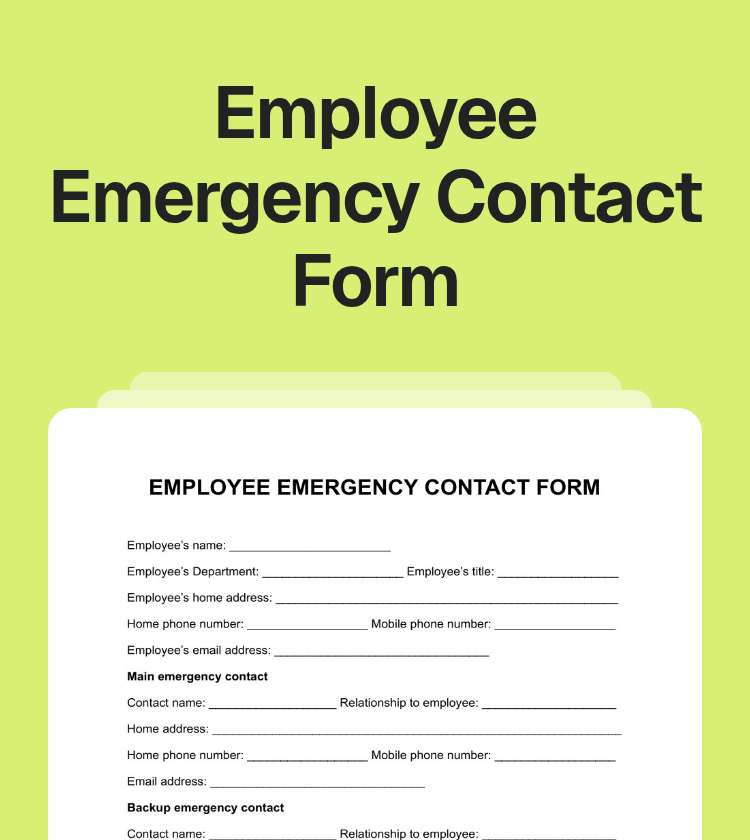
An employee emergency contact form is a short document employers use to collect the names and contact details of the people an employee wants to be reached if something happens to them at work. This typically includes a primary contact, a backup contact, and basic medical information that could matter in an emergency, such as allergies or a regular physician.
An emergency contact form template gives HR a consistent way to collect this information from every employee, so the format and level of detail are the same across the company. Some businesses call this a staff emergency contact form or simply an employee contact form, but the purpose stays the same: getting the right person on the phone quickly when an employee can't speak for themselves.
This form is short by design — usually a single page — but the information on it matters most in the moments when speed counts. A missing or outdated emergency contact form can delay care for an injured or ill employee, which is why most employers collect it during onboarding and update it regularly.
Use an employee emergency contact form when:
A new employee is being onboarded, so their information is on file before it's ever needed.
An employee's personal circumstances change — a new address, a new phone number, a new emergency contact, or a relevant medical update.
Your company conducts a routine HR records review, typically every six to twelve months.
Your workplace involves higher physical risk: construction, manufacturing, and warehouse work, where the chance of a workplace accident is greater.
You're setting up an emergency action plan and need to organize and make contact information accessible for every employee.
When not to use an emergency contact form:
Use a medical consent form instead if you need explicit authorization to make medical decisions on someone's behalf — an emergency contact form only identifies who to call, not who can consent to treatment.
Use an employee information form instead if you need a broader record of an employee's general personnel details beyond emergency contacts.
Employee: The person providing their own personal information, along with the names and contact details of the people they want reached in an emergency.
Employer / HR professional: The person or department responsible for collecting, storing, and using the emergency contact information appropriately, and for keeping it confidential.
Emergency contact (named on the form): Not a party to the document itself, but the person the employee designates: typically a family member, partner, or close friend, to be reached if something happens.
Emergency contact: A person designated by the employee to be reached in the event of an accident, illness, or other workplace emergency..
Workplace accident: An unplanned event at work, such as an injury or sudden illness, that requires immediate attention and may trigger the use of the emergency contact form.
Next of kin: A person's closest living relative, sometimes listed as the default emergency contact, though an employee can designate anyone they choose.
Emergency action plan: A broader workplace safety plan that outlines how a business responds to emergencies, of which emergency contact information is typically one part
For employees:
For employers and HR teams: