Updated July 22, 2026
7 min read
How to Evict a Tenant: 6 Legal Steps for U.S. Landlords

How to Evict a Tenant: 6 Legal Steps for U.S. Landlords
- When You Can Legally Evict a Tenant in the U.S.
- How Eviction Rules Differ by State
- What Is an Eviction Notice and How It Works
- Step-by-Step Eviction Process in the U.S.
- How Long the Eviction Process Usually Takes
- Can a Tenant Stop or Challenge an Eviction?
- What Paperwork Landlords Need for an Eviction Case
- What Happens After the Tenant Moves Out
Content
Eviction is never the first choice for most landlords and often not an easy one. But if a tenant stops paying rent, breaks lease terms, or refuses to move out after notice, eviction often becomes necessary. According to Eviction Lab, landlords filed more than 140.000 cases in 2025, with the average eviction filing rate of 7.9%. That means 1 in 13 tenants got served eviction papers.
Courts expect landlords to follow landlord–tenant law closely. Skipping one requirement can delay the case, increase costs, or force you to start over. Many landlords look into how to evict a tenant only after a problem becomes urgent. Here, we explain when eviction is legally allowed, what notices to use, and how the eviction process works in practice so you can avoid common mistakes.
When You Can Legally Evict a Tenant in the U.S.
A landlord can’t remove someone from a rental property for no good reason. Courts require a valid reason supported by state law or the lease terms. In most cases, eviction starts when a tenant breaches the lease agreement, which then triggers the formal eviction process. Here’s a breakdown of most common reasons.
Nonpayment of rent
Failure to pay rent is still the most common reason landlords begin eviction. Once rent passes the grace period written in the lease, you can usually serve a formal notice demanding payment.
This notice is often called a Pay Rent or Quit notice. It tells the tenant exactly how much they owe and how long they have to pay before court filing happens. Depending on the state, that window may be only a few days or up to two weeks.
Accepting partial payment after serving notice can cancel the original timeline in some states and force you to restart the process. Before accepting anything less than the full amount, confirm how your state handles partial payments.
Lease violations
Different lease types come with various terms and conditions that tenants must learn about before signing an agreement. A lease agreement violation is another common legal reason for eviction. Courts treat written leases as binding contracts, so repeated or serious violations can justify removal. These violations may include:
Unauthorized occupants moving into the unit
Pets not allowed under the lease
Property damage beyond normal wear
Repeated complaints from neighbors
Using the unit for business activity without permission
Renting a space for business follows a different procedure and comes with different terms. Never try to use the property for business without permission.
Most states require landlords to give tenants a chance to correct the problem first. This is usually done through a Cure or Quit notice. This notice explains what must change and how quickly the tenant must fix it.
Lease expiration
When a lease ends and the tenant does not leave, the tenant becomes a holdover occupant. This situation often surprises newer landlords because the lease has already expired, yet the tenant still has legal possession until proper notice is served.
State law determines how much advance notice you must give before filing eviction. The required period depends on whether the tenancy was fixed term or month to month. Once the notice period passes, the next step is filing a court case if the tenant remains. This applies even if the tenant stopped communicating entirely.
The same rules often apply when evicting a family member with no lease. Even without a written agreement, courts usually treat the arrangement as a tenancy that requires formal notice before removal.
Illegal activity on the property
Serious illegal conduct at a rental property can justify faster action. Examples include drug distribution, violent behavior, or threats that affect other tenants or neighbors.
Some states allow landlords to serve an Unconditional Quit notice in these cases. That notice requires the tenant to leave without offering time to correct the issue.
Courts expect reliable evidence when illegal activity is claimed. These filings are typically supported by police reports, written complaints, and witness statements. Without documentation, the case may slow down or fail.
Health and safety violations caused by tenants
Tenants are responsible for maintaining certain living conditions inside the unit. This is especially important in commercial leasing, as violations in service fields may come with more serious legal consequences.
When a tenant's actions create safety risks, eviction may become necessary. These actions could be, for example:
Blocking exits or creating fire hazards
Severe sanitation problems
Intentional structural damage
Unsafe storage of hazardous materials
Most states require landlords to provide written notice describing the issue before filing in court. The tenant must receive time to correct the problem unless the risk is immediate.
No-fault evictions
Not every eviction happens because the tenant violated the lease. Landlords may end a tenancy for business or personal reasons unrelated to tenant behavior, like:
Moving into the unit personally
Removing the property from the rental market
Completing major renovations that require vacancy
Selling the property to a buyer who plans to occupy it
However, most states follow “Just Cause” eviction requirements, created to protect tenants from wrongful eviction. Local rules may require longer notice periods or relocation payments to tenants.
How Eviction Rules Differ by State
Eviction rules vary widely across the country because most procedures are set by state and local landlord–tenant law. The required notices, timelines, and court steps may look similar on paper, but the speed and difficulty of the eviction process often depend on where your property is located.
Landlord-friendly states vs tenant-friendly states
Some states allow landlords to move forward quickly after serving notice. These areas usually have shorter waiting periods and faster court scheduling. Others give tenants more time to respond, fix violations, or challenge the case before removal becomes possible.

Understanding these differences and figuring out what type of state you’re in will help you find an answer to how does eviction work? question in your location and prevents avoidable delays.
Why local city rules may override state law
Cities sometimes add extra requirements beyond state law. These may include longer notice periods, limits on no-fault evictions, or relocation payments in certain cases.
Check local rules before serving notice when learning how to evict someone legally. Missing a city requirement can stop an otherwise valid eviction case.
What Is an Eviction Notice and How It Works
To put it simply, an eviction notice is the document that officially starts the legal eviction process. Courts usually require landlords to serve written notice before filing a case. This step gives the tenant a clear explanation of the problem and a final chance to fix it or move out.
Serving the correct notice is part of the formal eviction procedure. If the wrong notice is used or delivered incorrectly, the court may reject the case and require you to start again.
Different situations require different notices. Choosing the correct one depends on what the tenant did or did not do.
Pay Rent or Quit notice is used when rent is overdue. It states the total amount owed and gives the tenant a deadline to pay or leave. If payment arrives within the allowed time, the case usually stops.
Cure or Quit notice is used when the tenant breaks a lease term but can fix the problem. This often applies to unauthorized occupants, pets, or repeated disturbances. The tenant receives time to correct the violation before eviction continues.
Unconditional Quit notice requires the tenant to move out without offering time to fix the issue. Courts usually allow this notice only for serious violations or repeated misconduct.
Notice to Vacate ends a tenancy when the lease expires or the landlord plans to take the unit off the rental market. The required notice period depends on state or city rules.
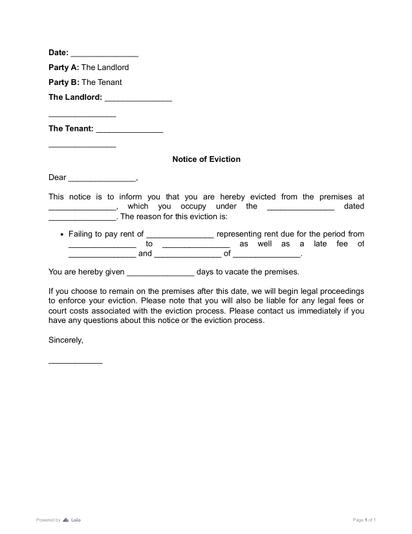
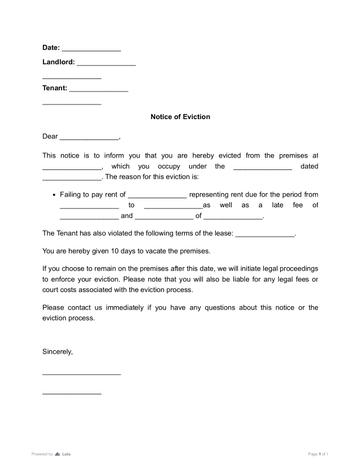
A valid eviction notice should include the tenant’s full name, the rental address, the reason for eviction, and the exact deadline to respond. If the tenant can correct the issue, the notice must explain how to do so. The document should also be signed and dated before delivery. Service rules vary by state.
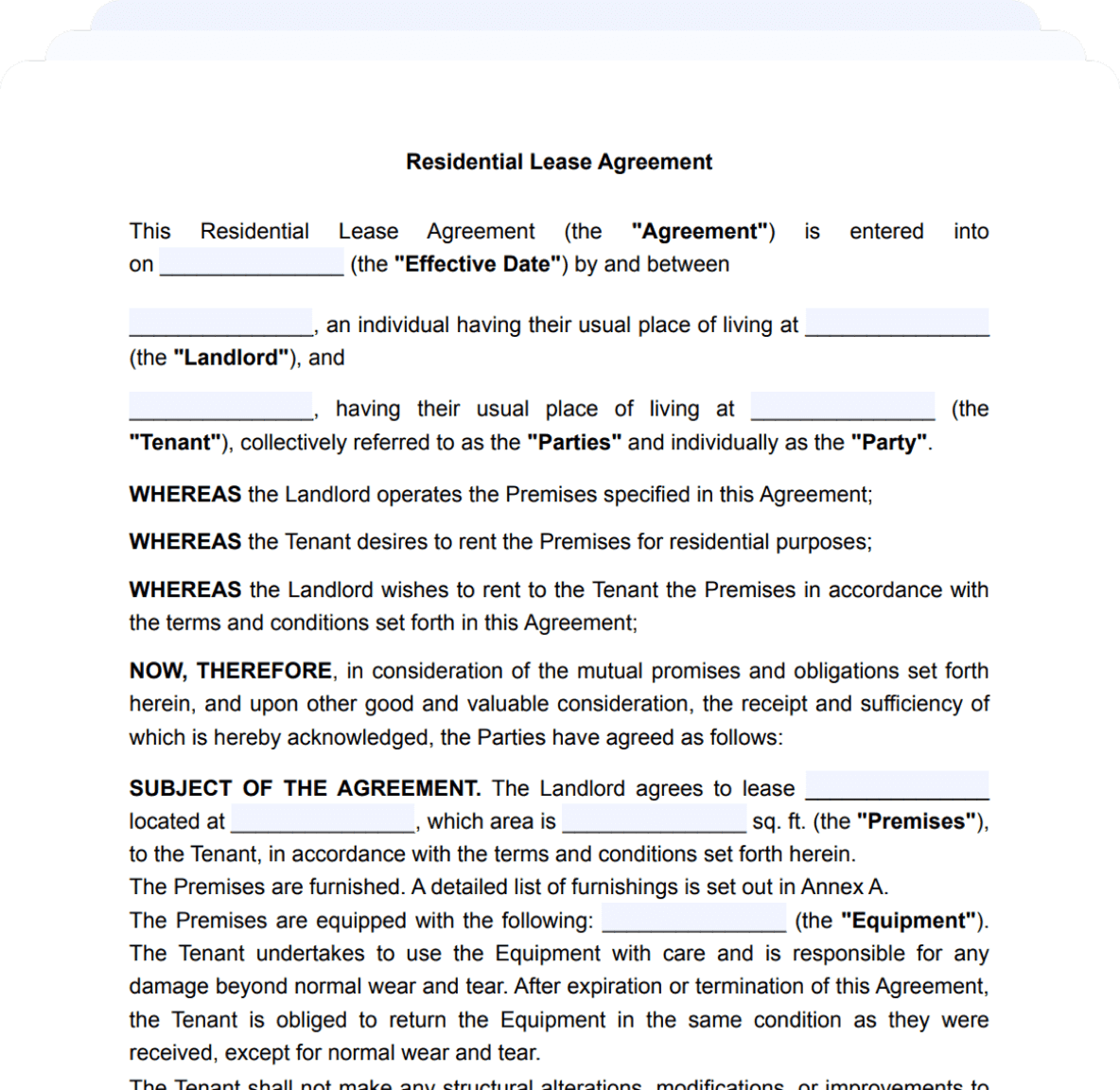
Less-experienced landlords do not have to prepare notices from scratch. Many now use eviction-notice templates that can be customized using an online PDF editor to match their situation. Use a structured template to make sure the notice meets court expectations and keeps the legal eviction process moving forward.
Step-by-Step Eviction Process in the U.S.
Many landlords begin by asking how does an eviction work in practice. Although details vary by location, most eviction cases follow a similar structure.
Step 1: Verify legal grounds for eviction
Start by confirming that your reason for eviction is valid under state or local landlord–tenant law. Courts expect a clear lease violation, unpaid rent, or another recognized legal basis before a case can begin.
This applies even when dealing with a tenant without a written lease, such as a relative or informal occupant. You can still proceed, but proper notice is required first. Check whether local rules add extra requirements before serving notice.
Step 2: Serve the eviction notice
Next, you serve a written notice to the tenant explaining what must happen to avoid eviction. Service must follow state rules.
Courts often ask for proof showing when and how the notice was delivered.
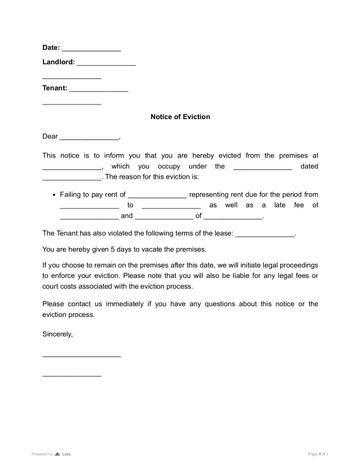
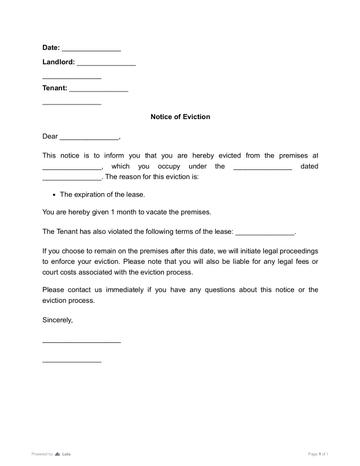
To make this easier, we provide state-specific eviction notice templates you can customize and use.
- Virginia Eviction Notice
 2965 downloads
 - Texas Eviction Notice
 3176 downloads
 - Indiana Eviction Notice
 2921 downloads
Step 3: File an eviction lawsuit
If the tenant does not comply within the notice period, the landlord may file an eviction claim in state court. This step is commonly called an unlawful detainer action.
Typical filings include the complaint, the lease if available, the eviction notice, and proof of service. Then, the tenant receives official court papers with instructions for responding.
Step 4: Attend the court hearing
Both parties present evidence during the hearing. Judges then review payment records, lease terms, inspection notes, and written notices before making a decision. If the landlord proves the claim, the judge may issue a court order for possession allowing recovery of the property.
Step 5: Obtain a writ of possession
After the ruling, the court issues a writ of possession. This document gives the tenant a final deadline to leave but may remove the tenant forcefully if they remain. At this stage, the process follows a clear legal sequence in which the state court issues a court order leading to property repossession.
Step 6: Law enforcement removes tenant if necessary
Only law enforcement officers can carry out a physical eviction. If the tenant stays beyond the final deadline, the sheriff schedules a removal date. Once the process is complete, the landlord regains legal possession of the property.
Landlords cannot change locks or remove belongings themselves before the tenant is removed by law enforcement.
How Long the Eviction Process Usually Takes
Now you know how eviction works, but what about the timeline? It can vary a lot across the country. In faster jurisdictions, the process may take about one month from notice to removal. In areas with stronger tenant protections, it can take several months. Court backlogs may add extra time, as well as tenant responses, mediation programs, or paperwork errors.
Preparing documents carefully helps avoid unnecessary delays. You can make this process a little faster and easier with Loio. Our AI Contract Review tool is here to help you summarize legal paperwork and pinpoint potential red flags in simpler terms.
Can a Tenant Stop or Challenge an Eviction?
Yes. Tenants have the right to respond after receiving an eviction notice and may challenge the case in court. This is one of the most common reasons the eviction takes longer than expected.
A tenant may argue that:
The eviction notice was incomplete or delivered incorrectly
Rent was already paid or partially accepted after notice
The landlord failed to maintain safe living conditions
The eviction was retaliatory after repair requests or complaints
The eviction was discriminatory under housing laws
Courts review these claims carefully. Even a small procedural mistake can delay the case or lead to dismissal.
Signed agreements are especially important. You can now use secure eSign tools to finalize notices and lease-related documents quickly while keeping a reliable record for court if needed.
Always keep copies of notices, payment records, inspection reports, and written communication with the tenant.
What Paperwork Landlords Need for an Eviction Case
Courts rely heavily on written evidence when deciding eviction cases. Most landlords should gather:
The signed lease agreement, if one exists
Payment history showing missed or late rent
Copies of eviction notices
Proof that notices were delivered correctly
Written warnings or prior violation notices
Inspection reports or repair records
Photographs of property damage or safety concerns
Communication with the tenant related to the dispute
These materials help show that the eviction followed proper legal steps. Even when dealing with a tenant who never signed a lease, written communication and payment records can still support your claim.
What Happens After the Tenant Moves Out
Once the tenant leaves and possession returns to you, the eviction case is mostly complete. However, several practical and legal steps may still follow.
Some states require landlords to store abandoned property for a limited period before disposal. Others allow removal sooner after notice. Always confirm local requirements before handling anything left behind.
Security deposits may be applied to unpaid rent or repair costs if allowed by the lease and state law. If losses exceed the deposit amount, landlords can seek additional recovery through small claims court.
After you restore legal possession of your property, the unit can usually be rented again right away. Completing repairs, documenting the property condition, and updating lease paperwork helps reduce risk with the next tenant. Keep these records signed and stored digitally to make future disputes easier to manage if they arise.
More guides
September 16
9 min read
Lease vs. Rent: What’s the Difference and What to Choose

September 11
10 min read
Rules for Renting a Room in Your House: How to Become a Landlord

September 4
How To Break a Lease in Florida Without Penalties
September 3
12 min read
The Biggest Red Flags on a Rental Application Explained

September 1
7 min read
How to Provide Proof of Employment: Documents and Steps

September 8
10 min read
What Is the Difference Between Joint Tenancy and Tenancy in Common?

One home for your
agreements
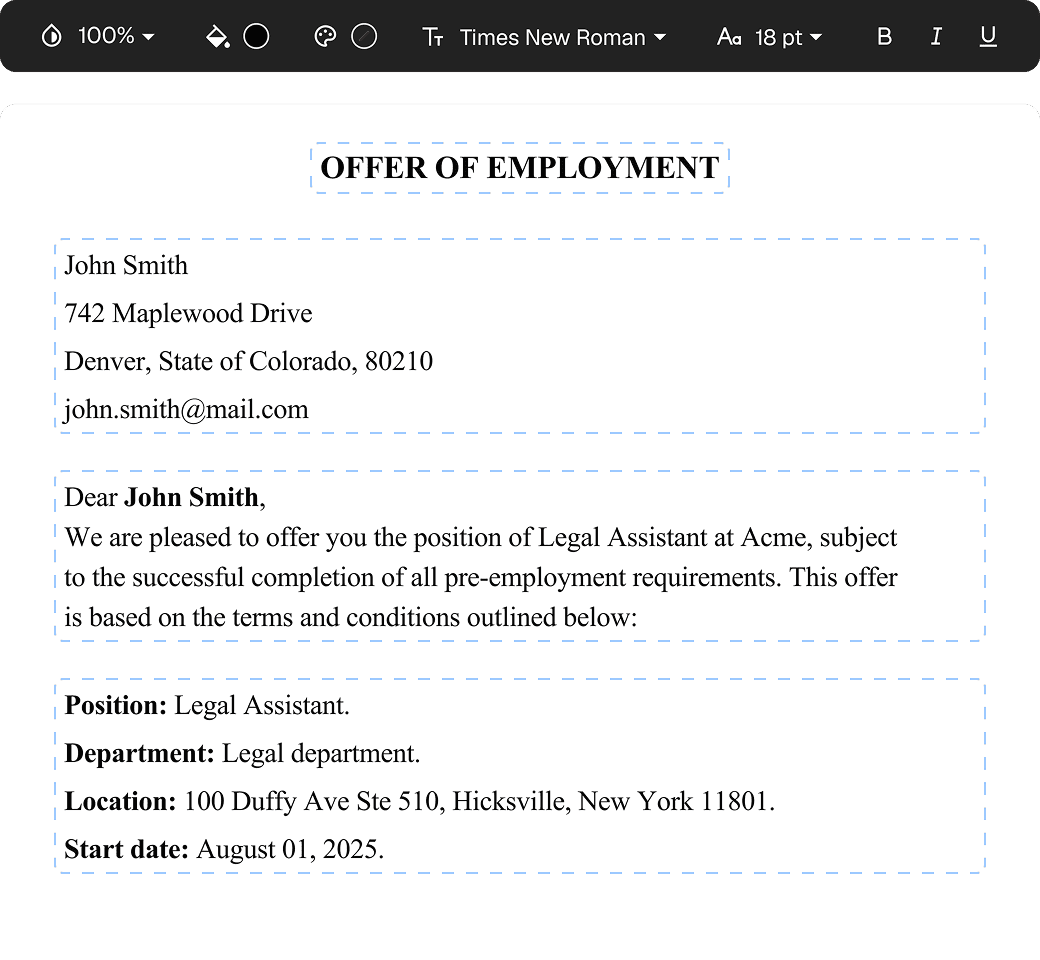
Edit PDFs seamlessly
Tweak agreements before signing or sending for signatures. Update details, add or remove clauses, adjust formatting, and redline changes instantly.
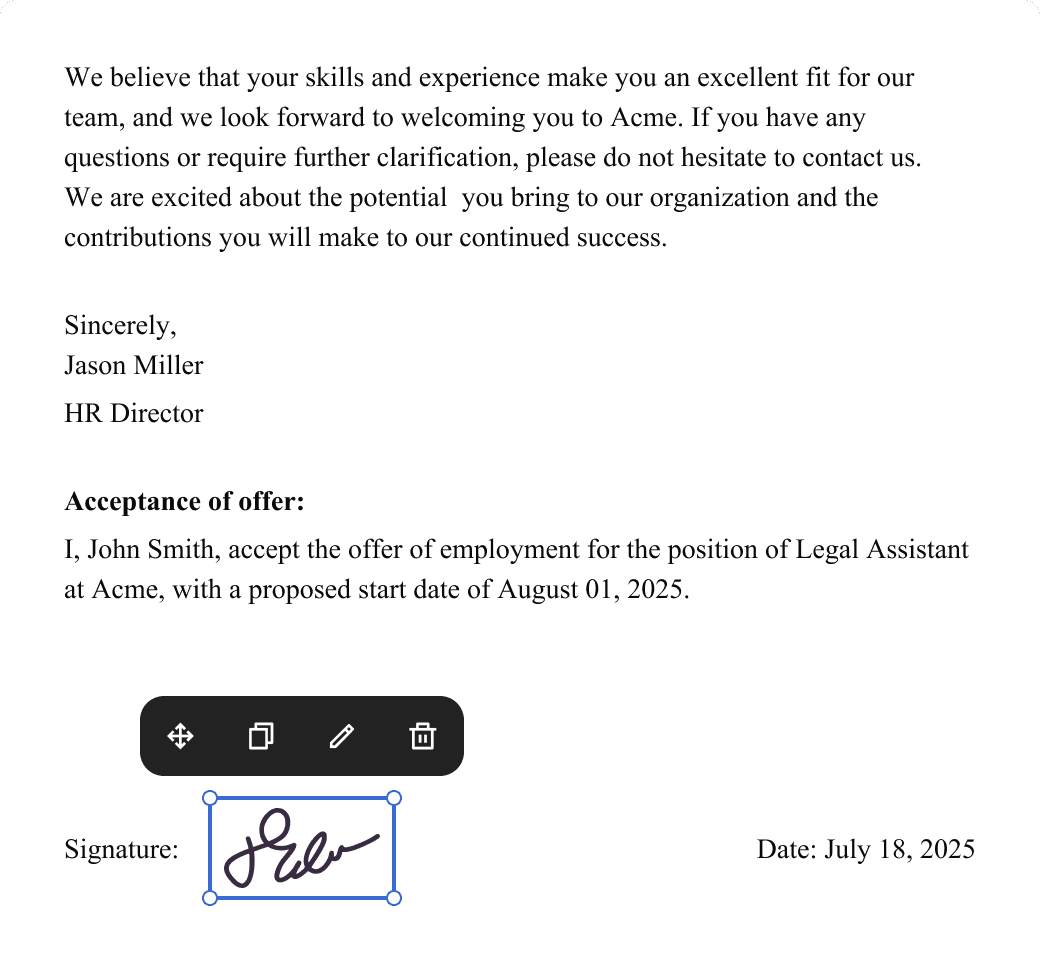
eSign legally and securely
Sign documents and collect legally binding signatures. Invite up to ten people to sign in any order, track the progress, and send reminders.
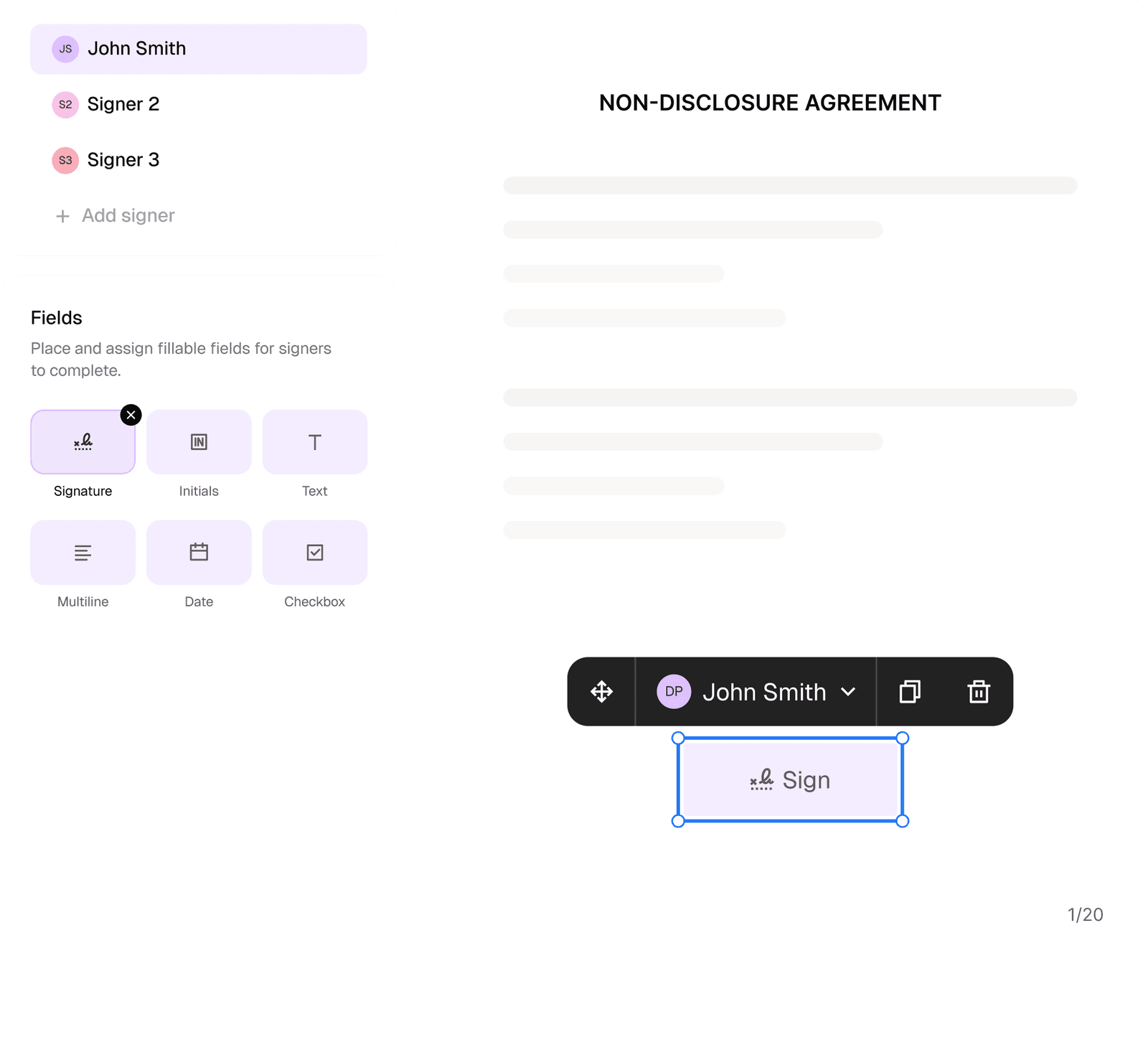
Request legally binding signatures
Invite up to ten people to sign your document in any order. Get a finalized, audit-ready copy without chasing signatures.
Skip the drafting.
Choose from 2,500+ templates
Browse templatesChoose a template
Fill in details
Sign and download